
Acoupa weakfish
Three lengths sit in the same row: 110 cm maximum, 45 cm common, 42.7 cm at first maturity. All three are tagged total length. The gap between the common fish and a mature one is 2.3 cm. A fourth number, 17 kg, has no length attached at all. This page is about which of those numbers measures what.

Three lengths sit in the same row: 110 cm maximum, 45 cm common, 42.7 cm at first maturity. All three are tagged total length. The gap between the common fish and a mature one is 2.3 cm. A fourth number, 17 kg, has no length attached at all. This page is about which of those numbers measures what.
Three lengths, one unit
The size row is unusually consistent in its unit and unusually tight in its spacing. Maximum 110 cm TL, common length 45 cm TL, maturity 42.7 cm. No fork length and no standard length are given anywhere in the record.
Uniform units help, yet they take away an option. An angler who measures to the fork cannot convert the source's 42.7 cm into a fork-length figure from this page, because the conversion is not in the data. The only honest instruction is to measure the same way the source does.
What total length includes here
Total length reaches the outermost tip of the tail fin. On a croaker that tail is long and pointed, and the difference between total and fork length is not a rounding error. The record gives no ratio, so no correction factor can be offered.
This is the correction the page can make: it can tell you not to mix methods. A fish measured to the fork and compared with a 42.7 cm TL threshold will look smaller than it is, and a fish measured with a stretched tail will look larger. Pick one method and keep it for the session.
The 2.3 cm gap
The common length is 45 cm and maturity is 42.7 cm. Those two lines almost touch. The record's ordinary specimen clears the spawning point by a mere 2.3 cm.
That makes the release decision sharper than the maximum suggests. A 50 cm fish is not a big specimen by the 110 cm standard, but it is already past maturity and well above the common size. At 45 cm TL the ordinary fish clears the 42.7 cm point by 2.3 cm; at 40 cm it would fall 2.7 cm short. No maximum age appears, so the age of a 50 cm specimen stays unknown.
The 17 kg without a length
The maximum weight is 17 kg. The row attaches no length to it; nothing indicates whether it belonged to a 110 cm specimen or to a shorter, heavier one.
So the two maxima should be carried separately. A 110 cm TL fish and a 17 kg fish are both statements in the source; "a 110 cm fish weighs 17 kg" is not. At the boat, that distinction matters when estimating a fish before weighing it.
One to twenty metres
The recorded band spans 1–20 m, the shallowest in this batch. The habitat keywords list sand, mud and brackish water; the environment field adds marine, freshwater and demersal.
Twenty metres is within reach of a small boat and, in many places, of a long cast. The band is narrow in the vertical and wide in the horizontal: the fish is coastal and estuarine, and the record gives no "usually" figure to narrow the 19 m span further.
Twelve months of spawning
Three spawning rows cover the year. Venezuela: all twelve months. Brazil, Ceara: December. Brazil, Maranhao: all twelve months. Taken together, the rows place spawning in every month across the sampled areas.
That weakens any plan built on a closed season. The record does not give spawning depth or temperature, so the months cannot be turned into a location. Two of the three rows cover all twelve months; the third, Ceara, names December alone; the record does not explain the difference. All it supports is the statement that a mature fish can be encountered at any time of year in those waters.
Weakfish, basher
Wikipedia gives the English names acoupa weakfish, blacktail basher and grey snapper. The last one borrows a name from another family; a weakfish is not a snapper, and the label travels on menus rather than in taxonomy.
In Chinese, FishBase gives . iNaturalist has 23 observations under the taxon. The scanty public record is worth noting beside a species assessed as Vulnerable: 23 observations do not measure abundance, but they do show how little is documented at this resolution.
The number to carry
Carry 42.7 cm TL as the maturity line and 45 cm TL as the common fish, and measure the same way the source does. Carry 110 cm and 17 kg as two separate maxima, not as one specimen.
The 2019 Vulnerable assessment is the stock-level context. GBIF's 35 distribution assertions lean heavily on Brazil (16 of 35), with 17 country codes in total and 32 marked native. Three of the 35 are marked non-native, which leaves the native count at 32. That is a western Atlantic record with a Brazilian centre of gravity, not a uniform range. The numbers to take home are the two lengths and the unit they were measured in.
For gear, the arithmetic follows the same two numbers: a 45 cm TL fish fits a medium spinning rod and a 45 cm net, while a 110 cm fish needs a boat rod and a net of at least 90 cm.
Where these facts come from
Check these pages before you rely on a size, range or protection status.
- FishBase — Cynoscion acoupa — FishBase · T2
- GBIF — Cynoscion acoupa occurrence records — GBIF · T2
- IUCN Red List — Cynoscion acoupa — IUCN · T1
- Photo record — iNaturalist — iNaturalist · T3
Fish in the same water
These fish live in the same place.
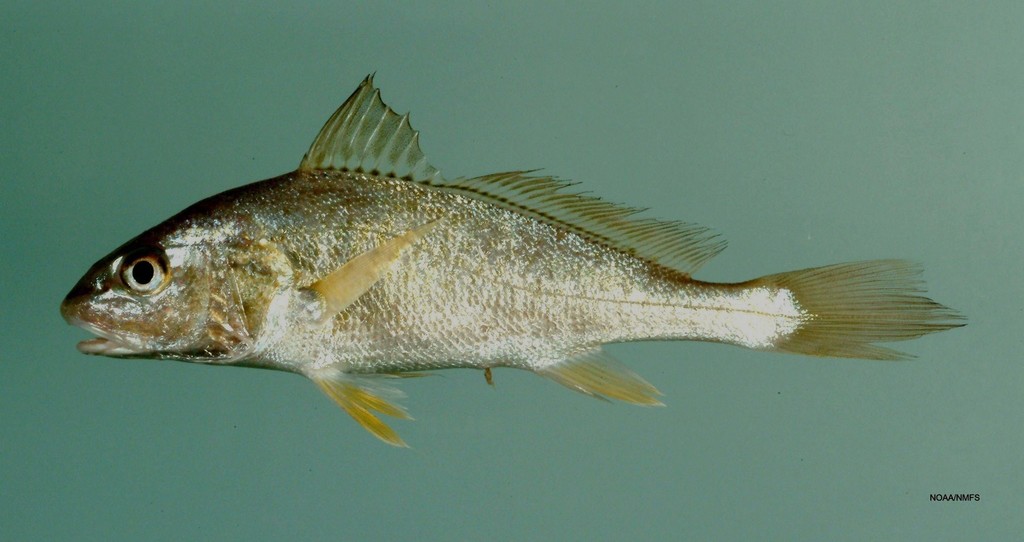
Atlantic croaker
- Family
- Sciaenidae
- Depth
- ≤ 100 m
- Season
- Jan, Feb, Mar, Apr, May, Jun, Jul, Aug, Sep, Oct, Nov, Dec
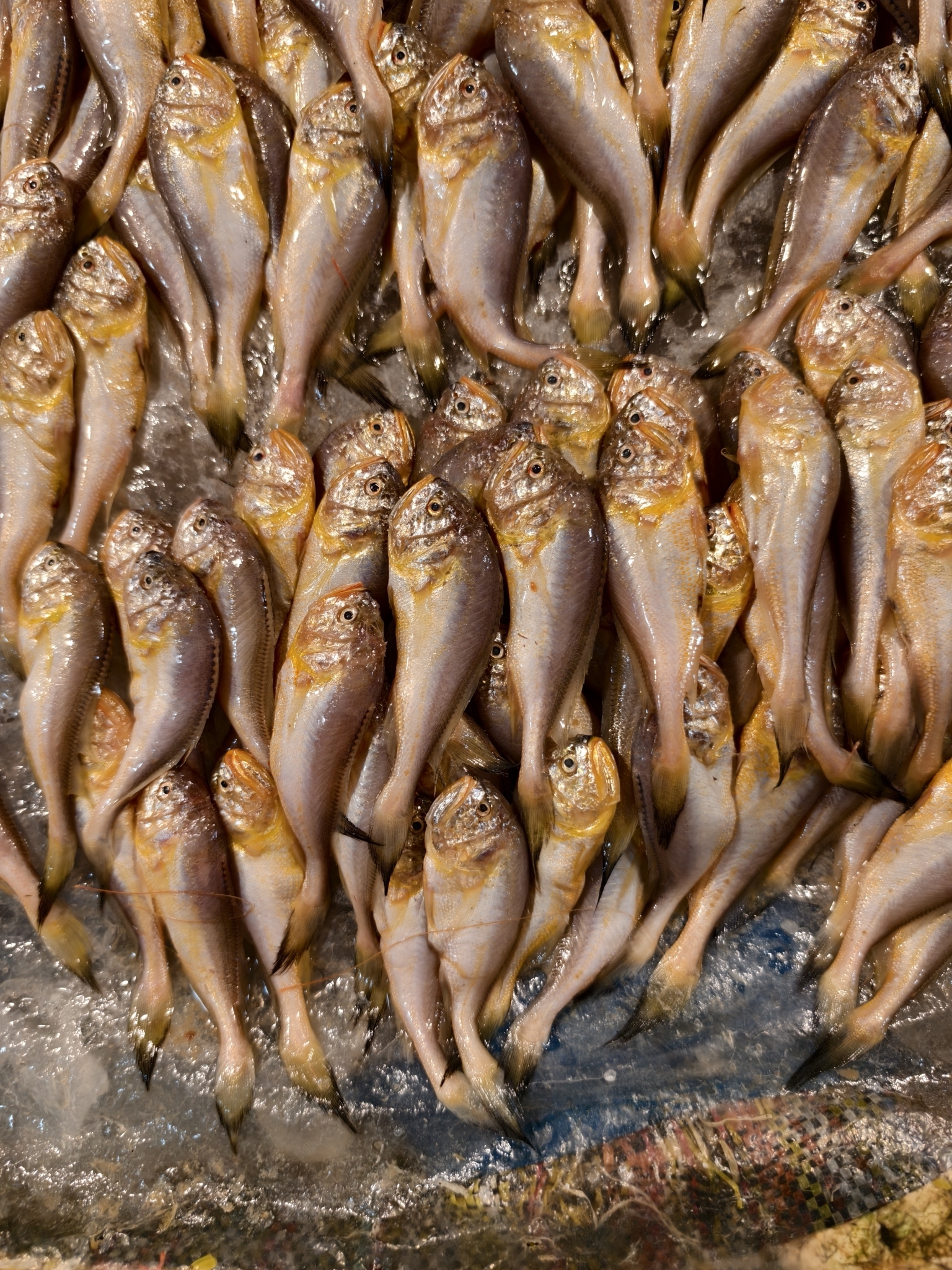
Bighead croaker
- Family
- Sciaenidae
- Depth
- ≤ 90 m
- Season
- Jan, Mar, Apr, May, Jun, Jul, Aug, Sep, Oct, Nov, Dec

Black drum
- Family
- Sciaenidae
- Depth
- ≥ 10 m
- Season
- Jan, Feb, Mar, Apr, May, Jun
Guides for this water
Technique, gear and safety guides that fit Acoupa weakfish.