
Emperor snapper in Australia — Northern Territory: 5 fish — Northern Territory.
Red emperor | 5 | Susceptible to barotrauma. Vessel limit applies, see page 8.
Quoted from NT Fisheries — Know your limits booklet (recreational fishing controls)
Regulation guide
Official sourcesHow emperor snapper is managed
Emperor snapper, Lutjanus sebae, appears in Australian rule books as red emperor. Each jurisdiction sets its own recreational rules for the species.
Queensland treats the species as a coral reef fin fish, Western Australia places it among demersal scalefish with separate bioregion limits, and the Northern Territory lists it as an at-risk species with vessel limits. The same fish can therefore carry three different sets of numbers, and the three jurisdictions also use different measurement methods.
Source: Queensland Government: Size and possession limits in tidal waters · DPIRD Western Australia: Recreational fishing guide 2026 · NT Fisheries: Know Your Limits booklet
Queensland: 55 cm and five in possession
Queensland sets a minimum size of 55 cm for red emperor and a possession limit of 5. The generic emperors row has a 25 cm minimum, but red emperor is listed as an exception at 55 cm, so the generic figure does not apply to this species.
Red emperor is also a coral reef fin fish, and a combined possession limit of 20 applies to all coral reef fin fish. The Queensland possession limit is the total a fisher may keep at any one time, not a daily figure, and it includes fish held at home or in the freezer.
On a boat, coral reef fin fish fillets must be at least 40 cm long with skin and scales left on. Two five-day closed seasons apply in October and November each year, and undersized fish must be returned to the water immediately. Fish are measured from the tip of the snout to the end of the tail.
Source: Queensland Government: Size and possession limits in tidal waters · Queensland Government: Measure your catch
Western Australia: 450 mm and a bioregion split
Western Australia lists red emperor in its demersal scalefish table with a minimum legal size of 450 mm. The individual daily bag limit is 2 in the West Coast bioregion, 1 at the Abrolhos Islands and 2 in the other bioregions. The total mixed demersal bag is 2, 1 and 4 respectively.
A demersal scalefish closure applies in the West Coast bioregion: recreational fishing for demersal scalefish by boat is closed until Spring 2027. The closure covers all demersal scalefish, not only red emperor. The guide states that it does not apply to land-based fishers or to charter fishers outside the Perth Metropolitan area. A release weight is required when line fishing for demersal scalefish anywhere in WA.
Fishing from a powered boat requires a Recreational Fishing from Boat Licence, including when the catch is released. The guide measures finfish from the point of the snout to the tip of the tail.
Source: DPIRD Western Australia: Recreational fishing guide 2026
Northern Territory: five in possession
The Northern Territory sets a personal possession limit of 5 red emperor. That number sits inside the general personal possession limit of 15 fish, which applies to fish held outside a person's permanent residence.
Red emperor is an at-risk species, so vessel limits apply. Vessels with four or fewer people on board may carry each person's personal possession limit; vessels with five to seven people may carry up to four times the personal limit; and vessels with eight or more people may carry up to eight times the personal limit.
The Territory lists red emperor as susceptible to barotrauma. Because the upper jaw is longer than the lower jaw, it is measured from the tip of the snout to the longest part of the tail fin.
Why the name and the table matter
In Queensland, red emperor is an exception to the general emperors limit: the table shows 25 cm for emperors generally, but 55 cm and a possession limit of 5 for red emperor. The exception, not the group row, carries the limit for red emperor.
Western Australia and the Northern Territory use different groupings again. WA controls red emperor through the demersal scalefish table and its bioregion bag, while the NT controls it as an at-risk species with a vessel limit. The species name is the same; the management table is not.
Source: Queensland Government: Size and possession limits in tidal waters · DPIRD Western Australia: Recreational fishing guide 2026 · NT Fisheries: Know Your Limits booklet
Before you keep an emperor snapper
Identify the fish as red emperor rather than another emperor, then check the state and, in WA, the bioregion. Measure with the method used by that jurisdiction: snout to the end of the tail in Queensland, snout to the tip of the tail in WA, and snout to the longest part of the tail fin in the NT.
Check the possession limit against fish already at home or in the freezer, and check closures before launching. In Queensland the coral reef fin fish closures and the 40 cm skin-on fillet rule apply; in WA the West Coast demersal boat closure and release-weight rule apply; in the NT the at-risk vessel limit applies.
Source: Queensland Government: Size and possession limits in tidal waters · Queensland Government: Measure your catch · DPIRD Western Australia: Recreational fishing guide 2026 · NT Fisheries: Know Your Limits booklet
Official pages: Queensland Government: Size and possession limits in tidal waters · Queensland Government: Measure your catch · DPIRD Western Australia: Recreational fishing guide 2026 · NT Fisheries: Know Your Limits booklet
Emperor snapper regulations at a glance
3 jurisdictions| Jurisdiction | Area | Size | Bag | Season / closure | Closed area | Other |
|---|---|---|---|---|---|---|
| Australia — Northern Territory | Northern Territory | — | — | — | — | Possession limit: 5 fish |
| Australia — Queensland | Queensland tidal waters | ≥55 cm | 5 fish possession limit | — | — | — |
| Australia — Western Australia | Western Australia — all bioregions | ≥450 mm | 2 per day (West Coast) · 1 per day (Abrolhos Islands) · 2 per day (other bioregions) | — | — | — |
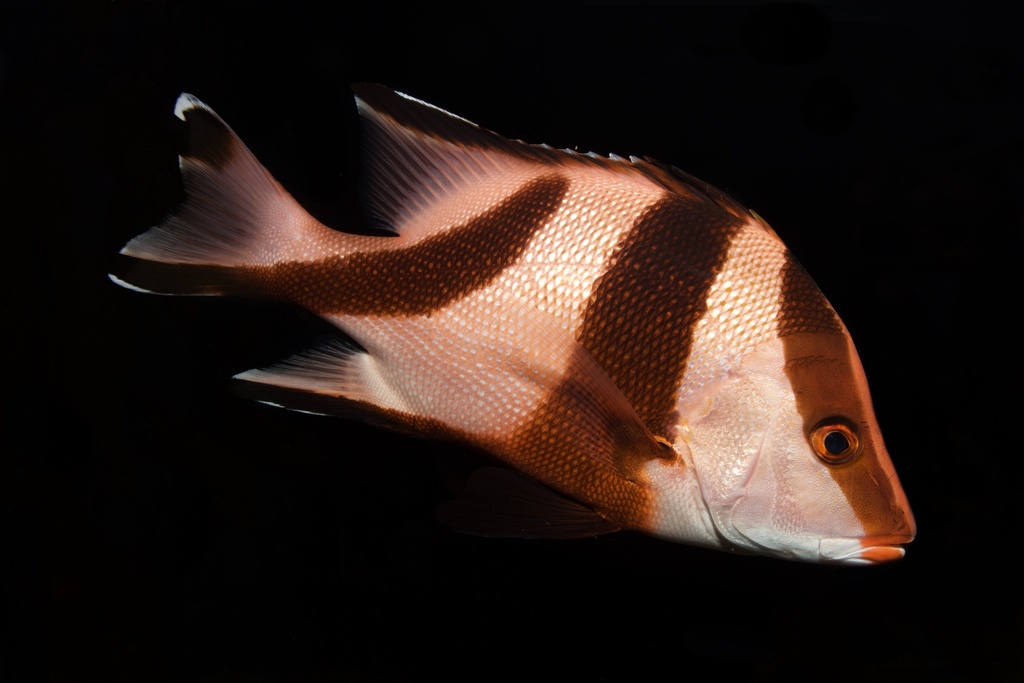
Emperor snapper
Lutjanus sebae · Lutjanidae
Emperor snapper is a large lutjanid of the Indo-West Pacific, from the southern Red Sea and East Africa to New Caledonia, Japan and Australia. It lives from 5 to 180 m in tropical water, reaches 116 cm and 32.7 kg, can live 40 years, and feeds on crustaceans, fish, molluscs and echinoderms. Boat bottom fishing is the usual approach, and fish are present year-round.
- Family
- Lutjanidae
- Max length
- 116 cm FL
- Max weight
- 32.7 kg
- Max age
- 40 years
- Depth
- 5–180 m
- IUCN
- LC
- Climate
- Tropical
- Diet
- crustaceans, fishes, molluscs, echinoderms
Emperor snapper (Lutjanus sebae) is a fish of the family Lutjanidae. FishBase gives its range as: Indo-West Pacific: southern Red Sea and East Africa to New Caledonia, north to southern Japan, south to Australia. It is recorded from 5 to 180 m, in tropical water. The recorded maxima are 116 cm FL, 32.7 kg, 40 years. Common length is recorded at 60 cm. Diet includes crustaceans, fishes, molluscs and echinoderms. IUCN status: Least Concern (LC). Chinese name: .
Techniques
- Boat bottom fishing —
Seasonality
Other AU-NT regulations
Same jurisdictionBefore you keep a fish
- Read the recorded value. It is copied from the notice; if the number and the notice disagree, the notice wins.
- Check the area. Federal, state and local waters can set different limits for the same fish.
- Check the date. Seasons, quotas and closures change; confirm the current notice before you go.
Common questions
- What is the possession limit for Emperor snapper in Australia — Northern Territory?
- 5 fish
- Where does this regulation apply?
- Northern Territory
- When was it checked?
- 2026-11-18, against NT Fisheries — Know your limits booklet (recreational fishing controls).
- Do other jurisdictions set different limits?
- Yes. This register lists 3 jurisdictions for Emperor snapper; compare them in the table above.