
Flathead mullet in Japan — Hiroshima: Closed 1 February – 31 July — Hiroshima Prefecture sea area.
Regulation guide
Official sourcesThree layers of rules for one fish
Flathead grey mullet (Mugil cephalus) is covered by three different instruments in this dossier: China's national summer closure, a Fujian provincial minimum catch size, and a Hiroshima Prefectural fishing adjustment rule. They operate at different scales and do different things.
The national measure is a closure of fishing operations by area and gear. The Fujian measure is a minimum catchable size for named species. The Hiroshima measure is a prefectural rule that prohibits taking small mullet during a defined period and applies to the public, not only to commercial fishermen.
Because the three instruments answer different questions, an angler needs to check area, date, gear and fish size separately rather than looking for a single mullet limit.
Source: Ministry of Agriculture and Rural Affairs: Notice on adjusting the marine summer closure system · Fujian Provincial Department of Ocean and Fisheries: Minimum catch sizes for 35 important commercial species · Hiroshima Prefecture: Sea area size limits and closed periods
China's summer closure: areas and dates
China's marine summer closure covers the Bohai, Yellow and East China Seas and the South China Sea north of 12 degrees north latitude, including the Gulf of Beibu. The Ministry of Agriculture and Rural Affairs notice sets three date bands.
North of 35 degrees north, in the Bohai and Yellow Seas, the closure runs from 12:00 on 1 May to 12:00 on 1 September. Between 35 degrees north and 26 degrees 30 minutes north, in the Yellow and East China Seas, it runs from 12:00 on 1 May to 12:00 on 16 September. Between 26 degrees 30 minutes north and 12 degrees north, in the East and South China Seas, it runs from 12:00 on 1 May to 12:00 on 16 August.
Small stow-net vessels start their closure at 12:00 on 1 May and stay closed for at least three months, with the reopening date set by the coastal province and reported to the ministry. The provincial date can therefore differ from the general band.
Source: Ministry of Agriculture and Rural Affairs: Notice on adjusting the marine summer closure system
The closure covers gear, and hook-and-line sits outside it
The national closure applies to all fishing operation types except hook-and-line gear (钓具), plus auxiliary vessels that support fishing vessels. It is written as a gear-based closure rather than a species-by-species ban.
That distinction matters for an angler with a rod. Hook-and-line gear is the excluded type, so the closure itself does not stop rod-and-line fishing in the way it stops trawls, gillnets, traps and the other listed gear.
Hook-and-line vessels are not exempt from everything. The notice requires them to follow the port entry and exit reporting system, to comply with the gear, area, season and quantity conditions in their fishing licence, and to land catch at designated ports under the catch inspection arrangements. Coastal provinces may also adopt stricter measures than the national rule.
Source: Ministry of Agriculture and Rural Affairs: Notice on adjusting the marine summer closure system
Fujian: 350 mm minimum catch size
Fujian's 2018 notice on minimum catch sizes lists 35 important commercial species, including 鲻鱼 (Mugil cephalus) at a body length of 350 mm or more. Fish below the listed size are treated as juveniles for the purposes of the notice.
The notice is a minimum-catchable-size rule, not a bag limit. It tells the fishery what size can be taken; it does not set a daily or possession number for mullet.
The 350 mm figure is specific to Fujian. It should not be applied to another province's waters or to Japan, where the size and season rules are different.
Hiroshima: small mullet are protected from February to July
Hiroshima Prefecture's sea-area rules list ぼら (mullet) at 15 cm body length or less, with a closed period from 1 February to 31 July. The rule prohibits taking fish at or below that size during that period.
The prefecture states that the rules apply not only to fishery operators but to the public. A recreational angler fishing Hiroshima waters is covered by the same size and period restriction as a commercial fisherman.
The mullet entry sits in a table with other species that have their own size limits and closed periods, including sea bass, Japanese whiting and Japanese littleneck clam. The periods are not shared across the table, so each species has to be read on its own row.
Source: Hiroshima Prefecture: Sea area size limits and closed periods
How the length is stated
Fujian states the mullet minimum as body length of 350 mm or more. Hiroshima states its mullet rule as body length of 15 cm or less. Both are stated as a length of the whole fish, not a weight and not a fillet measurement.
Because the two instruments are written in different languages and for different fisheries, the safest practice is to measure the whole fish before any gutting or filleting, using the unit and definition given in the instrument that applies.
A fish that is close to the line should be measured rather than estimated. The Hiroshima rule turns on 15 cm, and the Fujian rule turns on 350 mm; neither leaves room for a rough visual judgment at the rail.
Source: Fujian Provincial Department of Ocean and Fisheries: Minimum catch sizes for 35 important commercial species · Hiroshima Prefecture: Sea area size limits and closed periods
Before you keep a flathead grey mullet
In Chinese waters, establish the latitude band and the dates first. The closure runs to 1 September in the north, 16 September in the middle band and 16 August in the south. A rod-and-line angler is outside the gear closure, but still has to comply with licence conditions and port and landing rules.
In Fujian, check the fish against the 350 mm body-length minimum. In Hiroshima, check both the size and the date: mullet of 15 cm or less may not be taken between 1 February and 31 July, and that rule applies to recreational anglers as well as commercial fishermen.
Do not carry a size from one jurisdiction into another. Fujian's 350 mm and Hiroshima's 15 cm come from different instruments and are not interchangeable.
Source: Ministry of Agriculture and Rural Affairs: Notice on adjusting the marine summer closure system · Fujian Provincial Department of Ocean and Fisheries: Minimum catch sizes for 35 important commercial species · Hiroshima Prefecture: Sea area size limits and closed periods
Official pages: Ministry of Agriculture and Rural Affairs: Notice on adjusting the marine summer closure system · Fujian Provincial Department of Ocean and Fisheries: Minimum catch sizes for 35 important commercial species · Hiroshima Prefecture: Sea area size limits and closed periods
Flathead mullet regulations at a glance
3 jurisdictions| Jurisdiction | Area | Size | Bag | Season / closure | Closed area | Other |
|---|---|---|---|---|---|---|
| China — Fujian | Body length ≥350 mm | — | — | — | — | |
| China — national | Chinese coastal waters, by sea area | — | — | From 12:00 on May 1 to 12:00 on September 1, September 16 or August 16, depending on the area | — | — |
| Japan — Hiroshima | Hiroshima Prefecture sea area | ≤15 cm body length may not be taken | — | Closed 1 February – 31 July | — | — |
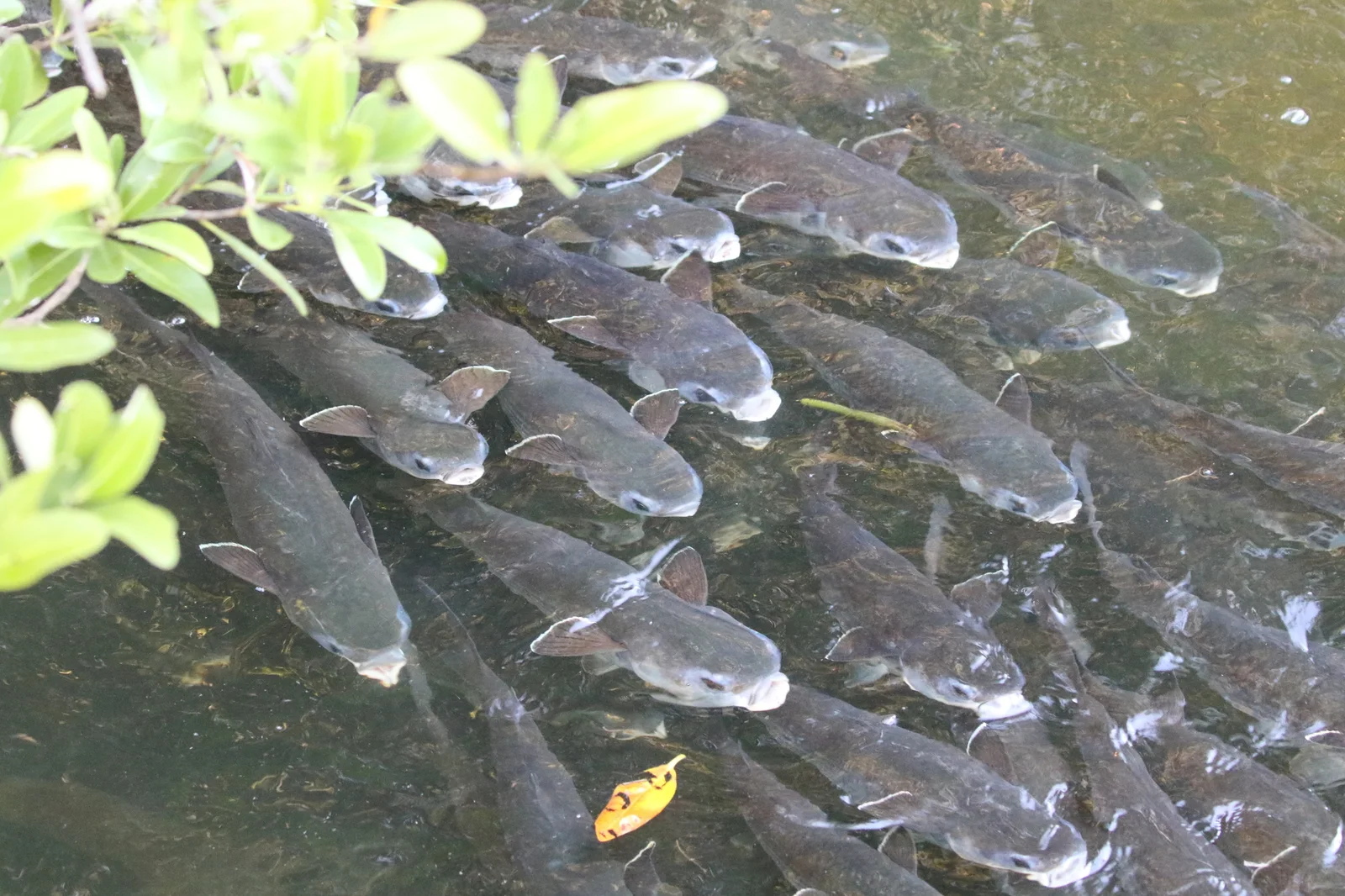
Flathead mullet
Mugil cephalus · Mugilidae
Flathead mullet is a mugilid of coastal waters in tropical, subtropical and temperate seas around the world. It lives from the surface to 120 m, reaches 100 cm, can live 16 years, and feeds on zooplankton, algae and detritus. Shore casting or float fishing is the usual approach, and fish are present year-round in water of 8 to 24 °C.
- Family
- Mugilidae
- Max length
- 100 cm SL
- Max age
- 16 years
- Depth
- 0–120 m
- IUCN
- LC
- Climate
- Subtropical · 8–24 °C
- Diet
- zooplankton, algae, detritus
Flathead mullet (Mugil cephalus) is a fish of the family Mugilidae. FishBase gives its range as: Cosmopolitan in coastal waters of the tropical, subtropical and temperate zones of all seas. Eastern Pacific: California, USA to Chile. It is recorded from 0 to 120 m, in subtropical water at 8–24 °C. The recorded maxima are 100 cm SL, 16 years. Common length is recorded at 50 cm. Diet includes zooplankton, algae and detritus. IUCN status: Least Concern (LC). Chinese name: .
Techniques
- Shore casting —
- Float fishing —
Seasonality
Other JP-34 regulations
Same jurisdictionBefore you keep a fish
- Read the recorded value. It is copied from the notice; if the number and the notice disagree, the notice wins.
- Check the area. Federal, state and local waters can set different limits for the same fish.
- Check the date. Seasons, quotas and closures change; confirm the current notice before you go.
Common questions
- What is the season / closure for Flathead mullet in Japan — Hiroshima?
- Closed 1 February – 31 July
- Where does this regulation apply?
- Hiroshima Prefecture sea area
- When was it checked?
- 2026-11-18, against www.pref.hiroshima.lg.jp.
- Do other jurisdictions set different limits?
- Yes. This register lists 3 jurisdictions for Flathead mullet; compare them in the table above.