
Dusky flathead in Australia — Queensland: 5 fish possession limit — Queensland tidal waters.
Dusky (mud) flathead | Min: 40cm Max: 75cm | Limit: 5
Quoted from Queensland Government — Size and possession limits in tidal waters
A possession limit is the total number of fish you may keep at any time, including fish at home or in the freezer; it is not a daily take limit.
Regulation guide
Official sourcesAn estuary flathead
The New South Wales Department of Primary Industries and Regional Development describes dusky flathead, Platycephalus fuscus, as varying from sandy with brown spots and blotches to dark brown or black with white spots, with a distinctive black spot on the caudal fin and dark bars often visible across the rear of the body. The preopercular spines on each side of the head are very sharp and should be avoided when handling the fish.
New South Wales gives a maximum of 15 kg and 1.5 m and records the species in estuaries and coastal bays from Cairns in Queensland to the Gippsland Lakes in Victoria, over sand, mud, gravel and seagrass, and up to the tidal limit. It is more commonly caught during summer.
The Victorian Fisheries Authority notes that dusky flathead is the most commonly caught flathead in estuaries from Lake Tyers to Mallacoota Inlet.
Slot limits, not just minimums
All three states use a slot limit rather than a simple minimum. Victoria allows fish from 30 to 55 cm, New South Wales from 36 to 70 cm and Queensland from 40 to 75 cm.
The Victorian Fisheries Authority explains a size limit as the smallest and largest fish that may legally be kept, and requires fish outside the legal size range to be returned to the water immediately and without harm. The legal size must be checked quickly.
Queensland sets both a minimum and a maximum for dusky (mud) flathead and treats the species separately from other flathead, which have a 30 cm minimum and a combined possession limit of five.
Source: VFA: Dusky flathead · NSW DPIRD: Saltwater bag and size limits · Queensland Government: Size and possession limits in tidal waters · VFA: Fishing definitions
Victoria: 30 to 55 cm and five fish
Victoria sets a minimum legal size of 30 cm, a maximum of 55 cm and a bag limit of 5 dusky flathead.
Dusky flathead cannot be filleted in or on Victorian waters. They must be kept whole or in carcass form, meaning only the gut, gills or scales may be removed, until the angler is away from the water; filleting on the cleaning tables at a boat ramp is allowed.
For regulation purposes, any flathead caught in Lake Tyers or in any estuary east of Lake Tyers is considered to be a dusky flathead, so the slot limit applies to those fish whatever they look like.
A Recreational Fishing Licence is required for recreational fishing in Victorian waters unless an exemption applies.
Source: VFA: Dusky flathead · VFA: Fishing definitions · VFA: Fishing licence
New South Wales: 36 to 70 cm and five fish
New South Wales applies a slot limit of 36 to 70 cm to dusky flathead, with a bag limit of 5 in total and a possession limit of 10.
The species sits in the NSW flathead group. Other flathead in New South Wales have different rules — bluespotted and tiger flathead have a 33 cm minimum, with 10 in total and 20 in possession — so identification matters.
Fish are measured from the snout on the upper jaw to the end of the tail. Dusky flathead may not be filleted or have the head or tail removed until the angler is well away from the water, although gilling and gutting is allowed and boat-ramp cleaning tables are excepted. A Recreational Fishing Fee is required and the receipt must be carried.
Source: NSW DPIRD: Saltwater bag and size limits · NSW DPIRD: How to measure fish · NSW DPIRD: Saltwater recreational fishing rules and regulations summary, October 2025 · NSW DPIRD: Recreational fishing fee
Queensland: 40 to 75 cm and five in possession
Queensland sets a slot limit of 40 to 75 cm for dusky (mud) flathead and a possession limit of 5.
The Queensland figure is a possession limit, not a daily bag: it is the total number of fish a person may keep at any one time, including fish at home or in the freezer. Other flathead species have a 30 cm minimum and a combined possession limit of five, with dusky flathead excluded from that combined limit.
You do not need a licence to fish recreationally in Queensland, apart from some stocked impoundments. Fillets may not be kept on board a boat with the skin removed, and fish may only be divided into portions if an inspector can easily count the number of fish in possession.
Source: Queensland Government: Size and possession limits in tidal waters · Queensland Government: Fishing
Measuring and handling a flathead
New South Wales measures fish from the snout on the upper jaw to the end of the tail, and Victoria measures from the tip of the snout with the mouth closed to the end of the tail. Queensland measures from the tip of the snout to the end of the tail and forbids manipulating a fish to change its length.
Undersized and oversized fish must be returned immediately. The sharp preopercular spines on the head are the main handling hazard, and the black spot at the caudal end of the tail is the simplest way to separate dusky flathead from other flathead.
Source: NSW DPIRD: How to measure fish · VFA: Fishing definitions · Queensland Government: Measure your catch · NSW DPIRD: Flathead (Dusky)
Before you keep a dusky flathead
In Victoria a dusky flathead must measure between 30 and 55 cm and the daily bag is 5; in New South Wales the slot is 36 to 70 cm with 5 fish and 10 in possession; in Queensland it is 40 to 75 cm with a possession limit of 5.
Check both ends of the slot, not just the minimum, because a fish above the maximum must also be released. Keep Victorian fish whole or as a carcass until away from the water, leave the skin on fillets on a Queensland boat, and carry a NSW fishing fee receipt or a Victorian licence where required. In Victoria, any flathead from Lake Tyers or an estuary east of it is treated as a dusky flathead.
Source: VFA: Dusky flathead · NSW DPIRD: Saltwater bag and size limits · Queensland Government: Size and possession limits in tidal waters
Official pages: NSW DPIRD: Flathead (Dusky) · VFA: Dusky flathead · NSW DPIRD: Saltwater bag and size limits · Queensland Government: Size and possession limits in tidal waters
Dusky flathead regulations at a glance
3 jurisdictions| Jurisdiction | Area | Size | Bag | Season / closure | Closed area | Other |
|---|---|---|---|---|---|---|
| Australia — New South Wales | New South Wales | 36–70 cm (slot limit) | — | — | — | — |
| Australia — Queensland | Queensland tidal waters | 40–75 cm (slot limit) | 5 fish possession limit | — | — | — |
| Australia — Victoria | Victorian waters | 30–55 cm (slot limit) | 5 fish per person per day | — | — | — |
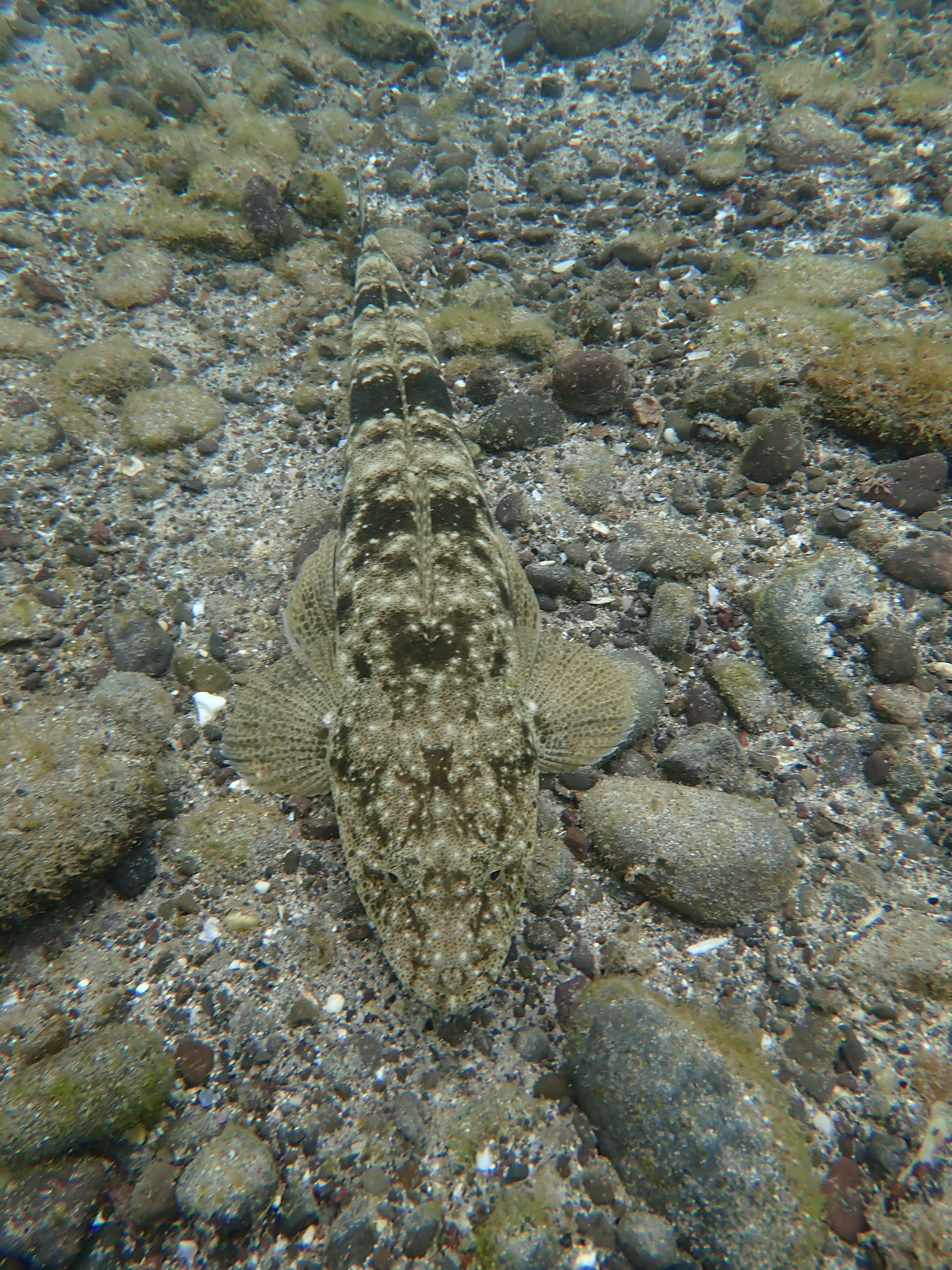
Dusky flathead
Platycephalus fuscus · Platycephalidae
A flathead is built to lie still. The dusky flathead is the largest member of its family, and it spends most of its life on the bottom of an estuary rather than on a reef. The recorded ceiling is 120 cm TL with a 15 kg top weight; depths run from the shoreline to 30 m, and the bottom list reads like a coastal river — sand, mud, estuary, seagrass and freshwater.
- Family
- Platycephalidae
- Max length
- 120 cm TL
- Max weight
- 15 kg
- Depth
- 0–30 m
- IUCN
- NE
- Climate
- Subtropical
- Diet
- crustaceans, fishes, worms
A flathead is built to lie still. The dusky flathead is the largest member of its family, and it spends most of its life on the bottom of an estuary rather than on a reef. The recorded ceiling is 120 cm TL with a 15 kg top weight; depths run from the shoreline to 30 m, and the bottom list reads like a coastal river — sand, mud, estuary, seagrass and freshwater. The record calls it largely estuarine, and that one word is the most useful thing on the page.
Techniques
- Boat bottom fishing —
- Shore casting —
Seasonality
Other AU-QLD regulations
Same jurisdictionBefore you keep a fish
- Read the recorded value. It is copied from the notice; if the number and the notice disagree, the notice wins.
- Check the area. Federal, state and local waters can set different limits for the same fish.
- Check the date. Seasons, quotas and closures change; confirm the current notice before you go.
Common questions
- What is the bag limit for Dusky flathead in Australia — Queensland?
- 5 fish possession limit
- Where does this regulation apply?
- Queensland tidal waters
- When was it checked?
- 2026-11-18, against Queensland Government — Size and possession limits in tidal waters.
- Do other jurisdictions set different limits?
- Yes. This register lists 3 jurisdictions for Dusky flathead; compare them in the table above.