
Leopard coral grouper in Australia — Northern Territory: 5 fish — Northern Territory.
Coral trout | 5 | Susceptible to barotrauma. Vessel limit applies, see page 8.
Quoted from NT Fisheries — Know your limits booklet (recreational fishing controls)
Regulation guide
Official sourcesOne species, two Australian rulebooks
Leopard coral grouper (Plectropomus leopardus) is known in Queensland as common coral trout and also as leopard trout. It is a coral reef species, and both Queensland and the Northern Territory set recreational rules for it.
The Queensland fish species guide lists it as common coral trout with a minimum size of 38 cm. The Northern Territory species page names Plectropomus leopardus as coral trout.
The two jurisdictions use different management frameworks, so the same fish carries different numbers depending on which side of the border it is caught.
The Northern Territory species page describes coral trout as inhabiting coral-rich areas of lagoon reefs and mid-shelf reefs, with juveniles living a demersal existence in shallow reef habitats, especially around coral rubble.
It gives a maximum size of 120 cm and 24 kg, with a reported maximum age of 26 years. Baited hooks and jigs are the listed fishing methods.
The Queensland guide notes that common coral trout is distinguished from the bluespotted coral trout by a transparent pectoral fin, which stays see-through even in the red colour phase.
Source: Queensland Government: Common coral trout · NT Government: Coral trout
Queensland: 38 cm and a combined limit of seven
Queensland's tidal water table gives coral trout a minimum size of 38 cm and a possession limit of 7 for all trout species combined.
That figure of 7 sits inside a second cap: a combined possession limit of 20 for all coral reef fin fish.
Queensland's possession limit is not a daily bag limit. It is the total an angler may legally keep at any one time, including fish at home and in the freezer.
Source: Queensland Government: Size and possession limits in tidal waters · Queensland Government: Common coral trout
Queensland's two reef fish closures
Coral reef fin fish are protected by two five-day closed seasons each year, in October and November. In 2026 they run from 8 to 12 October and 6 to 10 November; in 2027, from 26 to 30 October and 25 to 29 November.
The closure covers the regulated tidal waters along the Queensland east coast described in the state's coordinate list, running south from the tip of Cape York.
A narrow exception lets a recreational fisher possess a regulated reef fish on a boat in those waters if it was taken outside them and is to be eaten on board, or on a charter trip of at least 24 hours.
Source: Queensland DPI: Closed seasons in tidal waters · Queensland Government: Common coral trout
Filleting, gear and measuring in Queensland
On a boat, fillets of coral reef fin fish must be at least 40 cm long with skin and scales left on.
Recreational anglers may use up to three lines with up to six hooks in total, and must stay with the lines. Set lines, cross lines and free-floating lines are prohibited.
Fish are measured from the tip of the snout to the end of the tail, without stretching or trimming the fish to change its length.
Source: Queensland Government: Size and possession limits in tidal waters · Queensland Government: Fishing gear · Queensland Government: Measure your catch
Northern Territory: five coral trout
The Northern Territory sets a personal possession limit of five coral trout, held within the general personal possession limit of 15 fish.
Coral trout is listed as an at-risk species with a vessel limit. On boats with up to four people, each person may take their personal limit; with five to seven people the vessel may take four times the personal limit; with eight or more, eight times.
The Northern Territory does not require a recreational fishing licence.
Source: NT Government: Possession limits for fish · NT Government: Know your limits booklet
Protection areas and handling in the Northern Territory
No recreational or commercial fishing is allowed in the territory's reef fish protection areas, which include Bathurst Island, Melville Island, Charles Point Wide, Lorna Shoal, and Moyle and Port Keats. Vessels may transit if they are underway at all times.
NT Fisheries describes coral trout as highly prone to barotrauma when caught from depths greater than 10 m and advises against targeting the species for catch and release. The species can reach 120 cm and 24 kg and live about 26 years.
Fillets and trunks must keep their skin, two fillets count as one fish, and frozen fillets of different species must be kept in separate packaging.
Source: NT Government: Reef fish protection areas · NT Government: Coral trout · NT Government: Know your limits booklet
What to check before keeping one
In Queensland, check the 38 cm minimum, the combined seven-trout limit and the 20 reef-fish cap, and confirm the date is outside the two reef fish closures.
In the Northern Territory, check the five-fish limit and any vessel limit that applies to the boat, and confirm the location is not a reef fish protection area.
In both jurisdictions, measure from snout to tail and land the fish in a form that lets an officer check its size and species.
Source: Queensland Government: Size and possession limits in tidal waters · NT Government: Possession limits for fish
Official pages: Queensland Government: Common coral trout · Queensland Government: Size and possession limits in tidal waters · Queensland DPI: Closed seasons in tidal waters · NT Government: Possession limits for fish · NT Government: Reef fish protection areas
Leopard coral grouper regulations at a glance
2 jurisdictions| Jurisdiction | Area | Size | Bag | Season / closure | Closed area | Other |
|---|---|---|---|---|---|---|
| Australia — Northern Territory | Northern Territory | — | — | — | — | Possession limit: 5 fish |
| Australia — Queensland | Queensland tidal waters | ≥38 cm | — | — | — | — |
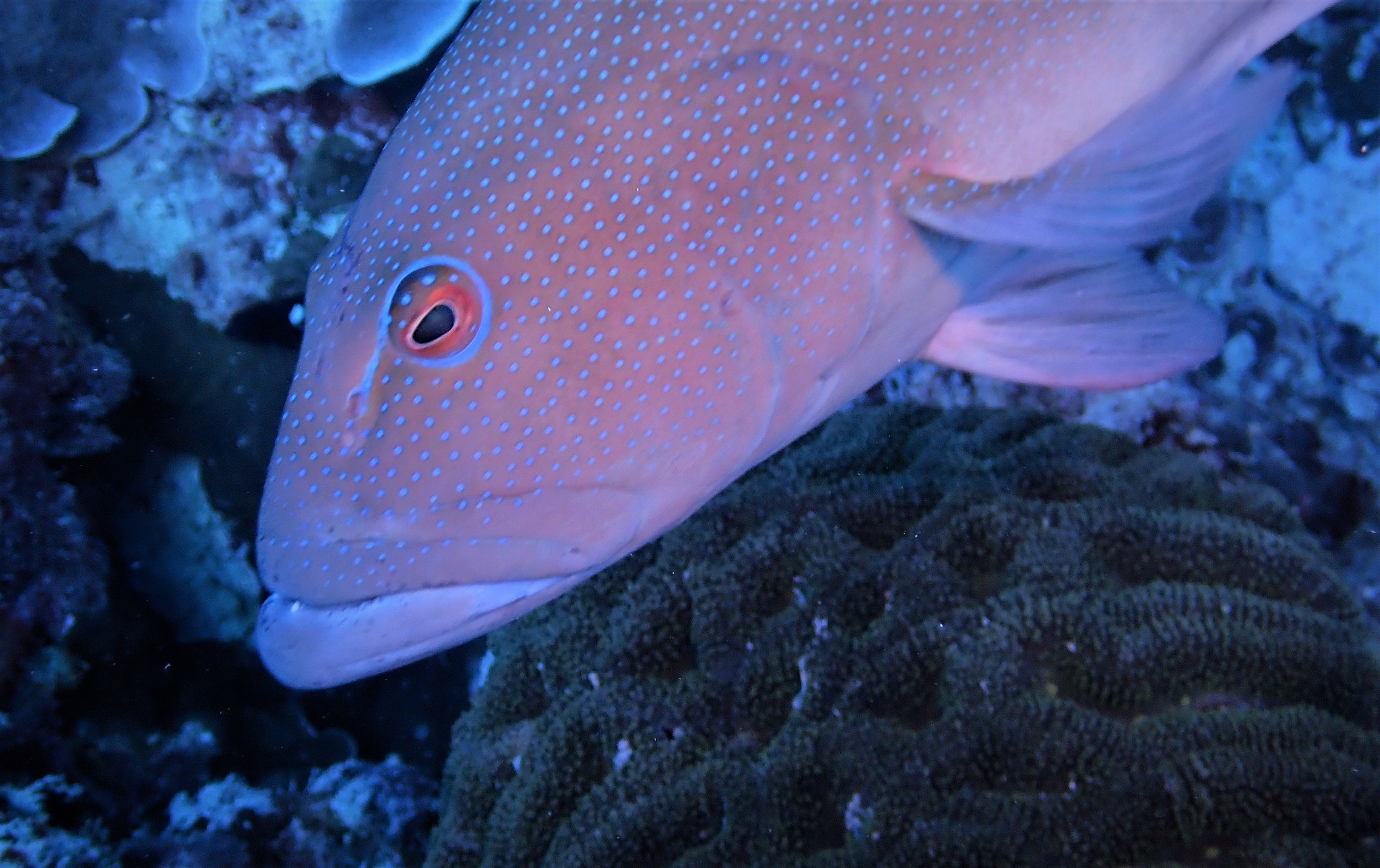
Leopard coral grouper
Plectropomus leopardus · Epinephelidae
Leopard coral grouper is recorded across the Western Pacific, from Western Australia, eastward to the Caroline Islands and Fiji: from southern Japan to Australia (Queensland), within the family Epinephelidae. It is caught from 3 to 100 m, in tropical water. It tops out at 120 cm SL and 23.6 kg, on a diet of crustaceans and fishes. The usual approach is boat bottom fishing or slow pitch jigging. The season runs January to December.
- Family
- Epinephelidae
- Max length
- 120 cm SL
- Max weight
- 23.6 kg
- Max age
- 26 years
- Depth
- 3–100 m
- IUCN
- LC
- Climate
- Tropical
- Diet
- crustaceans, fishes
Leopard coral grouper (Plectropomus leopardus) is a fish of the family Epinephelidae. FishBase gives its range as: Western Pacific: from Western Australia, eastward to the Caroline Islands and Fiji: from southern Japan to Australia (Queensland); also recently recorded from Tonga. Often misidentified as Plectropomus maculatus. It is recorded from 3 to 100 m, in tropical water. The recorded maxima are 120 cm SL, 23.6 kg, 26 years. Common length is recorded at 35 cm. Diet includes crustaceans and fishes. IUCN status: Least Concern (LC). Chinese name: .
Techniques
- Boat bottom fishing —
- Slow pitch jigging —
Seasonality
Other AU-NT regulations
Same jurisdictionBefore you keep a fish
- Read the recorded value. It is copied from the notice; if the number and the notice disagree, the notice wins.
- Check the area. Federal, state and local waters can set different limits for the same fish.
- Check the date. Seasons, quotas and closures change; confirm the current notice before you go.
Common questions
- What is the possession limit for Leopard coral grouper in Australia — Northern Territory?
- 5 fish
- Where does this regulation apply?
- Northern Territory
- When was it checked?
- 2026-11-18, against NT Fisheries — Know your limits booklet (recreational fishing controls).
- Do other jurisdictions set different limits?
- Yes. This register lists 2 jurisdictions for Leopard coral grouper; compare them in the table above.