
Cowcod in United States — California: No retention at any time · zero fish per person — California ocean waters.
These Rockfishes May Not Be Taken or Possessed in California - No Retention at Any Time: Bronzespotted Rockfish (JPG), Cowcod, Quillback Rockfish, and Yelloweye Rockfish (CCR T14, §28.55). Fishing is closed year-round, at all depths, no retention at any time (zero fish per person).
Quoted from California Department of Fish and Wildlife — Summary of Recreational Groundfish Fishing Regulations
Regulation guide
Official sourcesHow cowcod is managed
Cowcod (Sebastes levis) is a rockfish managed under the Pacific Coast Groundfish Fishery Management Plan, with recreational measures in 50 CFR 660.360 and a parallel California rule in Title 14 of the California Code of Regulations. It is one of four rockfish that CDFW lists as impossible to retain in California, together with bronzespotted rockfish, quillback rockfish and yelloweye rockfish.
The species is regulated as a prohibited species rather than as a bag limit with a small allowance. There is no count to stay under and no size that makes a cowcod legal; the only legal number to retain is zero.
Cowcod also carries a second layer of regulation that most rockfish do not: a set of closed areas in southern California that began as Cowcod Conservation Areas and now operate as Groundfish Exclusion Areas.
Source: 50 CFR 660.360: Recreational fishery, management measures · CDFW: Summary of Recreational Groundfish Fishing Regulations · CDFW: Cowcod Protections and Groundfish Exclusion Areas
California: zero retention, all year, all areas
CDFW states that cowcod may not be taken or possessed in California, with no retention at any time, fishing closed year-round at all depths and zero fish per person. The rule sits in the same section of Title 14 that covers the other protected rockfish.
The federal rule for waters seaward of California is identical in effect. Retention of cowcod, yelloweye rockfish, quillback rockfish and bronzespotted rockfish is prohibited in the recreational fishery all year in all areas.
The prohibition reaches possession, not only capture. A cowcod in the fish box is a violation even if it was taken outside the area where the angler is currently fishing, because the species is unretainable in California waters generally.
Source: CDFW: Summary of Recreational Groundfish Fishing Regulations · 50 CFR 660.360: Recreational fishery, management measures
Rebuilt in 2019, still closed
Cowcod was declared rebuilt in 2019 after years of management as an overfished stock. The rebuild did not come with a reopened recreational bag limit.
The retention ban remained after the stock recovered. CDFW's current table still lists cowcod with the rockfish that may not be taken or possessed, and the federal text still prohibits retention all year in all areas.
That combination is easy to misread from older material. A rebuilt stock is not automatically a keepable stock, and for cowcod the current California and federal tables still list zero fish.
Source: CDFW: Cowcod Protections and Groundfish Exclusion Areas · CDFW: Summary of Recreational Groundfish Fishing Regulations
From Cowcod Conservation Areas to Groundfish Exclusion Areas
The Cowcod Conservation Areas were created in 2001 to reduce cowcod bycatch. In January 2024 they were repealed for recreational and non-trawl commercial groundfish fisheries and replaced with eight Groundfish Exclusion Areas, through Amendment 32 of the Pacific Coast Groundfish Fishery Management Plan.
CDFW describes the change as opening about 4,663 square miles, or 12,077 square kilometres, of water to recreational groundfish fishing. The Cowcod Conservation Areas remain in place for trawl fisheries, which Amendment 32 did not change.
The eight Groundfish Exclusion Areas are south of Point Conception and are intended to protect sensitive deep water habitat, including areas with coral and sea pens. Their coordinates sit in federal regulation at 50 CFR 660.70 and are plotted on CDFW's interactive ocean map.
Source: CDFW: Cowcod Protections and Groundfish Exclusion Areas · NOAA Fisheries: West Coast Groundfish Closed Areas
Fishing inside an exclusion area
The Groundfish Exclusion Areas prohibit all commercial and recreational groundfish fishing. It is unlawful to take, retain or possess groundfish inside one, except for the purpose of continuous transit with all gear stowed.
Fishing for non-groundfish species inside a Groundfish Exclusion Area is allowed, provided no groundfish are aboard the vessel. Recreational vessels may transit through with no gear deployed.
The practical rule for a cowcod trip is therefore spatial as well as numerical. An angler can be fishing legally for a non-groundfish species, inside a closed area, and still be in violation because of a groundfish in the box.
Source: CDFW: Cowcod Protections and Groundfish Exclusion Areas · 50 CFR 660.360: Recreational fishery, management measures
Release, barotrauma and the descending device
A cowcod brought to the surface cannot simply be dropped back. A descending device returns the fish to the depth from which it was caught, which is what the federal requirement is designed to achieve.
Federal rules require every vessel in the groundfish recreational fishery seaward of California, Oregon and Washington to carry one functional descending device, ready for immediate use and available to present to an enforcement officer on request.
The device requirement applies to the trip, not to the catch. A boat fishing for a legal rockfish in water where a cowcod might be hooked still needs the device aboard.
Source: 50 CFR 660.352: Recreational fishery, prohibitions · CDFW: Cowcod Protections and Groundfish Exclusion Areas
What to check before you fish
Check the map first. The eight Groundfish Exclusion Areas have hard coordinates, and the California groundfish summary and CDFW interactive map are the current references for where they sit.
Check the licence and the in-season page. California requires a sport fishing license for anyone attempting to take fish from ocean waters, and groundfish measures can be changed during the year.
Then check the identification against the current CDFW reference, because the stakes run one way: a retained cowcod is a violation, while a released fish is not. Any fish that might be a cowcod goes back on the descending device rather than into the box.
Source: CDFW: Cowcod Protections and Groundfish Exclusion Areas · CDFW: Sport Fishing Licenses and Report Cards · CDFW: In-Season Ocean Fishing Regulation Changes
Official pages: CDFW: Cowcod Protections and Groundfish Exclusion Areas · CDFW: Summary of Recreational Groundfish Fishing Regulations · 50 CFR 660.360: Recreational fishery, management measures · NOAA Fisheries: West Coast Groundfish Closed Areas · CDFW: In-Season Ocean Fishing Regulation Changes
Cowcod regulations at a glance
1 jurisdictions| Jurisdiction | Area | Size | Bag | Season / closure | Closed area | Other |
|---|---|---|---|---|---|---|
| United States — California | California ocean waters | — | — | — | — | Protected species: No retention at any time · zero fish per person |
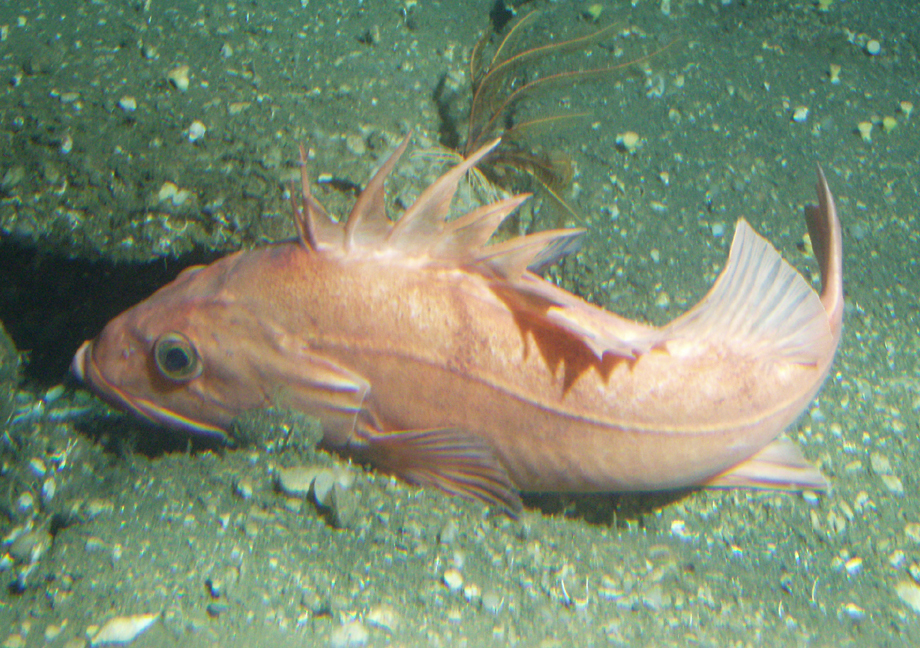
Cowcod
Sebastes levis · Sebastidae
Cowcod is a large deep-water rockfish of the eastern Pacific, from Mendocino County in California to central Baja California and Guadalupe Island. It lives from 20 to 500 m, reaches 100 cm FL and 13 kg, can live 55 years, and feeds on zooplankton. Boat bottom fishing is the usual approach, with the season running December to February.
- Family
- Sebastidae
- Max length
- 100 cm FL
- Max weight
- 13 kg
- Max age
- 55 years
- Depth
- 20–500 m
- IUCN
- NE
- Climate
- Deep-water
- Diet
- zooplankton
Cowcod (Sebastes levis) is a fish of the family Sebastidae. FishBase gives its range as: Eastern Central Pacific: Usal, Mendocino County in central California, USA to central Baja California and Guadalupe Island (off north central Baja California) in Mexico. It is recorded from 20 to 500 m, in deep water. The recorded maxima are 100 cm FL, 13 kg, 55 years. Diet includes zooplankton. IUCN status: Not Evaluated (NE). Chinese name: .
Techniques
- Boat bottom fishing —
Seasonality
Other US-CA regulations
Same jurisdictionBefore you keep a fish
- Read the recorded value. It is copied from the notice; if the number and the notice disagree, the notice wins.
- Check the area. Federal, state and local waters can set different limits for the same fish.
- Check the date. Seasons, quotas and closures change; confirm the current notice before you go.
Common questions
- What is the protected species for Cowcod in United States — California?
- No retention at any time · zero fish per person
- Where does this regulation apply?
- California ocean waters
- When was it checked?
- 2026-11-18, against California Department of Fish and Wildlife — Summary of Recreational Groundfish Fishing Regulations.