
Largehead hairtail in Australia — New South Wales: No size limit · 10 fish per day.
Hairtail | Hairtail | - | 10
Quoted from NSW DPIRD:Saltwater bag and size limits
The NSW rule page lists only the English name Hairtail, with no scientific name; the rule covers the hairtail group and does not settle the species identity of Chinese hairtail.
Regulation guide
Official sourcesHow hairtail is managed in New South Wales
Largehead hairtail (Trichiurus lepturus) is a saltwater species taken by recreational anglers in New South Wales, and its rules sit in the state's saltwater bag and size limits table. NSW Fisheries maintains that table as the reference for legal lengths and daily bags across saltwater species, and hairtail has a dedicated line in it.
The table works species by species. NSW states that a maximum daily bag limit of 20 applies to any fish or invertebrate that is not listed, so a listed species such as hairtail is counted against its own entry rather than against the default figure.
Protected and threatened species cannot be taken, and the same set of rules directs anglers to the separate saltwater methods table, which governs the gear that may be used to take a fish.
Source: NSW Department of Primary Industries and Regional Development: Saltwater bag and size limits
No legal length and a bag of 10
The hairtail entry records a dash in the size column and a bag limit of 10. In practice there is no minimum legal length for hairtail in NSW, and the number of fish kept is the only numerical control on the catch.
A bag limit is defined as the maximum number of fish or invertebrates one person may take per day. The allowance is personal, so two anglers fishing from the same boat each hold their own limit of 10 hairtail.
Possession follows the bag limit for this species. NSW doubles the possession limit only for a listed group that covers Australian bass and estuary perch, bream and tarwhine, flathead, tailor, luderick, trevallies and blue swimmer crab. Hairtail is outside that group, so 10 fish is also the maximum an angler may hold at any one time, including fish stored at home.
Source: NSW Department of Primary Industries and Regional Development: Saltwater bag and size limits
The NSW recreational fishing fee
A fee is required by law when fishing in NSW waters, fresh or salt, and the receipt must be carried. The requirement also applies to spearfishing, hand lining, hand gathering, trapping, bait collecting, prawn netting, and simply being in possession of fishing gear in, on or adjacent to the water.
The published rates are $7 for three days, $14 for one month, $35 for one year and $85 for three years. Receipts are bought online through Service NSW, by phone, from a fishing fee agent, or at a Service NSW Centre self-service kiosk.
Money raised goes into the Recreational Fishing Trusts, which fund improvements to recreational fishing and are overseen by committees of anglers. Exemptions exist and are listed separately by NSW, so an angler who believes they are exempt should check that list rather than assume.
Source: NSW Department of Primary Industries and Regional Development: Recreational fishing fee
Where NSW anglers find hairtail
Hairtail have a silver, ribbon-like body that ends in a thin, whip-like tail, and they carry large slashing teeth. They lack both caudal and ventral fins, and they grow to a maximum of about 2.5 m and roughly 5 kg.
Large schools are found infrequently in coastal bays and estuaries on Australia's east and west coasts. NSW recreational fishers have traditionally taken them in Cowan Creek in the Hawkesbury River system north of Sydney, with catches also recorded in Sydney Harbour and Botany Bay.
The fish can be caught all year but is more commonly taken during the winter months. Because large schools appear only intermittently, the fishery is episodic rather than a dependable target for a planned trip.
Source: NSW Department of Primary Industries and Regional Development: Hairtail
Gear limits that apply
NSW caps recreational equipment at four rods or handlines per person, with three hooks or three gangs of hooks per line. A gang of hooks should carry no more than five hooks, and no more than three trebles may be attached to a lure.
A separate rod or handline used for hand jigging may carry up to six single hooks with lures attached, and that line counts within the four-line total. The gear must be used by hand jigging only.
All fin fish and invertebrates, including squid, are subject to bag limits and in many cases size limits under the saltwater table. The equipment table sets a maximum per person for gear in use or in possession at any one time, which matters on a boat carrying several anglers.
Before you keep a hairtail
Identification is straightforward once the fish is aboard. The ribbon body, the whip tail and the absence of a tail fin separate hairtail from the southern frostfish, which has a distinct caudal fin. Frostfish are deepwater and offshore, so an angler is unlikely to meet one.
Handling deserves care because of the teeth. The NSW species page warns that hairtail have large, slashing teeth that should be avoided.
The checks before keeping a fish are simple: confirm the species, count the fish already kept against the personal bag of 10, and carry proof of the recreational fishing fee. There is no length to measure, but the possession limit of 10 follows the angler home.
Source: NSW Department of Primary Industries and Regional Development: Hairtail · NSW Department of Primary Industries and Regional Development: Saltwater bag and size limits
Official pages: NSW DPIRD: Saltwater bag and size limits · NSW DPIRD: Hairtail · NSW DPIRD: Recreational fishing fee
Largehead hairtail regulations at a glance
1 jurisdictions| Jurisdiction | Area | Size | Bag | Season / closure | Closed area | Other |
|---|---|---|---|---|---|---|
| Australia — New South Wales | — | No size limit · 10 fish per day | — | — | — |
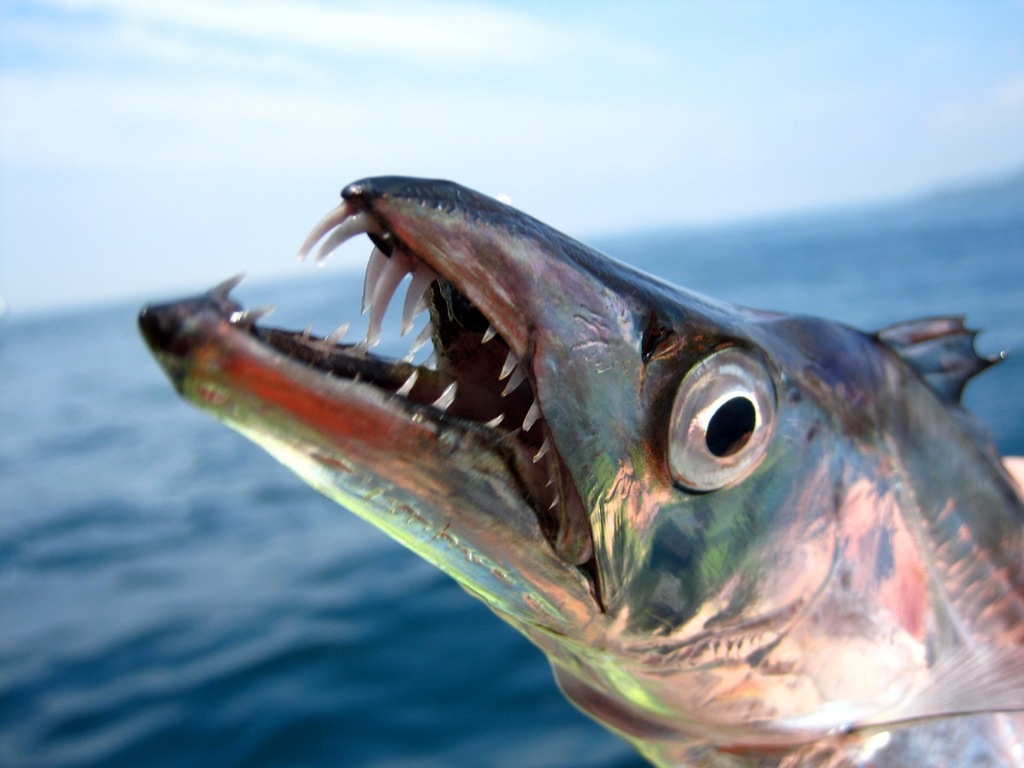
Largehead hairtail
Trichiurus lepturus · Trichiuridae
Largehead hairtail is recorded across Circumtropical and Circumtemperate, from including Gulf of Mexico, Caribbean Sea, Mediterranean Sea, Sea of Marmara, Red Sea, Persian Gulf, within the family Trichiuridae. It is caught from 0 to 589 m, in subtropical water. It tops out at 234 cm TL, on a diet of crustaceans, fishes and zooplankton. The standard approach is boat bottom fishing or slow pitch jigging. It is present year-round.
- Family
- Trichiuridae
- Max length
- 234 cm TL
- Depth
- 0–589 m
- IUCN
- LC
- Climate
- Subtropical
- Diet
- crustaceans, fishes, zooplankton
Largehead hairtail (Trichiurus lepturus) is a fish of the family Trichiuridae. FishBase gives its range as: Circumtropical and Circumtemperate: including Gulf of Mexico, Caribbean Sea, Mediterranean Sea, Sea of Marmara, Red Sea, Persian Gulf. Tropical to temperate. It is recorded from 0 to 589 m, in subtropical water. The recorded maximum is 234 cm TL. Common length is recorded at 100 cm. Diet includes crustaceans, fishes and zooplankton. IUCN status: Least Concern (LC). Chinese name: .
Techniques
- Boat bottom fishing —
- Slow pitch jigging —
Seasonality
Other AU-NSW regulations
Same jurisdictionBefore you keep a fish
- Read the recorded value. It is copied from the notice; if the number and the notice disagree, the notice wins.
- Check the area. Federal, state and local waters can set different limits for the same fish.
- Check the date. Seasons, quotas and closures change; confirm the current notice before you go.
Common questions
- What is the bag limit for Largehead hairtail in Australia — New South Wales?
- No size limit · 10 fish per day
- Where does this regulation apply?
- When was it checked?
- 2026-11-10, against NSW DPIRD:Saltwater bag and size limits.