
Pouting in Portugal: ≥17 cm — Portugal (mainland).
Faneca (Trisopterus luscus) | 17 cm
Quoted from DGRM — Tabela de Tamanhos Mínimos de Captura
Regulation guide
Official sourcesHow poor cod is managed in Portugal
Poor cod, Trisopterus luscus, is faneca in Portuguese. It is a small gadoid and it appears in the Portuguese commercial minimum-size table under that name.
The table is issued by DGRM under Portaria n.º 255/2022 and refers to Regulation (EU) 2019/1241. The recreational framework is Portaria n.º 14/2014, which sets the permitted gear, the licensing system and the daily catch limits.
There is no separate recreational size table for the species. The recreational ordinance adopts the commercial minimum sizes, so the DGRM row is the figure an angler has to work to.
Source: DGRM: Tabela de Tamanhos Mínimos de Captura (26/02/2026) · Portaria n.º 14/2014, de 23 de janeiro, regime da pesca lúdica
17 cm for faneca
The DGRM table lists Faneca (Trisopterus luscus) at 17 cm, with no footnote attached to the row. The figure is a straightforward total length and applies without the tolerances that qualify some of the pelagic entries.
The row names the species rather than the genus, so there is no need to work out which Trisopterus is in hand. The Portuguese name in the table is faneca.
Because the table is revised and reissued, the safest check is the current DGRM version rather than a remembered figure. The version consulted here is dated 26 February 2026.
Source: DGRM: Tabela de Tamanhos Mínimos de Captura (26/02/2026)
Faneca among the other gadoids
The same table carries several gadoids that can be confused with poor cod. Badejo (Merlangius merlangus) is 27 cm, Pescada-branca (Merluccius merluccius) is 27 cm, Juliana or Paloco (Pollachius pollachius) is 42 cm and Maruca (Molva molva) is 63 cm.
Those figures are 10 cm to 46 cm higher than the poor cod entry. Applying a neighbouring row to a faneca would make a legal fish look undersized, and applying the faneca figure to a whiting would do the opposite.
The gadoid shape is shared, but the size differences are large enough that the species check has to come first. The scientific name in the table is the reliable link between the fish and the number.
Source: DGRM: Tabela de Tamanhos Mínimos de Captura (26/02/2026)
How a poor cod is measured
The DGRM table states that its values are total lengths, with bracketed values used where a carapace or cephalothorax length applies instead. The faneca row has no bracket, so the figure is a total length.
Measure from the tip of the snout to the end of the caudal fin. Lay the fish flat, close the jaws naturally and include the tail fin rather than stopping at the fork or at the end of the fleshy tail base.
Measure before gutting or filleting. The size attaches to the intact fish, and a headed gadoid cannot be checked against a total-length figure.
Source: DGRM: Tabela de Tamanhos Mínimos de Captura (26/02/2026), general notes
No bag limit in numbers: the 10 kg cap
The Portuguese recreational daily limit is 10 kg per practitioner, and the heaviest specimen is not counted towards that weight. For spearfishing the limit is 15 kg, again excluding the largest specimen.
When more than three practitioners are on a recreational boat, the total catch may not exceed 25 kg, with one heaviest specimen per practitioner excluded. Poor cod counts as a fish within that total.
There is no species-specific bag limit expressed in numbers of poor cod, and no closed season for the species in the instruments cited here. The size, the weight cap and the licence are the controls that apply.
Source: Portaria n.º 14/2014, article 12 · DGRM: Pesca Lúdica — Espécies (limites diários)
Licence and marking
A recreational licence is required and is held as an electronic record in the DGRM system, which inspectors can check by SMS. It can be bought at Multibanco machines, at the DGRM counter in Lisbon, at the regional agriculture and fisheries offices or through the BMar portal.
The fee depends on the type of licence: on foot, from a boat, underwater, or a general licence covering all types. A licence bought through BMar comes with a printable or downloadable proof instead of an SMS record.
Fish kept under a recreational licence must be marked before the angler leaves the site or lands, by a cut in the caudal fin of each specimen. The requirement applies to the on-foot and boat modes and separates recreational catch from commercial landings.
Source: DGRM: Licenciamento da Pesca Lúdica · DGRM: Pesca Lúdica — Espécies · Portaria n.º 14/2014, article 12
Before you keep one
Check the species before the ruler. Faneca is 17 cm, while the whiting and hake rows in the same table are 27 cm and the pollack row is 42 cm.
Measure from the snout to the end of the tail, then weigh the day's catch against the 10 kg limit. Only the heaviest fish is excluded, and the boat ceiling of 25 kg applies once more than three practitioners are on board.
Mark each retained fish with a cut in the caudal fin before landing and keep the catch for personal use. Recreational fishing in Portugal is non-commercial and the sale of recreationally caught fish is prohibited.
Source: DGRM: Tabela de Tamanhos Mínimos de Captura · Portaria n.º 14/2014, de 23 de janeiro · Decreto-Lei n.º 246/2000, quadro legal da pesca lúdica
Official pages: Portaria n.º 14/2014: regime da pesca lúdica · DGRM: Tabela de Tamanhos Mínimos de Captura · DGRM: Pesca Lúdica — Espécies · DGRM: Licenciamento da Pesca Lúdica · Decreto-Lei n.º 246/2000, quadro legal da pesca lúdica
Pouting regulations at a glance
1 jurisdictions| Jurisdiction | Area | Size | Bag | Season / closure | Closed area | Other |
|---|---|---|---|---|---|---|
| Portugal | Portugal (mainland) | ≥17 cm | — | — | — | — |
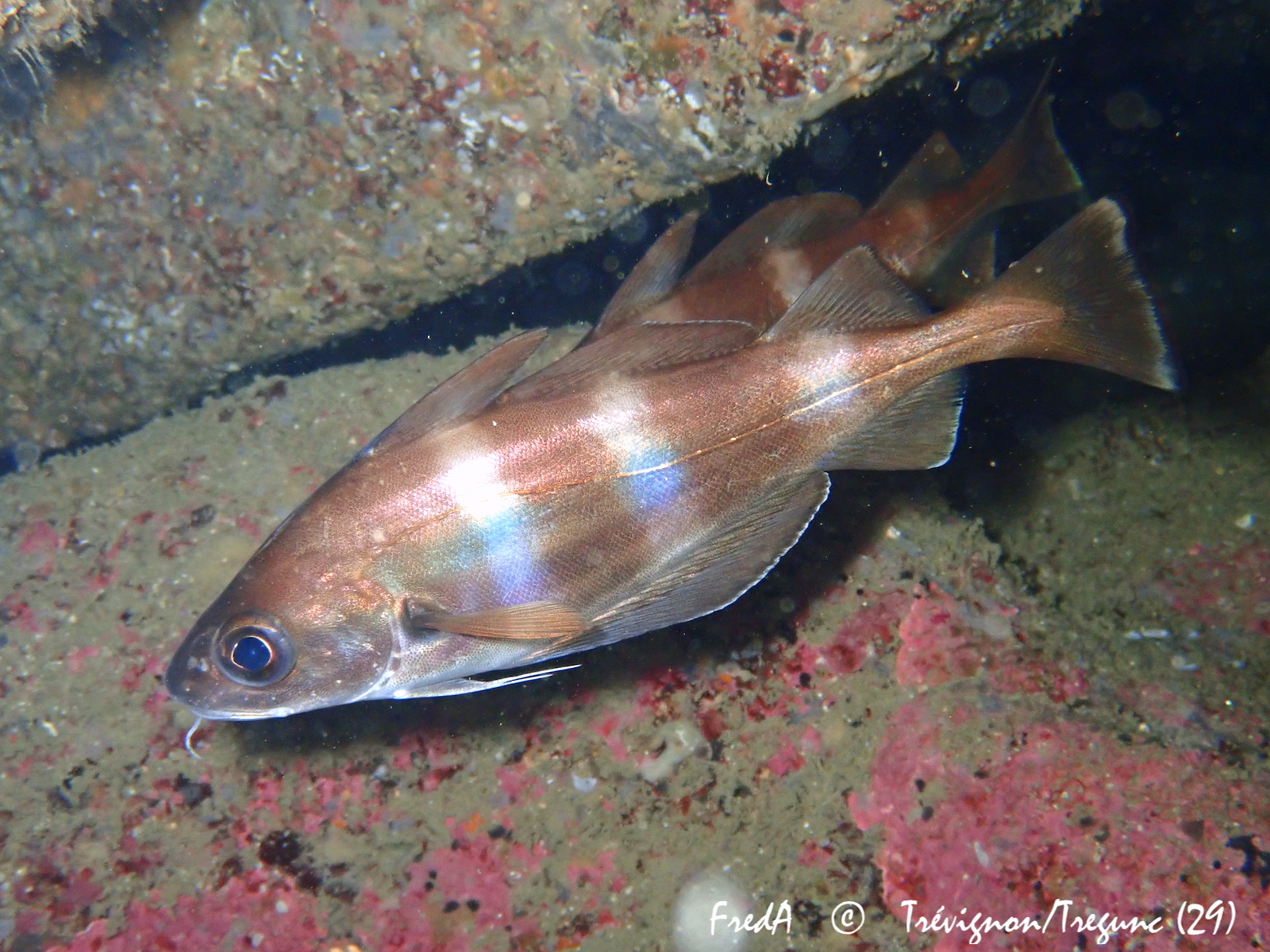
Pouting
Trisopterus luscus · Gadidae
Pouting is a gadid of the northeast Atlantic, from Norway to Morocco. It lives from 30 to 100 m in temperate water, reaches 46 cm TL, can live four years, and feeds on crustaceans, fish and worms. Boat bottom fishing is the usual approach, with the season running December to July.
- Family
- Gadidae
- Max length
- 46 cm TL
- Max age
- 4 years
- Depth
- 30–100 m
- IUCN
- NE
- Climate
- Temperate
- Diet
- crustaceans, fishes, worms
Pouting (Trisopterus luscus) is a fish of the family Gadidae. FishBase gives its range as: Northeastern Atlantic: from Norway to Morocco incl. British Isles and offshore islands, and Skagerrak, and in the western Mediterranean ). It is recorded from 30 to 100 m, in temperate water. The recorded maxima are 46 cm TL, 4 years. Common length is recorded at 30 cm. Diet includes crustaceans, fishes and worms. IUCN status: Not Evaluated (NE). Chinese name: .
Techniques
- Boat bottom fishing —
Seasonality
Other PT regulations
Same jurisdictionBefore you keep a fish
- Read the recorded value. It is copied from the notice; if the number and the notice disagree, the notice wins.
- Check the area. Federal, state and local waters can set different limits for the same fish.
- Check the date. Seasons, quotas and closures change; confirm the current notice before you go.
Common questions
- What is the minimum size for Pouting in Portugal?
- ≥17 cm
- Where does this regulation apply?
- Portugal (mainland)
- When was it checked?
- 2026-11-18, against DGRM — Tabela de Tamanhos Mínimos de Captura.