
Squaretail kob
Squaretail kob is a western Indian Ocean sciaenid, from Mozambique to Port Elizabeth in South Africa and along the west coast of Madagascar. It reaches 71 cm TL with a common length of 40 cm, publishes at 12 kg and matures at 33 cm. IUCN assessed it as Endangered in August 2019. Boat bottom fishing and shore casting are the methods listed, and no depth band is recorded.
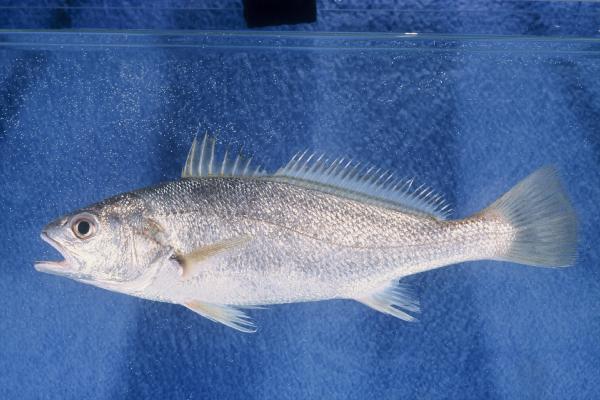
FishBase gives *Argyrosomus thorpei* 71 cm TL maximum, 40 cm TL common, 12 kg published weight and first maturity at 33.0 cm. It is a western Indian Ocean fish, recorded from Mozambique to Port Elizabeth in South Africa and also from the west coast of Madagascar, and the IUCN assessed it as Endangered on 2 August 2019. The common length is the number that matters most here: it sits below the sizes the South African rules allow, which changes what a shore angler can keep.
Identification
Eleven dorsal spines, 26–28 dorsal soft rays, 2 anal spines and 6–7 anal soft rays, on a fusiform body that is silvery with orange-brown or yellowish fins. That colour note is the whole external description on the page; there is no depth range, no length-weight table and no photograph key.
The name is a person. The eponymy note records Anthony R. Tony Thorpe, a South African lawyer and angler who sent Smith three undescribed fish found in KwaZulu-Natal waters and supplied specimens and photographs. The English name points at the tail, and the page itself does not describe the tail, so the name carries more identification weight than the description does.
It is one of the kobs, and the regulation treats kob as a genus: the DFFE brochure writes its limits against Argyrosomus spp.. FishBase gives squaretail kob as the standard English name, stompstert-kob in Afrikaans and corvina sul-africana for Mozambique. The Chinese name follows the same square-tail reading.
Range and habitat
FishBase gives the western Indian Ocean: Mozambique to Port Elizabeth, plus the west coast of Madagascar. GBIF holds 56 present records — 46 South African, 8 Mozambican and 2 from Bangladesh — and the two Bangladeshi records fall thousands of kilometres outside the stated range, which reads as a data-entry error rather than a range extension. iNaturalist holds no observations at all under the accepted name.
The environment line is short: marine, demersal, subtropical, between 24°S and 36°S and 25°E and 35°E. No depth is given, which is worth noting before any claim about how deep to fish. The biology adds coastal waters, with juveniles on sand or mud and adults predominantly on reef. That is a two-stage habitat: a soft-bottom nursery and a reef adult home, both coastal.
Habits and diet
No diet is recorded. The page lists no prey, no feeding period and no schooling behaviour. What it gives is the juvenile and adult split by substrate, and one line on spawning in winter.
The spawning line is the only reproduction statement: spawns in the winter. The separate spawning table is empty, so there is no month, no locality and no temperature to put beside that sentence. Winter in this hemisphere means June to August, which is a calendar inference, not something the page says.
Without a depth or a diet the behavioural picture is thin: a coastal demersal fish, reef-associated as an adult, spawning in winter, with a 33.0 cm maturity point. Anything about its position in the water column would be invention.
Season and time of day
The page has one season word, winter, with no months attached. The spawning table that would normally carry months and localities exists but has no rows. There is no time-of-day record and no tidal or lunar note.
That leaves a fact and a limit. The fact is a winter spawn. The limit is that no source here says a winter spawn makes winter the better fishing month; catchability is not recorded at all, and the page lists no angling season. A trip planned on the word winter is planned on a spawning statement, not on a fishing statement.
Tackle and techniques
The recorded sizes set the target. Common length is 40 cm TL, maximum 71 cm, published maximum weight 12 kg, and maturity starts at 33.0 cm. A 12 kg fish at 71 cm is heavy for its length, and gear sized for the 40 cm common fish will be tested at the top end.
Habitat, not depth, is the usable cue. Adults are predominantly on reef, juveniles on sand or mud. A reef adult with no recorded depth is a fish to work structure rather than a contour, and the sand-or-mud juvenile line puts the smaller fish around reef edges. That is inference from substrate; the source gives no depth to turn it into a number.
Bait, rig, line class and technique are absent from the page. No claim about them can be sourced here. The defensible plan is to treat the reef edge as the mark and 40 cm as the expected fish.
Kitchen and handling
FishBase records it as an important food fish, sold fresh in markets, with commercial and gamefish listings. That is the entire record: no flesh description, fat content, price or handling note.
The only species-specific handling fact is size. A 40 cm common length means most market fish are small, and the 12 kg maximum belongs to the record end rather than to a normal fish on a slab.
Regulations and conservation
South Africa is the only country in this range with a rule in the sources checked. The kob rule is written for Argyrosomus spp. and split by area and method. From a boat at sea in KwaZulu-Natal: 40 cm TL, 5 fish per person per day, of which only one may exceed 110 cm. From the shore or an estuary east of Cape Agulhas: 60 cm TL, 1 per day. From a boat between Cape Agulhas and the Umtamvuna River: 50 cm TL, 5 per day with the same single-fish allowance. From the shore west of Cape Agulhas: 50 cm TL, 5 per day. A permit is required, the catch is for own use and may not be sold, and the general bag is 10 fish where no species rule applies.
The 40 cm common length is the number to hold against those limits. The KwaZulu-Natal boat minimum of 40 cm sits exactly on the common length, so a boat angler in that province is working at the size where much of the population is already legal. The 60 cm shore minimum east of Agulhas sits above the common length and well above the 33.0 cm maturity point, so a shore angler there will release most of what is caught.
No Mozambican or Malagasy recreational rule was located in the sources checked, and none should be inferred from the South African text. The IUCN entry is Endangered, assessed 2 August 2019; the page gives no trend, population size or regional breakdown. An Endangered listing and a 40 cm common length point the same way: the fish is small, the limits sit close to its body size, and the margin is thin.
How to catch it
Boat bottom fishing
Fished with the listed approach, matched to the recorded depth and size.
Shore casting
Fished with the listed approach, matched to the recorded depth and size.
Where these facts come from
Check these pages before you rely on a size, range or protection status.
- FishBase — Argyrosomus thorpei — FishBase · T2
- GBIF — Argyrosomus thorpei occurrence records — GBIF · T2
- IUCN Red List — Argyrosomus thorpei — IUCN · T1
- Photo record — iNaturalist — iNaturalist · T3
Fish in the same water
These fish live in the same place.

Acoupa weakfish
- Family
- Sciaenidae
- Depth
- 1–20 m
- Season
- Jan, Feb, Mar, Apr, May, Jun, Jul, Aug, Sep, Oct, Nov, Dec
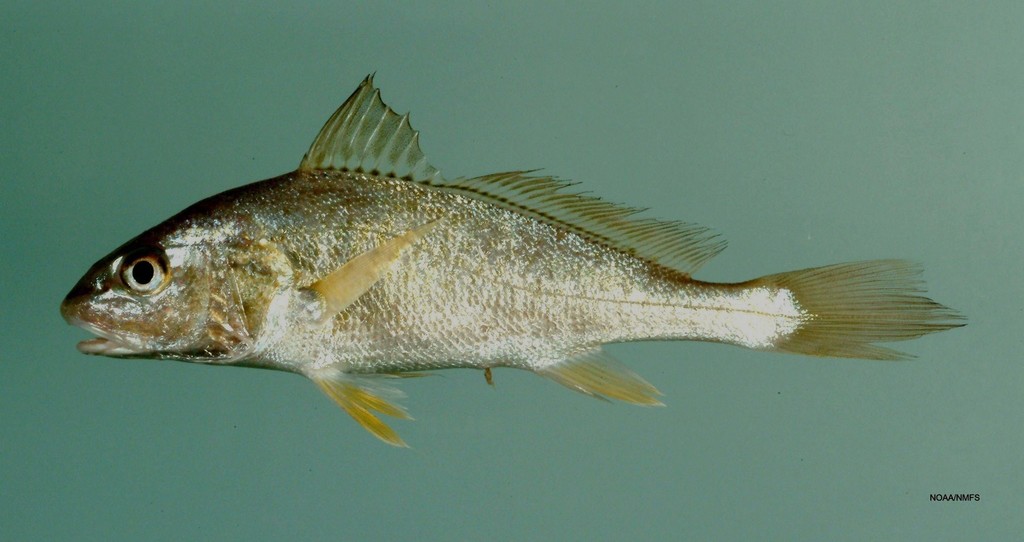
Atlantic croaker
- Family
- Sciaenidae
- Depth
- ≤ 100 m
- Season
- Jan, Feb, Mar, Apr, May, Jun, Jul, Aug, Sep, Oct, Nov, Dec
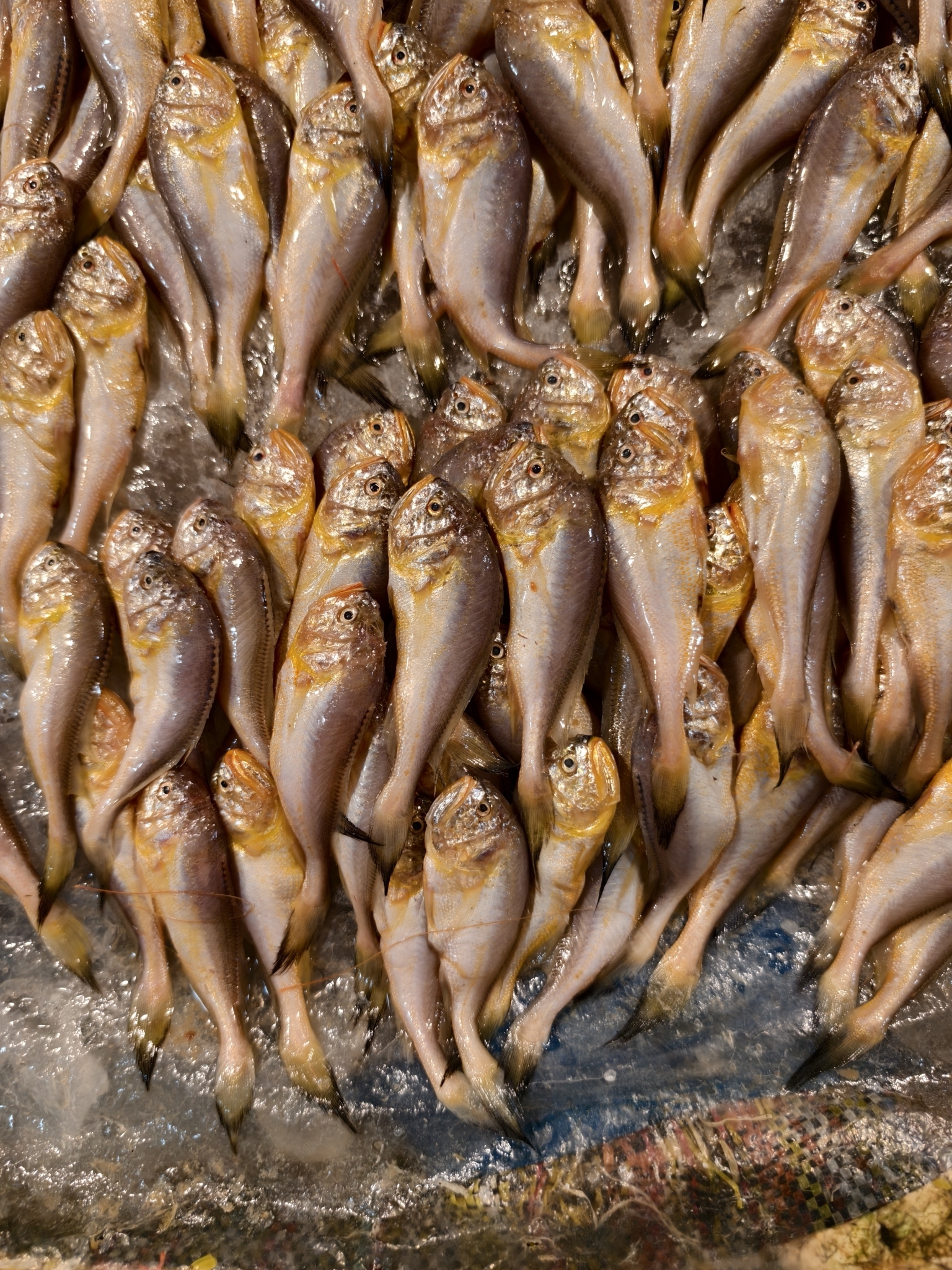
Bighead croaker
- Family
- Sciaenidae
- Depth
- ≤ 90 m
- Season
- Jan, Mar, Apr, May, Jun, Jul, Aug, Sep, Oct, Nov, Dec
Guides for this water
Technique, gear and safety guides that fit Squaretail kob.