
Blackmouth croaker
Blackmouth croaker is a deep-water sciaenid of the Indo-West Pacific, from Mozambique and Natal through India, China, Japan, the Philippines and Indonesia to northern Australia. It lives on sandy, muddy and gravelly ground at 45 to 200 m, usually to about 120 m, and is a commercial and boat-fishing target. It reaches 45 cm SL with a common length of 25 cm and maturity at about 14.5 cm.
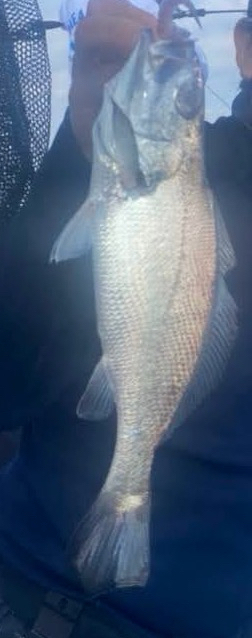
Blackmouth croaker is a deep-water sciaenid of the Indo-West Pacific, from Mozambique and Natal in South Africa through India, China, Japan, the Philippines and Indonesia to northern Australia. It lives on sandy, muddy and gravelly ground at 45–200 m, usually to about 120 m, and is a commercial and boat-fishing target. FishBase gives a maximum of 45 cm standard length, a common length of 25 cm and maturity at about 14.5 cm. IUCN lists it as Least Concern, assessed in 2018.
Reading the spines
The dorsal fin has 10–11 spines and 27–33 soft rays; the anal fin has 2 spines and 7 soft rays. The genus name Atrobucca joins the Latin ater (black) with bucca (mouth), literally the black mouth that the field check looks for. The body is moderately deep and slightly compressed. The swim bladder is carrot-shaped with 24–30 pairs of branched appendages, each with a dorsal and a ventral limb, regularly arranged so that the twiglets of the dorsal limb point backwards and those near the tip of the ventral limb point forwards. The lateral-line scales reach the tip of the caudal fin, and the linings of the mouth, gill chamber and body cavity are black. The black mouth is the field mark to check first; body colour fades quickly after death and is not reliable. Turning the fish to show the peduncle is the quickest way to confirm the line running to the caudal tip. The bladder and its 24–30 pairs of branches belong to dissection rather than to the rail, where the black lining and the lateral line are enough.
A deep shelf fish
FishBase's range is the Indo-West Pacific: Mozambique and Natal, India, China, Japan, the Philippines, Indonesia and northern Australia. The country table adds Hong Kong SAR, Iran, Iraq, North and South Korea, Myanmar, Taiwan region and Vietnam. GBIF's 352 records are led by Taiwan region (132), Japan (65), South Africa (24), the Philippines (19), Australia (15), mainland China (15) and Indonesia (15). The species is found in coastal waters down to 200 m and deeper, on seaweed beds and gravel. Fish the shelf edge, ridgelines and the junction of sand, mud and hard ground; 60–120 m is the band the source mentions most often.
Diet is not listed; sciaenids are generally benthic crustacean and small-fish feeders, so prawn, fish strips and squid strip are the logical deep-water baits.
The blanks are information
FishBase publishes no spawning months, temperature window or local season table. Deep-water croakers respond more to bottom temperature and current than to tide, so follow the local boat season and avoid months when the bottom water turns over. In Taiwan region and southern Japan, deep-water boat trips concentrate in the warmer half of the year, while winter wind cuts the practical window. Dawn, dusk and slack water are reasonable starting points, but there is no species-specific clock.
Where to start looking
This is a sounder fishery. Find the hard edge, the gully and the fish mark, then place the bait just above the mark rather than dropping into it. The source gives no coordinates and no habitat map beyond “seaweed beds and gravel”, so the boat's electronics do most of the locating. The country pattern indicates a wide Indo-Pacific distribution rather than a single stronghold; local knowledge will beat a generic map.
Tackle for deep water
At 45 cm maximum and 25 cm common, a medium-heavy boat rod with a 4000–8000 size reel is enough. Below 100 m, 1.5–3 PE mainline, a 30–50 lb leader and 100–300 g of lead, adjusted to current, are a sensible range. Control the descent: too fast and the bait lifts off the bottom, too slow and it snags. A single hook or a short dropper rig both work; squid strips, fish chunks, prawn and sandworm are the baits. Slow-pitch jigs and heavy soft plastics can take fish, but this species is a bottom feeder, so a slow drag near the seabed beats a fast retrieve.
Eating, handling and the rules
Blackmouth croaker is an important food fish with white, low-bone flesh, good steamed, braised or in soup. Bleed it, remove gills and guts, and ice it quickly; deep-water fish soften fast after landing. Ciguatera is mainly a reef-predator issue, so this deep-water sciaenid is lower risk, but organs should not be eaten in quantity. Rules vary: Taiwan region manages inshore fishing through closed areas, seasons and gear restrictions, and recreational boat fishing must follow local notices; Hong Kong SAR's Fisheries Protection Ordinance regulates methods, with no angling or collecting in marine parks and reserves; Japan, Korea and mainland China each manage trawling and minimum sizes; Southeast Asian states differ widely. Check the current local notice.
What the record leaves open
The page is built from FishBase taxonomy, morphology, distribution, biology, use and IUCN entries, with the country table for range and GBIF/iNaturalist for occurrence. Spawning months, temperature and local recreational rules are not standardised, so the text stays conservative. Deep-water boat safety and gear rules are set by the local maritime and fisheries authorities, not by this page.
How to catch it
Bottom fishing
Fished with the listed approach, matched to the recorded depth and size.
Where these facts come from
Check these pages before you rely on a size, range or protection status.
- FishBase — Atrobucca nibe — FishBase · T2
- GBIF — Atrobucca nibe occurrence records — GBIF · T2
- IUCN Red List — Atrobucca nibe — IUCN · T1
- Photo record — iNaturalist — iNaturalist · T3
Fish in the same water
These fish live in the same place.

Acoupa weakfish
- Family
- Sciaenidae
- Depth
- 1–20 m
- Season
- Jan, Feb, Mar, Apr, May, Jun, Jul, Aug, Sep, Oct, Nov, Dec
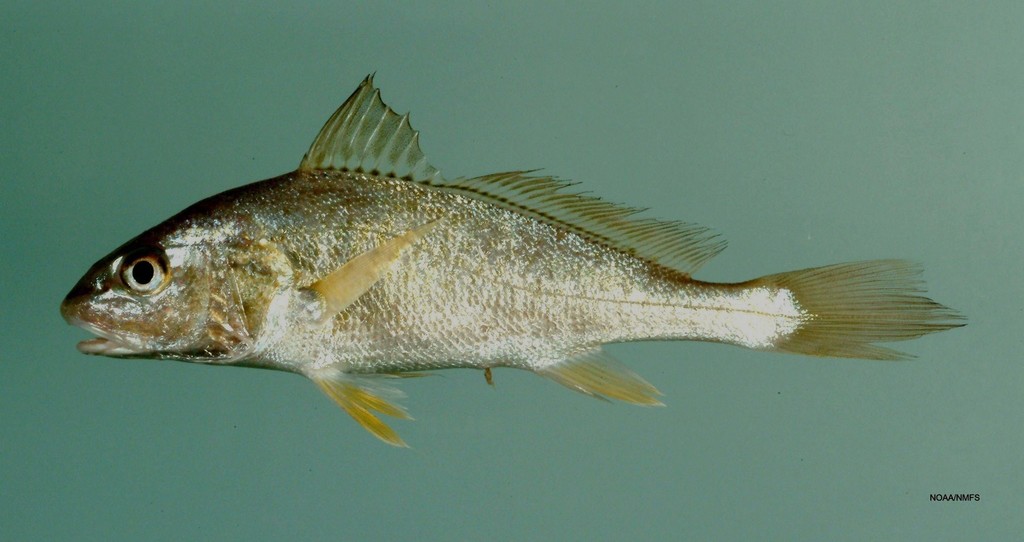
Atlantic croaker
- Family
- Sciaenidae
- Depth
- ≤ 100 m
- Season
- Jan, Feb, Mar, Apr, May, Jun, Jul, Aug, Sep, Oct, Nov, Dec
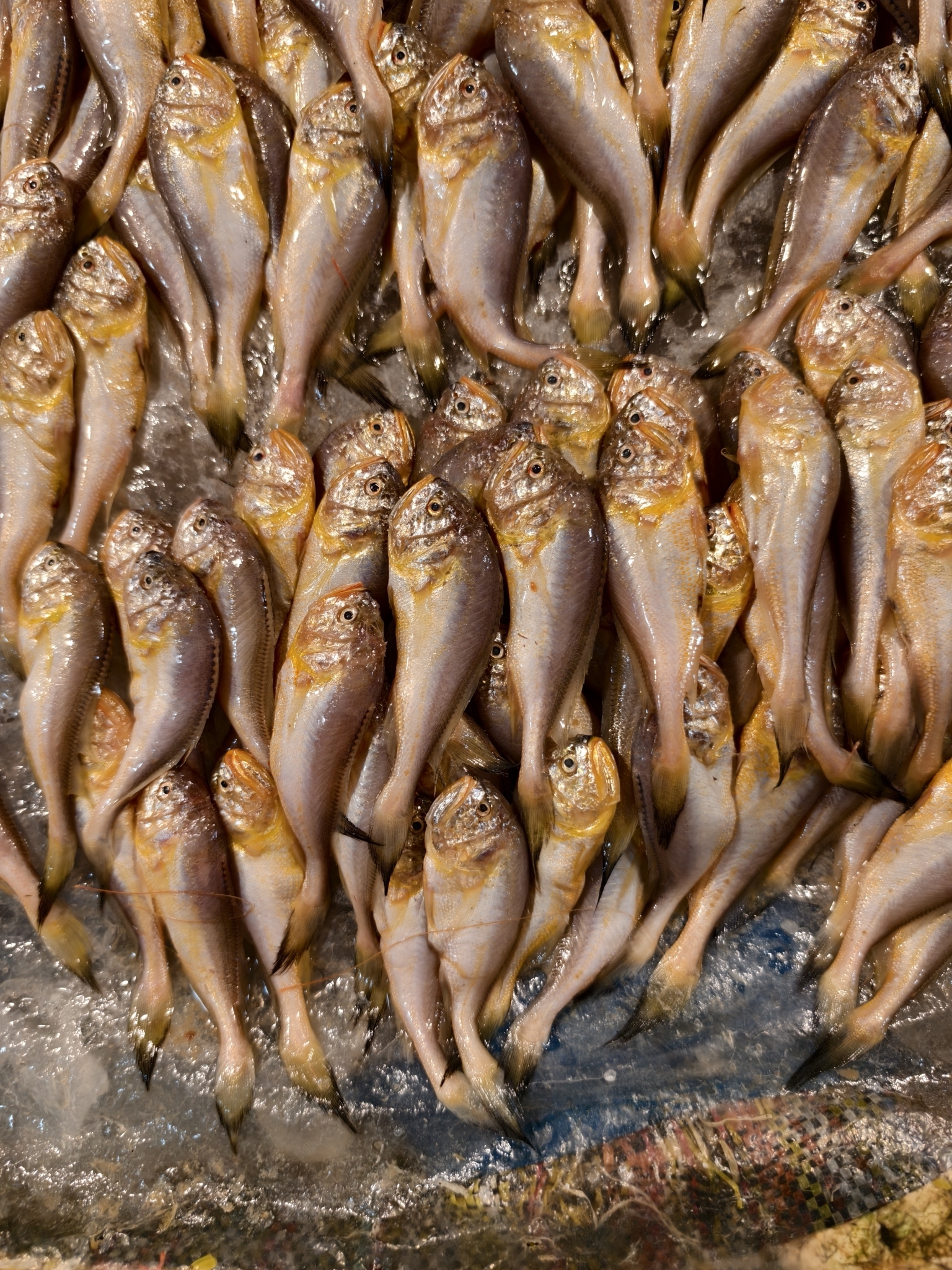
Bighead croaker
- Family
- Sciaenidae
- Depth
- ≤ 90 m
- Season
- Jan, Mar, Apr, May, Jun, Jul, Aug, Sep, Oct, Nov, Dec
Guides for this water
Technique, gear and safety guides that fit Blackmouth croaker.