
Splendid alfonsino
Splendid alfonsino is a berycid of deep reef slopes in the eastern Atlantic, western Atlantic, Gulf of Mexico, eastern Pacific and Mediterranean. It lives from 25 to 1,300 m in subtropical water, reaches 70 cm TL and 4 kg, can live 23 years, and feeds on crustaceans, fish and molluscs. It is recorded from November to February.
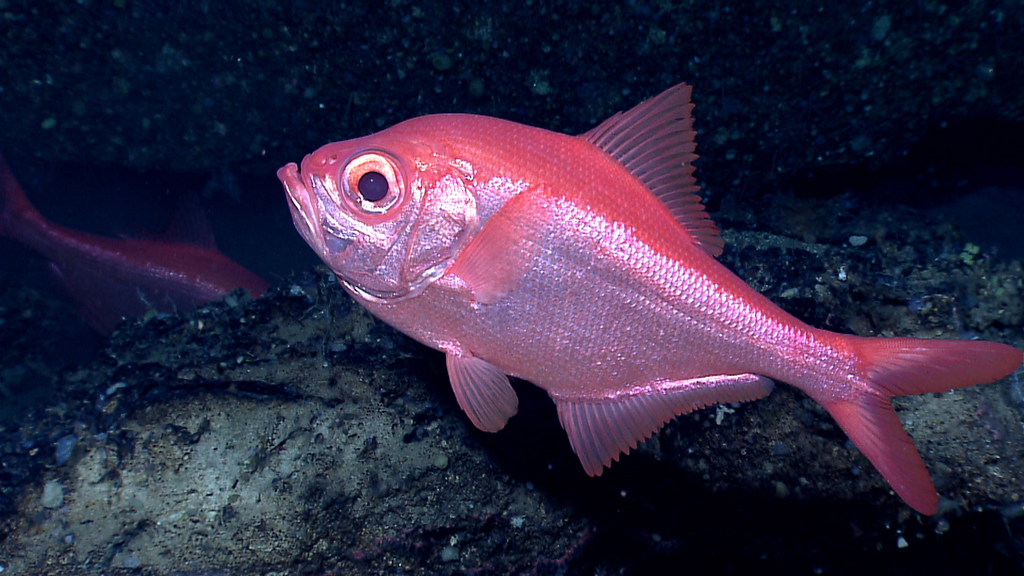
Splendid alfonsino (Beryx splendens) is a fish of the family Berycidae. FishBase gives its range as: Circumglobal, excluding the northeast Pacific and Mediterranean Sea. Western Atlantic: Gulf of Maine to the Gulf of Mexico. Eastern Atlantic: off southwestern Europe and the Canary Islands to South Africa. The splendid alfonsino is a deep-bodied, big-eyed berycid, orange-red on the back and silver-pink below, with a large head, rough scales and a deeply forked tail. It is recorded from 25 to 1300 m, in subtropical water. The recorded maxima are 70 cm TL, 4 kg, 23 years. Diet includes crustaceans, fishes and molluscs. IUCN status: Least Concern (LC). Chinese name: .
Identification
The splendid alfonsino is a deep-bodied, big-eyed berycid, orange-red on the back and silver-pink below, with a large head, rough scales and a deeply forked tail. The eye is the most conspicuous feature: it occupies a large share of the head and reflects light strongly when a fish is brought up from depth. FishBase gives a maximum of 70 cm total length, a common size of 40 cm and a weight of about 4 kg, with a maximum recorded age of 23 years. In the hand, the deep body, very large eye and bright red-orange colour separate it from most other slope fish; the related Beryx decadactylus is the species most easily confused with it.
Habitat and behaviour
Alfonsino is benthopelagic and lives over steep bottom rather than over flat ground. FishBase records a depth range from 25 to 1,300 m, but the bulk of the adult stock sits far deeper than that lower figure suggests; NPFC describes adults at 200–800 m, rising and sinking through the day in a diel vertical migration and feeding at night on crustaceans, cephalopods and fish. That behaviour is why sonar marks often sit well off the bottom at dusk and tighten onto it by daylight. The species is circumglobal in warm and temperate seas but absent from the northeast Pacific and the Mediterranean.
Depth and fishing grounds
In the North Pacific the fishery follows seamount chains and the edges of the continental slope. NPFC records historical catches from the Emperor Seamounts between roughly 30°N and 45°N. Japan's main grounds lie off the Kanto coast, around the Izu Islands and over the seamounts south of Shikoku; the 2023 catch there was 5,246 t, with stock abundance estimated at 37,000 t and spawning stock biomass at 29,900 t. Biomass and spawning stock have risen since 2015 while fishing pressure has declined, and the spawning stock now sits above the level needed for maximum sustainable yield. Those figures describe the Japanese stock, not the high-seas seamount populations, for which NPFC has no biomass estimate.
Seasonal window
On the Japanese coast alfonsino mature at four to five years and spawn in summer. Winter is nevertheless the season most anglers associate with the fish, because cold surface water pushes the thermocline down and the fish can be found at more consistent depths. The November–December closure used in the NPFC bottom-fishery measure was written around the spawning season of North Pacific armorhead, not alfonsino, so it is not an alfonsino spawning closure. Local Japanese prefectural rules may add their own restrictions, and those are the ones that decide whether a trip is legal.
Gear and approach
A rod rated for 300–600 g of lead, a braided main line of 0.20–0.30 mm equivalent and a 5–10 lb sinker form the working setup. Glow beads, luminous jigs and strips of squid or mackerel all take fish; the key is to keep the bait near the bottom long enough for the scent trail to work. Because fish come up from 400 m or more, expect barotrauma: a fish brought to the surface usually dies. Take only what you intend to eat, and stop fishing once the box is full rather than continuing to release damaged fish.
Edibility and regulations
Alfonsino is one of the best-eating deep-slope fish, with firm white flesh that holds up to grilling and makes good sashimi when bled and iced immediately. NPFC's conservation measure CMM 2025-05 governs bottom fishing in the northwest Pacific, including a trawl mesh rule aimed at protecting juveniles and area closures over vulnerable marine ecosystems. The commission has no accepted harvest control rule for the species, and its 2024 assessment found a high likelihood of growth overfishing because fish are caught before they mature. Its Red List listing is Least Concern. Recreational rules, where they exist, sit with national or prefectural authorities rather than with NPFC.
Where to look
Look for seamount summits, slope breaks and hard bottom in 300–600 m, especially where a current hits the rise. Japanese ports facing the Izu Islands and the seamounts south of Shikoku are the classic access points; the Emperor Seamounts support the high-seas fishery. The species also occurs off Hawaii, Australia, New Zealand, South Africa. iNaturalist holds only 21 observations, a reminder that almost all encounters happen on a line rather than in front of a camera.
Where these facts come from
Check these pages before you rely on a size, range or protection status.
- FishBase — Beryx splendens — FishBase · T2
- GBIF — Beryx splendens occurrence records — GBIF · T2
- IUCN Red List — Beryx splendens — IUCN · T1
- Photo record — iNaturalist — iNaturalist · T3
Fish in the same water
These fish live in the same place.

Bight redfish
- Family
- Berycidae
- Depth
- 10–260 m
- Season
- Jan, Feb, Mar, Apr, May
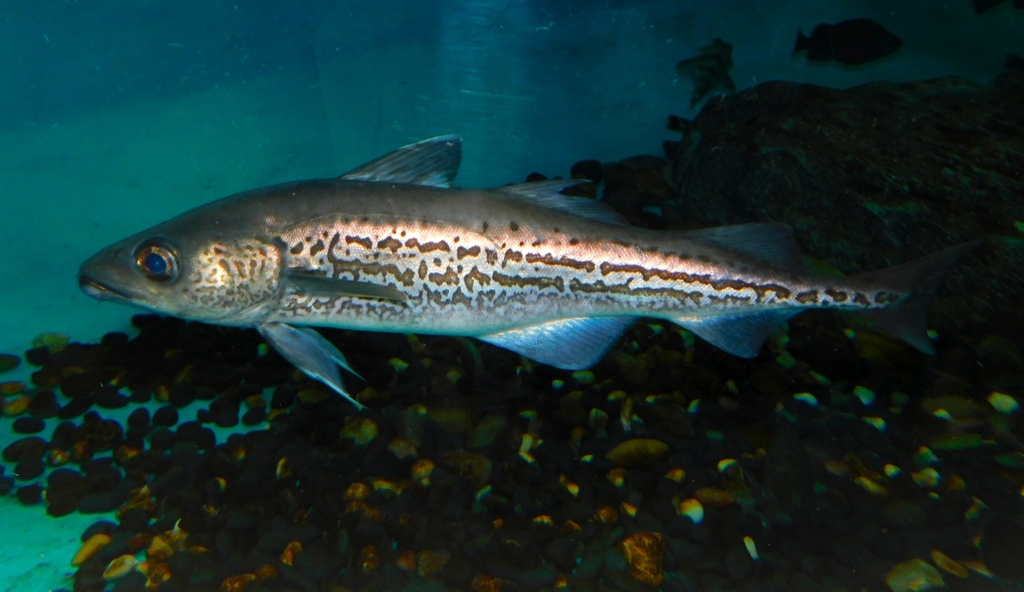
Alaska pollock
- Family
- Gadidae
- Depth
- 0–1280 m
- Season
- Jan, Feb, Mar, Apr, May, Jun, Jul, Aug

Albacore
- Family
- Scombridae
- Depth
- 0–600 m
- Season
- Jan, Feb, Mar, Apr, May, Jun, Jul, Aug, Oct, Nov, Dec
Guides for this water
Technique, gear and safety guides that fit Splendid alfonsino.