
Alaska pollock
Alaska pollock is a cold-water cod of the North Pacific and Arctic, ranging from Norway and Svalbard east to the Laptev Sea and south to California. It is a polar fish recorded from the surface down to 1,280 m, though adults of 91 cm TL and 3.9 kg are the big end of the range. Crustaceans and fish make up the diet, and the season here is January to August.
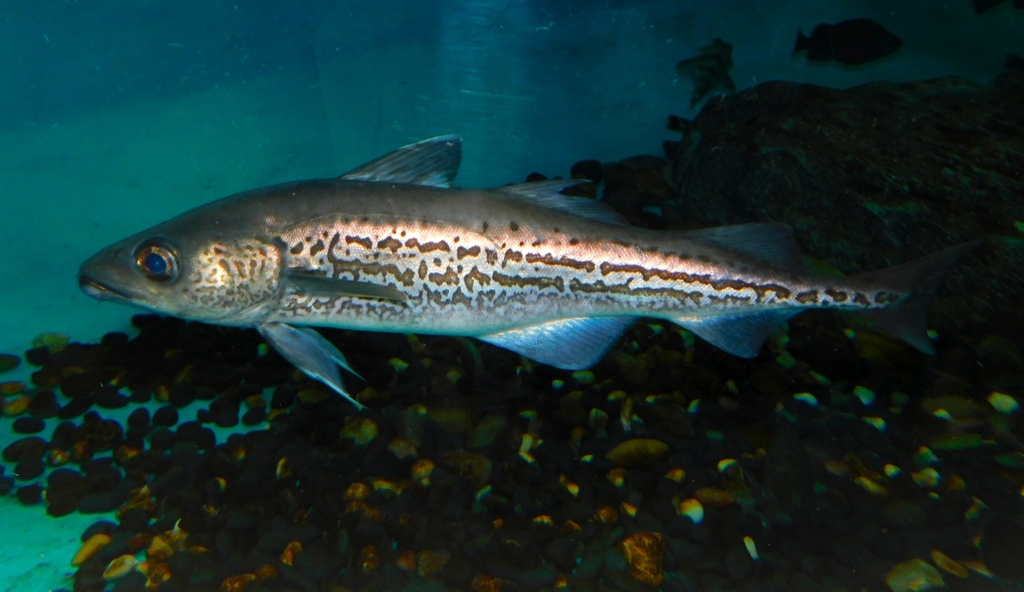
Alaska pollock (Gadus chalcogrammus) is a fish of the family Gadidae. FishBase gives its range as: Northeast Atlantic, Arctic and North to Eastern Central Pacific: from Norway to Svalbard, east to Laptev, South Korea and Beaufort Sea, south to California, USA. The record off the northern part of Baja California (Mexico) is apparently erroneous. It is recorded from 0 to 1280 m, in polar water. The recorded maxima are 91 cm TL, 3.9 kg, 28 years. Diet includes crustaceans and fishes. IUCN status: Not Evaluated (NE). Chinese name: .
Identification
Gadus chalcogrammus is a cod of the family Gadidae, in the order Gadiformes. Wikipedia places it in the cod genus Gadus, which is why the scientific name matters more here than any of the market names.
The size entry is short: maximum length 91 cm TL, maximum published weight 3.9 kg, maximum reported age 28 years. No common length is given at all. First maturity is 36.9 cm.
That combination describes a fish that stays small for most of its life. Ninety-one centimetres is the record, not the expectation, and a 28-year-old fish at that length would be exceptional. Without a common length, the page leaves the usual size to be inferred, which is exactly the kind of gap this article has to flag rather than fill.
A cod with four names and a borrowed one
The English table is split by country. Alaska pollock is the US entry and the FAO alternative; Walleye pollock is the AFS name and the Canadian and Alaskan usage; Pacific pollock belongs to Alaska; and the page's own title uses Walleye pollock. Wikipedia lists Alaska pollock, Pacific pollock and walleye pollock as the three working names.
Then there is whiting, which the table attaches to Canada and the United Kingdom. In both countries whiting is also the name of a different gadoid, and buying or selling under that label is how the wrong fish arrives in the wrong box.
The Japanese name is Suketôdara, and the Chinese entry is . None of these names is wrong locally; the point is that they do not translate into each other. Quote the scientific name when you check the rulebook.
Depth and ground
The environment entry is marine and brackish, benthopelagic, oceanodromous, from the surface to 1280 m, usually 30 to 590 m, polar between 82°N and 33°N. The 30 to 590 m band is the working range; the deepest record is not.
The habitat keyword list is empty, and the diet is crustaceans and fishes. No bottom type is recorded at all, which for a gadoid is a notable omission. What the page does support is that the fish feeds above the seabed rather than buried in it, so a bait or jig worked a few metres up is the sensible default, and the bottom itself is a place to avoid snagging rather than a place to target.
Brackish appears alongside marine, which fits the northern seas and the big river plumes. It also means low salinity is not a reason to rule a bay out.
Seasonal window
Spawning is listed from January to August, on five rows: the Aleutian Basin in January to April; the Bering Sea in February to May; the Gulf of Alaska in March and April; the waters north-west of the Pribilof Islands from January to August; and the Strait of Georgia in January to March.
The rows do not agree, and that is the useful information. A stock spawning in the Aleutian Basin in April and a stock spawning in the Strait of Georgia in January are following different schedules, so a single "pollock spawn in spring" rule would be wrong somewhere.
July and August appear only in the Pribilof row, the widest of the five. August is the tail of the table, not the middle of a season.
Gear and approach
At 3.9 kg and 91 cm maximum, medium-light tackle is enough. A 30 to 50 lb braid outfit with a 100 to 200 g jig covers the usual depth, and a lighter rod is more fun in the shallower part of the band.
The maturity figure of 36.9 cm is the one release number the page provides. Without a common length, the share of the catch that is mature cannot be calculated, but 36.9 cm is low enough that most keepable fish will clear it — which makes the size limit, where one exists, more binding than the biology.
A fish that reaches 28 years should go back if it is big, because it has already spawned many times. Removing it costs the stock more than removing a young fish of the same weight.
Edibility and regulations
FishBase lists a highly commercial fishery and gamefish status. Wikipedia adds only that the fish sits in the cod genus Gadus, so the rest of the identification work falls to the market names.
No IUCN assessment exists for the species, so there is no international benchmark to quote. What binds an angler is national: the minimum size and the daily limit set by the United States, Canada, Russia, Japan and Korea, each in its own waters, and the closure calendar issued separately by the same authorities. The database reproduces neither, and a species with this many names is a species where reading the wrong national page is easy.
Where to look
The range description starts in Norway and runs east to Svalbard, the Laptev Sea, South Korea and the Beaufort Sea, and south to California. It also states that the old record off northern Baja California is apparently erroneous, so the southern end of the range stops in the United States. The country table lists ten entries, including both Koreas, the Kuril Islands and Svalbard.
GBIF returns five rows. Three are ITIS sea areas — the East Pacific, the Eastern Atlantic and the Indo-West Pacific — one is a Norwegian present record with no source, and one is the Norwegian Red List 2015 row carrying Data Deficient. Five rows for a fish this widespread is a thin footprint, and the Indo-West Pacific row is outside the range given by FishBase.
iNaturalist holds 375 observations. Records concentrate in the Bering Sea, the Gulf of Alaska, the Sea of Okhotsk and the Norwegian Arctic, inside the 30 to 590 m band.
Where these facts come from
Check these pages before you rely on a size, range or protection status.
- FishBase — Gadus chalcogrammus — FishBase · T2
- GBIF — Gadus chalcogrammus occurrence records — GBIF · T2
- IUCN Red List — Gadus chalcogrammus — IUCN · T1
- Photo record — iNaturalist — iNaturalist · T3
Fish in the same water
These fish live in the same place.
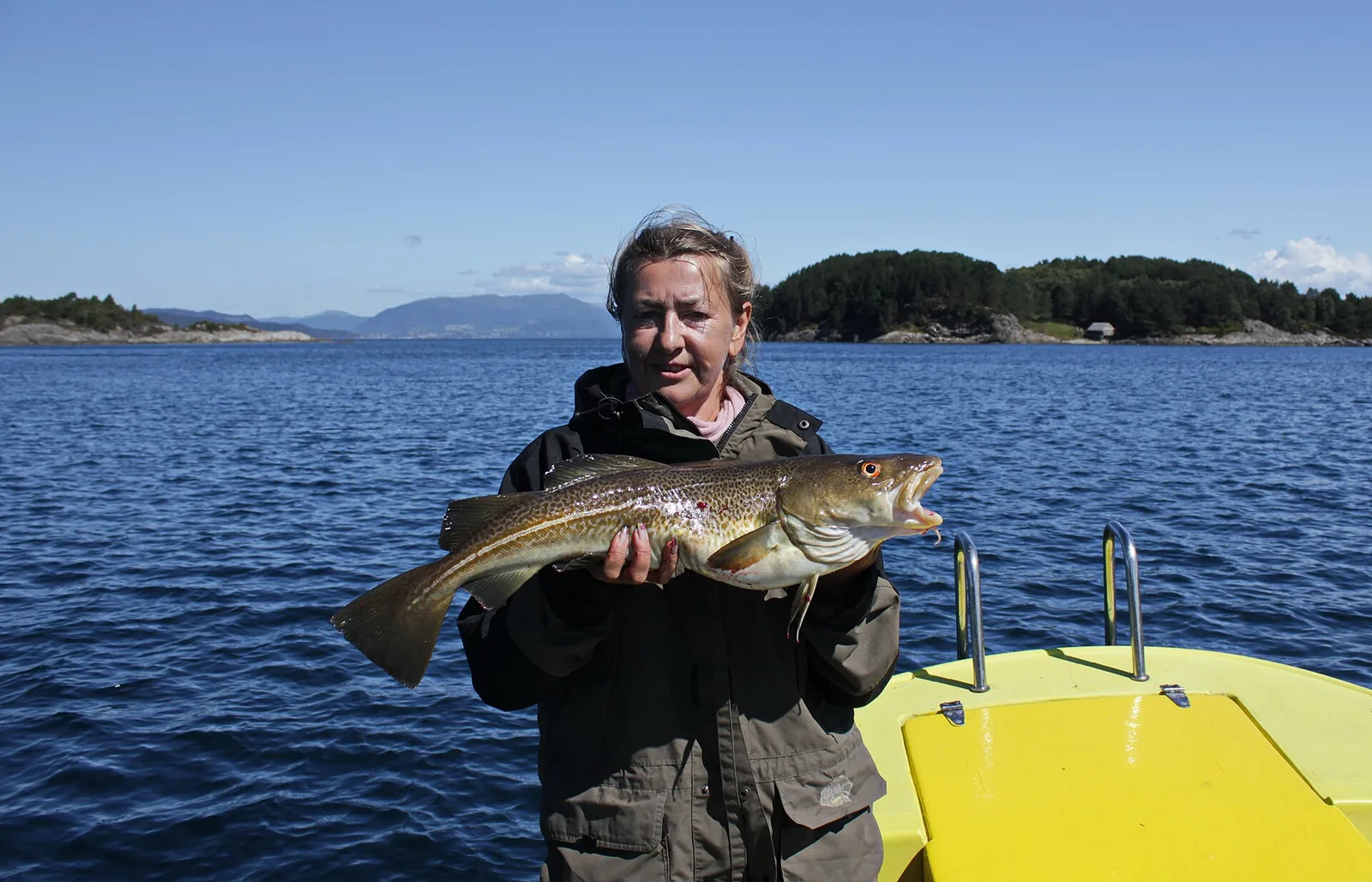
Atlantic cod
- Family
- Gadidae
- Depth
- 0–600 m
- Season
- Jan, Feb, Mar, Apr, May, Jun, Jul, Aug, Sep, Oct, Nov, Dec

Atlantic pollock
- Family
- Gadidae
- Depth
- 40–200 m
- Season
- Jan, Feb, Mar, Apr, May
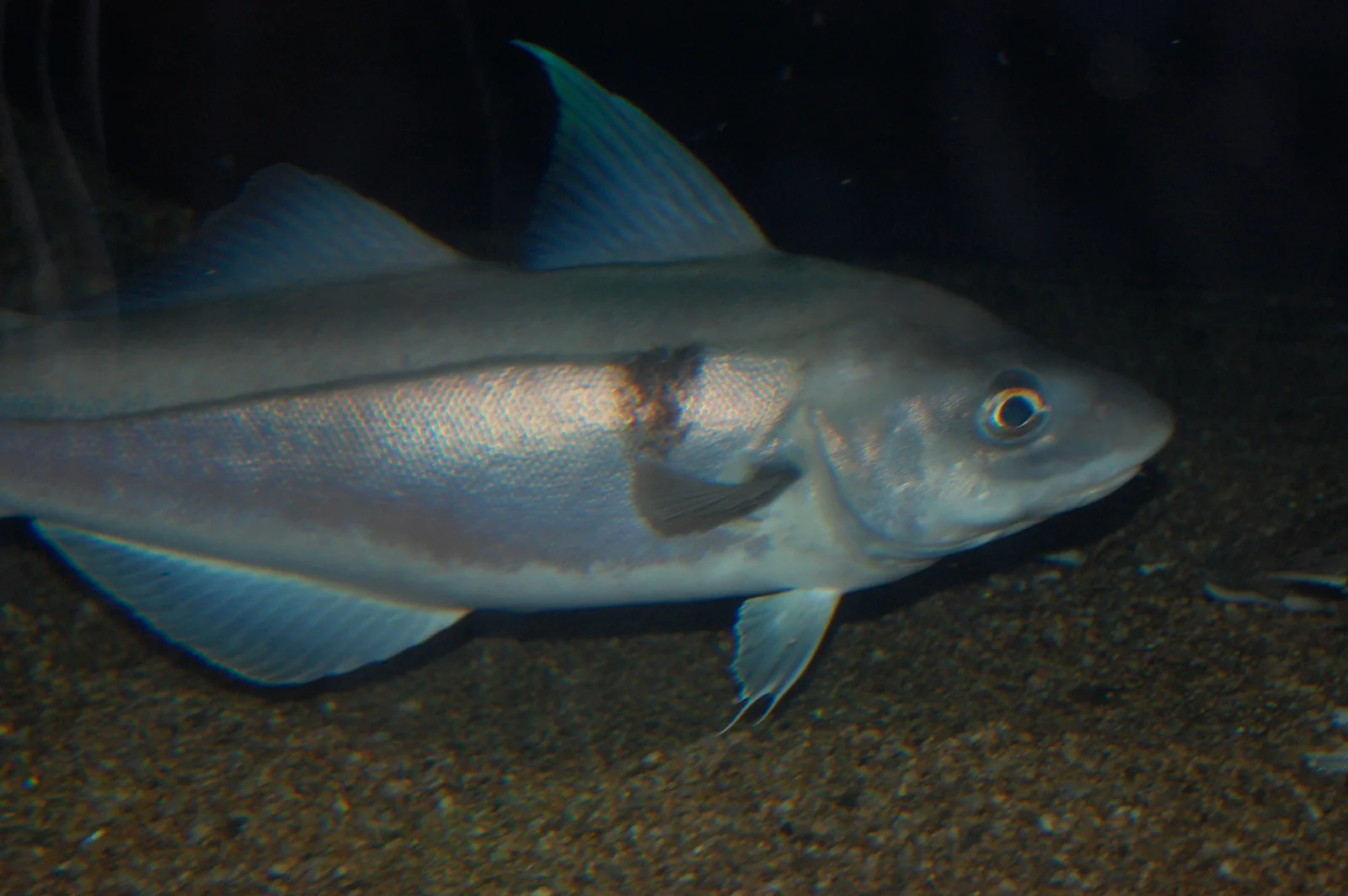
Haddock
- Family
- Gadidae
- Depth
- 10–450 m
- Season
- Jan, Feb, Mar, Apr, May, Jun, Jul
Guides for this water
Technique, gear and safety guides that fit Alaska pollock.