
Giant trevally
Giant trevally is a large carangid of Indo-Pacific reefs, known to anglers as GT. FishBase gives 170 cm and 80 kg as the maximum but 100 cm as the common size, and the species carries a ciguatera warning. Lure fishing and trolling are the usual approach, with the season running April to November.
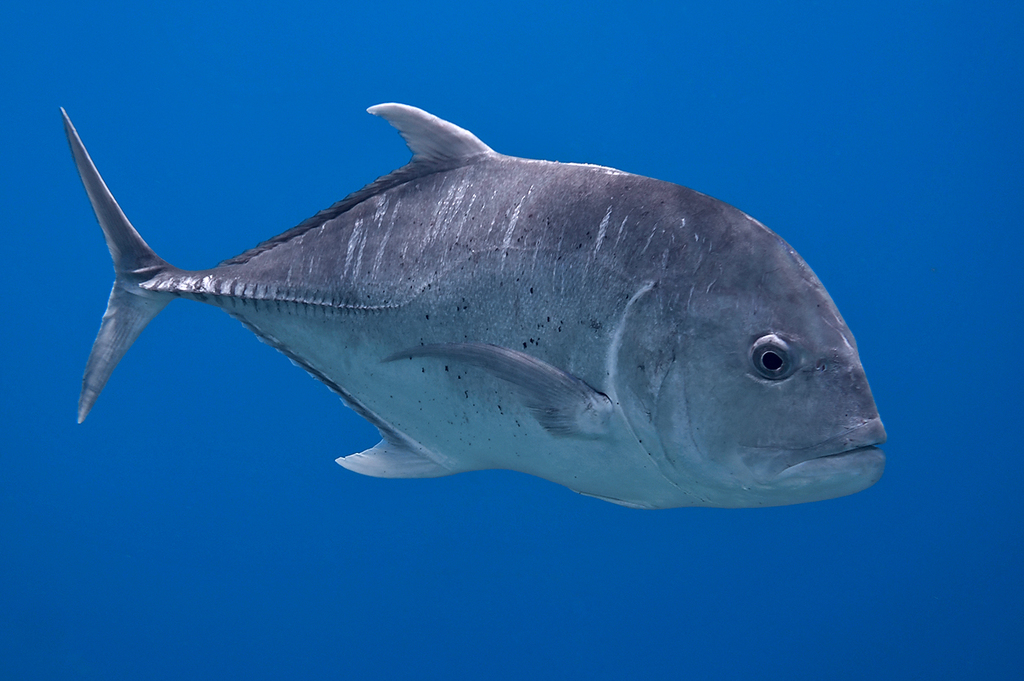
The giant trevally is a fish with two sizes. FishBase gives a maximum of 170 cm total length and 80 kg, and a common length of 100 cm. The ceiling is more than half again the everyday fish; the rest of this page follows the one you might actually meet. The species also carries a ciguatera warning, not a detail to leave at the bottom.
Two sizes on one page
The maximum is 170 cm total length, the maximum published weight 80 kg, the common length 100 cm, all in total length. No age is recorded. A 100 cm trevally is a serious fish; a 170 cm one is exceptional. Having a common-length figure separates the everyday animal from the ceiling, and the ceiling is not the target here.
The sixty-centimetre threshold
The maturity figure is 60 cm. That is well below the common length, which means most fish in the common-size class are mature. On release, 60 cm is the line the record backs; on tackle, plan around 100 cm rather than the 80 kg ceiling. A fish under 60 cm is the one the record calls immature, and no weight figure is given for it.
The age column is blank. With no age record, length cannot be turned into years here, so the 60 cm line stays a size threshold and does not become an age statement. A 60 cm fish could be young and fast-growing or old and slow-growing; the source does not choose between those.
Ten to 188 metres
The depth range is 10 to 188 m, in tropical water from 26°C to 29°C. The species is reef-associated, but the habitat keywords also include rocky, sandy, estuary and open-water. That is a wide set for one fish, and the source does not separate the life stages. A 10 m fish and a 188 m fish are both in the file, but the page does not say that the same fish moves between them.
For fishing, the shallow end is the accessible end. Rocky points, reef edges, harbour walls and estuary mouths are all in the habitat list, and all are within reach of a lure or a live bait. The 188 m end requires a boat and deep tackle, and the record gives no reason to expect a trevally at that depth in every location. Use the depth range as a boundary, not as a recommendation.
A Hawaiian spawning window
The spawning table gives April to November, with one record from the Northwestern Hawaiian Islands. That is a single regional survey, not a species-wide season. The same distribution text notes a hybrid with Caranx melampygus in Hawaii, which is a reminder that the Hawaiian population has its own genetic story.
A spawning aggregation in Hawaii does not tell you when fish spawn in the Red Sea or in Okinawa. For a trip, read April-to-November as a Hawaiian signal only, and seek local advice elsewhere. The table reports spawning, not good fishing in those months.
Counts and the compressed body
Fin counts on the checked page: 18–21 soft dorsal rays; three anal spines plus 15–17 soft rays; 24 vertebrae; a fusiform body with a laterally compressed section. Dorsal spine counts are absent. For a trevally the body is deep and compressed, and the rays are what you can verify in hand.
Several large carangids share the same silhouette. No comparative key is offered, so counts plus a photograph carry the identification. A released fish needs no firm identification; a kept one warrants ray counts and a look at the head profile first.
GT, ulua, lowly trevally
The English aliases are giant trevally, lowly trevally, barrier trevally, giant kingfish and ulua. The Chinese name in the approved list is . "GT" is the short form used by anglers, and "ulua" is the Hawaiian name. These labels are regional; they do not change the fish, but they change what you call it in a fishing report.
The name "giant" is earned by the 170 cm maximum, not by the average catch. A 60 cm fish is still a giant trevally, and calling it a juvenile is a statement about maturity, not about species. Across all those local labels, only the Latin binomial travels.
Least Concern, commercial, farmed
FishBase records commercial capture and commercial farming, gamefishing, and display in public aquariums. Red List status: Least Concern, dated 9 March 2015. The threat-to-humans field reports ciguatera poisoning, a real risk for a large predatory fish in warm seas and part of the trip plan rather than a footnote.
A 2015 snapshot, it arrives with no rule text. The ciguatera note is species-specific and does not vary with the size of the fish in a predictable way from this record alone. If you plan to eat a large trevally, the safe assumption is that the risk exists until local advice says otherwise.
Where the counts cluster
GBIF's 13,057 preserved records break down as Australia 6,172, United States 3,091, Japan 747, Seychelles 316 and Indonesia 295. The United States count is mostly Hawaii, which is inside the stated Indo-Pacific range. Then there are small oddities: Faroe Islands four, Great Britain three, France two, Ghana two, Colombia two and Ecuador one, all outside the Indo-Pacific core. They may be mislabels or aquarium records; the source does not explain them.
Wikipedia's lead fixes the four corners of that band: South Africa in the west, Hawaii in the east, Japan in the north and Australia in the south. Those corners set the trip map; the country table is where a specific coastline gets chosen.
iNaturalist has 2,186 observations. The approved methods are lure fishing and trolling, both mainstream. Put the record together and the plan is a warm-water plan: rocky points and reef edges in the 10 to 30 m range for casting, deeper water by boat for trolling. The two numbers to carry are the 60 cm maturity and the 100 cm common length; the 170 cm ceiling is a record, not a promise.
How to catch it
Lure fishing
Lure fishing, with lure size matched to the recorded body size.
Trolling
Trolled from a moving boat; suits roaming or pelagic species.
Where these facts come from
Check these pages before you rely on a size, range or protection status.
- FishBase — Caranx ignobilis — FishBase · T2
- GBIF — Caranx ignobilis occurrence records — GBIF · T2
- IUCN Red List — Caranx ignobilis — IUCN · T1
- Photo record — iNaturalist — iNaturalist · T3
Fish in the same water
These fish live in the same place.
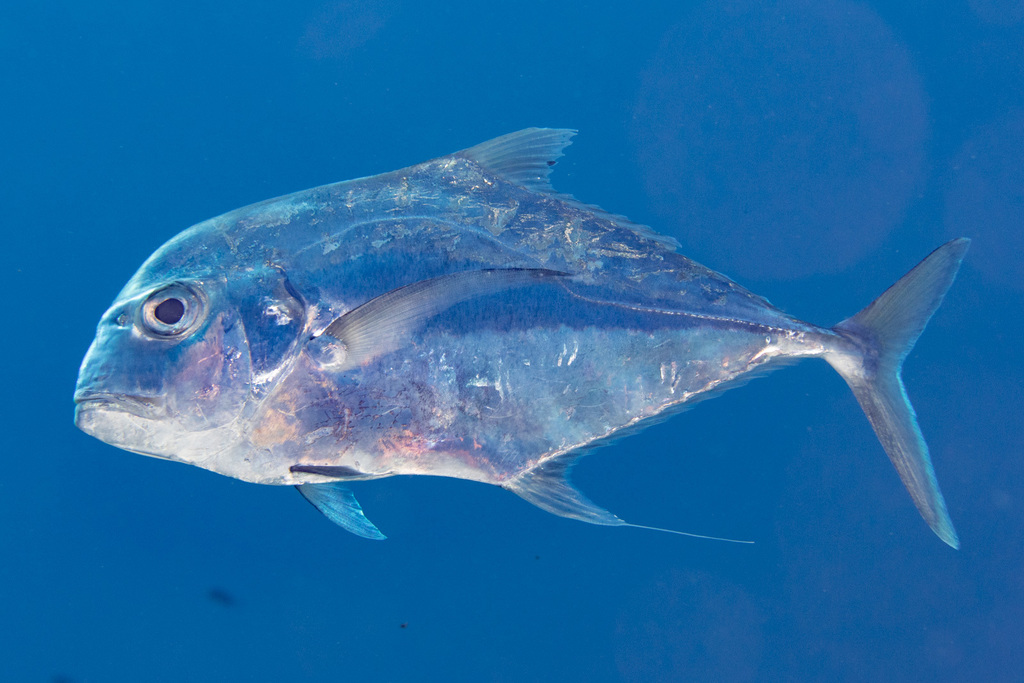
African pompano
- Family
- Carangidae
- Depth
- 60–100 m
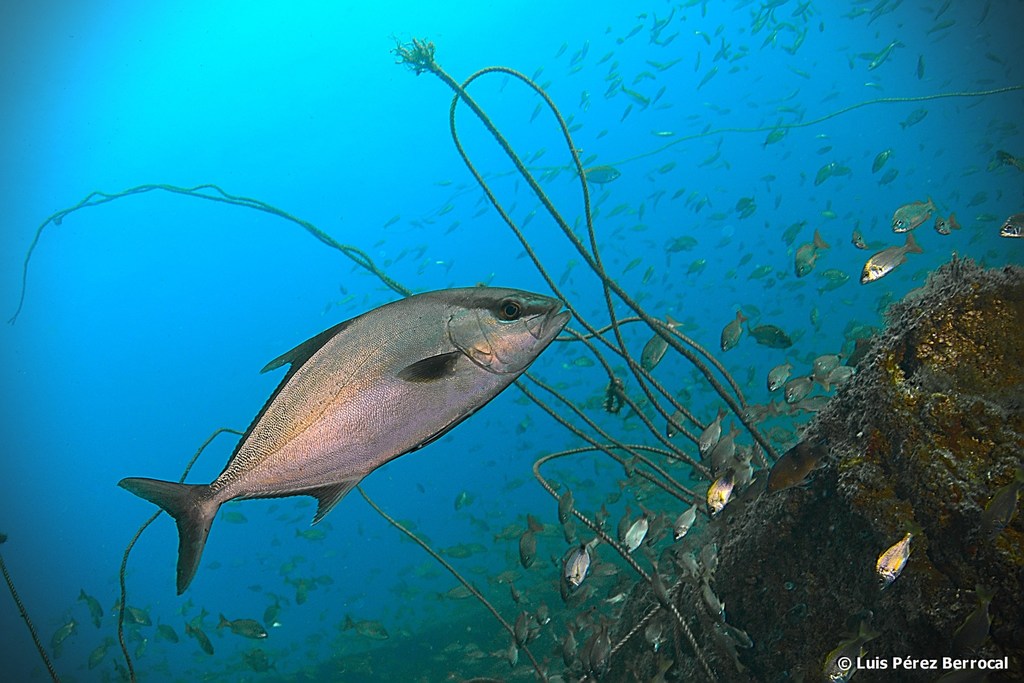
Almaco jack
- Family
- Carangidae
- Depth
- 5–245 m
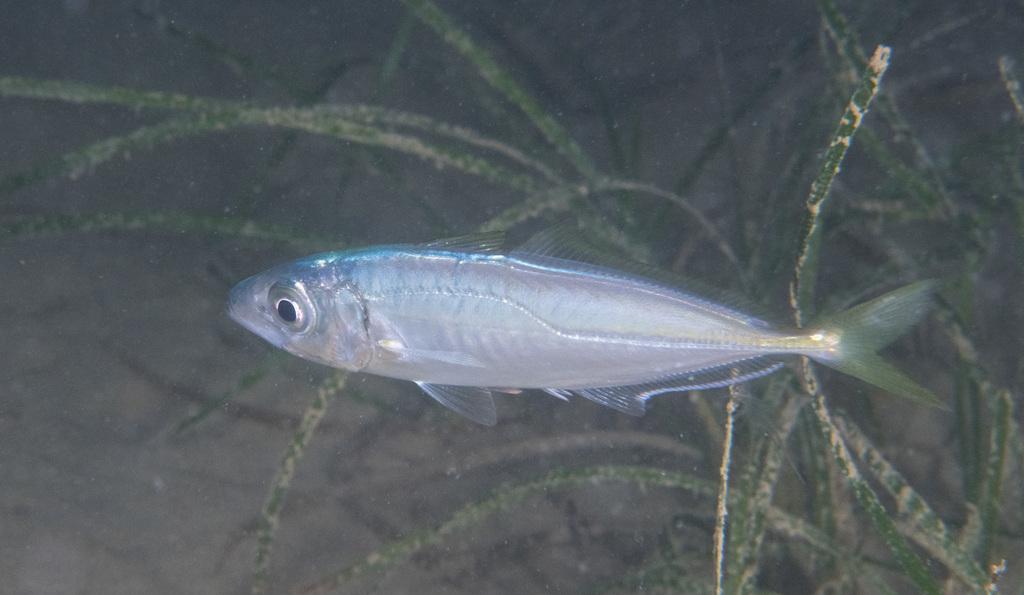
Atlantic horse mackerel
- Family
- Carangidae
- Depth
- 0–1050 m
- Season
- Jan, Feb, Mar, Apr, May, Jun, Jul, Aug, Sep, Oct, Nov, Dec
Guides for this water
Technique, gear and safety guides that fit Giant trevally.