
Golden grey mullet
Golden grey mullet is a mugilid of the eastern Atlantic, from the British Isles, North Sea, Norwegian Sea and Barents Sea to West Africa and offshore islands including the Canaries. It lives from 10 to 20 m in temperate water, reaches 61 cm FL and 2.5 kg, and feeds on zooplankton and detritus. It is present for most of the year, with March the only gap.
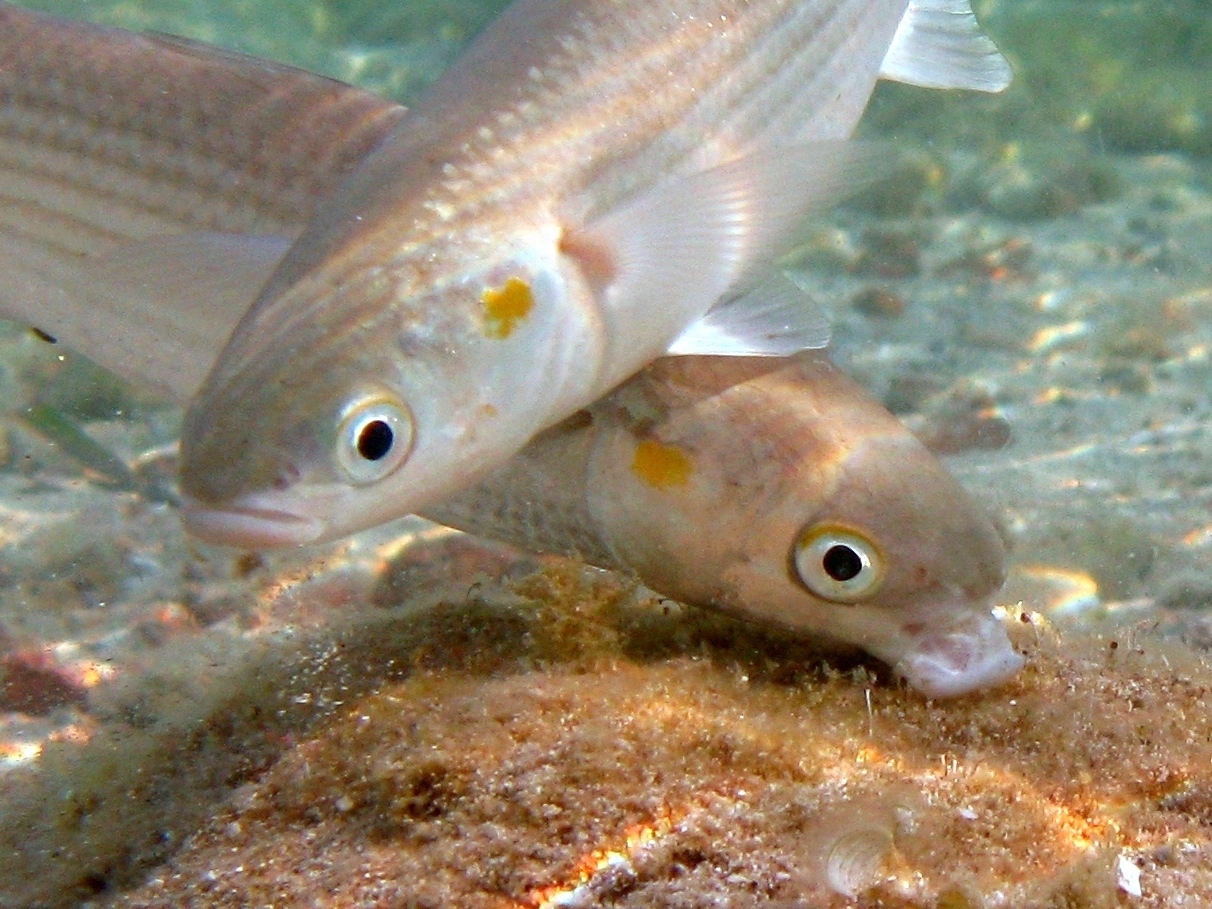
Golden grey mullet (Chelon auratus) is a fish of the family Mugilidae. FishBase gives its range as: Eastern Atlantic: British Isles, North Sea, Norwegian Sea, Barents Sea, Bay of Biscay, Western Africa and offshore islands including the Canaries, Azores and Madeira; the Mediterranean and Black Sea. Introduced to the Caspian Sea. It is recorded from 10 to 20 m, in temperate water. The recorded maxima are 61 cm FL, 2.5 kg. Diet includes zooplankton and detritus. IUCN status: Near Threatened (NT). Chinese name: .
Identification
The two length figures use different rulers. The maximum is 61 cm FL and the common length 30 cm SL. Fork length stops at the fork of the tail, standard length at the end of the vertebral column, and the record gives no common scale for both values. Maturity is set at 28.7 cm, below the common length and well below the maximum, so the usual catch is also a mature fish. Maximum published weight is 2.5 kg, and no maximum age is given. Dorsal soft rays 7–9; anal spines 3.
The name table gives "Golden grey mullet" as the global FAO entry, with "Golden mullet" in Russia, Spain and the United Kingdom and "Long-finned grey mullet" also in the United Kingdom. The Chinese entries read and . iNaturalist prefers Golden Grey Mullet, with 196 observations under taxon 786323. Wikipedia calls the species euryhaline and lists it as a target for both commercial and recreational fisheries.
Habitat and distribution
The record labels the species catadromous, and its environment line carries marine, freshwater and brackish all three, pelagic-neritic, 10–20 m, temperate, 64°N–20°N and 26°W–42°E. That combination describes an animal that moves along a salinity gradient rather than one that belongs to a single point on it.
The written range covers the British Isles, the North Sea, the Norwegian Sea, the Barents Sea, the Bay of Biscay, Western Africa and the Canaries, Azores and Madeira, plus the Mediterranean and Black Sea, with an introduced population in the Caspian. The country table carries 42 territories. The habitat keywords are estuary, coastal, freshwater and open-water, and the diet keywords are zooplankton and detritus.
OBIS holds 2,062 records in 56 datasets dated 1900 to 2026. The reply carries no country facet, so the count shows a well-sampled coastal fish without placing those records on the gradient.
Season and fishing approach
Four spawning records are attached to four places: the Bizerte Lagoon in Tunisia from October to December, a European entry from September to November, the Klisova lagoon in Greece in January–February and April–December, and the Marmara Sea in Türkiye in August–September. The months do not line up, so there is no single spawning season across the range; each entry belongs to its own lagoon or sea.
That is the working rule for a catadromous, brackish-tolerant fish: read the local record rather than the global one. The 10–20 m depth band puts the fishable water in the coastal and estuarine slice, and the estuary keyword marks the brackish end. A light float rig with a fine bait suits a fish whose diet keywords are zooplankton and detritus and whose common length is 30 cm. The salinity at the lagoon mouth is the variable to watch; the same fish can sit on either side of it on consecutive days.
Edibility and regulations
No appendix entry appears under CITES or CMS in this record. What conservation note there is comes from the Red List, which assesses the species as Near Threatened with a date of 7 June 2022. The use list, for its part, gives commercial fisheries and commercial aquaculture.
All 42 country entries are presence records: no bag number, no minimum length, no closed season, no authority. Because the range includes native Atlantic and Mediterranean waters and an introduced Caspian population, the same species is governed by more than one national text, and this database reproduces none of them. The record's own regulatory anchor is the 28.7 cm maturity length.
Where these facts come from
Check these pages before you rely on a size, range or protection status.
- FishBase — Chelon auratus — FishBase · T2
- GBIF — Chelon auratus occurrence records — GBIF · T2
- IUCN Red List — Chelon auratus — IUCN · T1
- Photo record — iNaturalist — iNaturalist · T3
Fish in the same water
These fish live in the same place.
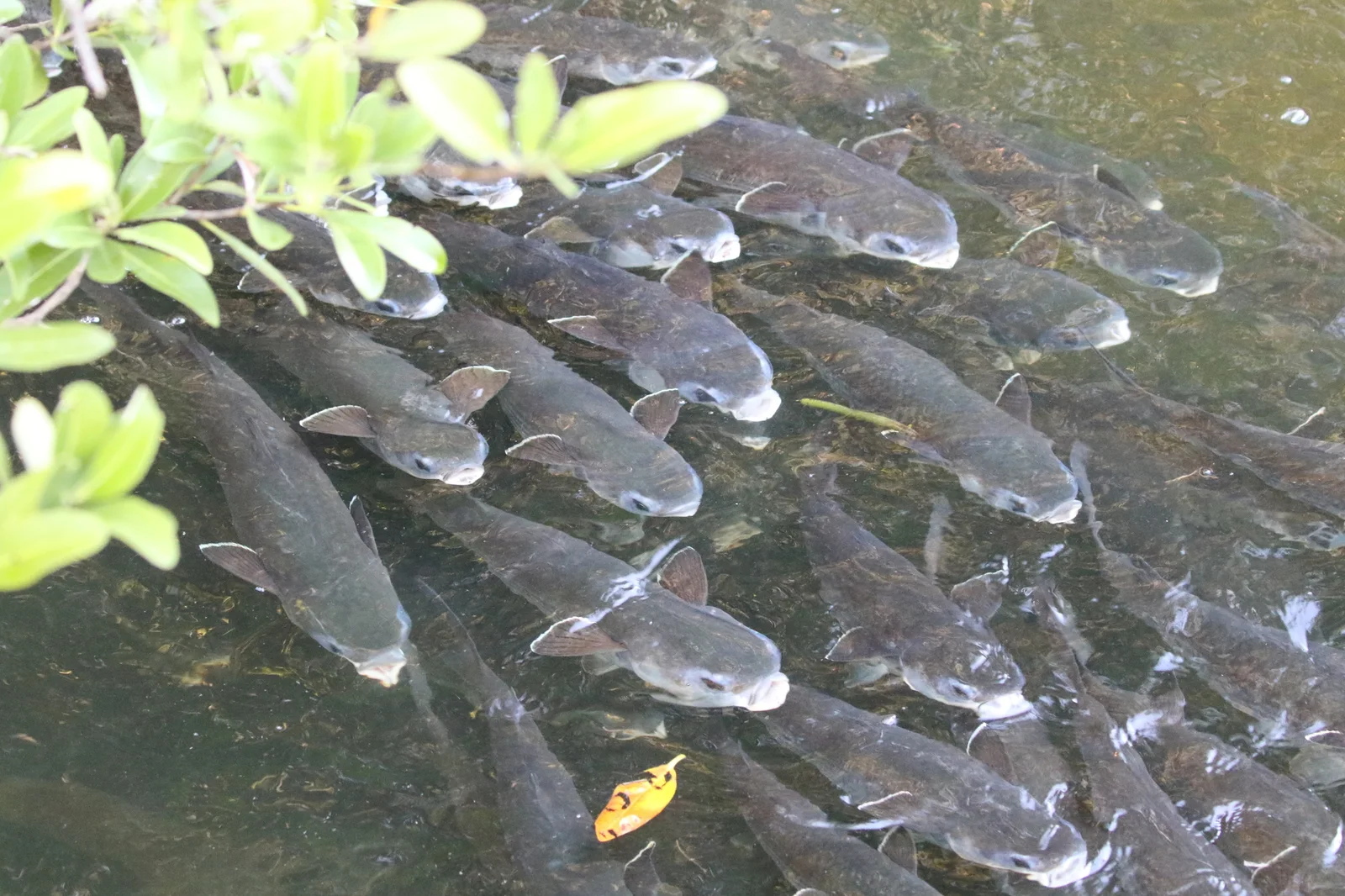
Flathead mullet
- Family
- Mugilidae
- Depth
- 0–120 m
- Season
- Jan, Feb, Mar, Apr, May, Jun, Jul, Aug, Sep, Oct, Nov, Dec
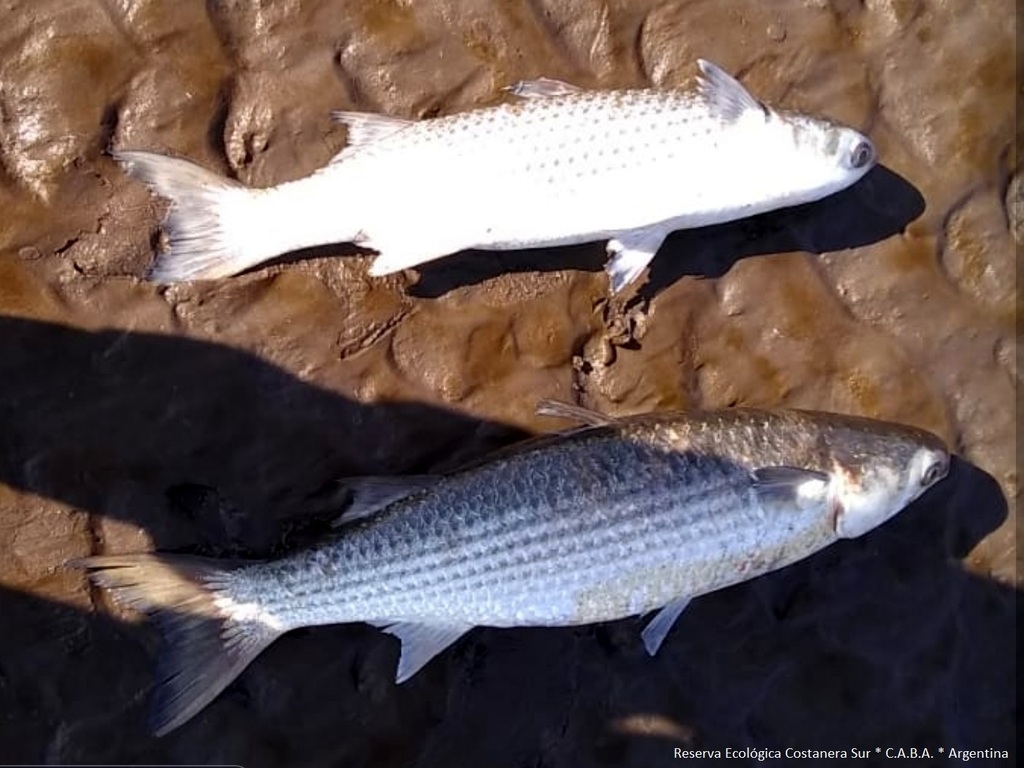
Lebranche mullet
- Family
- Mugilidae
- Depth
- ≥ 10 m
- Season
- Feb, Mar, May, Jun, Jul, Aug, Sep, Oct, Nov, Dec
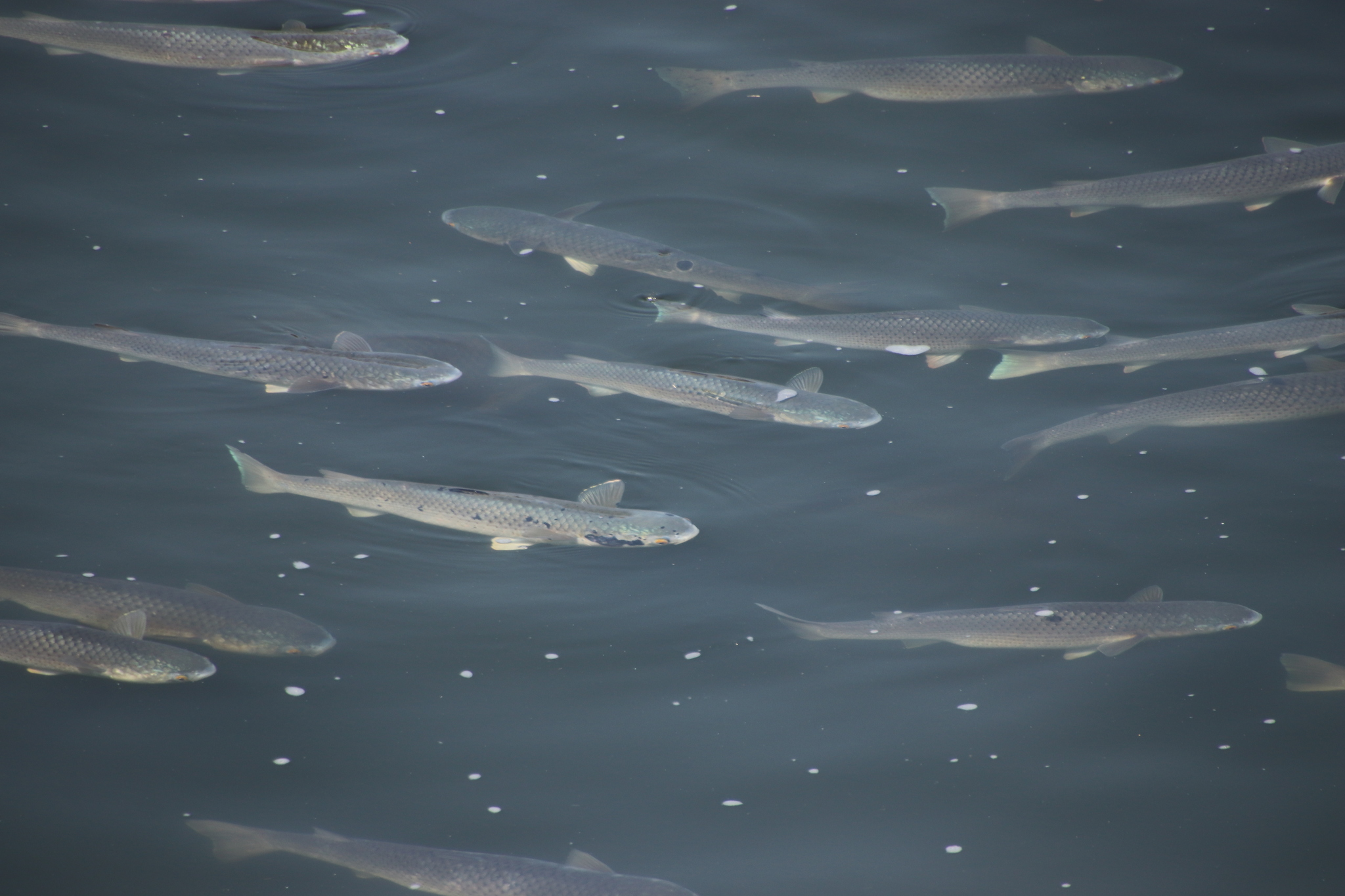
So-iuy mullet
- Family
- Mugilidae
- Depth
- 5–10 m
- Season
- May, Jun, Jul
Guides for this water
Technique, gear and safety guides that fit Golden grey mullet.