
Lebranche mullet
Lebranche mullet is a slim coastal mullet of the western Atlantic and Caribbean, a fish most people meet on ice rather than in the water. In the Caribbean and Brazil it is sold as liza or simply as mullet, and the market name covers more than one animal. The record gives 40 cm as a common length and 80 cm TL and 9 kg as the maximum, and it is a fish of water 10 m and deeper.
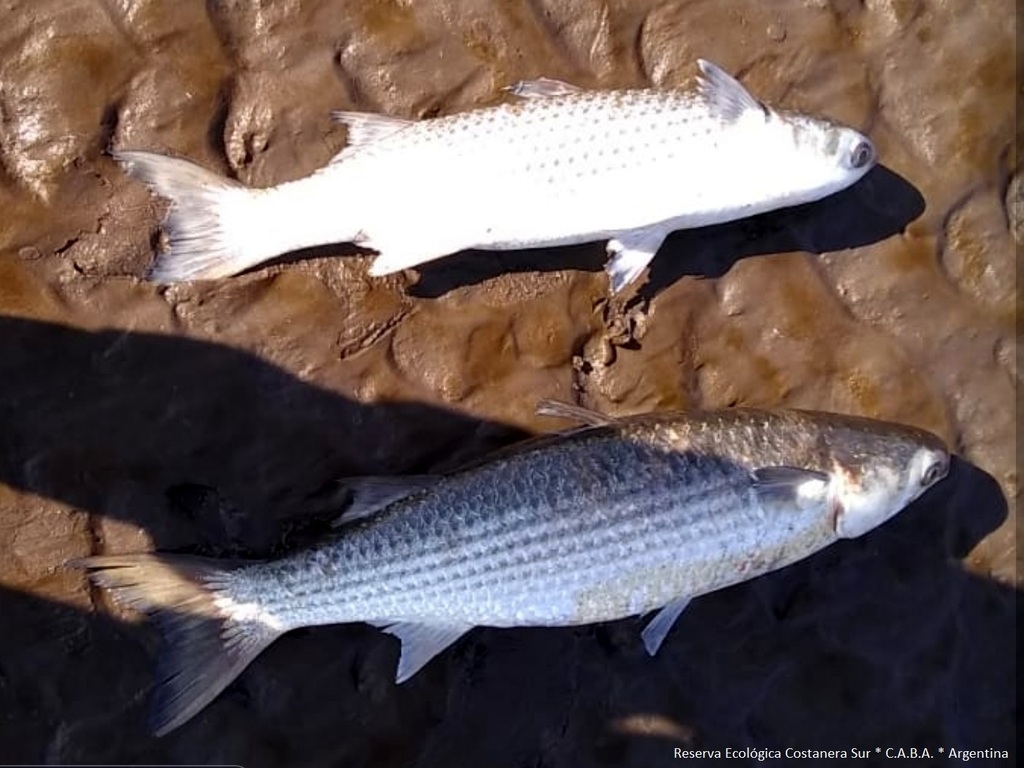
This is a fish most people meet on ice, not in water. In the Caribbean and in Brazil it is sold as liza or simply as mullet, and the label is doing more work than the biology. The page lists 40 cm as common and 80 cm as the maximum, plus an alias table that shows why the market name resists pinning down.
What the stall calls it
The encyclopedia summary calls it "the Lebranche mullet or the liza" and notes that it is fished commercially. The FishBase page carries "Lebranche mullet" as the FAO name, but its alias table also lists blueback mullet and fantail mullet from Cuba, "Liza" from the Bahamas, Belize, Cuba, Puerto Rico and the US, and plain "mullet" from Belize and Uruguay.
That is five market-facing names for one taxon. Each is locally correct. None of them is unique. A buyer asking for liza and a buyer asking for lebranche may be asking for the same fish, or for whatever mullet the stall had that morning.
A common fish with a record tail
A male or unsexed fish tops out at 80 cm TL, a female at 69 cm; 40 cm is the common length and 9 kg the top weight. At the stall the figure that matters is 40 cm; 80 cm is the outlier.
Age is blank. That leaves a size ceiling without a lifespan — an odd pairing for a fish that supports both a commercial catch and aquaculture. You know how big it can get, not how long it takes to get there.
Maturity: 35 cm, with a range that starts at 40
The maturity field reads Lm 35.0 cm, while the range field reads 40 to an open upper bound. The stated Lm sits below the lower end of its own range. That is the page's presentation, and the two parts cannot both be used as written.
For a fishery this matters directly. A minimum-size rule built on the Lm would sit at 35 cm; a rule built on the range would start at 40 cm. The page gives no way to choose between them, so the honest statement is that the maturity figure is internally inconsistent, not that one number is the true one.
The depth field that starts at 10 m
The habitat block gives a demersal, catadromous fish in marine, freshwater and brackish water, with a depth range that starts at 10 m and has no maximum. A depth range with a lower bound of 10 m and a blank upper bound is not a habitat description; it is a partially filled field.
Mullet work estuaries, river mouths and the open coast; the record tags it estuary, coastal, brackish, freshwater and open-water, the same span its catadromous label implies. The blank depth maximum does not contradict that; it simply fails to describe it.
A 10 m lower bound is also a strange floor for a fish that enters rivers. Either the field was filled from marine records only, or the freshwater part of the range was never coded into it. Nothing in the record decides between those two readings, so the number is best read as the shallowest depth the compiler had, not as a limit the fish respects.
Spawning moves with latitude
The spawning table marks February, March and May through December. Four regional windows cut it down: Brazil's Ceará in February and March, Cuba in November and December, Paraná in May through October, and Rio de Janeiro in the same May-to-October window.
That is not one season with local noise. It is a north-south sequence across a long coastline. A trip planned on the twelve-month summary tells you almost nothing; a trip planned on the nearest regional row tells you which months that area records.
Three markets, one species
The human-use line carries three entries: commercial fishing, commercial farming, gamefishing. Those are three different pressures on the same animal: wild capture, farm production and recreational catch.
IUCN recorded it as Data Deficient in December 2018. A species that is commercially fished, farmed and sought by anglers, and still carries DD, is a species whose catch statistics are not feeding back into an assessment. That is the gap the category is pointing at.
Where the records sit
The stated range starts at Bermuda, Florida and the Bahamas, crosses the Caribbean and ends in Argentina. GBIF's distribution table contains 54 rows: 44 are drawn from a Brazilian fauna checklist, 17 carry Brazil as the country and 3 Colombia. iNaturalist holds 48 observations.
So the record centre is Brazil, and it is a catalogue centre rather than a population centre. The range statement is broad; the submitted rows are concentrated where national checklists exist. A catalogue centre is not the middle of the range, it is the middle of the record-keeping.
Buying and releasing
If you are buying, ask for the scientific name or accept that "liza" may cover more than one mullet. If you are releasing, measure total length, note the salinity of the water you caught it in, and record the date. The catadromous life history means the same species can turn up in fresh, brackish and salt water, and a record without salinity loses half its meaning.
Treat 40 cm as the working benchmark and 80 cm as the record; the maturity entry is the one figure that must never be quoted without its contradiction.
Where these facts come from
Check these pages before you rely on a size, range or protection status.
- FishBase — Mugil liza — FishBase · T2
- GBIF — Mugil liza occurrence records — GBIF · T2
- IUCN Red List — Mugil liza — IUCN · T1
- Photo record — iNaturalist — iNaturalist · T3
Fish in the same water
These fish live in the same place.
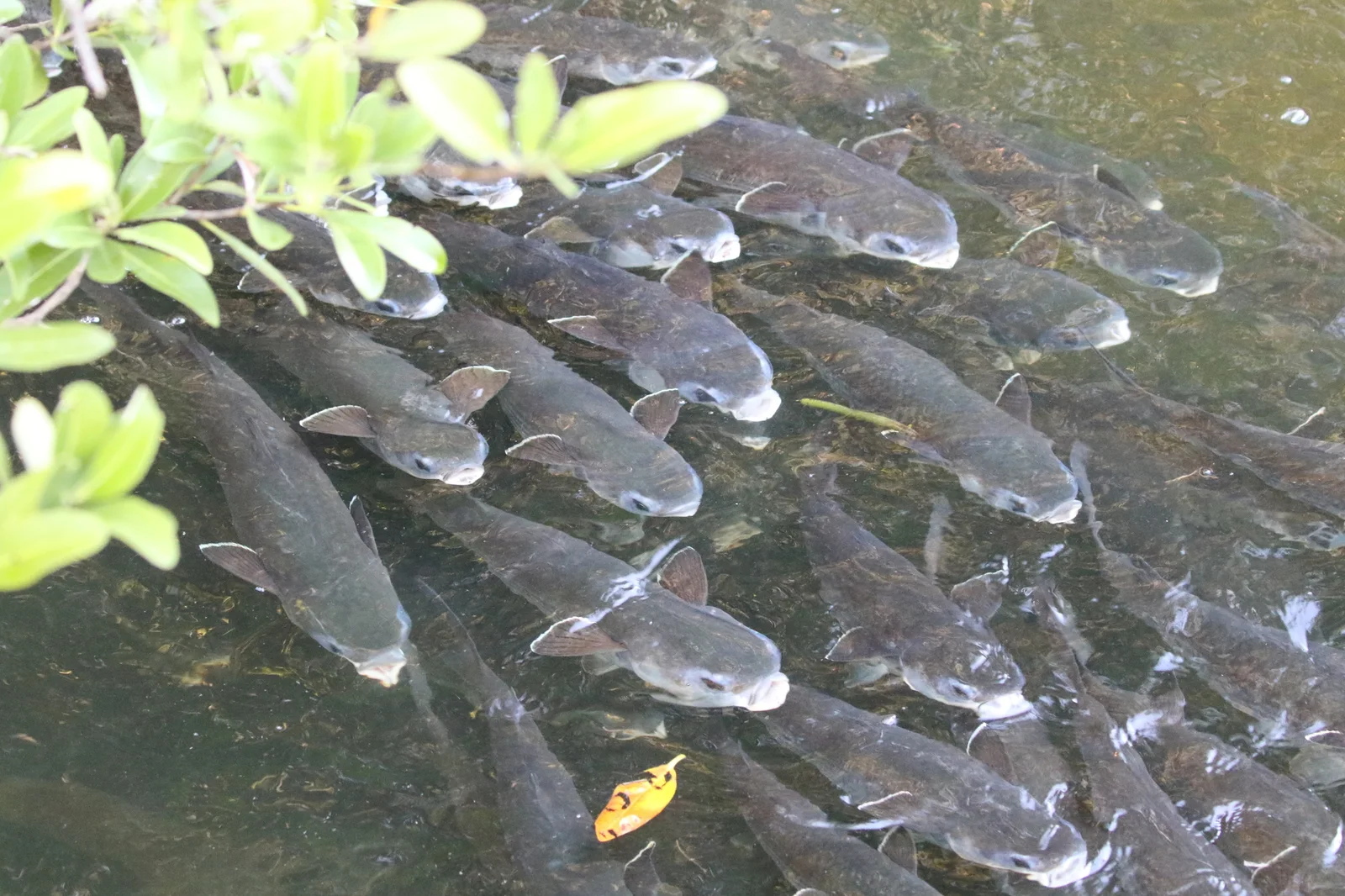
Flathead mullet
- Family
- Mugilidae
- Depth
- 0–120 m
- Season
- Jan, Feb, Mar, Apr, May, Jun, Jul, Aug, Sep, Oct, Nov, Dec
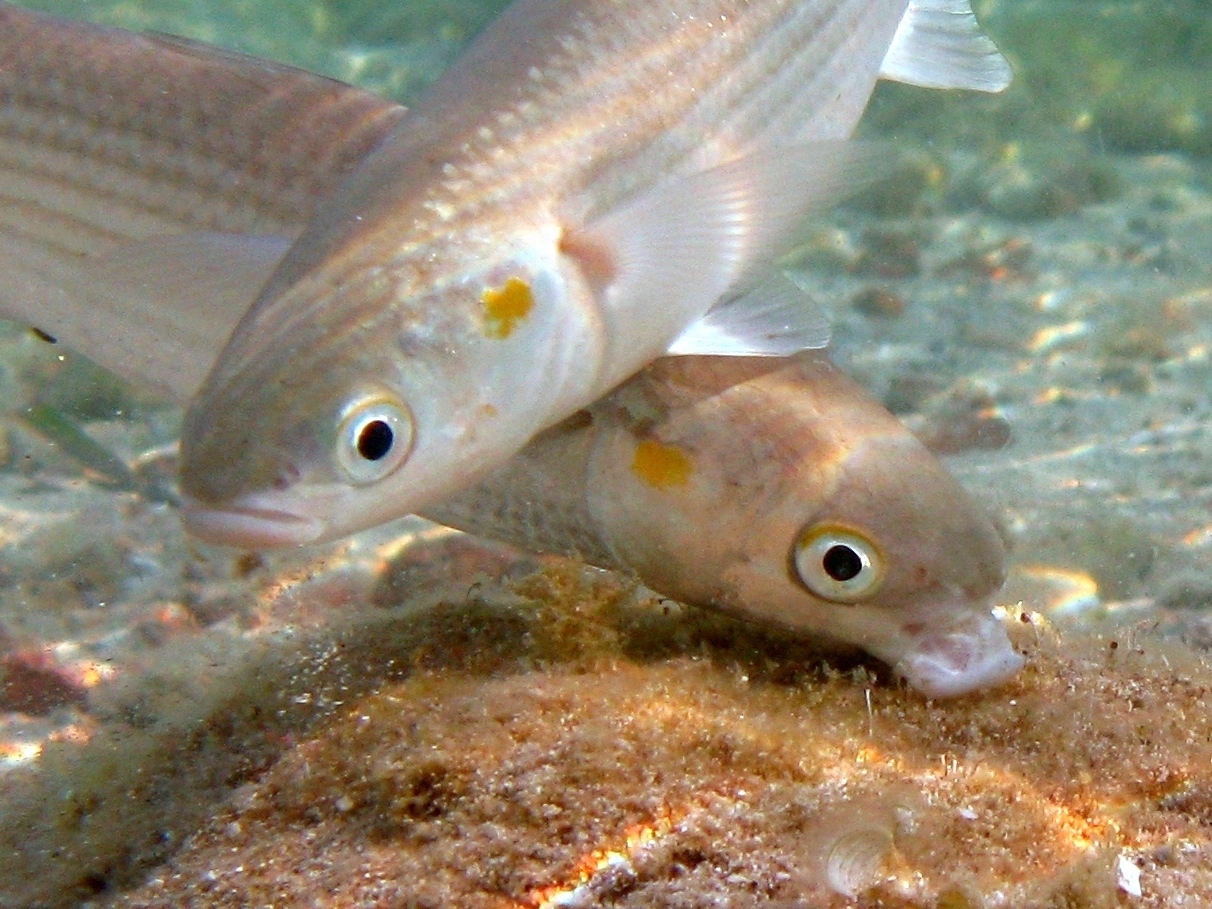
Golden grey mullet
- Family
- Mugilidae
- Depth
- 10–20 m
- Season
- Jan, Feb, Apr, May, Jun, Jul, Aug, Sep, Oct, Nov, Dec
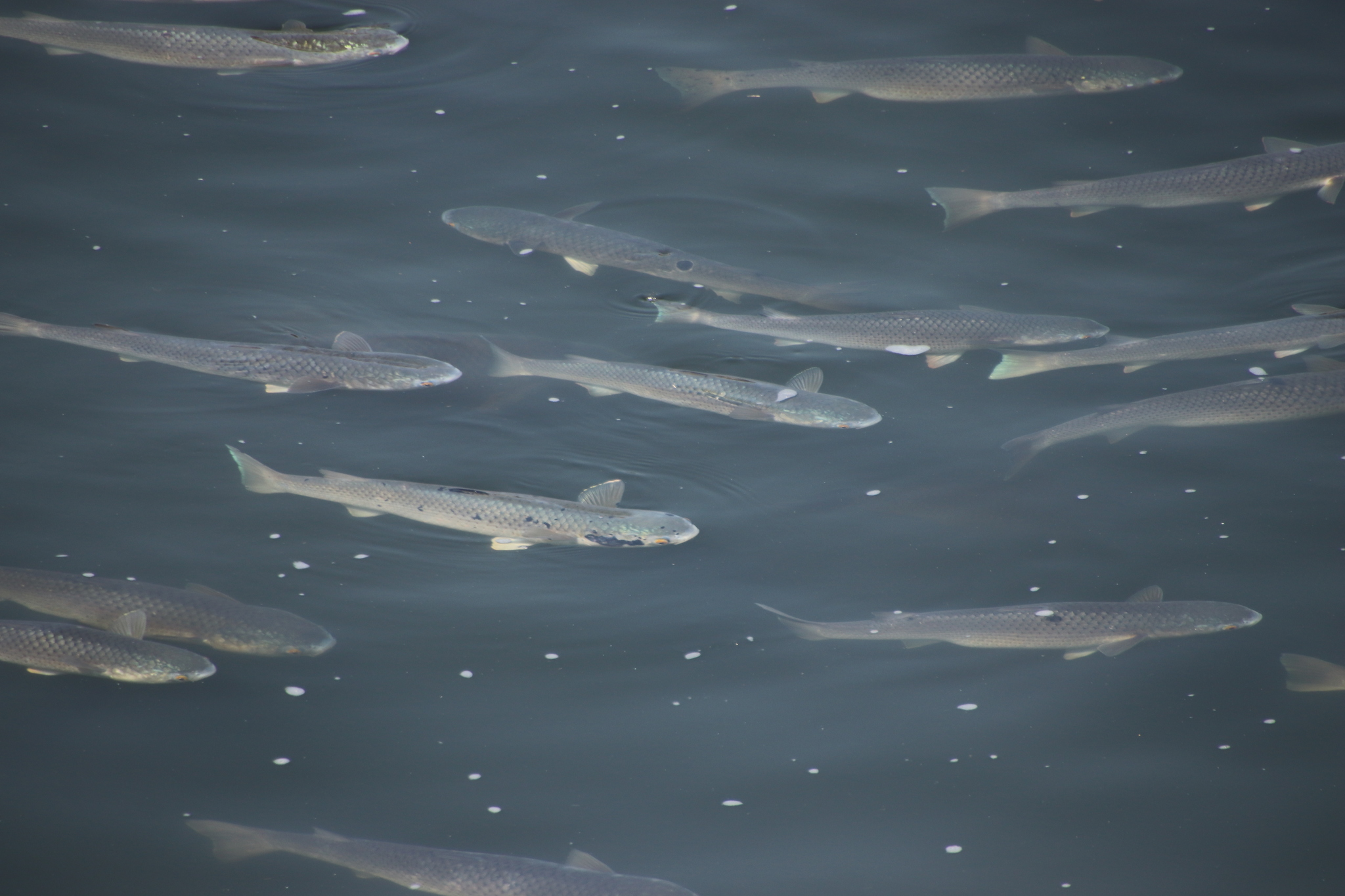
So-iuy mullet
- Family
- Mugilidae
- Depth
- 5–10 m
- Season
- May, Jun, Jul
Guides for this water
Technique, gear and safety guides that fit Lebranche mullet.