
Pescadilla de calada
Cynoscion guatucupa is the pescadilla of Argentina and the pescadilla de calada of Uruguay. Brazil lists it as maria-mole and pescada-olhuda, and the same fish is sold in Brazil under the label pescada-cambucu. In Brazil and Argentina, corvina means Micropogonias furnieri, and the two fish carry different size rules in the same ports.

Cynoscion guatucupa is the pescadilla of Argentina and the pescadilla de calada of Uruguay. Brazil lists it as maria-mole and pescada-olhuda, and the same fish is sold in Brazil under the label pescada-cambucu. It is not corvina. In Brazil and Argentina, corvina means Micropogonias furnieri, and the two fish carry different size rules in the same ports. The source records 57.5 cm TL as the maximum and 34.6 cm as the maturity point, and describes the shape only as fusiform.
Identification
The morphology block in the source is empty apart from “fusiform/normal”. There are no fin-ray counts, no colour note, no teeth or scale character, so this page cannot offer a field key. What the source does give is 57.5 cm TL maximum and 34.6 cm maturity.
The English name is a spelling trap worth flagging. FishBase's common-name list reads “Stripped weakfish”, while iNaturalist's preferred English name reads “Striped Weakfish”. The FAO Spanish name is corvinata listada. A page that cannot describe the fish can at least say which of the labels carries the typo. Argentina writes pescadilla into the rule itself, so the market word and the legal category share one label there, which is convenient and rare.
Range and habitat
The distribution text runs down the south-west Atlantic: Brazil, Montevideo, Uruguay and Argentina. Coordinates are 22°S–46°S and 68°W–41°W, a band that starts in subtropical water and ends in the cold-temperate south. That is 24 degrees of latitude, and one spawning month would not describe it. GBIF returns 200 present records: 102 from Argentina, 86 from Brazil and 4 from Uruguay. Uruguay holds four records, so the Uruguayan end of a fishery that gives the fish its Uruguayan name is almost absent from the open dataset. iNaturalist holds 35 observations.
The environment line reads marine, benthopelagic, oceanodromous, depth 1–194 m with the usual band ending at 50 m. Brackish is not recorded, which separates it from the estuary-centred corvina. The entire biology entry is one sentence: a coastal demersal species, but more oceanic than similar species. That sentence and the 194 m figure are the only two statements about where it lives, and they agree with each other.
Habits and diet
The source gives no diet. There is no prey list, no schooling note, no migration route and no growth figure. The record is thin for a fish landed in three countries: size, depth and position in the water, and nothing about what the fish does.
Any diet claim on this page would be invention, so none is made. The only defensible statement is that a demersal fish taken over the shelf is feeding somewhere near the bottom, and that is inference from one word in the source.
Season and time of day
FishBase's spawning table returns nothing for this species. No months, no grounds, no years, and therefore no season to recommend. This is the largest gap in the page, and it is not filled from the Argentine or Uruguayan fishing calendar, because neither calendar appears in the sources checked. An empty table is a data fact, not evidence that the fish does not spawn.
An inference, labelled as one: for a sciaenid on a subtropical to temperate shelf, spring and summer is the window most species in the family use, and 22°S–46°S covers a long span of latitude, so a single month would be wrong even if a record existed. No time-of-day record exists either.
Tackle and techniques
The source gives no rig, bait or hook size. It gives a 57.5 cm maximum, a 34.6 cm maturity point, a 1–194 m depth band with 50 m as the usual limit, and a demersal habit that is more oceanic than its relatives.
From that, the honest arrangement is a bottom presentation fished from a boat over shelf depths, with the shallow end of the range the only part a shore rod reaches. The “more oceanic” note argues against treating this as an estuary fish, and the brackish flag is absent for the same reason.
Because there is no diet record, no bait can be justified from this page; anything specific would be imported from another species. The 30 cm legal minimum sits below the 34.6 cm maturity point in both Argentina and Uruguay, so a legal fish is often an immature one.
Kitchen and handling
FishBase records the species as commercial and does not mark it as a gamefish. There is no weight, no flesh description, no yield figure and no price. The common English group word is weakfish, and the page does not use it as a comment on the flesh.
With no weight and no length–weight relationship, a 30 cm or 57.5 cm fish cannot be converted to a fillet weight here, and a lot of pescadilla cannot be costed per kilo. “Commercial” says the fish is landed and sold; it does not say at what size or in what form.
Regulations and conservation
Argentina's Buenos Aires rules put pescadilla at 30 cm inside the variado costero group, which allows 40 fish a day across the group. Uruguay sets 30 cm and applies DINARA permit conditions. Brazil has no federal minimum size for this species in the sources checked; any state rule or ICMBio instrument would sit outside them and is not stated here. The Brazilian licence requirement and the marine limit of 15 kg plus one specimen do apply to the catch.
Both 30 cm lines sit 4.6 cm below the recorded maturity point of 34.6 cm, and 30 cm is the only number Argentina and Uruguay share for this fish. The species is Least Concern, assessed on 4 September 2019, with no trend and no stock figure on the page.
One label warning belongs in this section. The 40-fish variado group covers several species, and the corvina rubia rule inside it is not the pescadilla rule; a mixed bag counted against the group limit is not a bag of corvina.
How to catch it
Boat bottom fishing
Fished with the listed approach, matched to the recorded depth and size.
Shore casting
Fished with the listed approach, matched to the recorded depth and size.
Where these facts come from
Check these pages before you rely on a size, range or protection status.
- FishBase — Cynoscion guatucupa — FishBase · T2
- GBIF — Cynoscion guatucupa occurrence records — GBIF · T2
- IUCN Red List — Cynoscion guatucupa — IUCN · T1
- Photo record — iNaturalist — iNaturalist · T3
Fish in the same water
These fish live in the same place.

Acoupa weakfish
- Family
- Sciaenidae
- Depth
- 1–20 m
- Season
- Jan, Feb, Mar, Apr, May, Jun, Jul, Aug, Sep, Oct, Nov, Dec
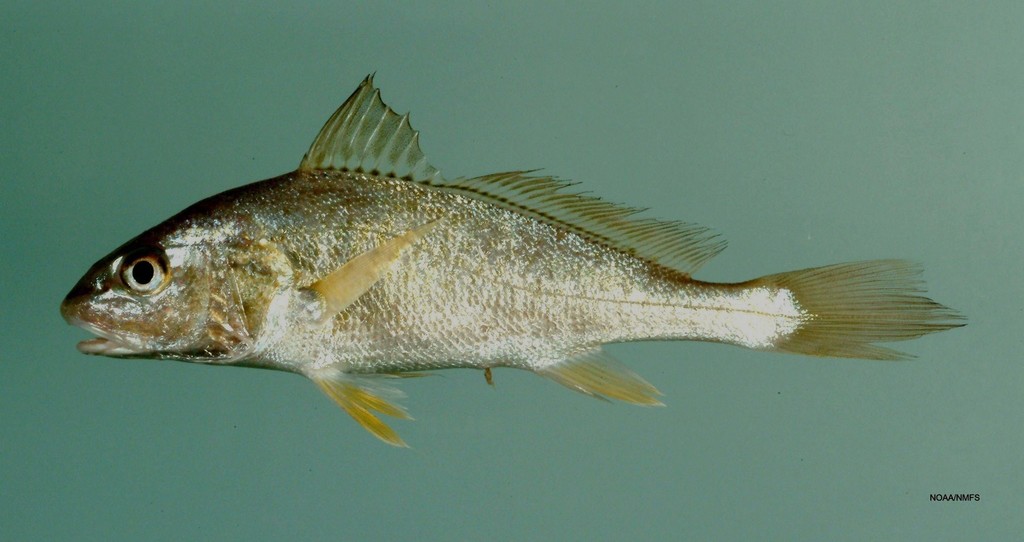
Atlantic croaker
- Family
- Sciaenidae
- Depth
- ≤ 100 m
- Season
- Jan, Feb, Mar, Apr, May, Jun, Jul, Aug, Sep, Oct, Nov, Dec
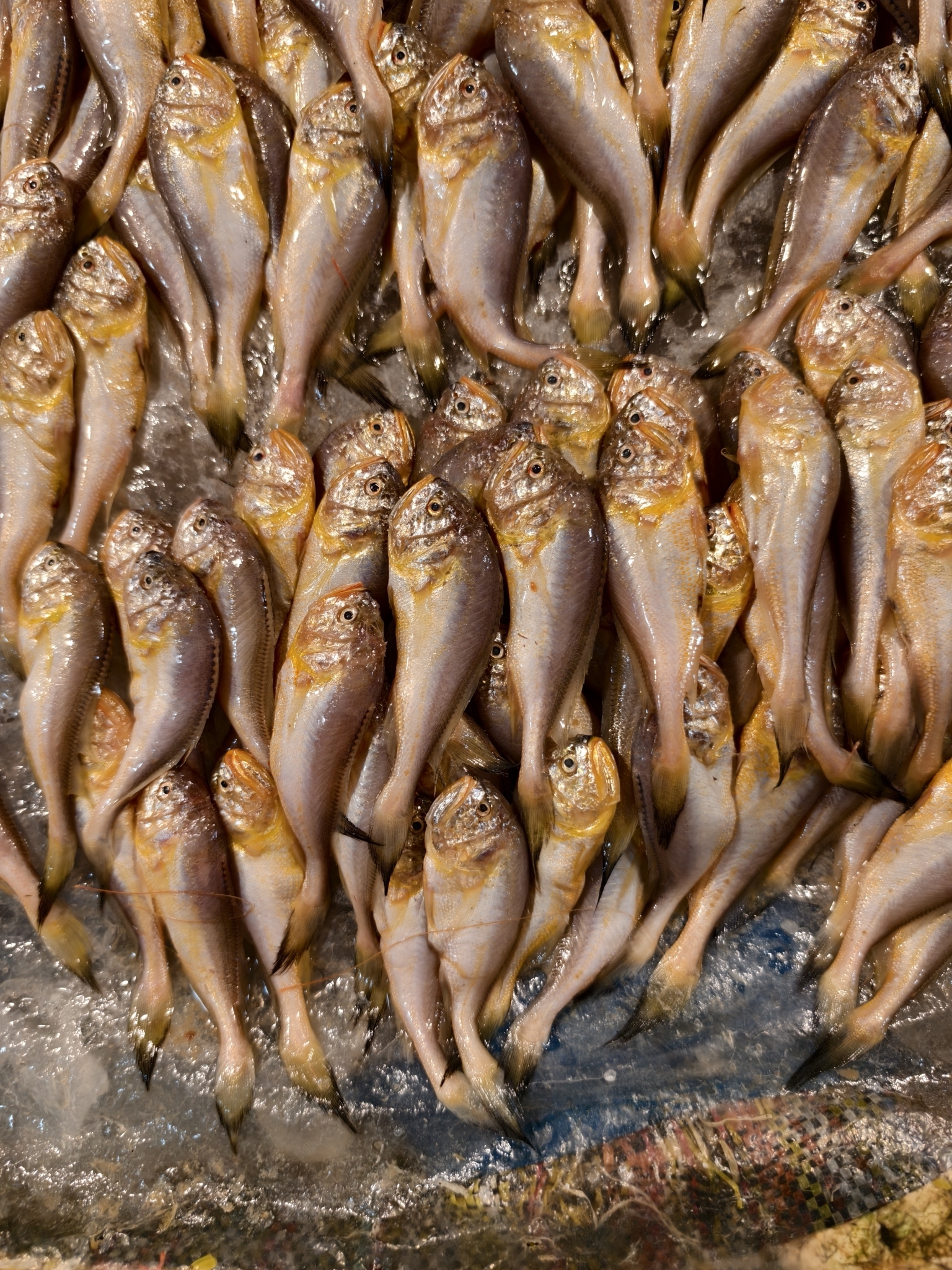
Bighead croaker
- Family
- Sciaenidae
- Depth
- ≤ 90 m
- Season
- Jan, Mar, Apr, May, Jun, Jul, Aug, Sep, Oct, Nov, Dec
Guides for this water
Technique, gear and safety guides that fit Pescadilla de calada.