
Goete
Goete is the Brazilian name for this western Atlantic sciaenid, recorded from Panama and the Greater Antilles down to Argentina. It reaches 56.9 cm TL with a common length of 35 cm and 2.2 kg, and matures at 25.1 cm. Brazil sets a federal minimum of 16 cm, which is 9.1 cm below the maturity point. Boat bottom fishing and shore casting are the methods listed.
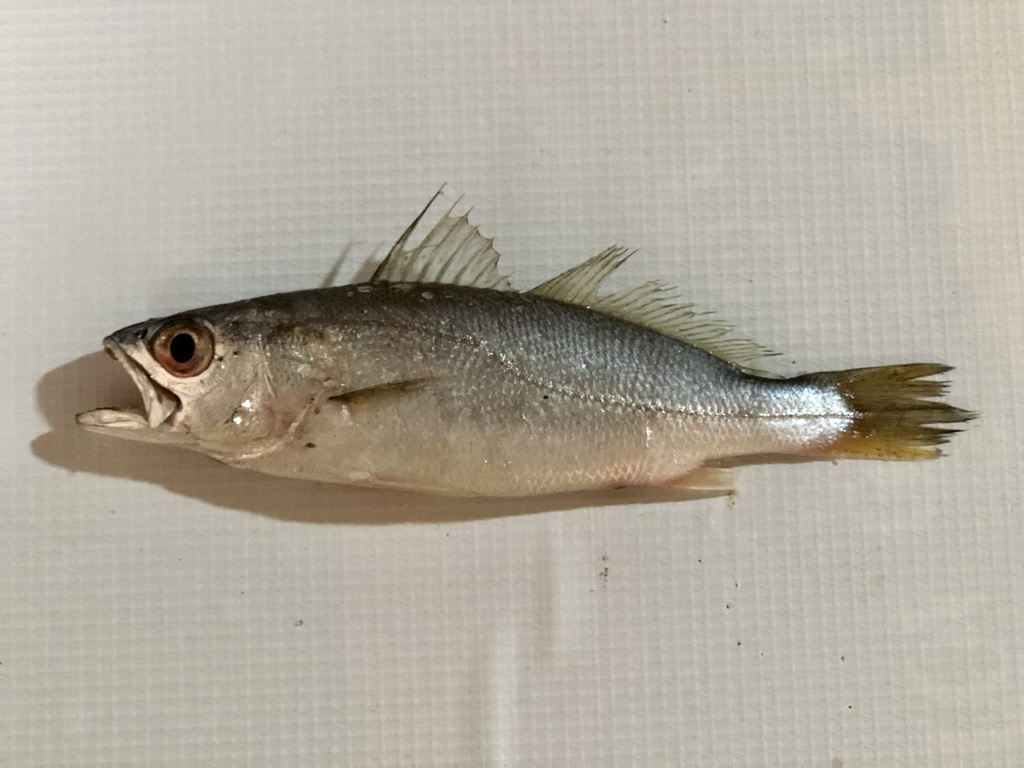
Cynoscion jamaicensis is the goete of Brazil. It reaches 56.9 cm TL, with 35 cm as the common length and 2.2 kg as the maximum weight, and matures at 25.1 cm. Brazil sets a federal minimum of 16 cm, which is 9.1 cm below the maturity point. The Spanish name is corvinata goete, a diminutive built on corvina, and this fish is not a corvina.
Identification
The morphology here is unusually detailed. FishBase gives 11 dorsal spines, 23–27 dorsal soft rays, 2 anal spines and 9 anal soft rays. It adds a set of marks that survive a wet hand: greyish above and silvery below, no conspicuous spots but faint dark streaks along the scale rows above the lateral line, the pectoral base and upper rays slightly dark, the pelvic and anal fins often yellowish, and the dorsal and caudal fins dusky with a darker margin. The inside of the opercle is darkish and shows through from outside.
The head characters are the ones to check on a fish in a bucket: mouth large and oblique, lower jaw slightly projecting, a pair of large canine-like teeth at the tip of the upper jaw, chin without a barbel and without pores, and two marginal pores on the snout. The gas bladder carries a pair of horn-like anterior appendages, a character for a dissection rather than a photograph.
Range and habitat
The distribution text runs from Panama and the Greater Antilles to Argentina, including the Lesser Antilles, with Nicaragua listed separately. Coordinates are 18°N–52°S and 83°W–34°W. GBIF returns 582 present records: 347 from Brazil, 29 from French Guiana, 21 from Guyana, 20 from Suriname, 20 from Venezuela, 18 from Colombia, 18 from Trinidad and Tobago, 11 from Puerto Rico, and single figures down to the Bahamas and Guatemala. Brazil holds 60 per cent of the set and Venezuela 20 records. iNaturalist holds 2 observations, so photo coverage of this species is close to nil.
The habitat line reads marine, brackish, demersal, 1–70 m with the usual band at 18–55 m. The biology text adds that the fish sits on sand or mud from the coastline to about 60 m and is rarely found shallower than 18 m. Those two statements agree on the centre and disagree on the edge: the environment field allows 1 m, the biology text calls the shallow end rare. For a shore angler the practical reading is that the fish is at the edge of its recorded range in wading depth.
Habits and diet
Juveniles use river estuaries, the species is oviparous with high fecundity, and it feeds on fishes and crustaceans, crabs and shrimps named. That is a broad predatory diet rather than a specialist one, and it is the only behavioural detail the page carries.
No growth rate, no natural mortality, no predator list and no migration route is recorded. The estuary use is described for juveniles only, so the adult habitat is the 18–55 m shelf band.
Season and time of day
The spawning table has three entries. The north coast of the Paria Peninsula in Venezuela runs January–February and September–December; the Brazilian south-east and south runs September–November; a second Brazilian record for the same area, dated 1993–1998, adds March to November. Two regions, two windows, and a Brazilian record that is the only one on the page carrying years.
September to December therefore appears in both the Venezuelan and the Brazilian rows, which is the closest thing to a shared season the table offers. The Venezuelan row has a January–February block that the Brazilian rows do not. No time-of-day record exists; an inference from a demersal fish held at 18–55 m is that light is not the controlling variable, and current over the sand and mud edge is, which is inference and labelled as such.
Tackle and techniques
The source gives no rig, bait or hook size. It gives a 35 cm common length, a 56.9 cm maximum, 2.2 kg as the maximum weight, a 25.1 cm maturity point, a demersal habit at 18–55 m over sand and mud, estuarine juveniles, and a diet of fish and crustaceans.
From that: a bottom or near-bottom presentation from a boat over the 18–55 m band, with the shore option limited to places where the shelf comes inside that band. Baits that match the recorded prey are fish strips and crustacean, which is a direct reading of the diet rather than an added recommendation.
Gear follows a 35 cm fish, with 2.2 kg as the recorded ceiling. The 16 cm legal minimum sits far below both the common length and the maturity point, so the rule permits a fish that has not spawned.
Kitchen and handling
FishBase calls the species an important food fish and records it as commercial and as a gamefish. There is no flesh description, no yield figure and no price. The maximum weight of 2.2 kg is the only mass figure on the page.
The English market names are a trap of their own: “salmon”, “silver salmon” and “pan salmon” in Trinidad, and “table bashaw” in Guyana, are local sale words and not statements about the family. Nothing on the page supports a comparison with salmon flesh, and none is made here.
Regulations and conservation
Brazil requires a licence, limits the marine catch to 15 kg plus one specimen, and sets a federal minimum of 16 cm. At 25.1 cm maturity, the 16 cm line allows the take of juveniles, and the gap is 9.1 cm.
Venezuela is in the range and holds 20 GBIF records, but no Venezuelan bag limit or minimum size for this species appears in the sources checked, and none is stated here. The same applies to Trinidad and Tobago, Puerto Rico and the other Caribbean states in the distribution: they are in range, and they are not covered by this page's regulation set.
IUCN lists the species as Least Concern, assessed on 11 October 2019, with no trend and no stock figure on the page. A two-observation iNaturalist record and 582 GBIF records are the whole open occurrence picture.
How to catch it
Boat bottom fishing
Fished with the listed approach, matched to the recorded depth and size.
Shore casting
Fished with the listed approach, matched to the recorded depth and size.
Where these facts come from
Check these pages before you rely on a size, range or protection status.
- FishBase — Cynoscion jamaicensis — FishBase · T2
- GBIF — Cynoscion jamaicensis occurrence records — GBIF · T2
- IUCN Red List — Cynoscion jamaicensis — IUCN · T1
- Photo record — iNaturalist — iNaturalist · T3
Fish in the same water
These fish live in the same place.

Acoupa weakfish
- Family
- Sciaenidae
- Depth
- 1–20 m
- Season
- Jan, Feb, Mar, Apr, May, Jun, Jul, Aug, Sep, Oct, Nov, Dec
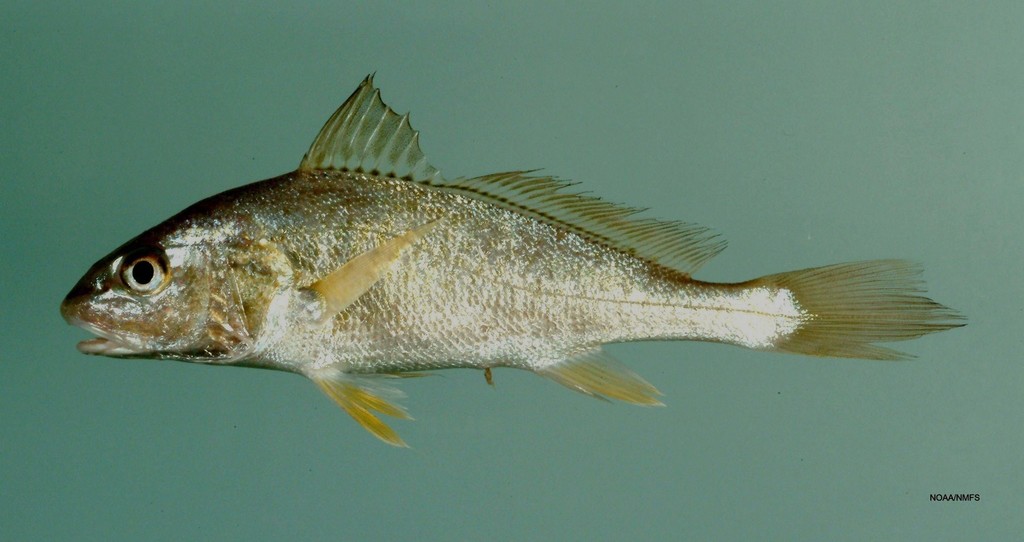
Atlantic croaker
- Family
- Sciaenidae
- Depth
- ≤ 100 m
- Season
- Jan, Feb, Mar, Apr, May, Jun, Jul, Aug, Sep, Oct, Nov, Dec
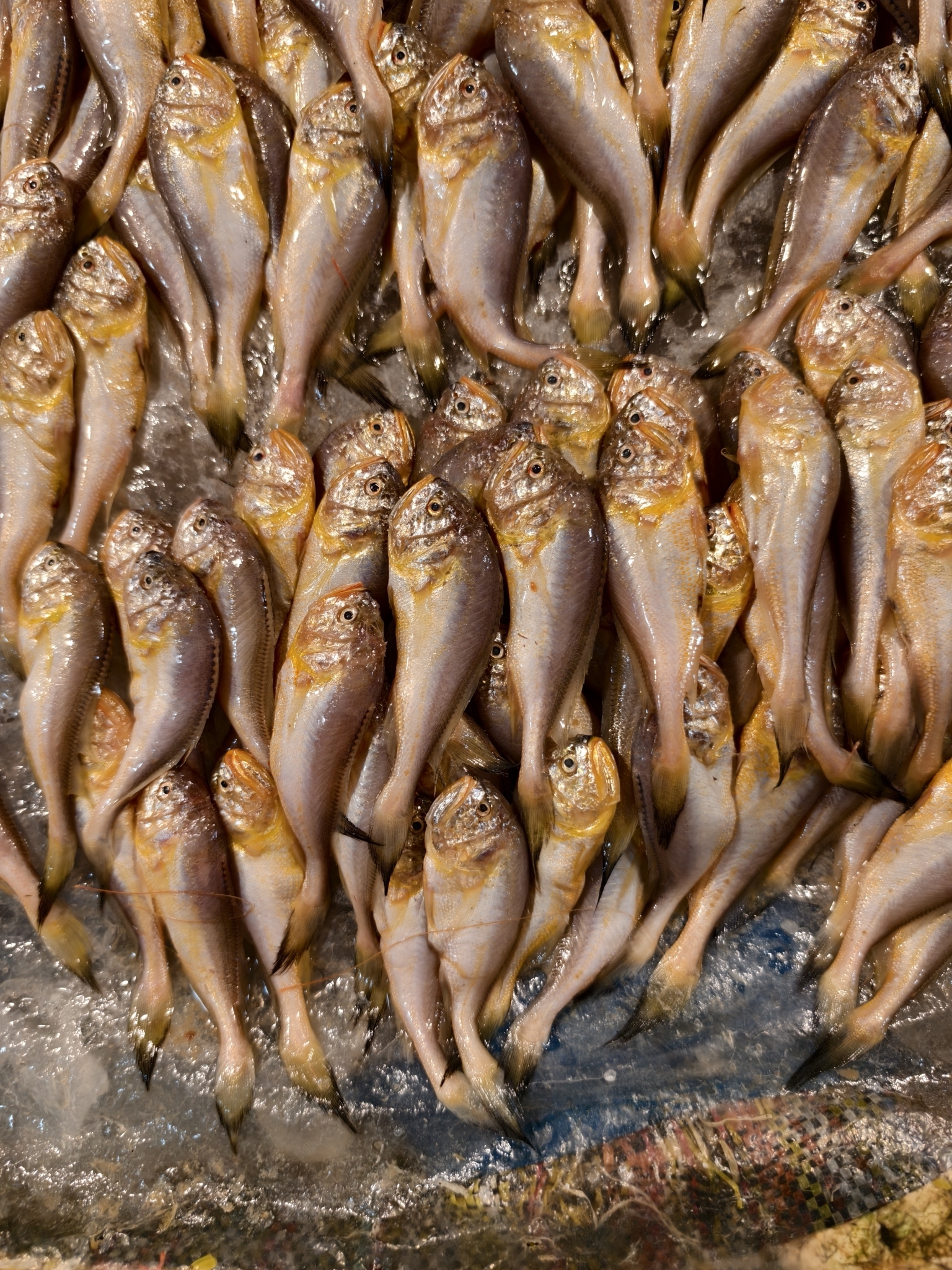
Bighead croaker
- Family
- Sciaenidae
- Depth
- ≤ 90 m
- Season
- Jan, Mar, Apr, May, Jun, Jul, Aug, Sep, Oct, Nov, Dec
Guides for this water
Technique, gear and safety guides that fit Goete.