
Shortfin corvina
The morphology field says only that the body is fusiform with a normal cross-section. Drums share that outline, and separating species inside the genus needs fin-ray and scale detail that the packet does not carry, so no photographic identification is claimed here. Length comes in two tiers, 40 cm common and 69 cm maximum, which makes a fish around 40 cm the likeliest encounter.
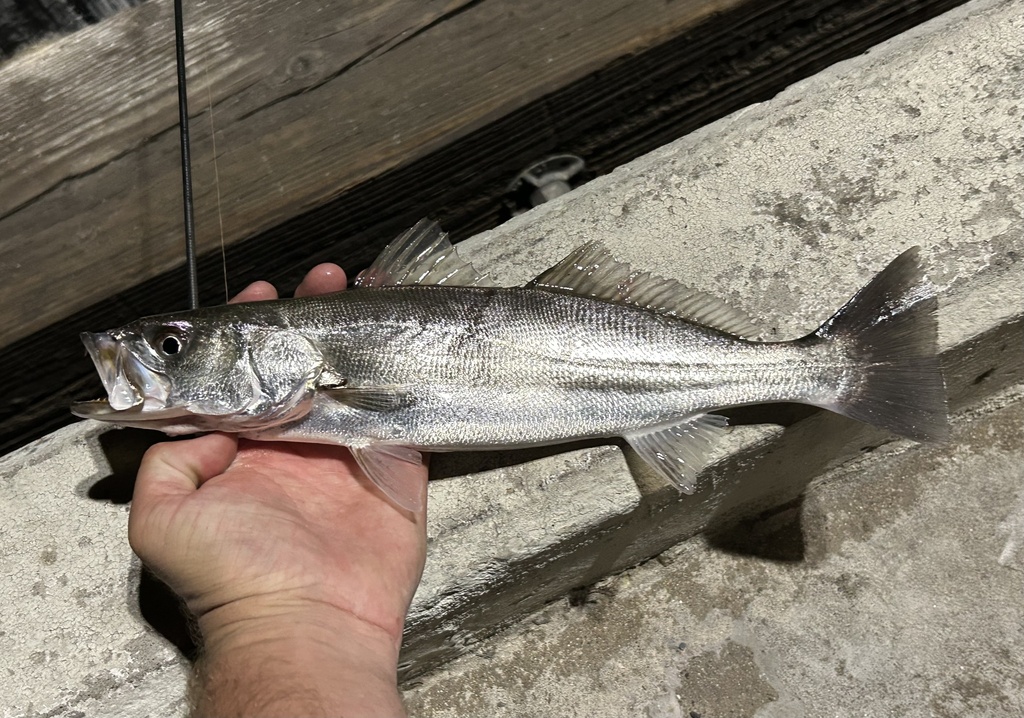
The morphology field says only that the body is fusiform with a normal cross-section. Drums share that outline, and separating species inside the genus needs fin-ray and scale detail that the packet does not carry, so no photographic identification is claimed here. Three checkable points remain. Length comes in two tiers, 40 cm common and 69 cm maximum, which makes a fish around 40 cm the likeliest encounter. Weight tops out at 3.2 kg, light for the family. And the range sits between southern California and Mazatlan only; outside that box the name should not be assumed. The Chinese name carries , dog tooth, from the genus Cynoscion and its jaw and dentition; the teeth themselves are not described in this draft. The English alias weakfish places it with the soft-fleshed sea trout in market speech.
A narrow box on a sandy coast
The distribution sentence is unusually precise: eastern Pacific from southern California to Mazatlan and the Gulf of California, rare north of Baja California. The country table has just two rows, Mexico and the contiguous United States. The coordinate box is 34°N to 21°N and 118°W to 108°W — a dozen degrees each way, a local range rather than an ocean one. Environment is marine, demersal, subtropical, and the habitat note is blunt: shallow inshore sandy areas. The depth fields are empty. That is worth stating plainly: with no depth figures there is no water-column advice to give, only terrain. Sand flat, surf gutter and estuary channel are the same three places a surf angler already walks.
A subtropical frame with no calendar
The record places the fish in subtropical water between 34°N and 21°N. There are no spawning months and no temperature values, so this section can only offer a usable frame: the further north you go, the closer you are to the edge of the range, and the more the season depends on that year's water; the southern end and the inner Gulf of California are the stable warm core. Reproduction is recorded as oviparous, which says something about strategy but nothing about months. Practically, the northern margin is a poor winter bet, and a trip planned around the subtropical core is the safer one. That is an inference from range edges, not a line in the source, so the year's water temperature and local reports still decide.
Reading sand instead of reef
A bottom-hugging fish on open sand is found by reading gutters, not structure. Three positions come first: the trough scoured behind the shorebreak, the sandy channel running off a river mouth, and the slower water at a bend in an estuary channel. Cut fish is the default bait, with shrimp and small whole fish also listed. Fish it on the bottom with just enough weight to be moved by the swell without being rolled away; a bait that never shifts on sand gets little attention. The diet is mainly small fishes, so fish scent is the steadier choice. The take usually arrives as a light pressure followed by line leaving, and the first pressure should not be struck — wait for the line to accelerate. When the water is clear, look inside the river mouth or in shade; when it is dirty, work the outer edge. Small soft plastics or spoons crawled along the bottom are the lure equivalent, and speed matters less than staying in contact.
Light gear that still lands fish
Sixty-nine centimetres and 3.2 kg are the ceiling, while the common fish is 40 cm, so build around the 40 cm fish rather than the record. A light surf rod with a mid-size spinning reel, moderate braid and a metre or two of fluorocarbon leader is enough; sand is kind to line, but shell and shingle in the wash are not. A single hook fished to the bottom, sized to the bait, strikes the balance between refusal and pull-out. Choose sinkers by sea state: a flat or gripped lead when the swell is up, something lighter that can drift when it is flat. Once hooked, do not drag the fish straight up the beach; let it work through a wave or two and use the next swell to beach it. The whole approach is light, bottom-focused and tide-driven rather than long-cast and heavy.
Limits, licences, and what the NOM says
The Mexican standard, NOM-017-PESC-1994 as revised in 2013, sets a daily total of ten fish with a five-fish cap on any single species. Whether you need a licence depends on where you fish from: shore anglers can go without one, limits unchanged, while a boat requires a personal licence for everyone over twelve. Licences cannot be borrowed and must travel with you, and recreational fish may not be sold. Baja California issues state licences at sportfishing.bajacalifornia.gob.mx, 2024 reference prices running 188, 470, 706 and 941 MXN for a day, week, month and year; Baja California Sur is handled by FONMAR. A boat in Mexican waters with tackle aboard needs a licence per person, and a national park or reserve adds its own pass. Local spawning closures for drums should be confirmed with CONAPESCA and the state each year rather than assumed from an earlier season.
Where the record stops
FishBase supplies the species-level facts; iNaturalist supplies 79 observations and the photographs' licensing; GBIF was used to confirm the species key; the Mexican limits come from the NOM text on FAOLEX and from the two state licence pages. Four items are missing and are not filled in here: depth, maximum age, an IUCN assessment — the field reads None and is treated as Not Evaluated — and the California recreational rules, which were not obtained, so the text covers Mexico only.
How to catch it
Boat fishing
Fished with the listed approach, matched to the recorded depth and size.
Boat fishing
Fished with the listed approach, matched to the recorded depth and size.
Boat fishing
Fished with the listed approach, matched to the recorded depth and size.
Where these facts come from
Check these pages before you rely on a size, range or protection status.
- FishBase — Cynoscion parvipinnis — FishBase · T2
- GBIF — Cynoscion parvipinnis occurrence records — GBIF · T2
- IUCN Red List — Cynoscion parvipinnis — IUCN · T1
- Photo record — iNaturalist — iNaturalist · T3
Fish in the same water
These fish live in the same place.

Acoupa weakfish
- Family
- Sciaenidae
- Depth
- 1–20 m
- Season
- Jan, Feb, Mar, Apr, May, Jun, Jul, Aug, Sep, Oct, Nov, Dec
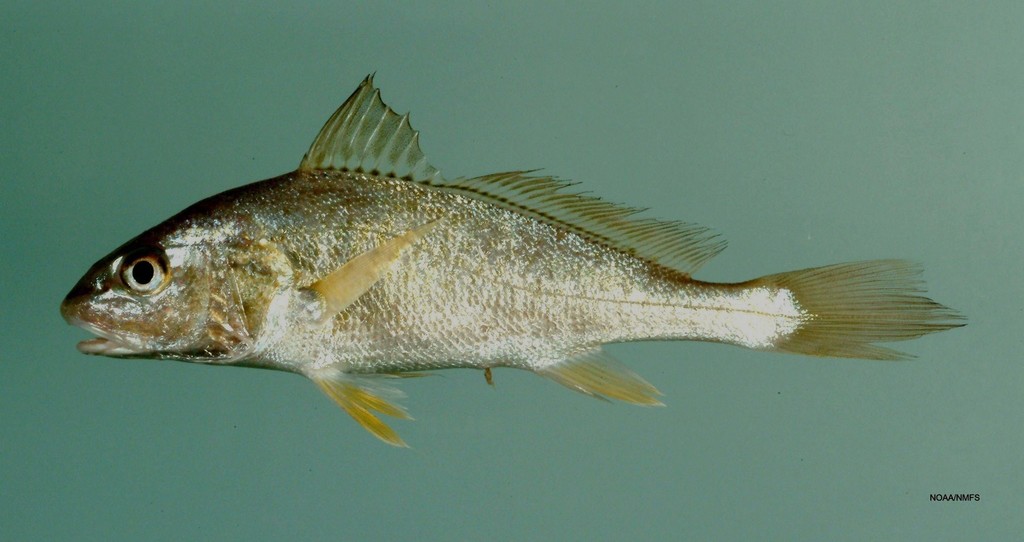
Atlantic croaker
- Family
- Sciaenidae
- Depth
- ≤ 100 m
- Season
- Jan, Feb, Mar, Apr, May, Jun, Jul, Aug, Sep, Oct, Nov, Dec
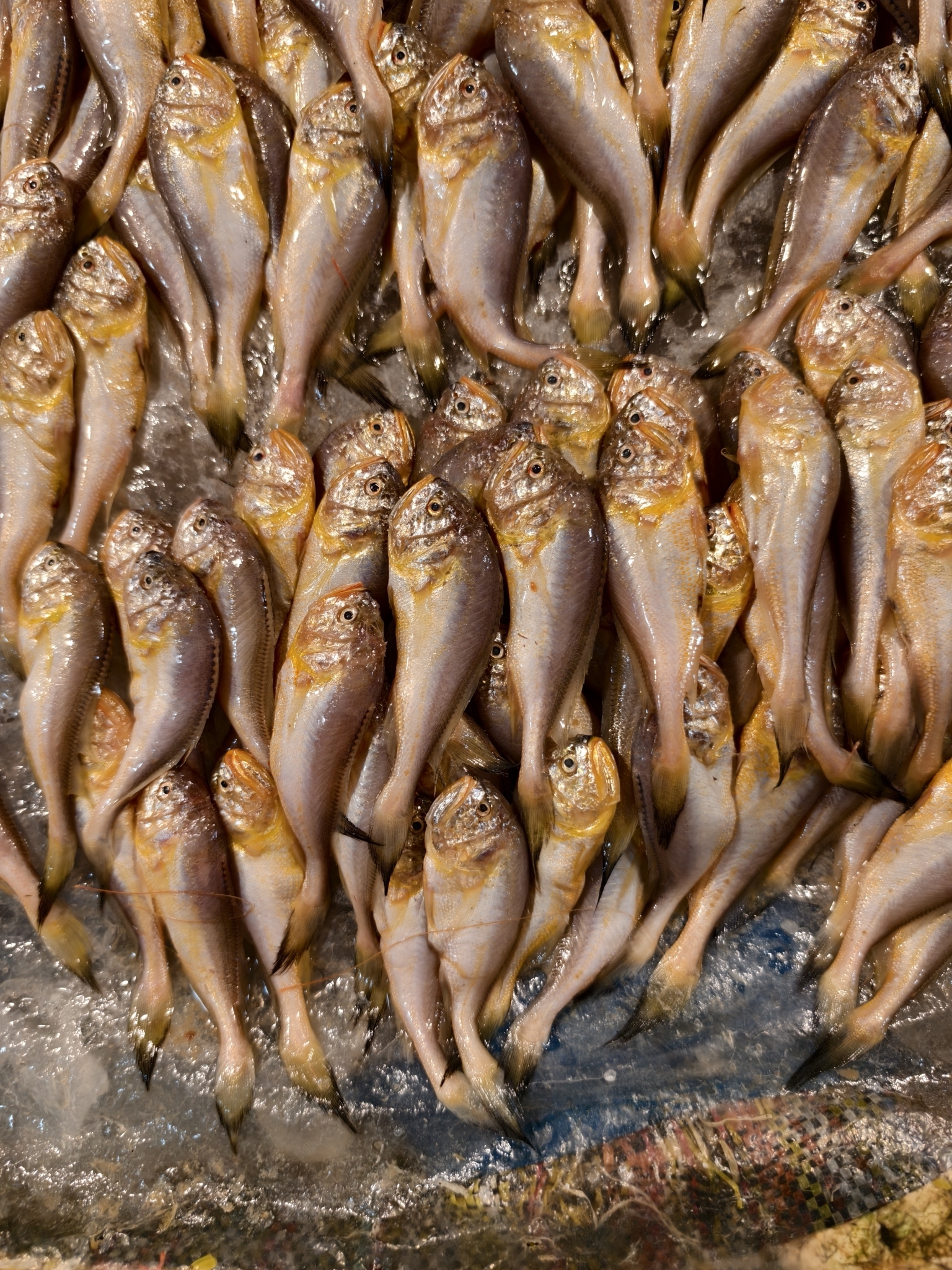
Bighead croaker
- Family
- Sciaenidae
- Depth
- ≤ 90 m
- Season
- Jan, Mar, Apr, May, Jun, Jul, Aug, Sep, Oct, Nov, Dec
Guides for this water
Technique, gear and safety guides that fit Shortfin corvina.