
Orangemouth weakfish
Orangemouth weakfish is a sciaenid of the eastern Pacific, native to Mexico, with an introduced population in the Salton Sea in southern California. It lives from 1 to 50 m in tropical water, reaches 129 cm TL and 24.6 kg, and is listed as Data Deficient.
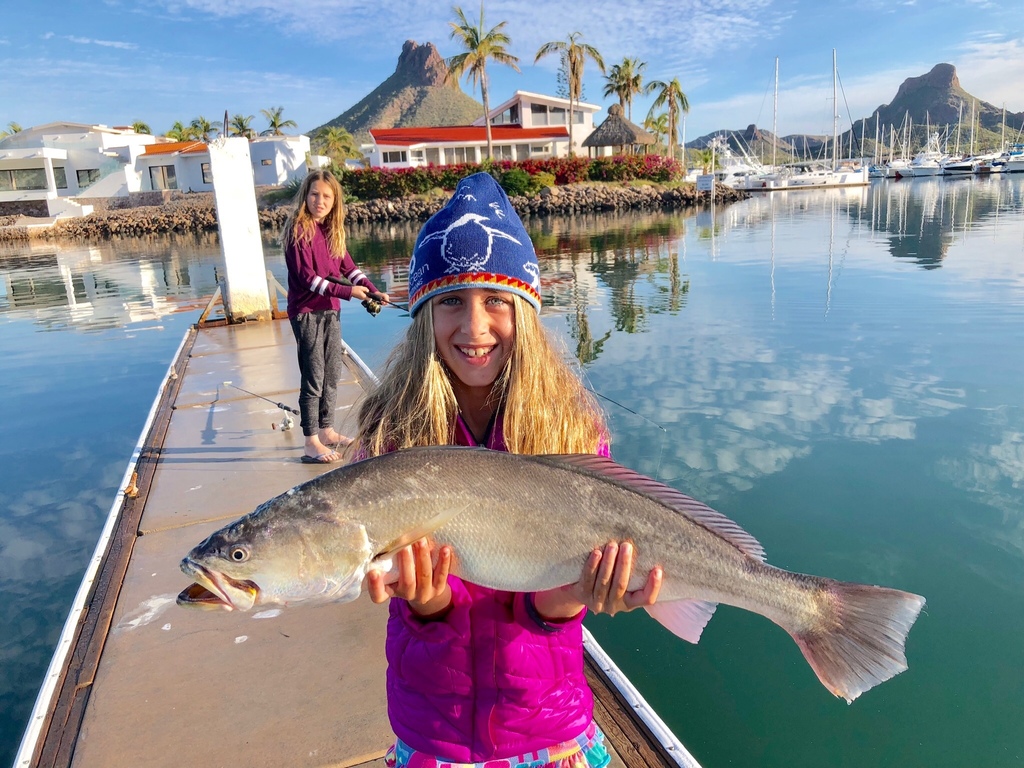
Orangemouth weakfish (Cynoscion xanthulus) is a fish of the family Sciaenidae. FishBase gives its range as: Eastern Pacific: Mexico. Introduced into the highly saline waters of Salton Sea in southern California, USA. FishBase's morphology block is empty — no fin-ray counts, no body shape. It is recorded from 1 to 50 m, in tropical water. The recorded maxima are 129 cm TL, 24.6 kg. IUCN status: Data Deficient (DD). Chinese name: .
Identification
FishBase opens with "Orangemouth weakfish", but its own name table is more divided: the AFS entries for Mexico and the United States read "Orangemouth corvina", while the global FAO entry reads "Orangemouth weakfish". The batch list's "Yellowmouth corvina" appears on neither FishBase list. iNaturalist's preferred name for taxon 98873 is "Orangemouth corvina". Three labels, one sciaenid.
The body numbers are thinner than the name list. The record gives a 129 cm total length and a 24.6 kg maximum weight, both from the same reference, and no common length, no length at maturity and no maximum age. Only the extreme is defended. FishBase's morphology block is empty — no fin-ray counts, no body shape. iNaturalist holds nine observations under taxon 98873. WoRMS carries the species as AphiaID 276095, adds FAO-ASFIS status, and records active sound production under natural conditions. The sound note is the most useful identification fact here: a calling drum can be found at night, a silent one cannot.
Habitat and distribution
The range sentence joins two clauses that should not be drawn as one polygon: "Eastern Pacific: Mexico", then introduction into the highly saline waters of the Salton Sea in southern California. The country table resolves the difference — Mexico native, the contiguous United States introduced. An angler on the Salton Sea and an angler on the Mexican Pacific coast fish the same species under two different histories.
The environment fields read marine and brackish, benthopelagic, tropical, from 33°N to 14°N and 118°W to 92°W, spanning 1–50 m. The only habitat keyword is "coastal"; there is no reef, sand or mud term, so the database places the fish inshore without saying which bottom it uses. OBIS returns 70 records in nine datasets dated 1895 to 2018. The query runs on the name alone and cannot separate native coast from introduced lake, so the figure spans both populations.
Season and fishing approach
The record carries neither a spawning month nor a diet keyword, which leaves depth, behaviour and the use categories as material. The 1–50 m band is shallow, and the benthopelagic label puts the fish just above the bottom rather than on it. A bottom bait fished a metre off a coastal flat is the natural presentation, and with no prey list the bait is a local choice.
The uses line separates two fisheries: highly commercial under landings, and gamefish "yes". A fish that is both netted in quantity and taken on rod should be approached as a school, not a solitary target. WoRMS's note on active sound production turns that into a method: on a still night, cut the engine, listen, and find the school before casting. The single "coastal" keyword is a caution rather than a mark on a map — it says inshore, not where.
Edibility and regulations
The use record lists highly commercial landings and gamefish use, with no aquaculture or aquarium supply. The Red List assessment dated 24 January 2020 returns Data Deficient, which states that the information is insufficient rather than that the stock is healthy.
What is missing can be named precisely: neither of the two rows carries a minimum landing size, a daily bag or a closed season, and neither names the authority that would set one. The Salton Sea makes the gap practical: a fish from an introduced stock in a closed basin and a fish from the native Mexican stock are not covered by the same instrument, and this record does not say which instrument applies to either. Until a state or federal text is read directly, the database does not answer "can I keep this one".
Where these facts come from
Check these pages before you rely on a size, range or protection status.
- FishBase — Cynoscion xanthulus — FishBase · T2
- GBIF — Cynoscion xanthulus occurrence records — GBIF · T2
- IUCN Red List — Cynoscion xanthulus — IUCN · T1
- Photo record — iNaturalist — iNaturalist · T3
Fish in the same water
These fish live in the same place.

Acoupa weakfish
- Family
- Sciaenidae
- Depth
- 1–20 m
- Season
- Jan, Feb, Mar, Apr, May, Jun, Jul, Aug, Sep, Oct, Nov, Dec
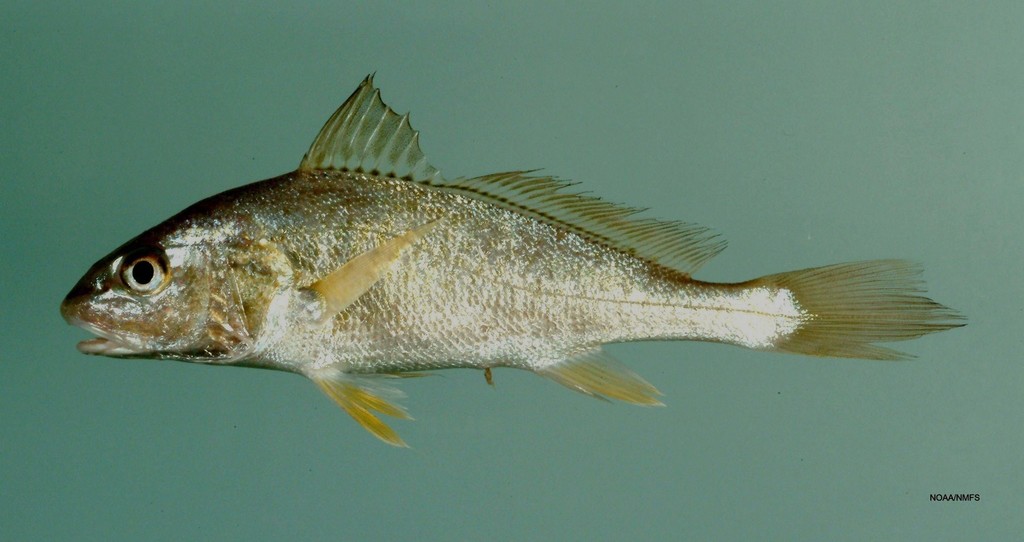
Atlantic croaker
- Family
- Sciaenidae
- Depth
- ≤ 100 m
- Season
- Jan, Feb, Mar, Apr, May, Jun, Jul, Aug, Sep, Oct, Nov, Dec
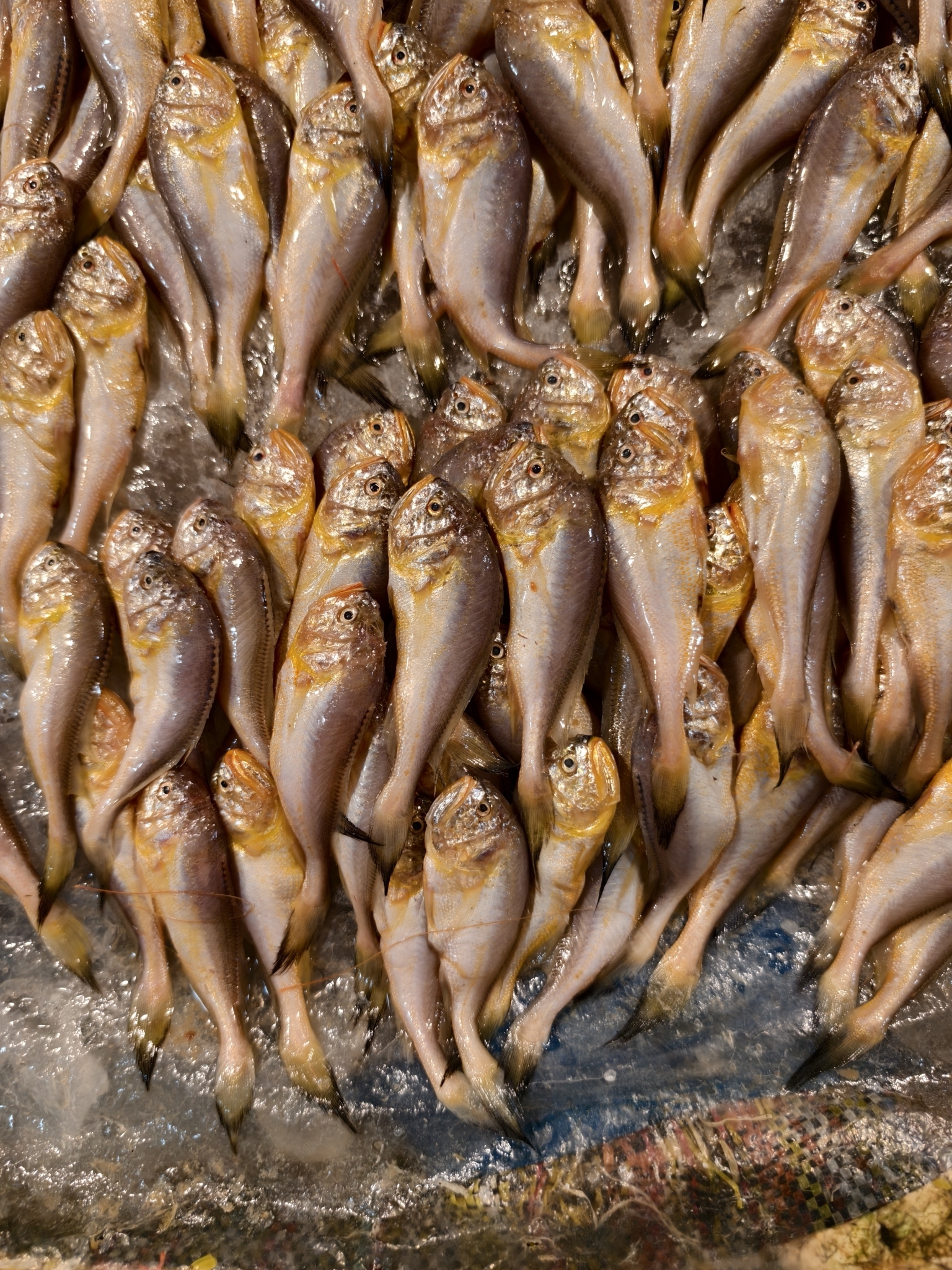
Bighead croaker
- Family
- Sciaenidae
- Depth
- ≤ 90 m
- Season
- Jan, Mar, Apr, May, Jun, Jul, Aug, Sep, Oct, Nov, Dec
Guides for this water
Technique, gear and safety guides that fit Orangemouth weakfish.