
Mackerel scad
The quickest mark is inside the mouth: in adults the oral valve at the symphysis of the upper jaw is conspicuously white. The shoulder girdle has two small papillae on its margin, the lower one the larger. The dorsal and anal fins each end in a widely detached finlet, the carangid trademark expressed in this species' own way.
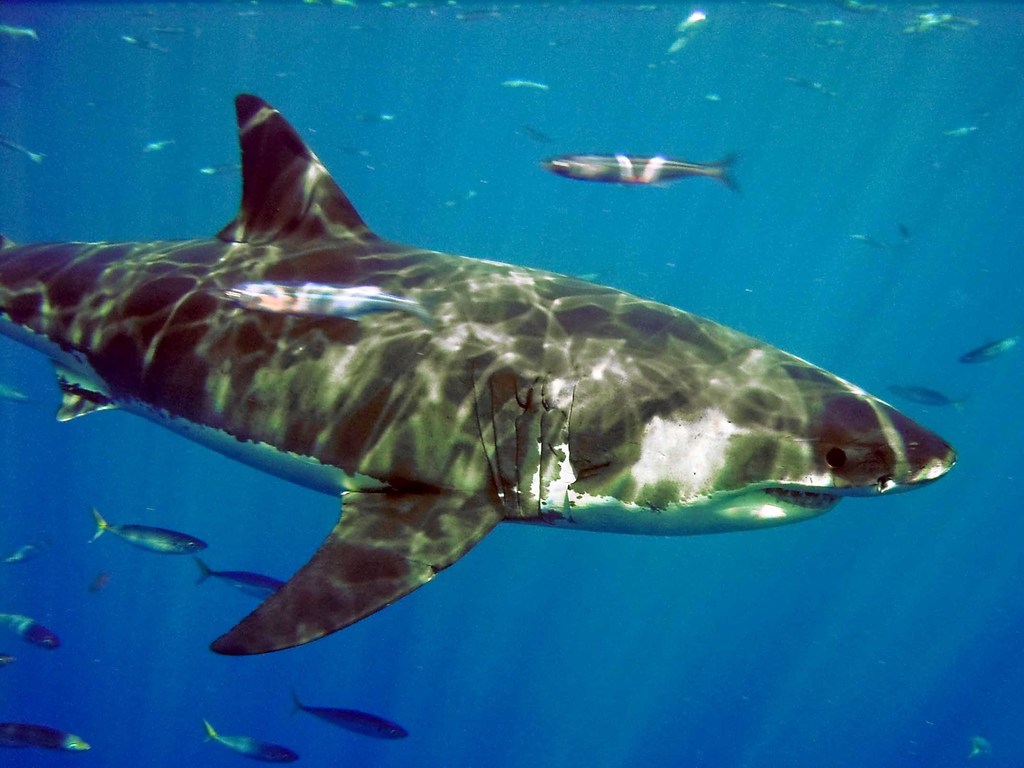
The quickest mark is inside the mouth: in adults the oral valve at the symphysis of the upper jaw is conspicuously white. Neither jaw carries teeth. The shoulder girdle has two small papillae on its margin, the lower one the larger. The dorsal and anal fins each end in a widely detached finlet, the carangid trademark expressed in this species' own way. The pectoral fin is short, 58–72 per cent of head length, and its tip falls well short of the second dorsal origin when pressed against the body. The lateral line is in two parts: 58–75 curved scales without scutes, then 18–39 straight scales carrying 24–40 scutes, 110–138 elements in total. Live colour is bluish green above and silvery below, with a small black blotch near the upper edge of the opercle and a yellow-green tail.
One ocean, many coastlines
The range is circumglobal, and FishBase lists it piece by piece. In the western Atlantic it runs from Nova Scotia and Bermuda to about Rio de Janeiro, and it appears to be absent from the Gulf of Mexico. The eastern Atlantic has St. Helena, Ascension, Cape Verde and the Gulf of Guinea, plus the Azores and Madeira. The Indian Ocean list runs from the Red Sea and Gulf of Aden through the Seychelles and Mascarenes to South Africa and Sri Lanka. In the eastern Pacific it goes from the Gulf of California and Revillagigedo to Ecuador. The latitudinal span, 54°N to 46°S, makes it a subtropical to tropical species rather than a warm-water specialist.
GBIF holds 10,077 records, led by the United Kingdom with 2,296, then the United States with 1,485, France with 1,115, Spain with 498, Japan with 304 and Mexico with 162. A British lead looks like the fingerprint of specimen and survey collections, not of a fish that is commonest in the North Atlantic. Adults prefer clear oceanic water, often around islands, and are usually seen as fast schools along reef edges next to deep water.
Floating eggs, no month
No spawning month is given; the record states only that the eggs are pelagic. For a species with a circumglobal range, a single month table would be meaningless anyway. What can be said is that the schools follow zooplankton, and zooplankton follows water temperature and upwelling. The same month can therefore fish very differently off Hawaii and off southern Japan.
In practice, treat season as the least important variable. Look first for a device or a ledge, then for the wind and current of the evening, and only then at the calendar. Light at night concentrates fish, but a fixed lamp left all night is less effective than changing the angle every twenty or thirty minutes.
Sabiki first
The main tool is a sabiki, a multi-hook rig dressed with small flash flies or strips of fish skin, worked up and down around aggregating devices and ledges. Once a school is found, a small or micro jig retrieved fast through it will take fish. The third option is bait: a small piece of shrimp or cut fish on a light hook, drifted with a slow current.
‘ōpelu is worth more than its fillets. It is one of the standard live baits, so the routine is to find a school with the sabiki, keep the fish alive, and then offer them to something larger. Do not drive through the middle of the school; it will sound immediately. Work around the edge, stop briefly, retrieve fast, and come back.
Light tackle, fast fish
The species reaches 46 cm and commonly runs 30 cm, so build the outfit around lightness. A soft rod lets you see what each fish on the sabiki is doing, a fine braid main line keeps the rig from planing, and a short leader reduces tangles. Use just enough weight to sink the rig slowly; too much and the hooks wrap into a knot. Small sharp hooks matter because the mouth is thin.
Do not ask the sabiki to fight a big fish. The rig is not built for it, and the correct move is to finish the bait stop and change tackle. The live well needs circulation and space; packed too tightly, the fish turn over quickly.
Dinner, bait and a local bait rule
FishBase records the species as marketed fresh and also salted or dried, and notes reports of ciguatera poisoning. The human-use field itself is blank, which is a gap rather than a statement that nobody uses it.
Hawaii sets no minimum mesh size for ‘ōpelu. In the South Kona waters from Kiilae-Keokea to Kapua-Kaulanaumauna, animal bait is prohibited except on a handline, so check that rule before planning to fish shrimp or cut fish there. A non-resident recreational angler needs an NRMFL and commercial sale needs a CML. Size and bag terms follow the current year's announcement.
What the records do not say
The entry draws on FishBase for taxonomy, range, meristics, depth, diet and use, GBIF for national records, iNaturalist for the taxon link and 406 observations, and DLNR-DAR for state rules. The blank human-use field sits beside a detailed note on salting, drying and fresh sale, so the gap is recorded rather than resolved. No maximum weight or age is given, and no spawning month, so this entry quotes neither a weight ceiling nor a season table. GBIF's British-led totals point to a collection bias, so the distribution text still follows FishBase.
How to catch it
Boat fishing
Fished with the listed approach, matched to the recorded depth and size.
Jigging
Fished with the listed approach, matched to the recorded depth and size.
Boat fishing
Fished with the listed approach, matched to the recorded depth and size.
Where these facts come from
Check these pages before you rely on a size, range or protection status.
- FishBase — Decapterus macarellus — FishBase · T2
- GBIF — Decapterus macarellus occurrence records — GBIF · T2
- IUCN Red List — Decapterus macarellus — IUCN · T1
- Photo record — iNaturalist — iNaturalist · T3
Fish in the same water
These fish live in the same place.
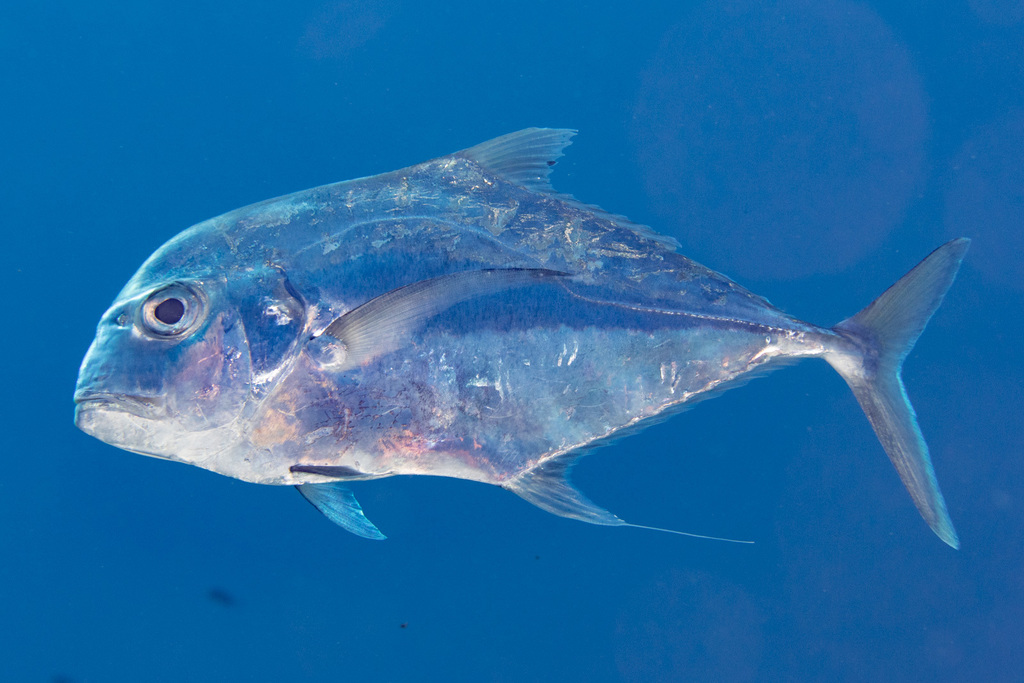
African pompano
- Family
- Carangidae
- Depth
- 60–100 m
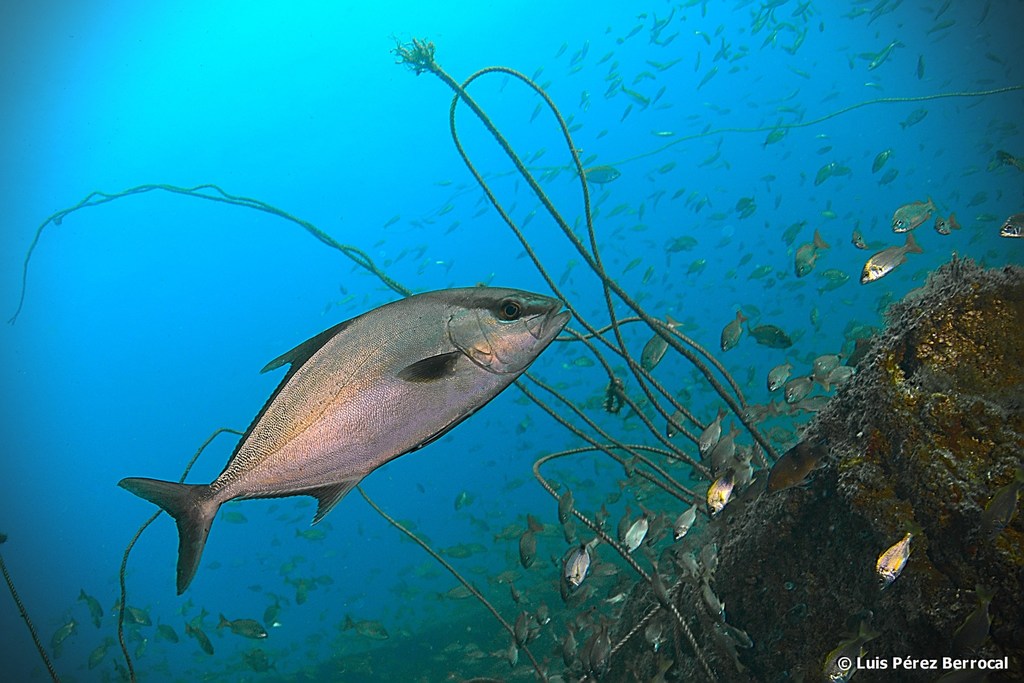
Almaco jack
- Family
- Carangidae
- Depth
- 5–245 m
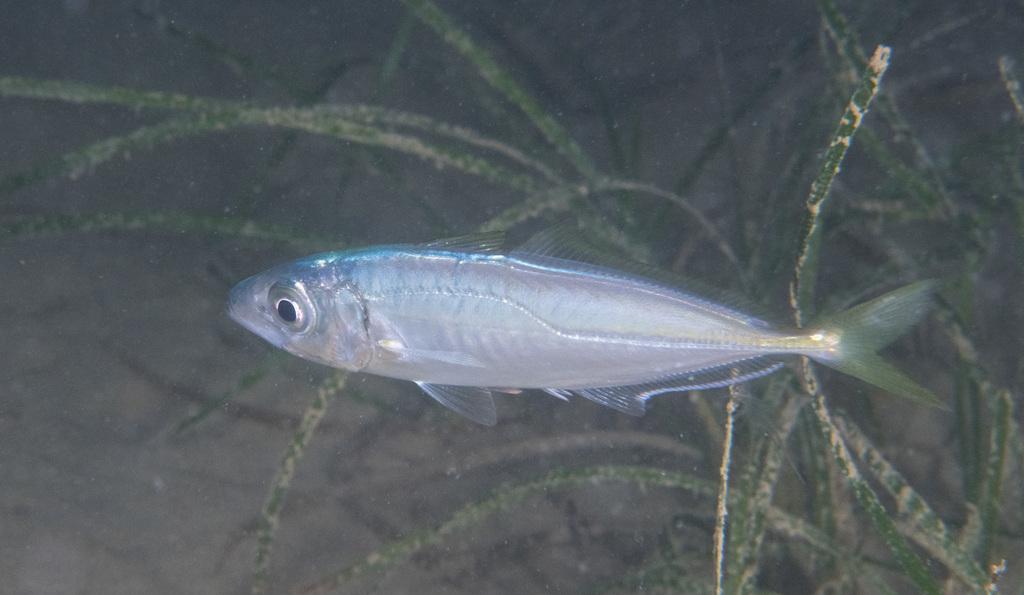
Atlantic horse mackerel
- Family
- Carangidae
- Depth
- 0–1050 m
- Season
- Jan, Feb, Mar, Apr, May, Jun, Jul, Aug, Sep, Oct, Nov, Dec
Guides for this water
Technique, gear and safety guides that fit Mackerel scad.