
California white croaker
The white croaker is one of the most numerous pier fish in Southern California, with no size limit and a generous bag limit, and it is also the subject of the most specific consumption warning on this coast: OEHHA advises against eating fish taken between Santa Monica Pier and Seal Beach Pier. Knowing which stretch of coast to release it on is the harder part.
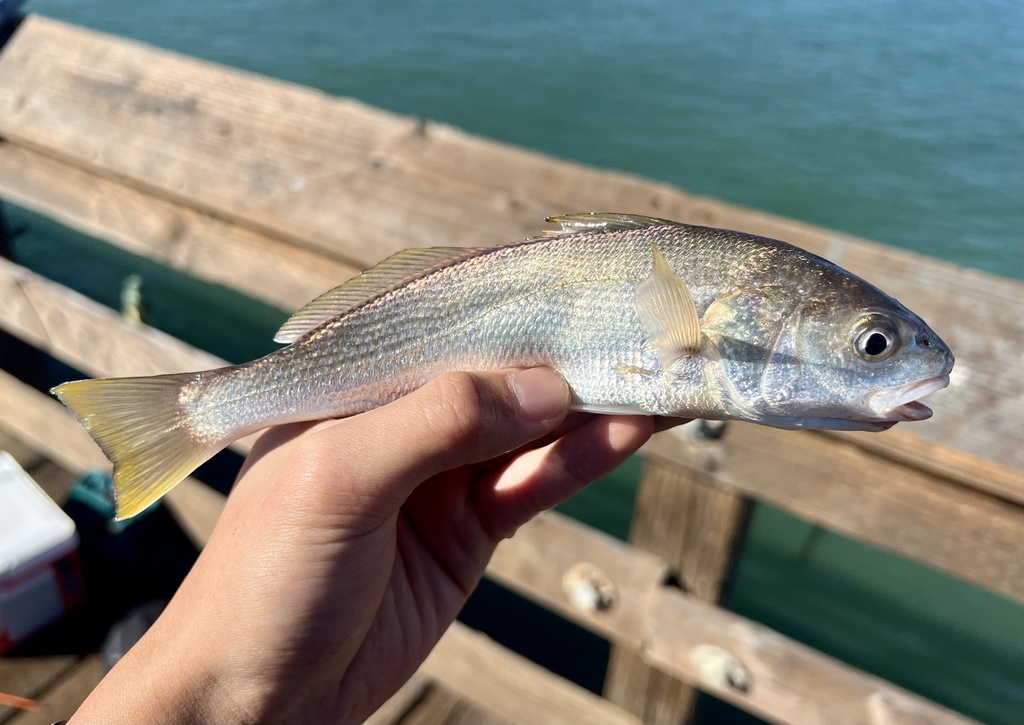
The white croaker is one of the most numerous pier fish in Southern California, with no size limit and a generous bag limit, and it is also the subject of the most specific consumption warning on this coast: OEHHA advises against eating fish taken between Santa Monica Pier and Seal Beach Pier. Catching one is easy. Knowing which stretch of coast to release it on is the harder part.
No spots, no bars, no barbel on the chin
The body is more slender than most local croakers, silver-grey above and white below, with no spots, no bars and no barbel under the chin. Those three absences separate it from the yellowfin croaker, the spotfin croaker and the California corbina. FishBase gives 13 to 16 dorsal spines and 21 to 24 soft rays, two anal spines and 11 to 12 soft rays, plus a fleshy appendage at the base of the pelvic fin whose first ray ends in a free thread. Locally it is called kingfish or tomcod, two names that invite confusion; white croaker is safer at the cleaning table. The pelvic thread is visible if you look for it.
Sand from British Columbia to Baja
FishBase runs the range from Barkley Sound in British Columbia to southern Baja California and notes that the species is rare north of California. It is a sand-bottom fish, recorded to 183 m but usually inside 30 m. In Southern California the working grounds are the sand inside a pier, the mouth of a bay, the flat outside a breakwater and the silt around shallow wrecks; the fish schools tight to the bottom, so a good stop produces a run of small fish. The Canadian records sit at the edge of the range and do not make a destination. Fish the pier edge rather than the open beach.
A fish that follows its food, not the calendar
FishBase calls the species an oviparous multiple spawner and gives no month-by-month spawning table. Local catches run all year, peak from late spring through autumn, and continue inside piers in winter with smaller fish. It tracks its food more closely than it tracks temperature: polychaetes, small shrimp, crabs and molluscs sit in a certain layer of sand, and the fish sit with them. Spawning months and juvenile distribution are not published, and both are listed as gaps. A cold snap moves the school offshore without warning.
Small hooks on sand, and a fast bite
From a pier or breakwater, use a light bottom rig: a 1 to 2 oz sinker with two hooks, line tightened after the sinker lands so the rod tip reads the bottom for you. On sand the fish schools, and one good stop can produce fish after fish; the rig does not need to be refined, and smaller hooks and smaller baits often fish faster. From a boat, drag a small iron or plastic across the flat slowly enough that the head ticks the sand. The bite is light, usually a few taps before the take, so strike when the tip loads. Re-bait as soon as the shrimp stops looking fresh.
Light tackle, because nothing here snags
A 7 to 9 foot medium-action spinning rod, a 3000 to 4000 size reel, 20 lb braid, a 12 to 15 lb fluorocarbon leader, size 2 to 1/0 wide-gap hooks and a 1 to 3 oz sinker. Clean sand does not snag, so the rig can be fine, but keep an abrasion section near pier structure. The mouth is small, and a wide gap with a thin wire hooks more fish. The catch is often heavy, so use long pliers, limit handling, and return unwanted fish straight away instead of stacking them on dry concrete. Keep a wet towel or a bucket of water within reach.
The one Southern California fish with a no-eat zone
The flesh is white and soft, with a stronger taste than a yellowfin croaker; it suits deep-frying or soup, and should be bled and iced at once. The advisory needs its own paragraph: OEHHA advises against eating white croaker taken between Santa Monica Pier and Seal Beach Pier, and recommends limited consumption elsewhere in Southern California according to its area-by-area table, so check the current sheet for the beach you are fishing. California's general bag limit is 20 fish in total with no more than 10 of any single species, and the white croaker has no size limit and no closed season (14 CCR § 27.60). State and federal water can differ, MPAs ban take, and the CDFW notice decides. A licence is required from 16.
Sourcing the 41 cm and the advisory
Range, the 183 m depth ceiling, the 41 cm maximum length, the sand-bottom habit, the diet of polychaetes, small shrimp, crabs and molluscs, and the IUCN LC assessment from 2019 all come from FishBase; that entry gives neither weight nor age, and none is added here. The bag limit comes from 14 CCR § 27.60, and the consumption warning from the OEHHA sheet covering Santa Monica Pier to Seal Beach Pier and the Southern California advisory. Monthly strength and gear detail are regional angling experience. The Chinese name follows the master plan, with the FishBase name kept as an alias here.
How to catch it
Boat bottom fishing
A 1 to 2 oz sinker with two hooks; tighten the line after it lands and let the rod tip read the bottom.
Slow pitch jigging
A 20 to 40 g iron dragged slowly enough to tick the sand, worked along ridges and shallow wreck edges.
Boat bottom fishing
Two small hooks spaced apart, baited with shrimp or worm, dropped to the bottom and lifted with the drift.
Where these facts come from
Check these pages before you rely on a size, range or protection status.
- FishBase — Genyonemus lineatus — FishBase · T2
- GBIF — Genyonemus lineatus occurrence records — GBIF · T2
- IUCN Red List — Genyonemus lineatus — IUCN · T1
- Photo record — iNaturalist — iNaturalist · T3
Fish in the same water
These fish live in the same place.

Acoupa weakfish
- Family
- Sciaenidae
- Depth
- 1–20 m
- Season
- Jan, Feb, Mar, Apr, May, Jun, Jul, Aug, Sep, Oct, Nov, Dec
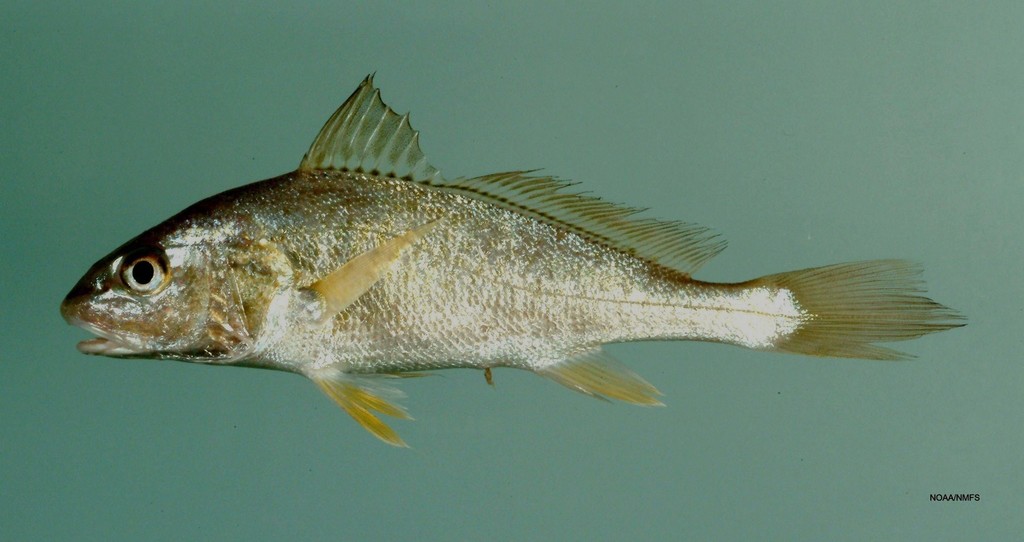
Atlantic croaker
- Family
- Sciaenidae
- Depth
- ≤ 100 m
- Season
- Jan, Feb, Mar, Apr, May, Jun, Jul, Aug, Sep, Oct, Nov, Dec
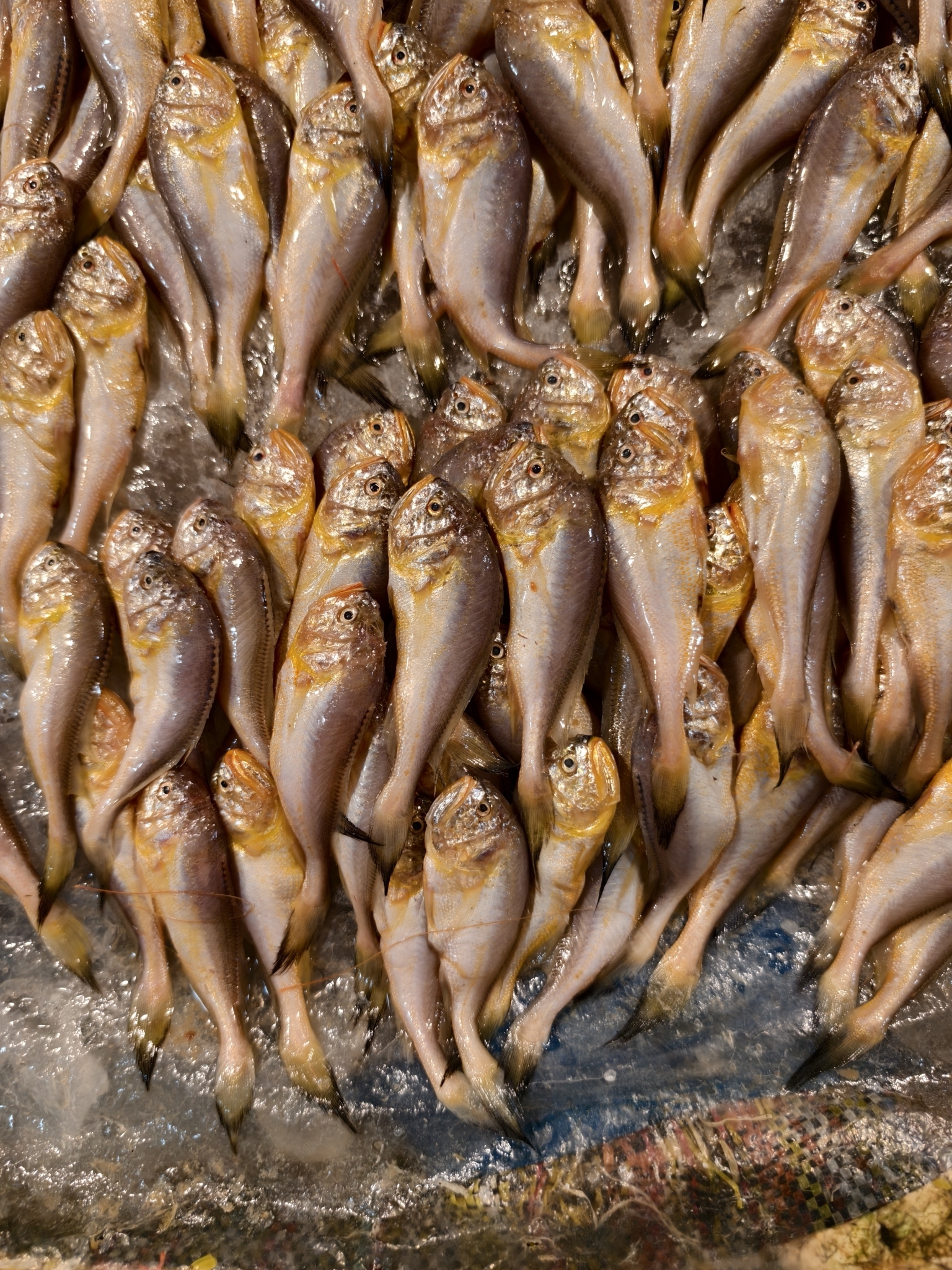
Bighead croaker
- Family
- Sciaenidae
- Depth
- ≤ 90 m
- Season
- Jan, Mar, Apr, May, Jun, Jul, Aug, Sep, Oct, Nov, Dec
Guides for this water
Technique, gear and safety guides that fit California white croaker.