
Moki
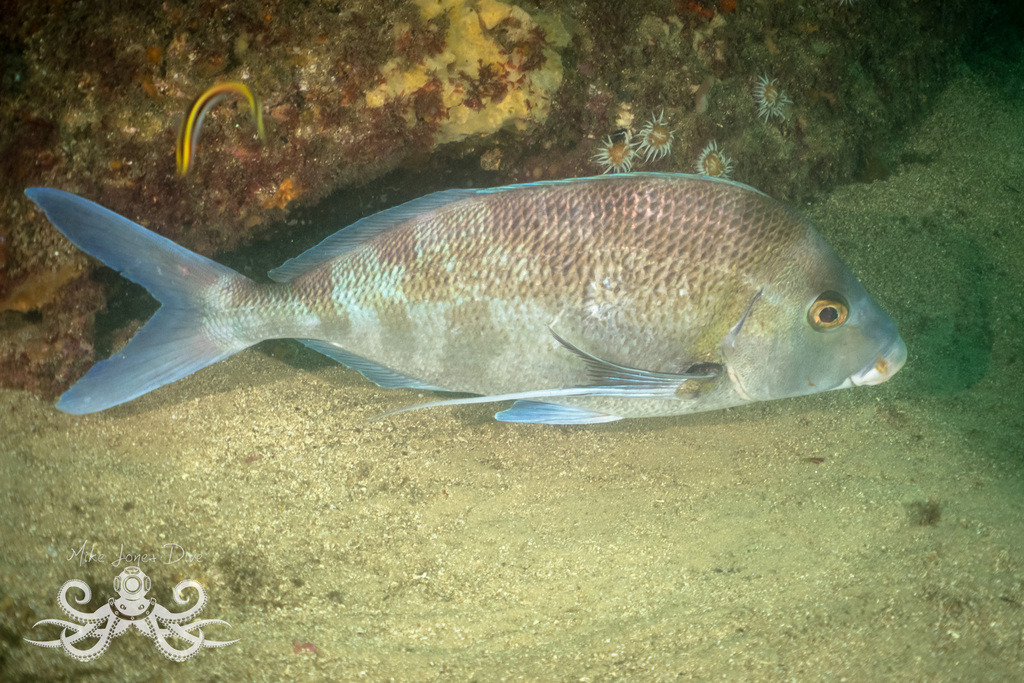
Blue moki is a southwestern Pacific trumpeter with an 80 cm FL maximum, a 63 cm TL ordinary length and a 33-year lifespan. Wikipedia calls it a species of trumpeter; FishBase places it in the family Latridae. It is also recorded as a gamefish, which is why the page carries both a boat method and a rock method.

Blue moki is a southwestern Pacific trumpeter with an 80 cm FL maximum, a 63 cm TL ordinary length and a 33-year lifespan. Wikipedia calls it a species of trumpeter; FishBase places it in the family Latridae. It is also recorded as a gamefish, which is why the page carries both a boat method and a rock method.
80 cm FL is not 80 cm TL
The maximum is 80 cm FL and the common length is 63 cm TL. The two figures use different units, and the page publishes no conversion. A tape on an FL fish and a tape on a TL fish are not the same measurement, so 80 and 63 cannot be subtracted from each other.
No weight is published. The 33-year age is the strongest life-history number on the page, and it arrives without a growth curve. An 80 cm fish and a 33-year fish are both records, and the page does not say they are the same individual.
Maturity is a range with a missing top
The maturity line reads "Lm ?, range 40 - ? cm". The 40 cm is a lower bound; the estimate and the upper bound are both blank.
That is not a release length. The 63 cm common fish is 23 cm above the lower bound, and the page gives no upper figure to say where the range closes. The only safe reading is that some fish are mature at 40 cm and the rest of the curve is unknown. Any release rule has to come from the current national rule, not from this line.
Adults offshore, juveniles on the reef
Most adults form schools offshore over mainly open bottom; some adults do not school and remain around reefs; juveniles occur inshore, usually around rocky reefs. Wikipedia repeats the pattern and adds that some solitary adults can be found on reefs.
The split changes where a mark should be placed. A reef mark is a juvenile mark or a solitary adult, and the school is a boat mark over open ground. The page gives no size at which the move offshore happens.
The depth column starts at 10 m and stops
The depth is given as 10 m with no upper bound. The habitat keywords are rocky and coastal. With no ceiling, the page cannot say how deep the offshore schools sit.
This is a real gap rather than a formatting slip: the same line that gives 10 m leaves the maximum blank, so no band can be quoted. The only usable depth statement is "10 m and greater". A boat fishing the offshore schools is therefore working without a published depth target.
743 of 766 records are New Zealand
FishBase gives the range as the southwest Pacific: New Zealand and southern Australia. The country list adds Kermadec Islands and Lord Howe Island. GBIF holds 766 records: 743 from New Zealand, 18 from Australia and five elsewhere.
Wikipedia says native around New Zealand and only occasionally off southeastern Australia, which fits the 18 Australian records better than a continuous trans-Tasman range would. The five remaining records are too few to extend the range.
August and September at Gisborne
The spawning table marks August and September, with a single regional record: New Zealand, Gisborne. No other month and no other locality are recorded.
That is one window at one place. It does not describe the whole coastline, and it does not say when the offshore schools spawn. The page publishes no temperature figure, so the window cannot be tied to a degree value. A trip outside August and September is not a trip without fish; it is a trip without a published spawning claim.
A gamefish with no diet line
Human uses list a commercial fishery and gamefish. The habitat keywords are rocky and coastal, and the diet keyword list is empty. There is no prey list, so bait cannot be matched to diet from this page.
The two uses are worth separating: commercial landings and a gamefish rating describe pressure and appeal, not abundance. Neither line gives a stock figure.
Rock and boat, two mainstream methods
Boat bottom fishing and rock fishing are both mainstream; shore casting is secondary. The terrain list is rocky shore, reef and coastal.
The same species is targeted from ledges and from boats, which is unusual for a single species record. The rock mark fits the juvenile and solitary-adult description; the boat mark fits the offshore school. The page publishes no gear specification for either method. The 80 cm maximum is the only upper bound a rig can be built around.
Not Evaluated, and New Zealand rules decide
The IUCN category is Not Evaluated, and CITES and CMS are both Not Evaluated; the species is harmless to humans. Not Evaluated means no assessment has been completed, not that the fish is unthreatened.
In New Zealand, MPI sets the amateur saltwater rules: daily bag limits, minimum sizes, method restrictions and accumulation limits, applied by fishery management area (FMA). Marine reserves under the Marine Reserves Act 1971 are no-take, and Hauraki Gulf, Fiordland and Marlborough Sounds carry additional rules, as do temporary closures and rāhui.
No bag number, size limit or closure date is given here, and the page publishes no national size limit to set against the 63 cm common length. Check the current rule for the FMA and the reserve map before keeping a fish.
Where these facts come from
Check these pages before you rely on a size, range or protection status.
- FishBase — Latridopsis ciliaris — FishBase · T2
- GBIF — Latridopsis ciliaris occurrence records — GBIF · T2
- IUCN Red List — Latridopsis ciliaris — IUCN · T1
- Photo record — iNaturalist — iNaturalist · T3
Fish in the same water
These fish live in the same place.

Guides for this water
Technique, gear and safety guides that fit Moki.