
Southern kingfish
Southern kingfish is a slender, silver sciaenid of open sandy beaches from Cape Cod to Argentina, common in the surf trough and behind the first bar. It picks small crustaceans and worms from moving sand, reaches about 50 cm, and is caught on light two- or three-hook bottom rigs with shrimp or squid.
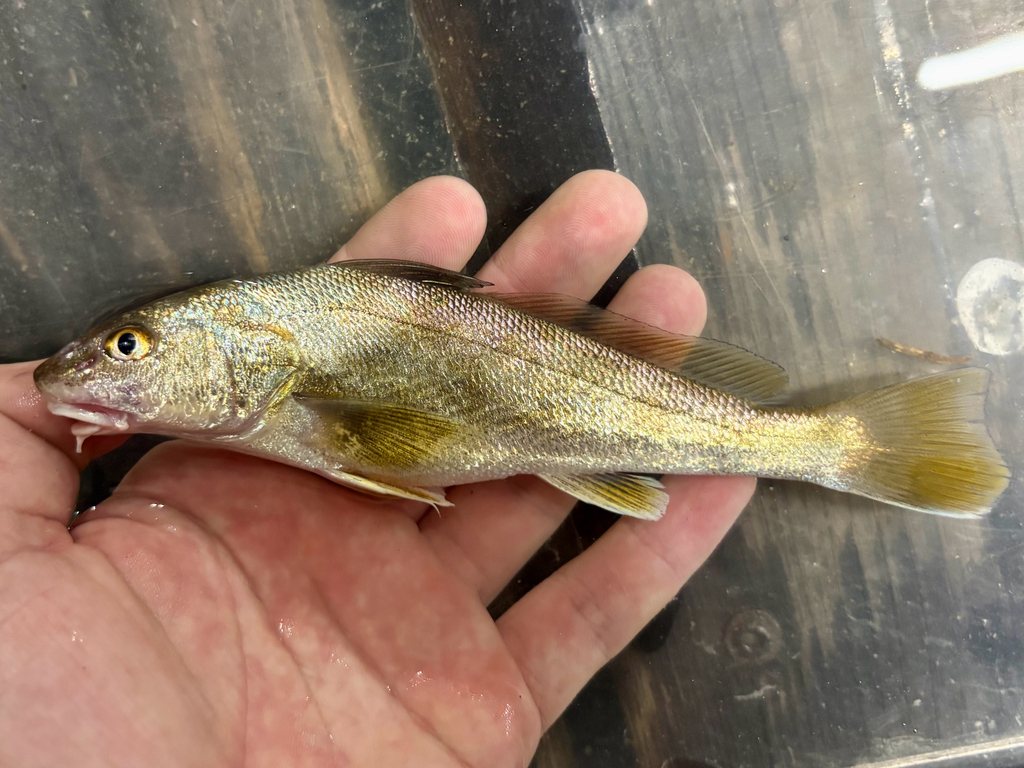
Southern kingfish is a slender, silver sciaenid of open sandy beaches from Cape Cod to Argentina, common in the surf trough and behind the first bar. It picks small crustaceans and worms from moving sand, reaches about 50 cm, and is caught on light two- or three-hook bottom rigs with shrimp or squid.
Identification
Southern kingfish are small, slender sciaenids with a silvery body, a blunt but noticeably pointed snout and a small, low mouth. The lower jaw carries a short barbel, the first dorsal fin is short and spiny, and the second is long and soft-rayed. Colour is plain silver-grey with faint diagonal bars that fade soon after death.
FishBase gives a maximum of 50 cm total length and 1.1 kg, with 30 cm a common adult and maturity at about 18 cm. That is a small fish by grouper standards, and most of what comes out of the surf is well under 35 cm.
Separating it from Gulf kingfish is the hard part. Southern kingfish is the more elongate of the two, with a longer, more pointed snout; Gulf kingfish is deeper-bodied and blunter. Distribution helps: this species runs from Cape Cod to Argentina, while the Gulf species is centred on the eastern Gulf.
Distribution and Habitat
FishBase records the species from Cape Cod, Massachusetts, to northern Argentina, a range covering the whole Gulf and much of the western Atlantic. It is a coastal fish rather than a reef fish, and it is common along open beaches.
The habitat is sandy-mud to hard sand bottom in coastal water, with juveniles usually in lower-salinity water. Depth reaches about 40 m, but the fishable concentrations sit in the surf and just past the bar.
That puts it in the same water as pompano and whiting: the trough between beach and first sandbar, and the sloughs behind it. It is not a structure fish, and a reef or wreck is the wrong place to look.
Habits and Diet
Southern kingfish feed on the bottom, taking small crustaceans, worms and whatever the surf stirs up. The small, down-pointing mouth is built for picking rather than crushing, which is why small baits outperform big ones.
They travel in loose schools along the beach and are most active when water is moving. In calm, clear water they spread out and are harder to find; a little colour and a running tide concentrate them.
FishBase spawning records span February to December overall, with north-central Gulf fish recorded from April to September. That is a long season, so spawning is not a useful timing cue for anglers.
Fishing Methods
The standard approach is surf fishing with a light two- or three-hook bottom rig. A pyramid or sputnik sinker holds in the wash, and small pieces of shrimp, squid or sand flea go on hooks small enough for the mouth.
Casting past the first bar and letting the rig work back into the trough is the classic presentation. Fish pick up the bait as it moves, so a slow retrieve with the rod tip low often beats a dead stick.
From a boat, the same rig fished over sand in 3 to 10 m takes fish, and a small jig or a bait on a 1/0 hook picks up whiting while you target something else. Long casts matter less than finding the trough.
Gear and Approach
A 9 to 10 ft light surf rod rated for 1 to 3 oz, a 4000-size spinning reel, 15 lb braid and a 20 lb fluorocarbon leader is the usual outfit. It casts small baits far enough without killing the fight of a one-kilo fish.
Hooks should be small: size 2 to 1/0, wide gap, thin wire. A big grouper hook will not fit a whiting's mouth, and a heavy leader makes a shy fish drop the bait.
Read the beach before you cast. Look for a colour change, a cut in the bar, or birds working the wash; those are the places fish funnel through. Move every twenty minutes until you find the school.
Seasonal Window
Late spring through autumn is the reliable season across the northern Gulf, when fish are close to the beach and the surf is warm. Winter fish move offshore or down the coast, and the surf bite slows.
Tide and wind matter more than the month. A rising tide with a light onshore breeze usually produces; a flat, clear, dead-calm day does not. The first two hours of the rise and the last of the fall are the windows.
On the Atlantic side of Florida the pattern runs later into autumn, and the species is caught through winter in warmer years.
Edibility and Handling
Whiting are excellent eating: white, sweet, fine-flavoured and easy to fillet. FishBase lists the species as commercial and as a gamefish, and it is one of the most popular pan fish on the Gulf coast.
They are small, so handle them as food rather than trophies. Bleed and ice immediately, keep them out of fresh water, and fillet within a day. The flesh is delicate and does not freeze well.
Because the fish are small, a 30 cm fish yields two thin fillets; two or three per person is a realistic meal, which is roughly how the generous state limits are written.
Regulations and Conservation
There is no federal bag or size limit for southern kingfish in the Gulf EEZ. It is not on the reef-fish list and is not managed under the coastal migratory pelagic plan, so federal rules do not constrain the beach fishery.
Florida does not list the species separately, so the default unlisted-species rule applies: 100 lb or 2 fish per person per day, whichever is greater. Mississippi lists kingfish, also called ground mullet, with no size or bag limit. Louisiana, Alabama and Texas list no separate state rule, and Texas sets no state limit for the species.
The practical constraint is bycatch rather than bag limits: small whiting come alongside pompano, and a small hook is easy to release. The IUCN Red List assesses the species as Least Concern, most recently on 11 July 2023. Rules change yearly, so check the current state summary before you go.
How to catch it
Boat bottom fishing
Slow pitch jigging
Boat bottom fishing
3–10 m whiting
Where these facts come from
Check these pages before you rely on a size, range or protection status.
- FishBase — Menticirrhus americanus — FishBase · T2
- GBIF — Menticirrhus americanus occurrence records — GBIF · T2
- IUCN Red List — Menticirrhus americanus — IUCN · T1
- Photo record — iNaturalist — iNaturalist · T3
Fish in the same water
These fish live in the same place.

Acoupa weakfish
- Family
- Sciaenidae
- Depth
- 1–20 m
- Season
- Jan, Feb, Mar, Apr, May, Jun, Jul, Aug, Sep, Oct, Nov, Dec
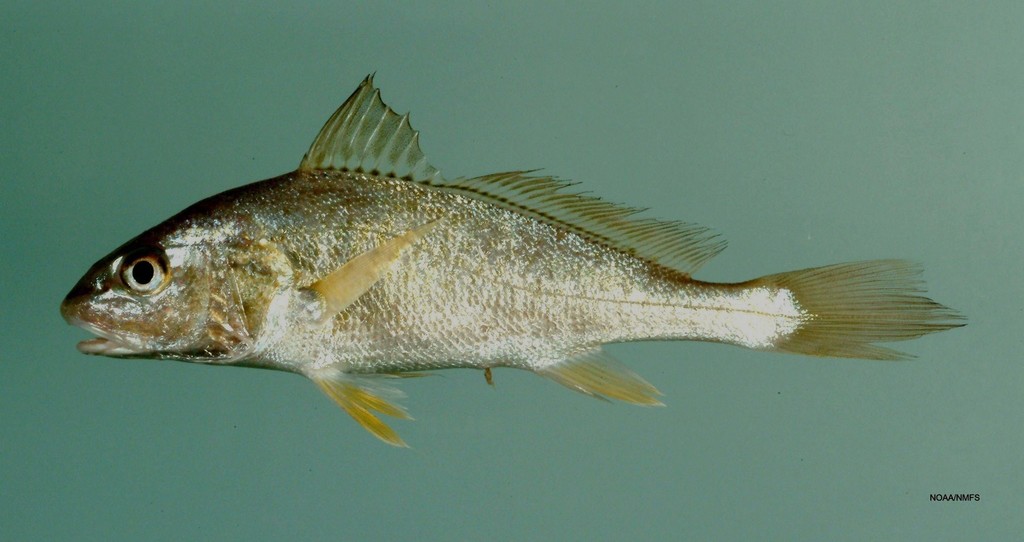
Atlantic croaker
- Family
- Sciaenidae
- Depth
- ≤ 100 m
- Season
- Jan, Feb, Mar, Apr, May, Jun, Jul, Aug, Sep, Oct, Nov, Dec
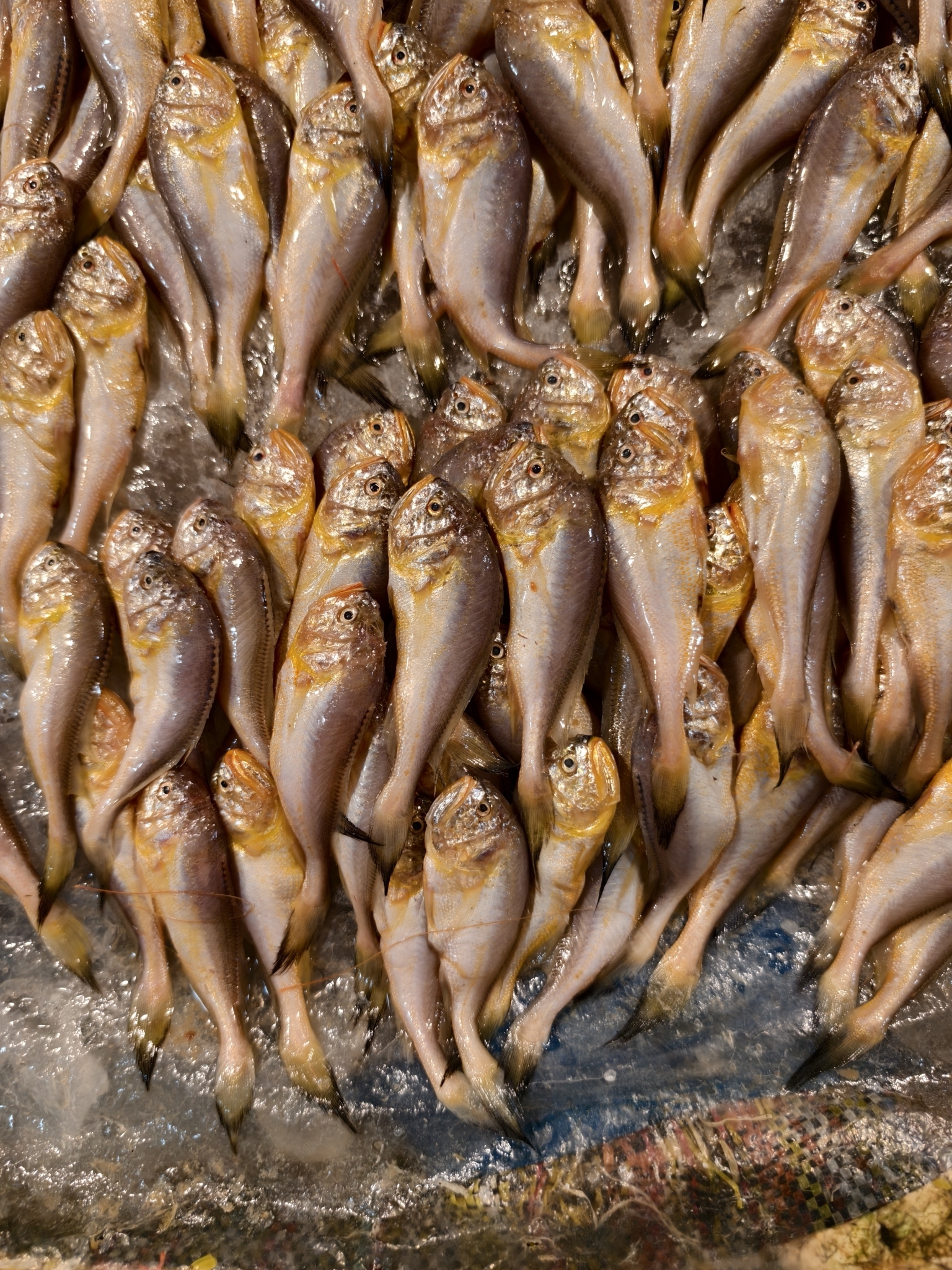
Bighead croaker
- Family
- Sciaenidae
- Depth
- ≤ 90 m
- Season
- Jan, Mar, Apr, May, Jun, Jul, Aug, Sep, Oct, Nov, Dec
Guides for this water
Technique, gear and safety guides that fit Southern kingfish.