
Gulf kingfish
Gulf kingfish is a deep-bodied, silver sciaenid of Gulf and Florida west-coast beaches, recognised by a short blunt snout and a small inferior mouth. Juveniles are abundant in the surf zone, adults work sandy and muddy bottom from about 10 m, and the species feeds mainly on worms and crustaceans.
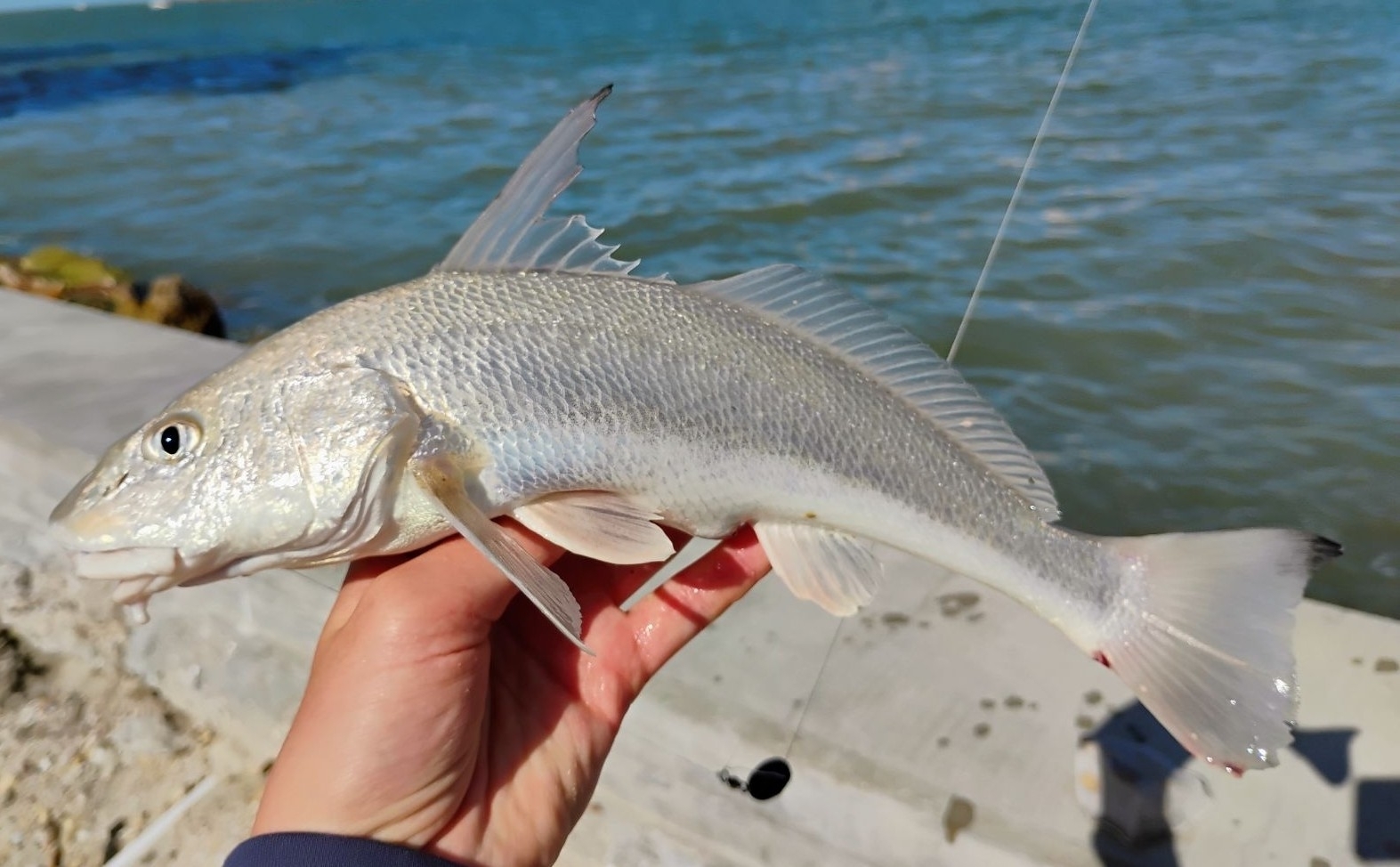
Gulf kingfish is a deep-bodied, silver sciaenid of Gulf and Florida west-coast beaches, recognised by a short blunt snout and a small inferior mouth. Juveniles are abundant in the surf zone, adults work sandy and muddy bottom from about 10 m, and the species feeds mainly on worms and crustaceans.
Identification
Gulf kingfish look like a stockier southern kingfish: a deep-bodied, silvery sciaenid with a short, blunt snout and a small inferior mouth. The lower jaw carries a short barbel, and the first dorsal fin is short and spiny. The body is noticeably deeper than the southern kingfish's, and the head is shorter.
FishBase gives 48.3 cm maximum total length and 1.4 kg, with 30 cm a common adult. Maturity comes at about 23 cm, later than the southern kingfish's 18 cm, so a fish of the same length can be at a different life stage in the two species.
The two overlap in the surf, so use the whole set of marks: snout length, body depth, size at maturity and location. Gulf kingfish is centred on the eastern Gulf and Florida west coast, while southern kingfish ranges far north and south of that core.
Distribution and Habitat
FishBase records the species from Virginia and the continental coast of the Gulf of Mexico to Rio Grande do Sul in southern Brazil. The word continental matters: it is a mainland beach fish, not a Caribbean island fish.
Depth starts at about 10 m with no clear upper limit in the record, but juveniles are abundant in the surf zone and the species sometimes enters estuaries. Adults work coastal sandy and muddy bottom just off the beach.
In practice the core of the range for US anglers is the Florida west coast, the Big Bend, the Panhandle, Alabama, Mississippi and Louisiana. It is the kingfish you expect on an eastern Gulf beach rather than in the Atlantic surf.
Habits and Diet
The diet is mainly worms and crustaceans, picked from sand and mud with the small, down-pointing mouth. That is why sand fleas, bloodworms and small shrimp pieces work, and why a big cut bait is mostly wasted.
Fish move along the beach in loose groups and feed best when water is moving. In clear, flat water they spread out; a little turbidity and a running tide bring them together in the troughs.
The fact base for this species does not record spawning months, so no month range is claimed here. Spawning is likely warm-season and tied to local temperature, and the practical advice is to fish the warm months and watch local reports rather than a calendar.
Fishing Methods
The rig is the same light surf bottom rig used for southern kingfish: a pyramid or sputnik sinker and two small hooks on short snoods. The difference is distance. Gulf kingfish often sit in the first trough, so a short, accurate cast beats a long one.
Cast just past the wash, let the sinker settle, and keep a slight bow in the line so the bait stays put as the wave retreats. A slow drag with the rod tip low will find fish that are cruising the trough rather than sitting still.
From a boat, fish the same small baits over sand from about 10 m out. A light jig or a bait on a size 1 hook picks up kingfish while you are chasing something else, and the bycatch is usually welcome.
Gear and Approach
A 9 to 10 ft light surf rod, a 4000-size spinning reel, 15 lb braid and a 20 lb fluorocarbon leader covers it. The outfit has to cast a small bait without burying it, and it has to feel a bite from a fish that weighs less than a kilogram.
Use size 2 to 1/0 thin-wire hooks and keep the leader light. A heavy leader and a big hook cut the bite rate sharply in clear water, and this fish has a small mouth to begin with.
Work the beach systematically. Fish one trough, then move fifty metres and fish the next cut in the bar. When you find the school, the bites come quickly, and staying too long in a dead spot is the most common mistake.
Seasonal Window
The reliable window is late spring through autumn, when Gulf water is warm and fish are close to the beach. Winter pushes them offshore or down the coast, and the surf slows.
Tide and wind drive the day-to-day pattern. A rising tide with a light onshore breeze is the classic combination; a flat, clear, windless day is not. Fish the first half of the rise and the last of the fall.
Cold fronts in autumn and spring reset the beach: the day before a front often produces, and the two or three days after are usually poor.
Edibility and Handling
FishBase calls this an excellent food fish, and it earns the label. The flesh is white, sweet and firm enough to fry or grill, and it is one of the reasons people fish Gulf beaches at all.
Handle it like any small food fish: bleed, ice immediately, keep it out of fresh water, and fillet the same day. A 30 cm fish gives two thin fillets, so plan on two or three fish per person.
Because the fish are small, they chill fast and dry out fast. A slurry of ice and salt water holds quality better than a cooler of block ice, especially in summer.
Regulations and Conservation
There is no federal bag or size limit for Gulf kingfish in the Gulf EEZ. It is not a reef fish and not a coastal migratory pelagic species, so the federal plans do not set a limit.
Florida does not list the species separately, so the default unlisted-species rule applies: 100 lb or 2 fish per person per day, whichever is greater. Mississippi lists kingfish (ground mullet) with no size or bag limit. Louisiana and Alabama list no separate state rule, and Texas sets no state limit for the species.
The IUCN Red List assesses Gulf kingfish as Least Concern, most recently on 11 July 2023. It is often mixed with southern kingfish in both the catch and the regulations, so identify before you count. Rules change yearly; check the current state summary before you go.
How to catch it
Boat bottom fishing
Lure fishing
Boat bottom fishing
10
Where these facts come from
Check these pages before you rely on a size, range or protection status.
- FishBase — Menticirrhus littoralis — FishBase · T2
- GBIF — Menticirrhus littoralis occurrence records — GBIF · T2
- IUCN Red List — Menticirrhus littoralis — IUCN · T1
- Photo record — iNaturalist — iNaturalist · T3
Fish in the same water
These fish live in the same place.

Acoupa weakfish
- Family
- Sciaenidae
- Depth
- 1–20 m
- Season
- Jan, Feb, Mar, Apr, May, Jun, Jul, Aug, Sep, Oct, Nov, Dec
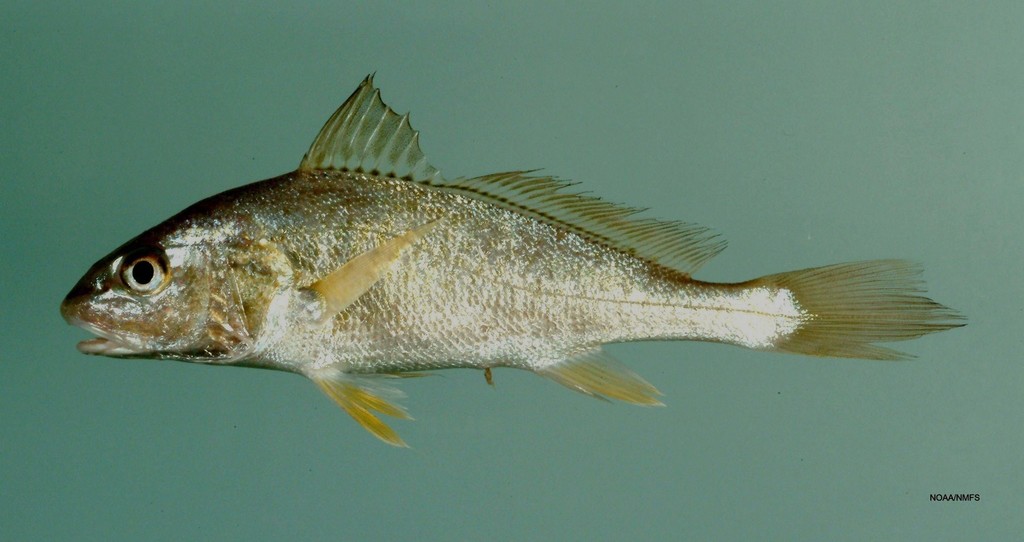
Atlantic croaker
- Family
- Sciaenidae
- Depth
- ≤ 100 m
- Season
- Jan, Feb, Mar, Apr, May, Jun, Jul, Aug, Sep, Oct, Nov, Dec
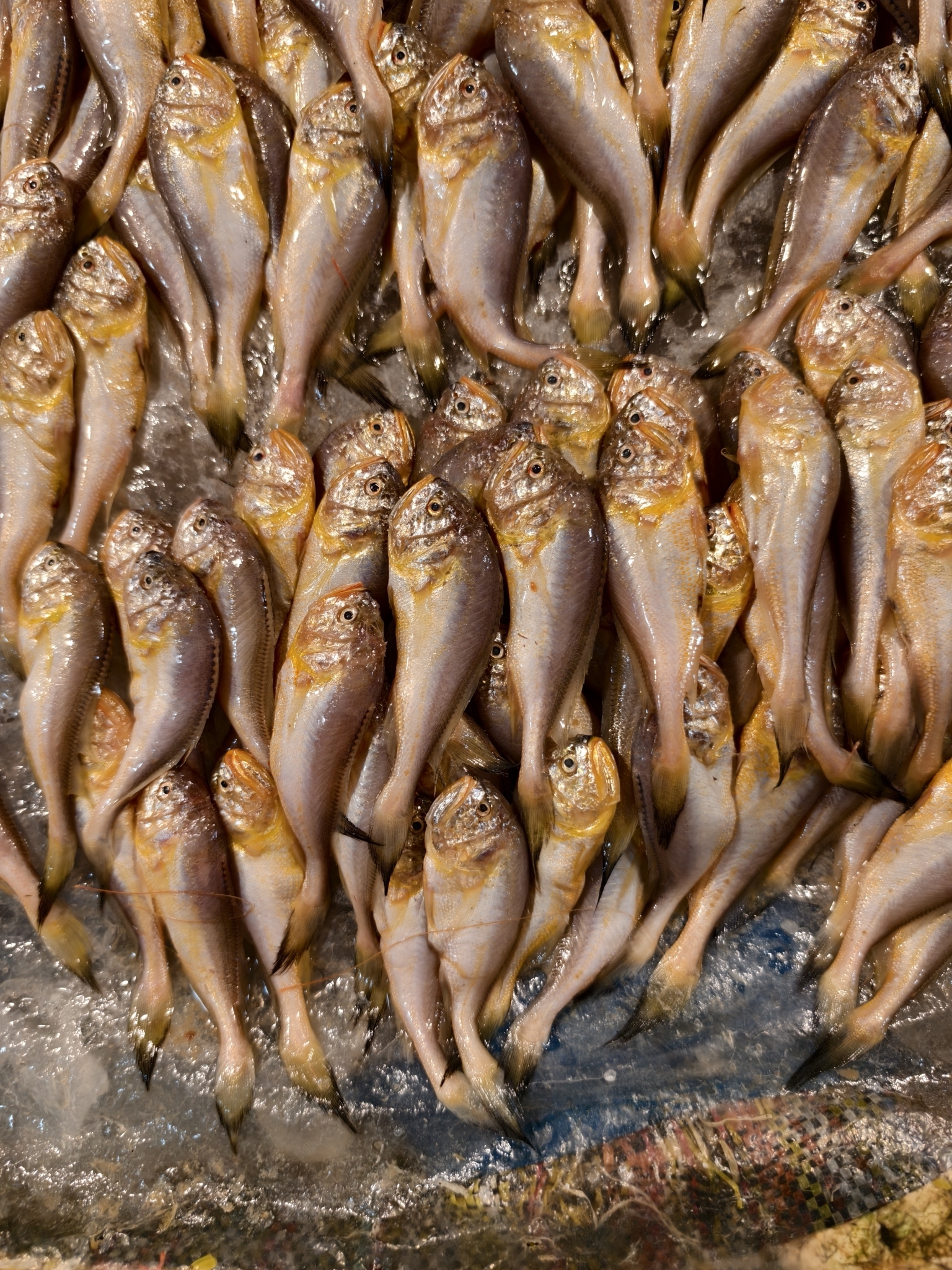
Bighead croaker
- Family
- Sciaenidae
- Depth
- ≤ 90 m
- Season
- Jan, Mar, Apr, May, Jun, Jul, Aug, Sep, Oct, Nov, Dec
Guides for this water
Technique, gear and safety guides that fit Gulf kingfish.