
California corbina
One long chin barbel and a single weak anal spine separate this croaker from the other two, and the same two features explain why it is almost always caught inside the shorebreak. It follows sand crabs and the movement of the wash, reaches 71 cm, and still feels light on most people's line. The current state rule is the general 20/10 bag, with no separate size limit or closed season.
One long chin barbel and a single weak anal spine separate this croaker from the other two, and the same two features explain why it is almost always caught inside the shorebreak. It follows sand crabs and the movement of the wash, reaches 71 cm, and still feels light on most people's line. The current state rule is the general 20/10 bag, with no separate size limit or closed season.
One long chin barbel and one weak anal spine
In the wash, read the mouth first. A single long barbel under the lower jaw is the first thing that separates this fish from the yellowfin and spotfin croakers. The body is slender, grey-brown above and silver below, and the pectoral fins are dark, closer to black than yellow. The anal fin usually carries one weak spine, which is the easiest check at the boat; the yellowfin has two strong anal spines and yellow fins. This species has no swim bladder and cannot croak. With three croakers in one bucket, turn the fish over for the anal spines, then compare barbel length.
A fish that lives inside the shorebreak
FishBase runs the range from California to Peru. The core habitat is sandy shore and bay, especially the sand surf of an exposed outer coast, with a depth record down to 14 m. Fish travel in small groups and larger individuals tend to be solitary. In Southern California the productive water is the trough between sandbars, the mouth of a sandy bay and the clean water just outside a river mouth. Rock and kelp are not its ground. The range reaches Peru, but catch information outside Southern California is thin, so the methods here describe the local surf only.
Spawning starts in July and the surf season follows
FishBase states that spawning begins in July, describes the species as a pelagic spawner, and gives neither a monthly table nor a preferred temperature. Southern California catches usually improve as water warms in late spring, hold through midsummer and early autumn, and thin in winter when the surf is big and the water cold. Spawning and good fishing overlap in summer, but overlap in time is not a cause. Whether a given morning is worth fishing is better read from swell height, water colour and the sand exposed on the falling tide than from a temperature figure.
Reading the wash instead of casting past it
The standard approach is surf bait: a light sinker and a sand crab in the trough, letting the bait move with the backwash so the fish takes in the seconds after a wave retreats. Hook a whole sand crab after trimming the hard edge and exposing a little meat; hooked the wrong way, it spins in the wash. The second method is sight fishing. Walk the beach with polarised glasses, spot the shadow, and drop a small bait a metre or two ahead of the fish rather than on its head. It feeds in shallow water by day, so lures are a minor tool; a small soft plastic or a crab fly works only when fish are close.
Light line, long rod, small sinker
An 8 to 9 foot medium-light surf rod with a 2500 or 3000 size spinning reel covers it. Run 10 to 15 lb braid to a 6 to 8 lb fluorocarbon leader, a size 1 to 1/0 fine-wire hook, and a half to one ounce pyramid sinker. This species reacts to line diameter: one step heavier in the leader and the bites drop, so lengthen the leader instead of thickening it. In big surf, use enough weight to hold bottom without pinning the bait. Keep the drag light; the first run often uses the wave. A rod held high keeps the leader out of the backwash, and that alone saves fish on a steep beach.
No separate size limit and no closed season
FishBase calls it a good food fish and notes that it is common in markets. The flesh is white and fine-grained, suited to pan frying, grilling or fillets; bleeding and gilling early matters, because the muddy note in sand fish usually comes from slow handling. California's general marine bag is 20 fish in total with no more than 10 of any one species, and this species has no size limit and no closed season (14 CCR § 27.60). The section sets no separate size limit or closed season for it. Parts of the Southern California beach sit inside marine protected areas, so check the CDFW MPA map and the current year's notice; a licence is required from 16, plus the Ocean Enhancement Validation south of Point Arguello.
A data-deficient species with a well-documented local fishery
Length, weight, age, depth, distribution and diet come from FishBase. The IUCN listing is Data Deficient, assessed in 2020, which means regional trend estimates do not exist. The July spawning start is a biological record cited by FishBase, not a monthly table; the month-by-month strength is arranged from Southern California surf reports. The separation from the other two croakers follows the project's identification notes and uses no scale or fin-ray counts. The regulation section uses only the current general bag limit in 14 CCR § 27.60. No corbina-specific size, season, or gear rule exists beyond the general bag limit.
How to catch it
Drift fishing
A half ounce pyramid sinker and a 1/0 fine-wire hook, a whole crab fished in the trough and allowed to move with the backwash while the line stays under the thumb.
Lure fishing
Walk the beach until a shadow shows, then place the bait a metre or two ahead of the fish and wait for it to turn.
Lure fishing
On the falling tide, put the bait on the line where clean water meets the plume, with just enough weight to hold.
Where these facts come from
Check these pages before you rely on a size, range or protection status.
- FishBase — Menticirrhus undulatus — FishBase · T2
- GBIF — Menticirrhus undulatus occurrence records — GBIF · T2
- IUCN Red List — Menticirrhus undulatus — IUCN · T1
- Photo record — iNaturalist — iNaturalist · T3
Fish in the same water
These fish live in the same place.

Acoupa weakfish
- Family
- Sciaenidae
- Depth
- 1–20 m
- Season
- Jan, Feb, Mar, Apr, May, Jun, Jul, Aug, Sep, Oct, Nov, Dec
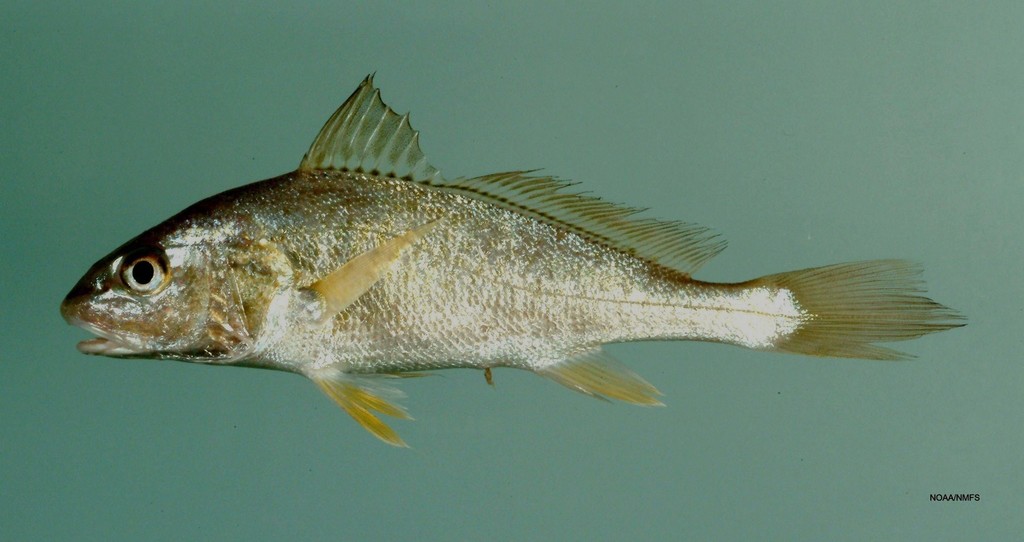
Atlantic croaker
- Family
- Sciaenidae
- Depth
- ≤ 100 m
- Season
- Jan, Feb, Mar, Apr, May, Jun, Jul, Aug, Sep, Oct, Nov, Dec
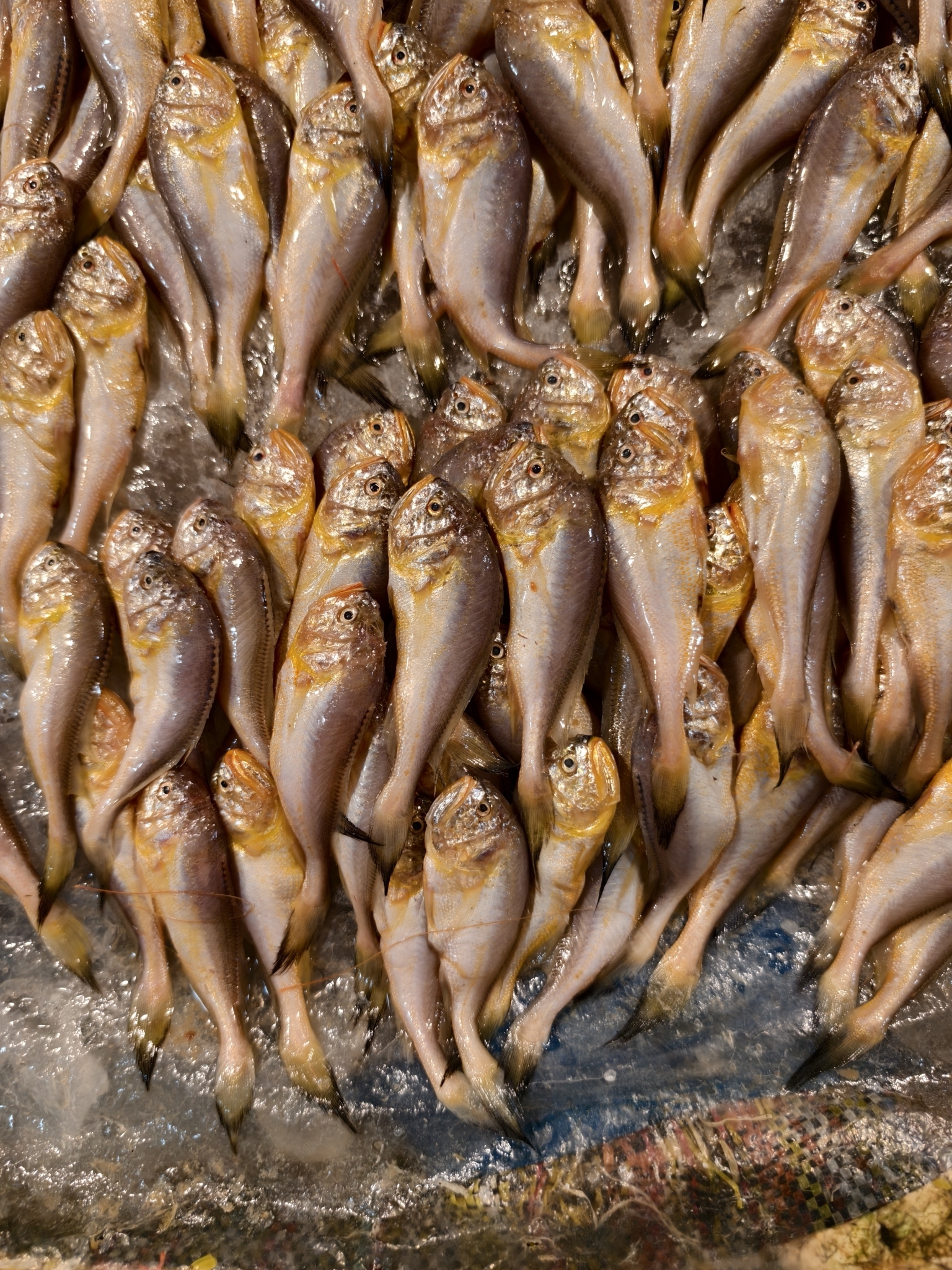
Bighead croaker
- Family
- Sciaenidae
- Depth
- ≤ 90 m
- Season
- Jan, Mar, Apr, May, Jun, Jul, Aug, Sep, Oct, Nov, Dec
Guides for this water
Technique, gear and safety guides that fit California corbina.