
Whitemouth croaker
Micropogonias furnieri is the whitemouth croaker, and in the southern half of South America it is the fish behind the word corvina. Brazil sells it as corvina, Argentina qualifies it as corvina rubia, Uruguay as corvina blanca. It reaches 60 cm SL with 45 cm as the common length, matures at 30.6 cm and lives to about 7 years.
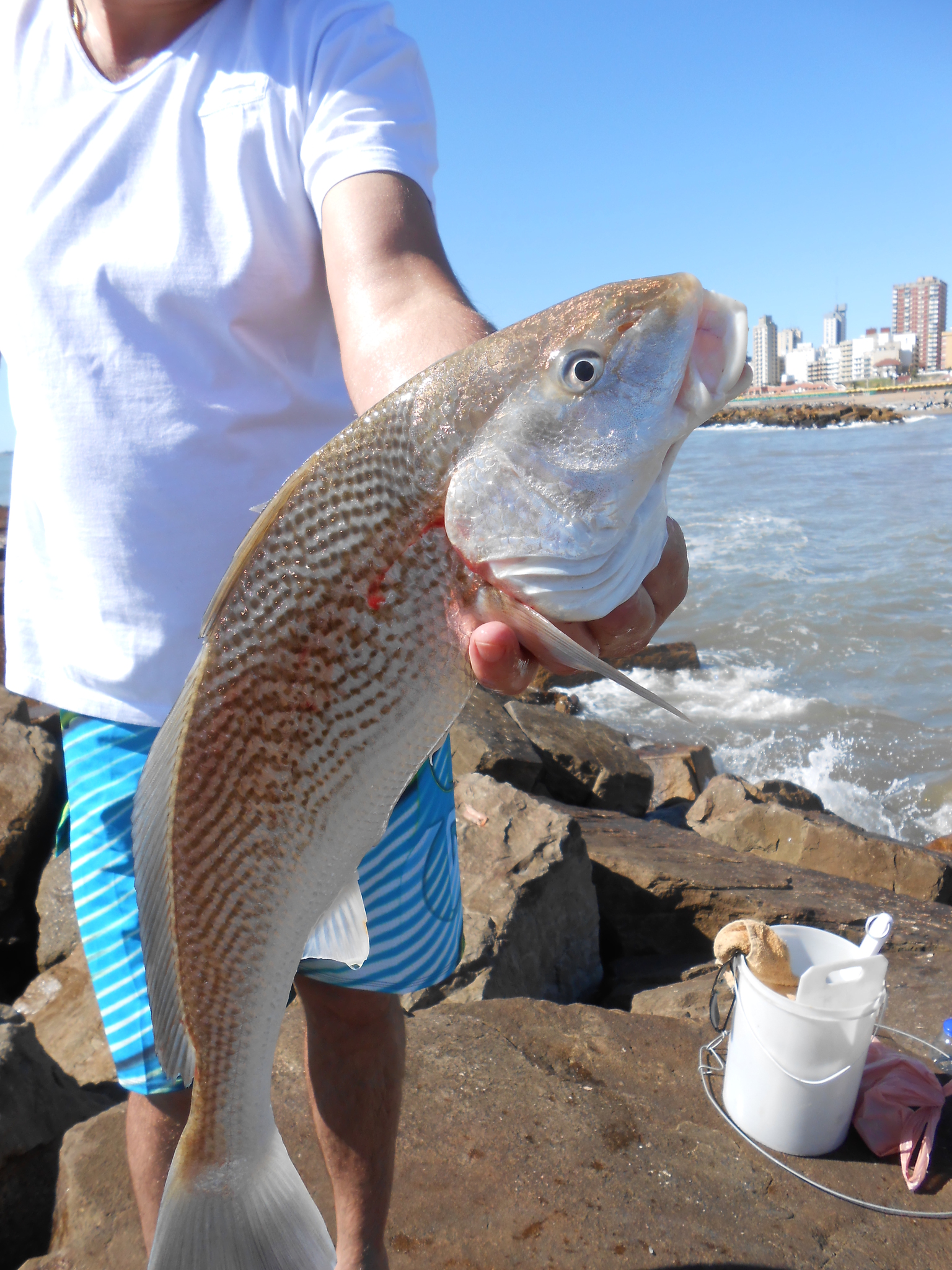
Micropogonias furnieri is the whitemouth croaker, and in the southern half of South America it is the fish behind the word corvina. Brazil sells it as corvina, Argentina qualifies it as corvina rubia, Uruguay as corvina blanca. It reaches 60 cm SL with 45 cm as the common length, matures at 30.6 cm and lives to about 7 years. The three countries that land it set three different minimum sizes: 25 cm in Brazil, 32 cm in Uruguay, 35 cm for corvina rubia in Buenos Aires.
Identification
FishBase gives 11 dorsal spines, 26–30 dorsal soft rays, 2 anal spines and 7–9 anal soft rays, and calls the body deep. The colour description is unusually specific: silvery with a golden cast, a greyish back, and oblique dark streaks along the scale rows that extend well below the lateral line, while the spinous dorsal carries no small dark dots. That last character is a negative one, stated by the source as a character of this species, and it is the kind of mark that separates one croaker from the next in a market tray.
The English name refers to the mouth, and the description does not describe the mouth lining. The common-name list carries “golden croaker”, “hardhead”, “West Indian croaker” and “cro-cro”, which are English labels applied elsewhere and not local names from the three corvina countries. Corvina is a market word rather than a species name, and in these waters it covers more than one sciaenid, which is why Argentina and Uruguay qualify it as rubia or blanca; a buyer who hears only corvina should ask for the qualifier or the scientific name.
The page records a maximum weight of 55.30 g against a 60 cm fish. That figure cannot be right for a fish of that length. It is treated here as a unit error in the source and is not used for anything.
Range and habitat
The distribution text runs from the Greater Antilles and Costa Rica to Argentina, with Nicaragua and Brazil listed separately. Coordinates are 27°N–36°S and 84°W–34°W. The fish is demersal in marine and brackish water, recorded to 60 m and usually between 20 and 40 m, over muddy and sandy bottoms in coastal waters and estuaries.
GBIF returns 75,941 records, but 73,579 of them are Colombian, which is 97 per cent of the total for a species whose distribution text runs to Argentina. Brazil holds 1,786, Argentina 147, Uruguay 46, French Guiana 80, Chile 32, Venezuela 26. The three corvina countries together hold 1,979 records against Colombia's 73,579: the dataset is dominated by one national programme, and record density here says nothing about abundance. iNaturalist holds 282 observations.
Habits and diet
Feeding changes with age, and the source separates the stages. Juveniles take benthic migratory crustaceans and sessile boring molluscs; adults are benthos feeders that occasionally take fish. Boring molluscs live inside shell or rock, which means the juvenile diet is not drawn from clean sand alone; that reading is inference from the prey description, not a statement in the source.
Adults form schools, the species migrates seasonally, and estuaries serve as both nursery and feeding ground. The page gives no prey species, no daily ration and no predator list. Feeding also varies with season according to the source, without saying which season favours which prey.
Season and time of day
FishBase's spawning table has ten entries, and they do not collapse into one season. Ceará is November–December; Maranhão appears twice, once as all twelve months and once as January–April plus September–December; Cuba is all year; the Río de la Plata appears twice, both January–March plus November–December, one of them for the estuary; São Paulo has a June–August entry and a 1979–1980 set spread over April, May, June, August, September, November and December; Trinidad and Tobago is January–August plus October–December.
The southern records cluster between November and March, which is the summer window an angler would expect. The June–August São Paulo entry breaks the shorthand: on this table, winter spawning is recorded, not assumed away. Most rows carry no year, and one is explicitly 1979–1980, so the table mixes decades and areas.
No time-of-day record exists. An inference from a schooling, benthos-feeding fish in 20–40 m over mud: current-driven hours will out-fish slack, and estuary mouths are the shore-accessible version of the same edge.
Tackle and techniques
The source gives no rig, bait or hook size. It gives a 45 cm common length, a 60 cm maximum, a 30.6 cm maturity point, a 20–40 m working depth over mud and sand, schooling adults, seasonal migration and a diet of crustaceans, molluscs and occasional fish.
Boat fishing over 20–40 m of soft bottom is the direct reading; the estuary and beach edge is the shore version, and the source puts estuaries in the habitat. Baits should sit on the bottom, since the recorded prey are benthic. The legal fish in Brazil is 25 cm, below the 45 cm common length and below the 30.6 cm maturity point, so a Brazilian angler keeping a legal fish is usually keeping a small one.
Tackle sized for a 45 cm fish covers the normal catch; 60 cm is the recorded ceiling. The missing weight data means rod rating cannot be matched to a kilogram figure from this page.
Kitchen and handling
FishBase classes the species as highly commercial and records it as marketed fresh and salted. That is the whole culinary record: no flesh description, no fat content, no yield figure and no price. The salted trade is noted without a method or a region.
Age is recorded to about 7 years, which is the one life-history number besides maturity that the page supplies. The 55.30 g weight is not usable, so no length-to-fillet arithmetic is possible here.
Regulations and conservation
Brazil requires a licence, caps the marine catch at 15 kg plus one specimen, and sets a federal minimum of 25 cm. Argentina's Buenos Aires rules put corvina rubia at 35 cm inside the variado costero group, which allows 40 fish a day. Uruguay sets 32 cm and applies DINARA permit conditions.
The three lines rank the same fish differently against its own biology. At 30.6 cm maturity, Brazil's 25 cm lets a fish be taken before it has spawned, while 32 and 35 cm sit above that point. One Argentine trap: the 2-fish rule for corvina negra belongs to a different species and does not apply to corvina rubia.
IUCN lists the species as Least Concern, assessed on 30 July 2019, with no trend or stock figure on the page. The label is global and predates the current Argentine and Uruguayan rules by several years.
How to catch it
Boat bottom fishing
Fished with the listed approach, matched to the recorded depth and size.
Shore fishing
Fished with the listed approach, matched to the recorded depth and size.
Where these facts come from
Check these pages before you rely on a size, range or protection status.
- FishBase — Micropogonias furnieri — FishBase · T2
- GBIF — Micropogonias furnieri occurrence records — GBIF · T2
- IUCN Red List — Micropogonias furnieri — IUCN · T1
- Photo record — iNaturalist — iNaturalist · T3
Fish in the same water
These fish live in the same place.

Acoupa weakfish
- Family
- Sciaenidae
- Depth
- 1–20 m
- Season
- Jan, Feb, Mar, Apr, May, Jun, Jul, Aug, Sep, Oct, Nov, Dec
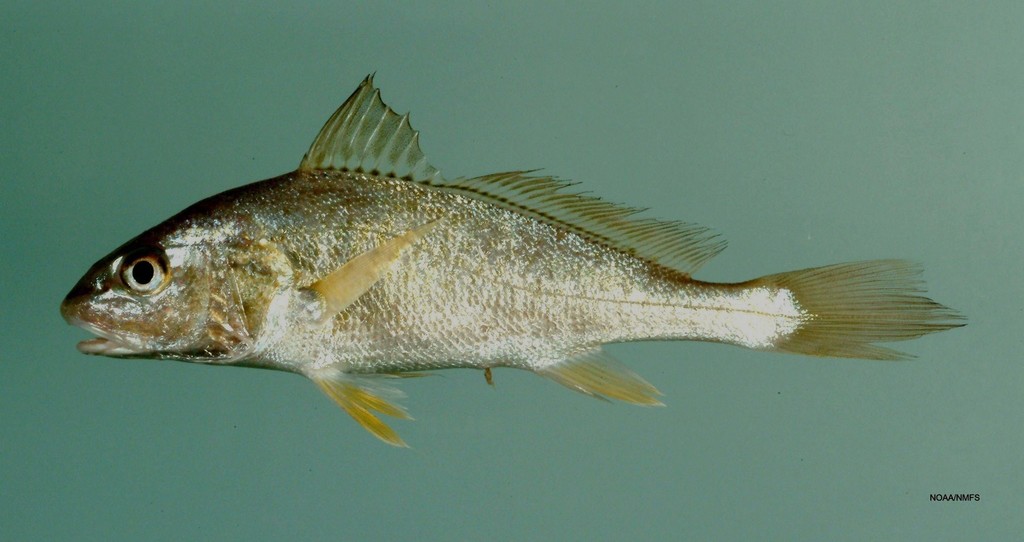
Atlantic croaker
- Family
- Sciaenidae
- Depth
- ≤ 100 m
- Season
- Jan, Feb, Mar, Apr, May, Jun, Jul, Aug, Sep, Oct, Nov, Dec
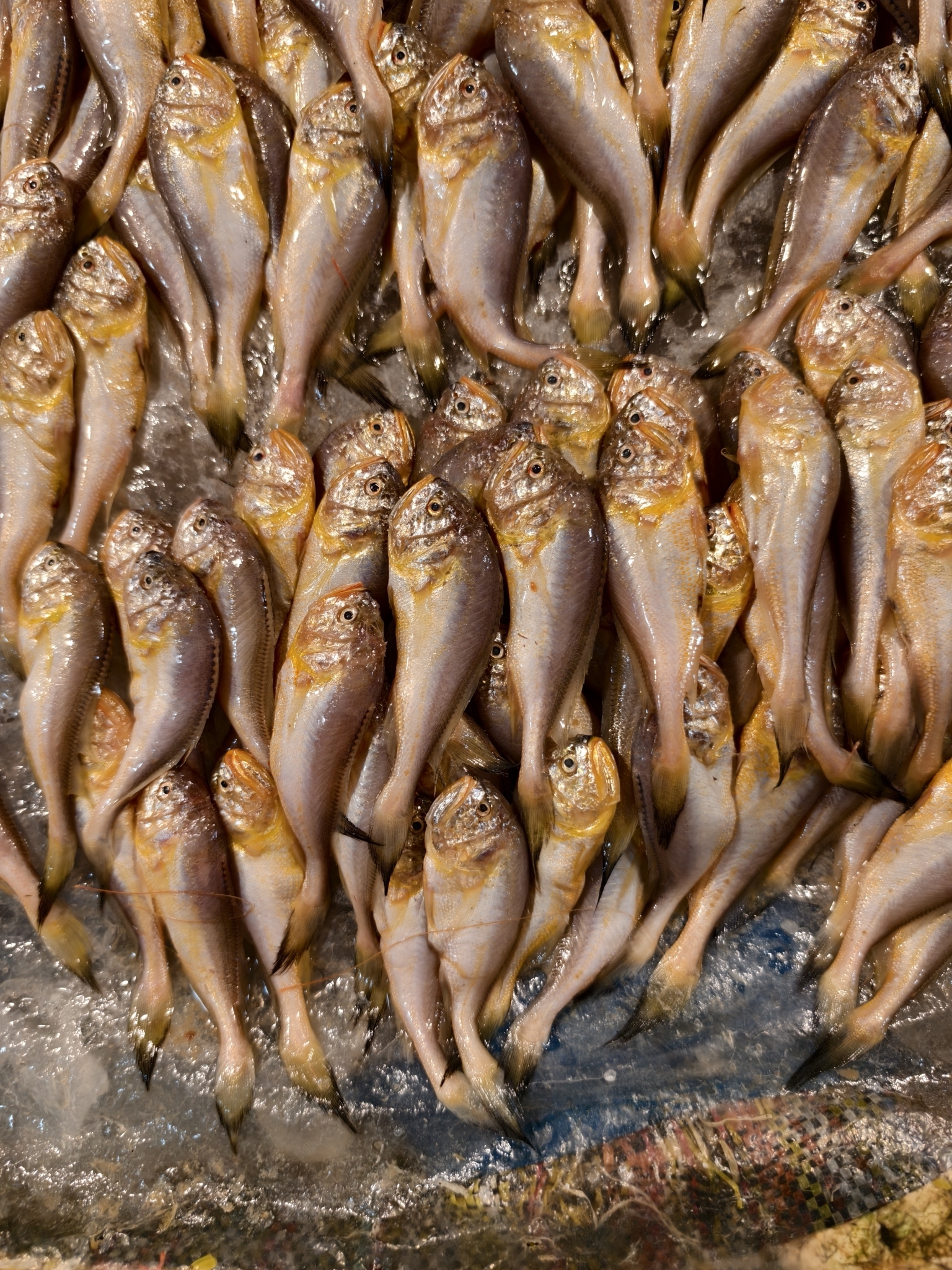
Bighead croaker
- Family
- Sciaenidae
- Depth
- ≤ 90 m
- Season
- Jan, Mar, Apr, May, Jun, Jul, Aug, Sep, Oct, Nov, Dec
Guides for this water
Technique, gear and safety guides that fit Whitemouth croaker.