
Black grouper
Black grouper is a large epinephelid of the western Atlantic, from Bermuda and Massachusetts through the southern Gulf and Caribbean to southern Brazil. It lives from 60 to 250 m in subtropical water, reaches 150 cm TL and 100 kg, and feeds on crustaceans and fish. It is present year-round.

Black grouper (Mycteroperca bonaci) is a fish of the family Epinephelidae. FishBase gives its range as: Western Atlantic: Bermuda and Massachusetts, USA to southern Brazil, including the southern Gulf of Mexico and the Caribbean. Adults are unknown from the northeastern coast of the USA. It is recorded from 60 to 250 m, in subtropical water. The recorded maxima are 150 cm TL, 100 kg. Diet includes crustaceans and fishes. IUCN status: Near Threatened (NT). Chinese name: .
A name list that is not a naming system
The English names on file for this species include black grouper, black rockfish, marbled rockfish and rockfish, plus a spelling, black gouper, that appears once and never again. A list like that is a record of what people have called the fish, not a standard that a buyer or a deckhand can apply. Black rockfish and rockfish are words used for other fish in ordinary speech, which is exactly why the list is useful as a warning rather than as a vocabulary.
For identification, the consequence is simple: do not settle a fish from the label on the ice. Settle it by the shape of the head, the slope of the jaw and the pattern, then check the name afterwards. The commercial column makes this more than pedantry, because a market that sells this fish under several names will also sell other groupers under the same ones.
One hundred and fifty centimetres, seventy in the box
The size line gives a 150 cm total length and 100 kg maximum, and a common size of 70 cm. The distance between the two is the whole argument of this section: the record is a rare event, the common size is the fish that actually reaches a fish box. A 150 cm grouper is a once-in-a-career fish; a 70 cm one is a Tuesday.
Maturity averages 67.7 cm, within 47–95.1 cm. Put the common length next to that midpoint and the typical landed fish is barely past the average size of first maturity. The record does not say what fraction of the population is mature at 70 cm; it gives the average and the spread, and the average is close enough to the common size that the margin is thin.
Sixty metres is the shallowest you can go
The depth field reads 60 to 250 m, with no "usually" clause and no shallow record at all. That is unusual for a grouper that is sold in fish markets, because the fish on the slab is not reachable from a jetty. Every black grouper in the market was caught at sixty metres or deeper, which rules out the shore angler and most of the small-boat fleet.
Finding the mark at sixty metres
For a boat, sixty metres is a sounder depth, not a sight-fishing depth. Relief, ledges and drop-offs at that range are found by electronics and confirmed by the drift, and the fish is likely to be met on the bottom rather than in the water column. The habitat keywords — reef, rocky, coastal — describe what the sixty metres is made of, not how to get there.
iNaturalist holds 967 observations for the taxon, a record of observers rather than abundance. Dense observation does tell you where boats return; it does not tell you how many fish are below them.
Maturity that sits almost on the common size
The maturity range of 47 to 95.1 cm spans nearly half a metre, and the average of 67.7 cm sits just under the common length of 70 cm. Any minimum size written between those two numbers would take fish that are, on average, just mature, and would leave the upper half of the range untouched. That is not an argument for a particular limit; it is an argument for reading the three numbers together instead of choosing the one that suits a headline.
The maximum age is not on the page, so the time it takes to reach 95 cm is unknown here. NOAA Fisheries gives a lifespan of up to 30 years, which fills the gap without explaining how growth maps onto it. A fish that matures anywhere between 47 and 95.1 cm and has no recorded lifespan on its species page is a fish whose size tells you less than you would like.
Twelve months of spawning, three places
The spawning table gives all twelve months for the species, then breaks it into three regional records: Brazil's Bahia from June to December, Mexico's Campeche Bank from December to March, and Cuba from November to May. A year-round species-level line with regional windows underneath is not a contradiction; it describes what happens when a species is fished across a wide tropical range.
For an angler, the practical reading is regional. A closed season in one country may overlap a reported spawning peak in another and both may be right, because the fish on each coast are following different water. The species-level line should not be used to plan a trip; the regional rows should.
Near Threatened, and a poison column
The Red List category is Near Threatened, assessed on 20 November 2016, and the use column says highly commercial, gamefish, and landings that appear in markets far from the reef. Near Threatened is close to the threshold and not over it; it is also a decade-old snapshot, and the category describes a stock, not a single fish.
Ciguatera is listed separately as a threat to humans, and that is a different kind of risk from the conservation category. One column is about how many fish remain; the other is about whether the fish you keep is safe to eat. Merging them produces bad advice in both directions: a healthy stock does not make a ciguateric fish edible, and a poisoned fish does not mean the stock is in trouble.
What the three identities ask of you
As a buyer, ask for the species and not the trade name, because the name list on this page shows how many labels the same fish carries. As an angler, plan for sixty metres as the floor and use the sounder to find the relief rather than the map to find the coast. As a reader of the Red List, treat Near Threatened as a reason to let the big ones go, and keep the 70 cm common size in mind as the typical one, not the target.
Black grouper carries 59 Caribbean records in GBIF, 16 of them from Brazil's national fauna catalogue and two from Colombia — including the 2024 Resolución 0126, which lists it as Vulnerable; the IUCN entry is Near Threatened. NOAA Fisheries treats the Gulf of America and South Atlantic fish as one stock, not overfished and not subject to overfishing. Identity is the only thing the databases settle here.
The 100 kg maximum is real and belongs to a fish most readers will never see. The number to carry is 70, the common length, because that is the fish the market and the reef actually produce — and the gap between 70 and 150 is the space where the three identities stop agreeing.
Where these facts come from
Check these pages before you rely on a size, range or protection status.
- FishBase — Mycteroperca bonaci — FishBase · T2
- GBIF — Mycteroperca bonaci occurrence records — GBIF · T2
- IUCN Red List — Mycteroperca bonaci — IUCN · T1
- Photo record — iNaturalist — iNaturalist · T3
Fish in the same water
These fish live in the same place.
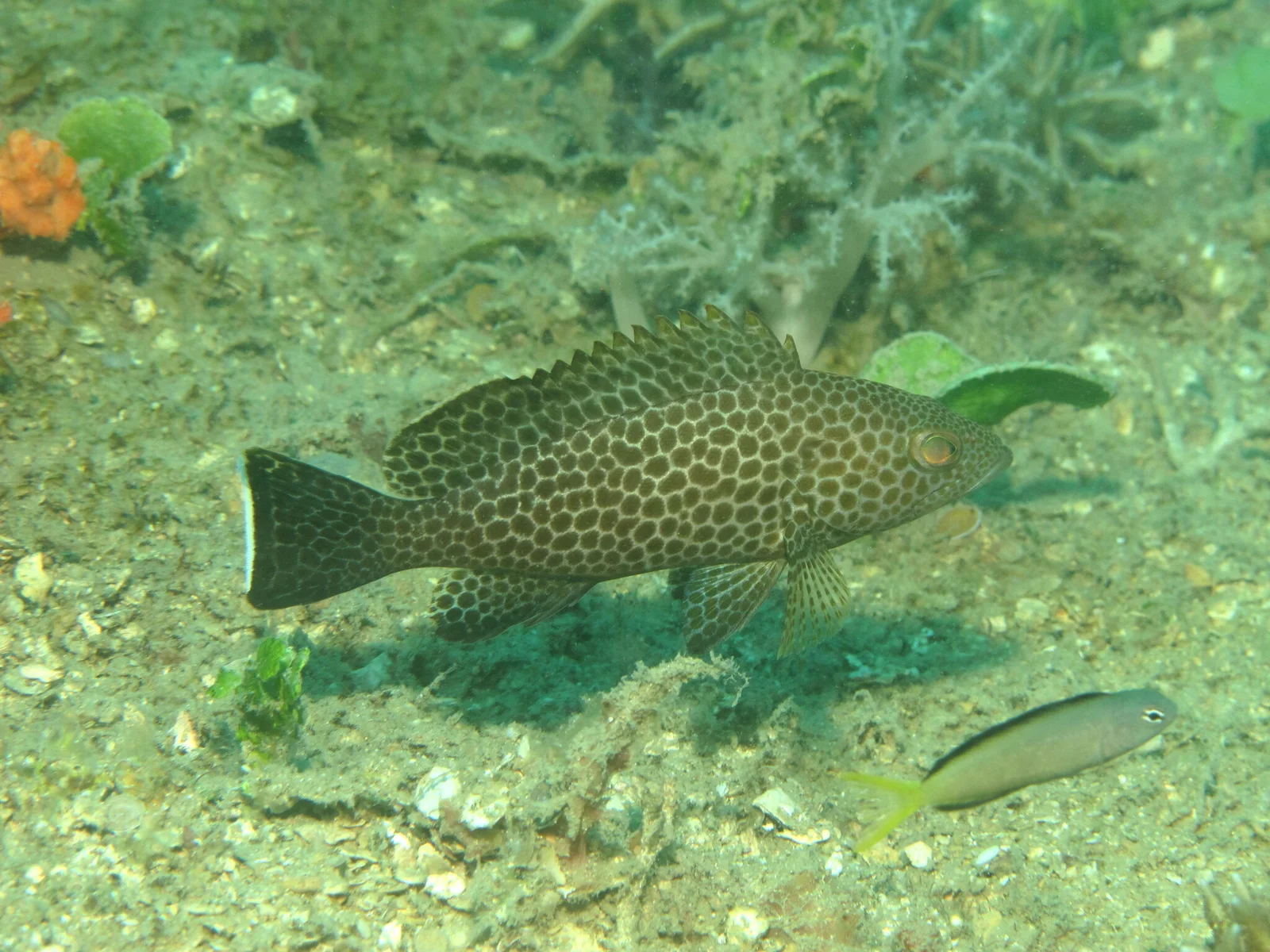
Areolate grouper
- Family
- Epinephelidae
- Depth
- 6–200 m
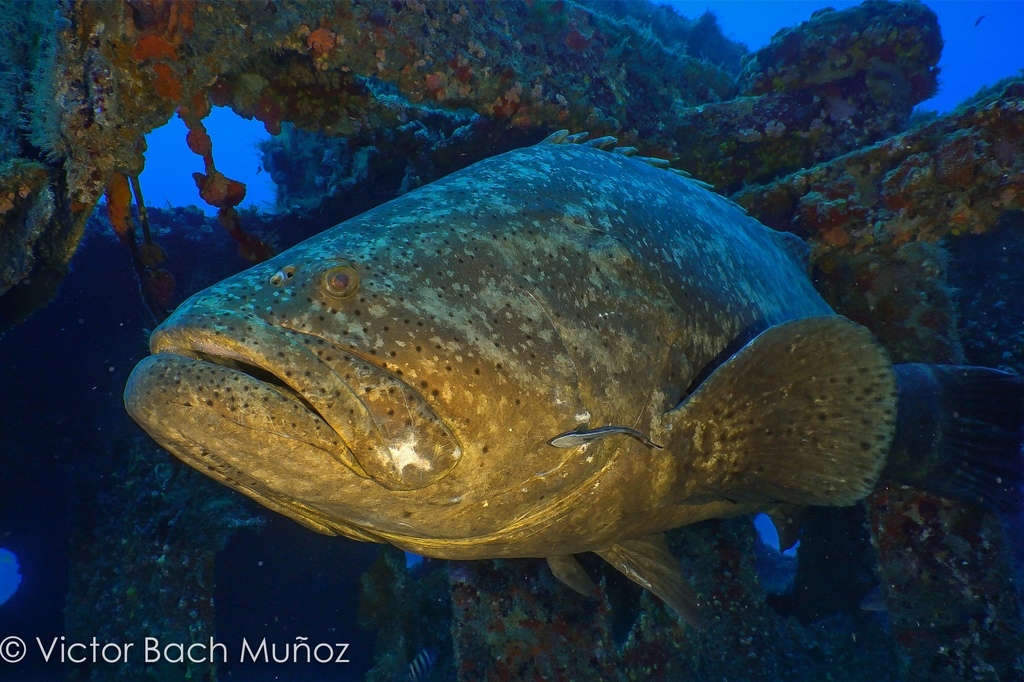
Atlantic goliath grouper
- Family
- Epinephelidae
- Depth
- 0–100 m
- Season
- Jan, Feb, Jun, Jul, Aug, Sep

Blacksaddle coral grouper
- Family
- Epinephelidae
- Depth
- 4–100 m
- Season
- Oct, Nov
Guides for this water
Technique, gear and safety guides that fit Black grouper.