
Nibe croaker
An inshore bottom croaker called nibe in Japan. It lives on shallow sand and mud facing the open sea, makes a croaking sound with its swim bladder, and spawns in April or September. It stays offshore compared with the inner-bay white croaker, and its fine flesh is better than its market profile suggests.
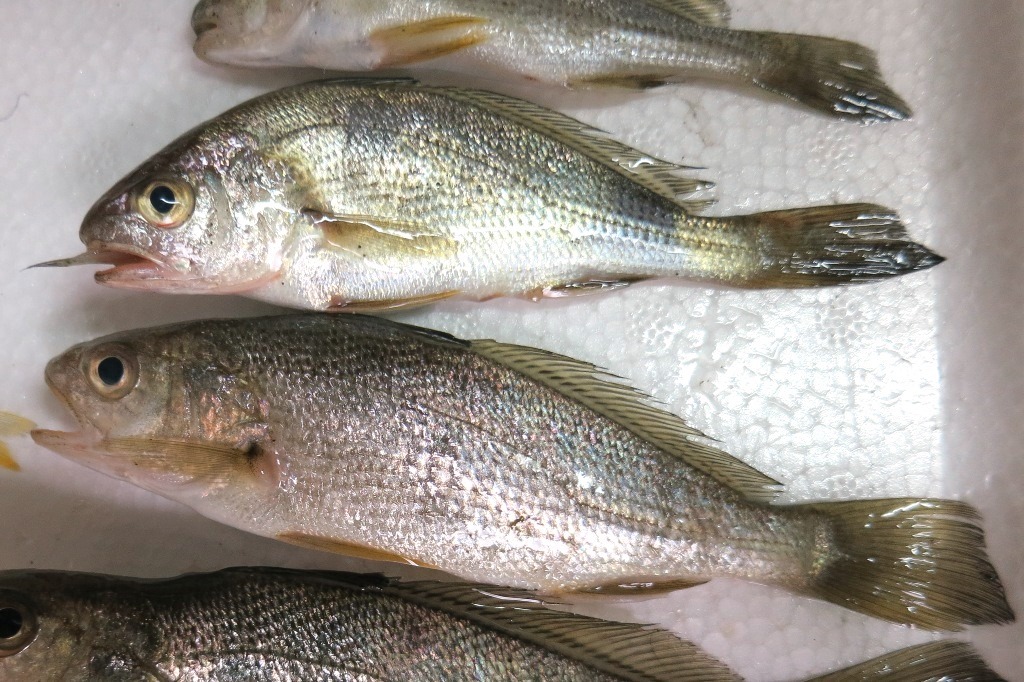
An inshore bottom croaker called nibe in Japan. It lives on shallow sand and mud facing the open sea, makes a croaking sound with its swim bladder, and spawns in April or September. It stays offshore compared with the inner-bay white croaker, and its fine flesh is better than its market profile suggests.
A croaker that is heard before it is seen
The body is elongate and compressed, the head slightly pointed, the mouth inferior. Colour is silvery grey, darker on the back, with fine scales. The family signature is a well-developed swim bladder and the ability to produce sound, and this species is no exception: a continuous croaking is often heard when a fish is landed. The sound continues after the fish is lifted clear of the water, which is usually the first thing that identifies a croaker at the rail.
The closest confusion is with the white croaker, shiroguchi, which is more of an inner-bay fish and paler, while this species sits on offshore shallow ground.
FishBase gives a maximum of 75 cm standard length. The Japanese guide stresses that the fish is small and inconspicuous, and ordinary catches are far below that ceiling.
Offshore sand, not the closed bay
FishBase records the northwest Pacific, Japan and the East China Sea. The Japanese range is Niigata to Shimane, the Sanriku coast of Tohoku, the Seto Inland Sea in small numbers, and the Pacific coast from Sendai Bay to southern Kyushu, plus the southwest coast of the Korean peninsula and Jeju.
The habitat is shallow inshore sand and mud, with a preference for sand that faces the open sea rather than an enclosed bay. That preference decides the method. An inner bay has softer ground and weaker current; an exposed shallow ground takes swell and tide, so the sinker has to hold. It also explains why a boat working a bay floor catches fewer of these than one working the open shore.
Two spawning windows, April or September
The Japanese source writes the spawning period as April or September, meaning a spring window and an autumn window rather than a single season. That fits the double-peaked spawning recorded in a number of croakers. Spring fish are on the shallow ground; autumn fish are fat ahead of spawning. The source does not rank the two windows, and neither does this article.
Fishing therefore centres on spring and summer. Quality drops for a while after spawning, though the same guide says the fish eats well most of the year apart from that post-spawning period.
Winter is not its strong season. As coastal water cools, the schools move offshore.
Bottom rigs and a waiting game
The diet is polychaetes, crustaceans and small fish on sand and mud, so the fish is clearly benthic. The rig belongs on the bottom: a surf or boat bottom rig with a sandworm, shrimp or squid strip, and a sinker heavy enough to press the bait onto the sand-mud surface.
The mouth is inferior and the fish takes deep, so the strike should wait for a clear run rather than a tap. Because the fish vocalises, continuous croaking from a boat often means fish are close, but the sound is not a bite and should not be struck.
Tackle for swell and current
From shore, a 3 to 3.6 m surf rod with a size 20 to 25 sinker. From a boat, a 1.8 to 2.1 m bottom rod with a size 30 to 50 sinker. Main line of 2 to 3 nylon or PE 1 to 1.5, leader 1.5 to 2, Maruseigo hooks in 12 to 14.
Offshore shallow ground carries current and swell, so a heavier sinker and a shorter leader are steadier. On sand the lead can drag to find bottom; over shell beds slow the drag down to cut losses.
Fine flesh, low market profile
The flesh is white with little dark muscle, the scales are fine and come off easily, the skin is thick but softens as soon as it is heated, and the bones are not hard. The Japanese guide notes that thin black tendons sometimes run through the muscle and that this is normal tissue, not a defect.
Sashimi, salt-grilling, simmering and frying all work, and steaming shows the sweetness when the fish is very fresh.
Japan has no nationwide recreational size or closed season; the sea rules sit in prefectural fishery adjustment regulations and cooperative rules. No species-level restriction was found, but the rules of Niigata, Miyagi and Chiba were not checked line by line. That item is deferred.
A spawning line left unresolved
Taxonomy, distribution and maximum length come from FishBase. The Japanese range, spawning period, diet and eating assessment come from the market guide. The correspondence between the Chinese name and the Japanese nibe comes from the Japanese fish dictionary, which also links the fish to the English name blue drum; the specific epithet honours Mitsukuri Kakichi. The regulatory framework comes from the Fisheries Agency.
The spawning line reads April or September in the original. This article keeps both windows instead of choosing one, because the source does not rank them and a single-season summary would be an addition, not a translation.
How to catch it
Shore casting
Fished with the listed approach, matched to the recorded depth and size.
Boat bottom fishing
Fished with the listed approach, matched to the recorded depth and size.
Where these facts come from
Check these pages before you rely on a size, range or protection status.
- FishBase — Nibea mitsukurii — FishBase · T2
- GBIF — Nibea mitsukurii occurrence records — GBIF · T2
- IUCN Red List — Nibea mitsukurii — IUCN · T1
- Photo record — iNaturalist — iNaturalist · T3
Fish in the same water
These fish live in the same place.

Acoupa weakfish
- Family
- Sciaenidae
- Depth
- 1–20 m
- Season
- Jan, Feb, Mar, Apr, May, Jun, Jul, Aug, Sep, Oct, Nov, Dec
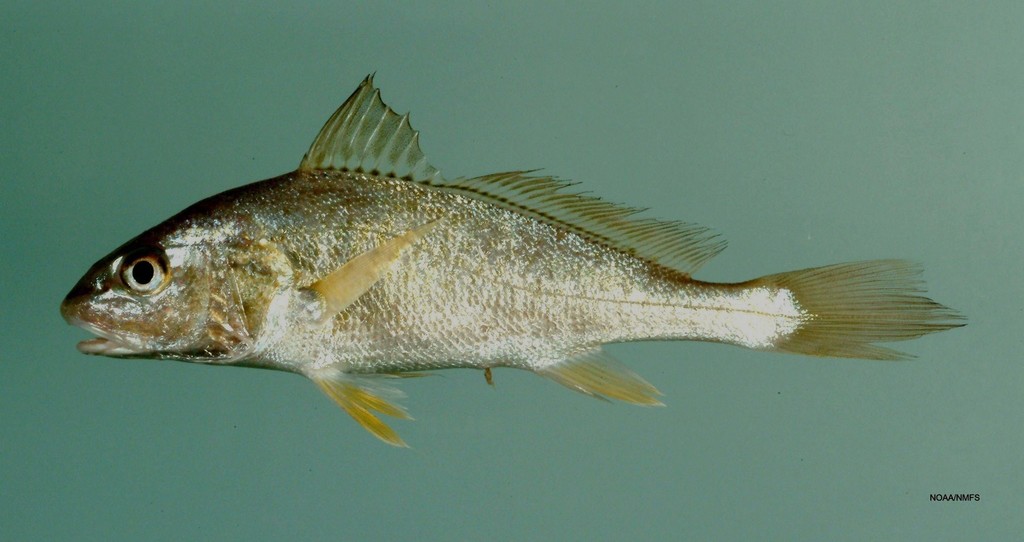
Atlantic croaker
- Family
- Sciaenidae
- Depth
- ≤ 100 m
- Season
- Jan, Feb, Mar, Apr, May, Jun, Jul, Aug, Sep, Oct, Nov, Dec
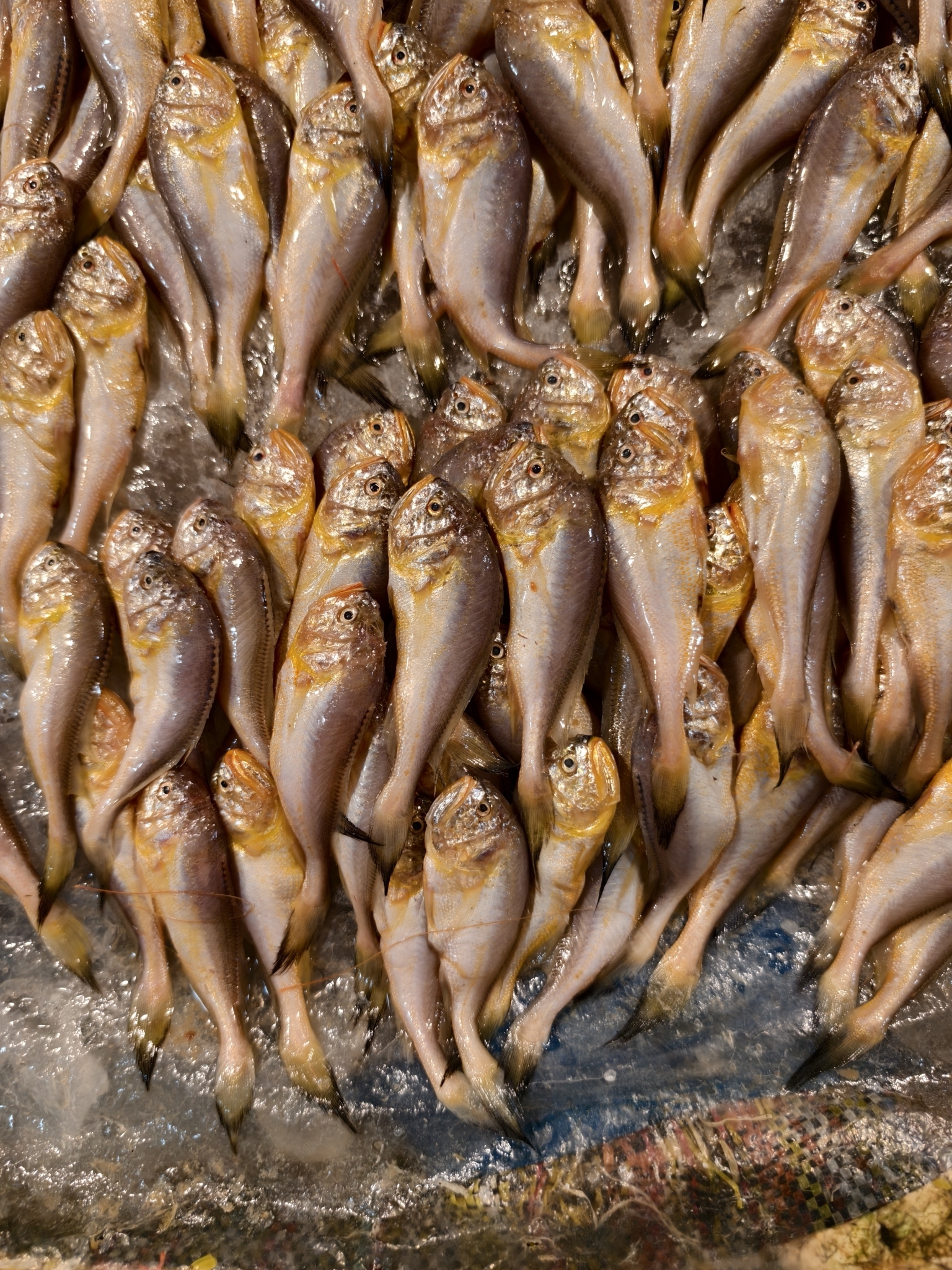
Bighead croaker
- Family
- Sciaenidae
- Depth
- ≤ 90 m
- Season
- Jan, Mar, Apr, May, Jun, Jul, Aug, Sep, Oct, Nov, Dec
Guides for this water
Technique, gear and safety guides that fit Nibe croaker.