
Peruvian flounder
The Peruvian flounder is a 70 cm flatfish of soft continental-shelf ground, and its fin counts are the most useful identification data on the page. It lives shallower than the other four species here: 1–35 m. Records list maxima of 70 cm TL.
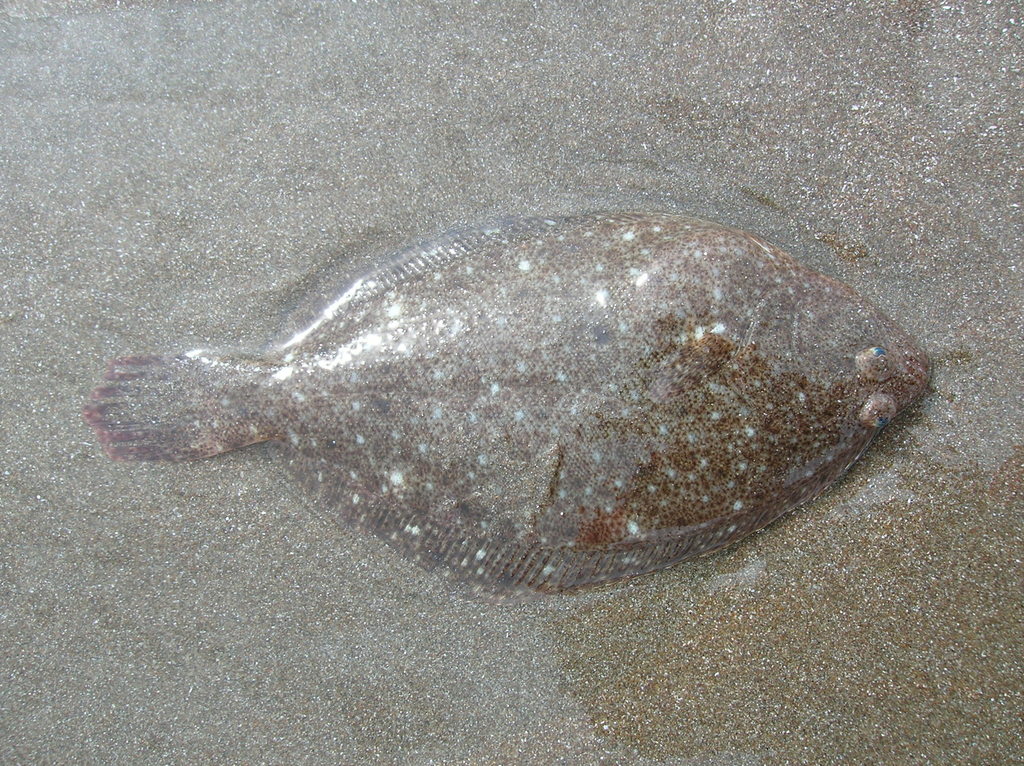
The Peruvian flounder is a 70 cm flatfish of soft continental-shelf ground, and its fin counts are the most useful identification data on the page. It lives shallower than the other four species here: 1–35 m.
70 cm, mature at 60.4 cm, and no weight on record
The maximum published length is 70.0 cm TL and the maturity estimate is 60.4 cm. No maximum weight, no common length and no maximum age are published. A maturity length of 60.4 cm is close to the 70 cm maximum, which means most of the large fish an angler meets are already mature.
That has a practical consequence: a release decision based on 60.4 cm is close to releasing most of the big fish, and the page gives no growth data to argue the other way. With no weight and no age, the page gives no way to convert a length into either mass or years.
72 to 77 dorsal rays separate it from the rest
The morphology field gives dorsal soft rays of 72–77, zero anal spines, and anal soft rays of 57–65. Those are counted characters, not impressions, and they are the only diagnostic numbers on the page. No body colour and no eye-side description are published.
The page also publishes no confusion species. Identification therefore rests on the fin counts, the flatfish shape and the Ecuador-to-Chile range. A count of 72–77 dorsal rays is a range rather than a fixed number, so a specimen at either end still fits.
One to 35 metres over soft bottom
The depth range is 1–35 m and the species is demersal. The climate is subtropical, with coordinates from 2°N to 46°S and 82°W to 73°W. The biology note says it inhabits the soft-bottom area of the continental shelf.
The habitat keywords are soft bottom and continental shelf, which agree with that sentence. A 1 m lower bound puts beaches and shallow bays inside the range, and 35 m is the deepest record. Soft bottom and continental shelf are broad categories, and the page does not narrow them to sand, mud or a particular grain size. No temperature figure is published.
Ecuador to Chile, with Chile holding 3,532 records
FishBase gives the range as Ecuador to Chile. GBIF holds 3,648 records: 3,532 from Chile, 84 from Peru, 5 from Mexico, 2 from Ecuador and 1 from Panama. iNaturalist carries 44 observations.
Wikipedia describes the species as a large-tooth flounder of the eastern Pacific, along the continental shelf from Ecuador to Peru, which stops short of the Chilean range in FishBase. FishBase and GBIF both carry Chilean records, so the wider range is the one used here, with the discrepancy noted rather than hidden. The five Mexican records and the single Panamanian record sit outside the stated range and should be treated as edge data.
Boat bottom fishing is the mainstream method
Boat bottom fishing is mainstream and shore casting is secondary. The terrain is sandy bottom, muddy bottom and coastal. With a 1 m floor, shore casting can reach the shallow part of the range from a beach or a breakwater.
The page publishes no diet information, so this account gives no bait preference. The method and the ground are recorded; the feeding behaviour is not. That is a gap worth naming, because bait choice is usually the first question a flatfish angler asks. The 1 m floor also means a surf or pier angler is fishing the same depth band as a boat working the shallows.
No spawning table, so no closed-window reading
The page publishes no spawning months and no temperature preference. The conservation entry is Least Concern, assessed on 2 May 2008, with no CITES or CMS evaluation and no threat to humans.
Without a spawning table, there is no month to treat as a closed window on biological grounds. Any closed season comes from the current national rule, not from this page.
A commercial flatfish with no published weight
Human uses record a commercial fishery and no aquaculture, gamefish or aquarium use. No weight is published, so a cool box cannot be sized from a maximum figure. A flatfish with no published weight is a fish you measure, not one you estimate at the rail.
Handling a flatfish is mostly about support: hold the body flat, avoid bending the head, and keep the fish off hot decks. Those are general practices, not species-specific findings.
Two jurisdictions, two enforcement chains
Chile: SUBPESCA writes the recreational rules and SERNAPESCA enforces them; a recreational licence is required, with daily limits, minimum sizes and closed seasons. Marine protected areas include AMCP-MU sites and Parque and Reserva Marina designations, where the rules differ.
Peru: PRODUCE writes the fisheries rules and IMARPE supplies the assessment; management relies on minimum sizes, closed seasons and area measures, and artisanal pressure is heavy. SERNANP reserves such as Paracas and San Fernando bar recreational fishing inside their boundaries.
No bag number, size limit or closed-season date is restated here. The two countries also register the recreational sector differently, so a licence from one does not transfer to the other. Check the current rule and the protected-area map before the trip.
Where these facts come from
Check these pages before you rely on a size, range or protection status.
- FishBase — Paralichthys adspersus — FishBase · T2
- GBIF — Paralichthys adspersus occurrence records — GBIF · T2
- IUCN Red List — Paralichthys adspersus — IUCN · T1
- Photo record — iNaturalist — iNaturalist · T3
Fish in the same water
These fish live in the same place.
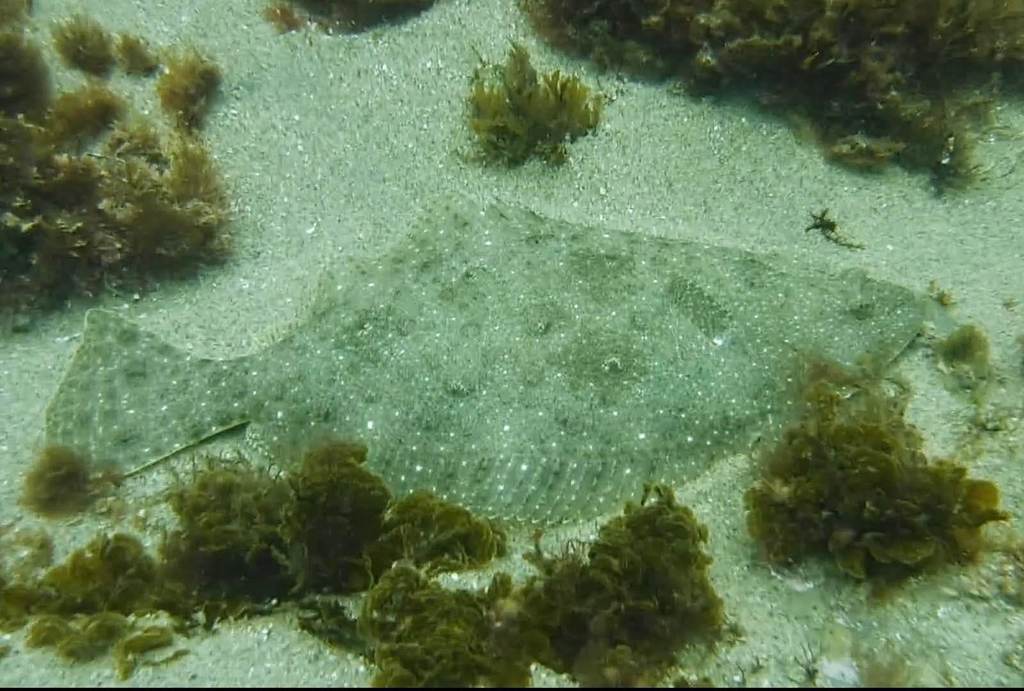
California halibut
- Family
- Paralichthyidae
- Depth
- 0–183 m
- Season
- Apr, May, Jun, Jul, Aug, Sep
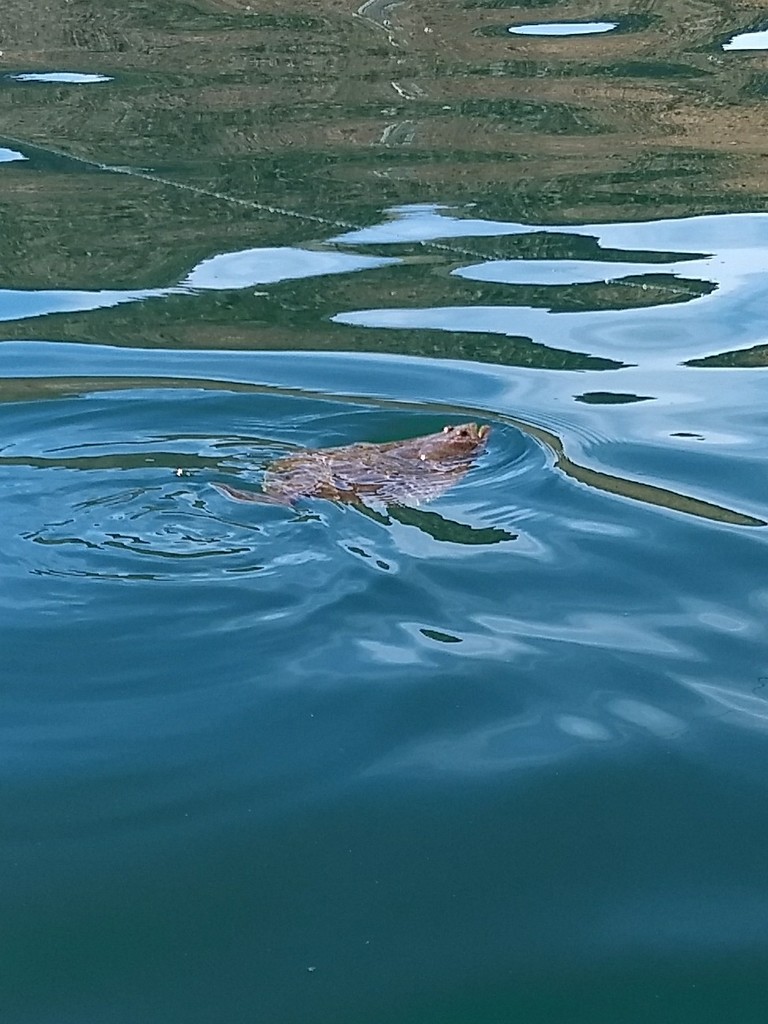
Cortez halibut
- Family
- Paralichthyidae
- Depth
- ≤ 44 m

Olive flounder
- Family
- Paralichthyidae
- Depth
- 10–200 m
- Season
- Feb, Mar, Apr, Jun, Jul
Guides for this water
Technique, gear and safety guides that fit Peruvian flounder.