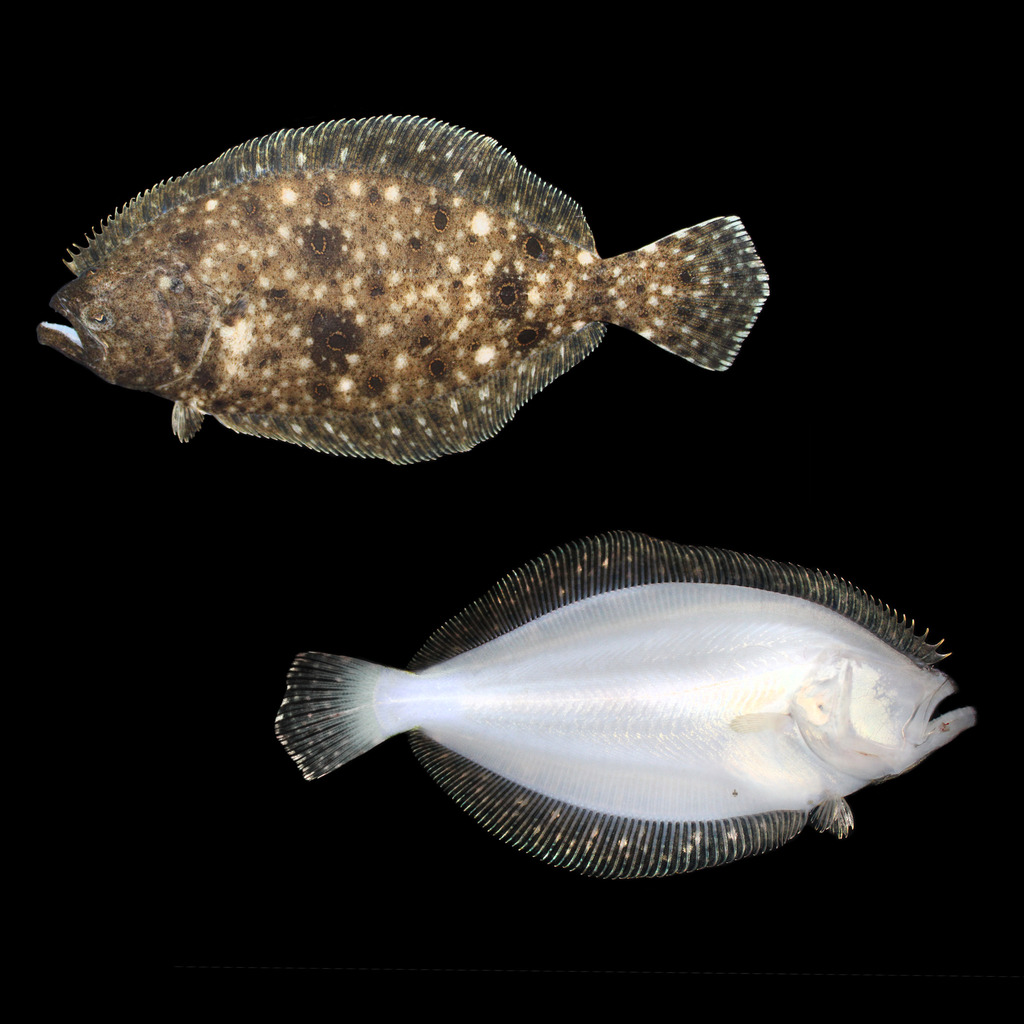
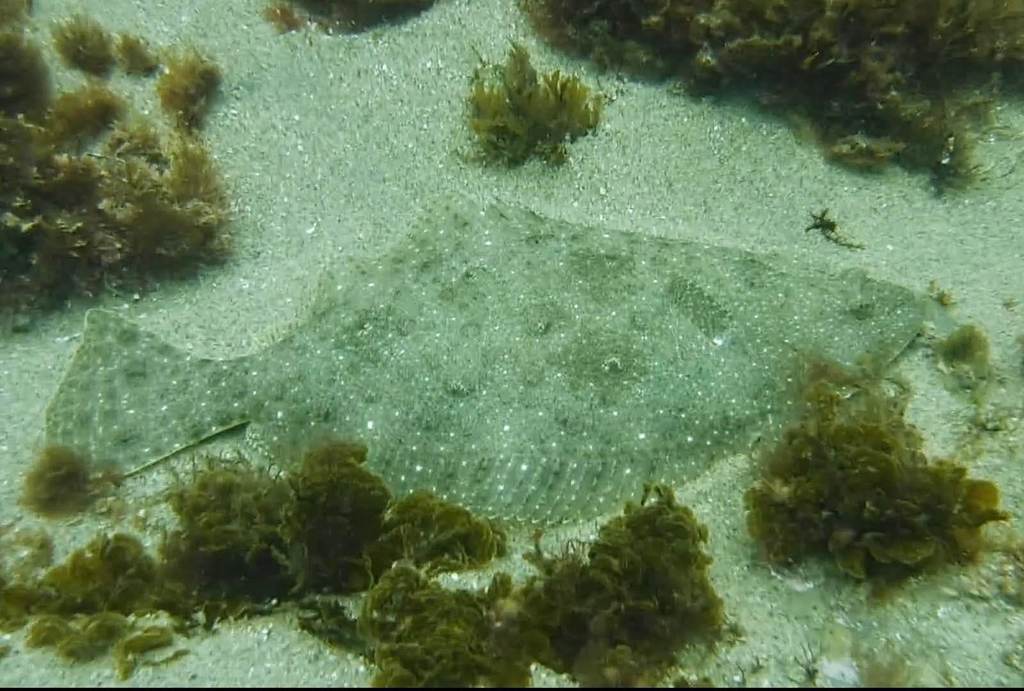
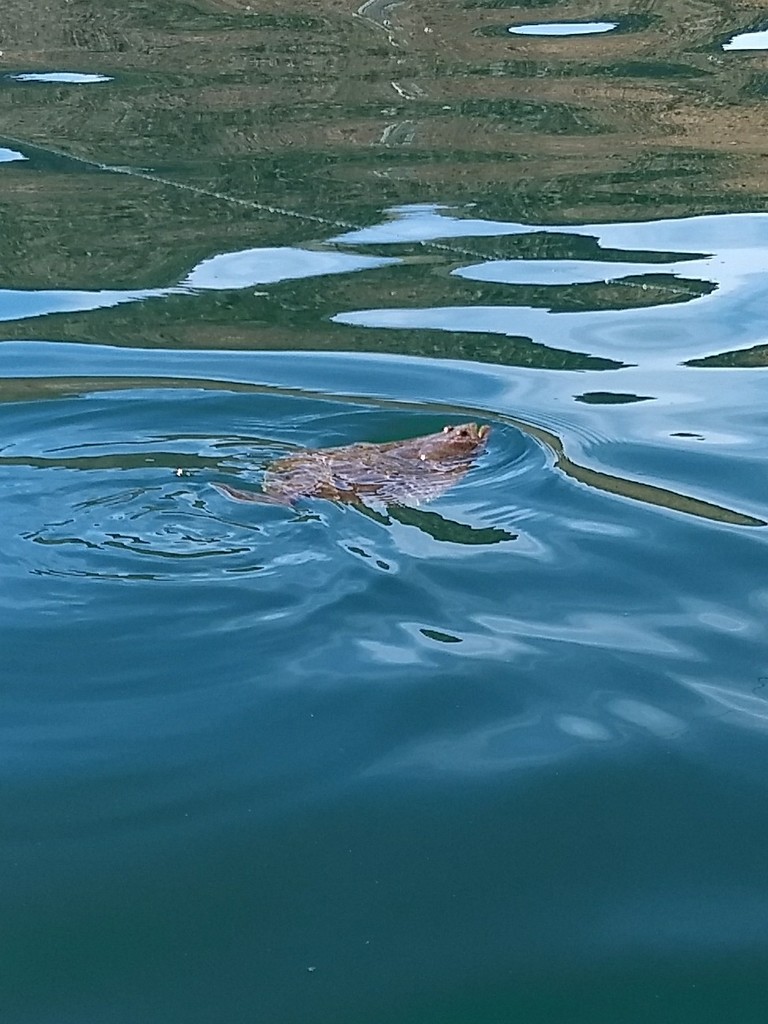
Summer flounder (Paralichthys dentatus) is a fish of the family Paralichthyidae. FishBase gives its range as: Northwest Atlantic: Maine (rarely Nova Scotia, Canada) to southern Florida, USA. It is recorded from 10 to 183 m, in temperate water. The recorded maxima are 94 cm TL, 12 kg, 9 years. IUCN status: Least Concern (LC). Chinese name: .
The bottom list is the useful part
FishBase records the species as marine and brackish, demersal, oceanodromous, with a depth range of 10–183 m and a usual depth that tops out at 37 m. The upper bound of the usual range has no lower figure in the record ("usually ? - 37 m"), so the usable statement is "shallow to about 37 m", not a band with two ends. That partial field matters: the 183 m end is a tolerance record, while the 37 m ceiling is the working one.
Where sand, mud and grass meet
A demersal ambush fish on soft ground needs something to hide beside or a colour field to lie on. Sand and mud offer the lie; seagrass and the edges of channels offer the seam. The source does not say which of these the fish uses at which size, so the following is a reading of the keyword list: the productive position is usually the boundary between two bottom types, because that is where a fish can sit still and still be within a short strike of open water. Flat, uniform ground is the least informative part of the list.
Depth as a position
The record's 10–183 m span is wide enough to contain several fisheries, and the 37 m usual ceiling narrows it to the shelf. Ten metres is the shallowest record, which puts the inshore edge inside reach of a shore cast in places; 37 m is a boat mark in most weather. The practical translation is that this is a shelf fish with an offshore tolerance, not a deep-water species. The missing lower bound of the usual range is the one gap in that reading.
The ambush triangle
Put the three keywords together and a position emerges: soft bottom, an edge, and moving water. A flounder lying on sand at the edge of grass, with current sweeping past the seam, is using the same geometry as a fish behind a rock in a tide. The source supports the ingredients, not the triangle; the triangle is inference. The test on the water is simple: if the drift carries the bait along the seam rather than across flat sand, the rig is in the right geometry.
The fish you meet
The maximum is 94 cm (TL) and 12 kg, the maximum reported age is 9 years, and maturity begins at 28 cm. No common length is recorded. The maturity figure is the useful one for a kept fish: at 28 cm the animal is only beginning to reproduce, while the record length is more than three times that. Nine years is also brief for an animal that grows to 94 cm, which means growth is fast and the window between maturity and maximum size is compressed. A 94 cm flounder is a rare specimen, not the shape of the population.
Two windows, three localities
The spawning records are local, not a single season: one entry for Cape Sable to Block Island covering January–April and October–December, and narrower entries for Chesapeake Bay and Delaware Bay covering December–February. Read as a union, the table looks like two windows; read by locality, each estuary has its own short one. The page does not turn that into a coast-wide "season", because the localities are three points on a long coastline.
What the record map actually counts
GBIF holds 15,934 preserved occurrences, of which 15,552 are from the United States, 265 from Canada, and 33 with no country resolved. The Canadian records mark the northern edge of that sampling, and the unresolved ones are a reminder that country totals are a product of metadata as much as of fish. That is a national dataset with a long tail, not a global distribution. For a Northwest Atlantic species whose text range runs from Maine to southern Florida, the concentration is expected; it still means the map tells you where sampling happened, not where the fish is equally common.
Rig for the bottom
Boat bottom fishing and shore casting are the recorded approaches, both with the bait or lure presented directly on or near the seabed. Because the fish lies on the bottom, the presentation plane matters far more than casting distance: a bait that swings a metre above the sand is in the wrong layer, and a bait that drags through mud is in the right one but may be buried. A leader short enough to keep contact, and a weight light enough to drift with the current rather than anchor, are the two adjustments that follow directly from the substrate list.
How to catch it
Boat bottom fishing
Anchored or drifting boat, bait or lure worked near the recorded bottom.
Shore casting
Cast from shore or a breakwater, within reach of the recorded inshore range.
Regulations before you keep it
These are the published regulations for this fish. Read the number first. The notice below it is the actual regulation.
Minimum size1
19 in (May 4 – Aug 1) · 19.5 in (Aug 2 – Oct 15) · 3 fish per person
United States — New York · US-NY
New York requires summer flounder to be 19 inches from May 4 to August 1 and 19.5 inches from August 2 to October 15, with a three-fish possession limit.
Summer flounder (fluke) (4) | 19"
19.5" | 3 | May 4 - Aug 1
Aug 2 - Oct 15
Bag limit5
Vessel 17.5 in, shore 16.5 in · 5 fish · May 24 – Sept 23
United States — Massachusetts · US-MA
Massachusetts allows 5 summer flounder per person from May 24 to Sept 23, at 17.5 inches from vessels or 16.5 inches from shore.
Summer Flounder
(Vessel Based) Min: 17.5" May 24 - Sep 23 5 fish
Summer Flounder
(Shore Based) Min: 16.5" May 24 - Sep 23 5-fish
20 in · 2 fish per angler per day
United States — Maine · US-ME
Maine allows 2 summer flounder per angler per day at 20 inches.
SUMMER FLOUNDER (Paralichthys dentatus)
Size: Minimum size 20 inches
Bag limit: 2 fish per angler per day
18 in (Delaware Bay 17 in; Island Beach State Park 16 in) · 3 fish per person per day, 2 at Island Beach
United States — New Jersey · US-NJ
New Jersey allows 3 summer flounder at 18 inches, 3 at 17 inches in Delaware Bay, and 2 at 16 inches at Island Beach State Park.
Open season May 4 – September 25.
Summer Flounder (Fluke)
All marine waters except
those noted below:
3 fish at 18 inches
Delaware Bay & Tributaries:
3 fish at 17 inches
Island Beach State Park:
2 fish at 16 inches
Open Season: May 4 – Sept 25
19 in (two fish may be 17 in at shore sites) · 6 fish per person per day · Apr 1 – Dec 31
United States — Rhode Island · US-RI
Rhode Island allows 6 summer flounder per person per day from Apr 1 to Dec 31 at 19 inches.
At special shore angling sites two of the six fish may be 17 inches.
3.9.1 Recreational
A.Minimum size: Nineteen inches (19”).
B.Season: April 1 through December 31.
C.Possession limit: Six (6) fish per person per day.
16 in Jan 1 – May 31, 17.5 in Jun 1 – Dec 31 · 4 fish per person per day · year round
United States — Virginia · US-VA
Virginia allows 4 summer flounder per person per day at 16 inches from Jan 1 to May 31 and 17.5 inches from Jun 1 to Dec 31.
SUMMER FLOUNDER
Minimum Size Limit January 1-May 31: 16 Inches
Minimum Size Limit June 1-December 31: 17.5 Inches
Possession Limit: 4 per person
Season: Open year-round
Season / closure1
Open May 4 – September 25
United States — New Jersey · US-NJ
New Jersey's summer flounder season runs May 4 through September 25.
Open Season: May 4 – Sept 25
Possession limit1
No heads or tails removed, no cleaning, cutting, filleting or skinning until brought to shore
United States — New York · US-NY
New York requires summer flounder to be kept whole until brought to shore; only the white side fillet or white skin may be removed for bait, and the carcass with the dark side intact must be retained.
Summer flounder may not have heads or tails removed or be otherwise cleaned, cut, filleted, or skinned until brought to shore, with the following exception: the white side fillet or white skin only of a legal size fluke may be removed to use as bait. The carcass of the fluke with dark side completely intact must be retained for inspection of size limit and counts against the possession limit.
Every record above names its source and the date it was retrieved. See the regulation register for the full list, or how to read these regulations.
Where these facts come from
Check these pages before you rely on a size, range or protection status.
-
FishBase — Paralichthys dentatus
— FishBase · T2
-
GBIF — Paralichthys dentatus occurrence records
— GBIF · T2
-
IUCN Red List — Paralichthys dentatus
— IUCN · T1
-
Photo record — iNaturalist
— iNaturalist · T3