
Patagonian flounder
Patagonian flounder is a large-tooth flounder of the southwest Atlantic, listed from Rio de Janeiro to Patagonia and separately from Chile. Males reach 48 cm TL and females 62 cm, with a common length of 40 cm and first maturity at 33.5 cm. It is recorded from 6 to 200 m. IUCN assessed it as Vulnerable in December 2019, and boat bottom fishing and shore fishing are the methods listed.
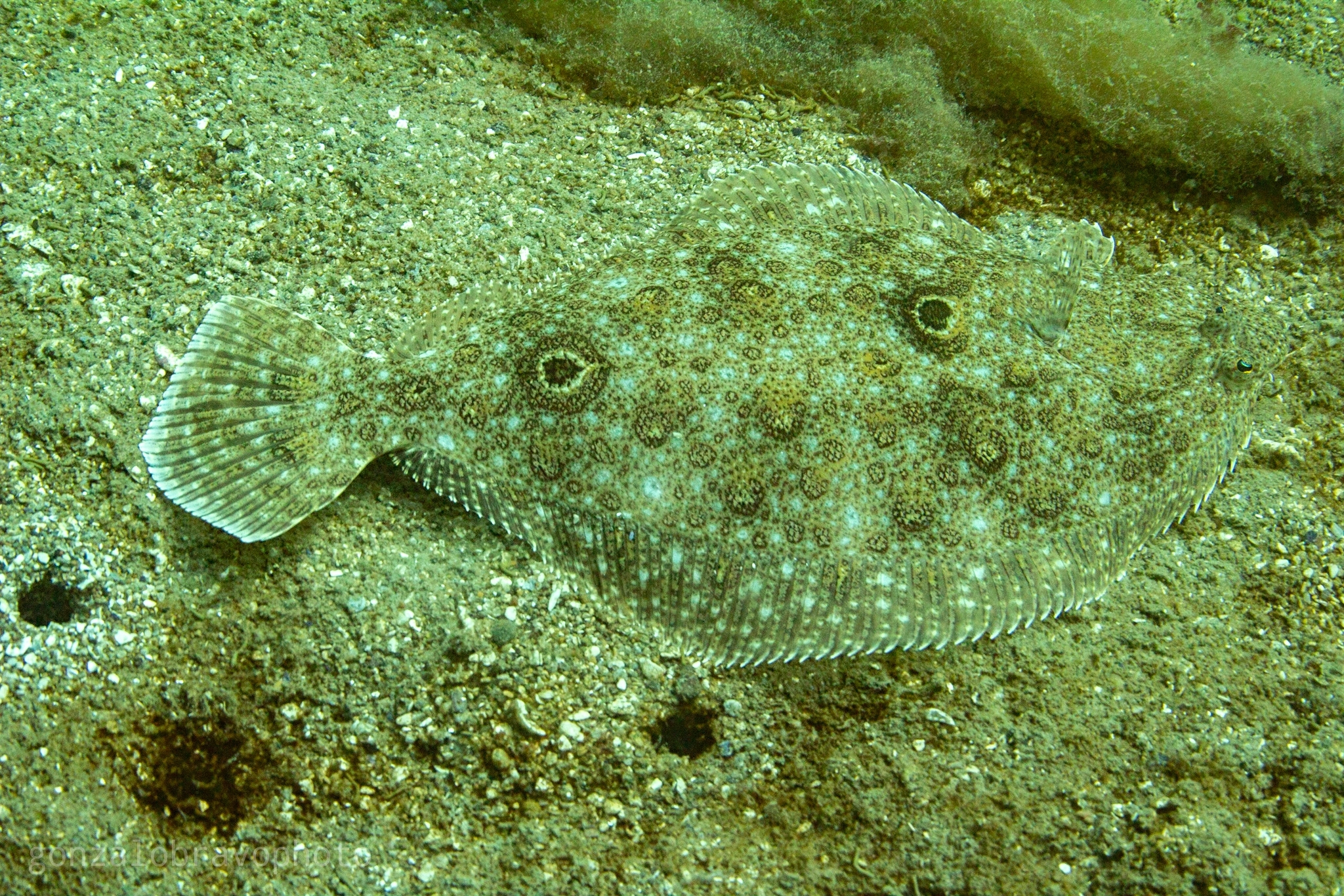
*Paralichthys patagonicus*, the Patagonian flounder, is a large-tooth flounder of the southwest Atlantic, listed from Rio de Janeiro to Patagonia and separately from Chile. FishBase gives 48 cm TL as the maximum for males and unsexed fish, 62 cm for females, 40 cm as the common length and first maturity at 33.5 cm. It is a commercial flatfish assessed as Vulnerable in December 2019. This page sets out what the sources record about its depth, its two-sided scalation, and the Buenos Aires rule that covers a recreational catch.
Identification
Both eyes sit on one side and the two sides are scaled differently: ctenoid on the ocular side, cycloid on the blind side. The fin counts are 78–84 dorsal soft rays, 60–65 anal soft rays, no spines in either fin, and 37–39 vertebrae; the body is short and deep.
The length figures form three grades. Common length is 40 cm TL, first maturity 33.5 cm, the maximum for males and unsexed fish 48 cm TL, and the female maximum 62 cm TL. No weight and no age are given. A 62 cm fish is a female at the top of the range, not a routine landing.
The page records no colour and no comparison with the region's other Paralichthys; identification rests on the scale difference and the ray counts. The alias list adds lenguado de Patagonia, linguado and cardeau patagonien; lenguado and linguado are family-level market words for flatfish and do not name the species.
Range and habitat
The distribution text gives two blocks: the southeast Pacific off Chile, and the southwest Atlantic from Rio de Janeiro to Patagonia. Uruguay is on the country list. GBIF returns 346 present records, 212 from Argentina, 108 from Brazil and 18 from Uruguay, with none from Chile; iNaturalist carries 8 observations. The Chilean half of the range is in the text but not in the occurrence set, and the page does not explain the gap.
The environment line is marine, demersal, 6–200 m, usually 70–100 m, subtropical, with a southern limit of 43°S and no northern limit. Bottom type appears in the biology notes: the fish is frequently captured over sand. Six metres is within a shore cast; the usual 70–100 m is not.
Habits and diet
The biology entry is short: the species ranges from the coast to 200 m, is taken over sand, and feeds mainly on fishes, also shrimps.
Reproduction is the largest blank. The spawning section holds no record, and the page gives no ground, season or temperature. First maturity at 33.5 cm is the only reproductive figure, and it is a length rather than an age; there is no growth curve, longevity or natural mortality.
What remains is a demersal fish on sand that takes fish and shrimp and matures at 33.5 cm, in a stock where females run 14 cm longer than males and unsexed fish.
Season and time of day
There is no season to give. FishBase records no spawning period for P. patagonicus, so the page cannot say when the fish aggregates, moves shallow, or should be left alone. "Subtropical" and "43°S" are climate and latitude, not a calendar.
Time of day is equally silent: no diel behaviour is recorded. An inference, labelled as one, is that a demersal ambush fish over sand that eats fishes and shrimps is most likely to feed when prey move over open bottom, which in shallow water is the low-light window around dawn and dusk.
The 70–100 m band is where the fish is usually taken.
Tackle and techniques
The depth range sets the method. With a usual band of 70–100 m and a maximum of 200 m, this is a boat fish for most of its range; a shore rod reaches only the shallow 6 m edge. The page records no method, gear or bait.
Diet gives the bait direction: fishes and shrimps. A fish strip or a small whole fish on a bottom rig, with shrimp as a secondary, follows from that line, as does the expectation that the take comes on or near the bottom. This is inference from the diet entry, not a recorded technique.
Size sets the terminal tackle. A common fish is 40 cm TL and a female can reach 62 cm. A flatfish of that width loads a rod differently from a round fish of the same length, and the trace has to survive a broad head working against the bottom.
Two checks follow from the identification section. Confirm scale type on both sides before keeping a fish, and count dorsal and anal rays if the catch is to be logged. Because lenguado and linguado also cover other flatfishes, a local name alone will not separate this species.
Kitchen and handling
FishBase records commercial use and nothing else: no aquaculture, no gamefish entry, no price, no quality note. There is no weight, so no kilogram grade, and no culinary description to repeat.
The numbers do support a size reading. Common length 40 cm TL and first maturity 33.5 cm make a 40 cm fish a mature adult and a 35 cm fish close to the line. The 62 cm figure belongs to females and marks the top of the range, not a routine landing. A 60 cm flounder is an old female, which is the part of the stock least able to absorb removal.
The page says nothing about killing, storage or filleting. Those blanks stay blank. The one handling rule the sources supply is regulatory: in Buenos Aires the fish falls in a directed group with a 10-piece daily ceiling, and no minimum size for lenguado was located.
Regulations and conservation
IUCN lists the species as Vulnerable, assessed on 6 December 2019. The page gives no population trend, stock estimate or regional breakdown. A global VU label from one assessment is not a harvest rule and does not say which country carries the decline.
Argentina, Buenos Aires Province: a recreational licence is required, and lenguado sits in the directed group at up to 10 pieces per angler per day. No Buenos Aires minimum size for lenguado was located in the sources checked; the published minimums cover corvina rubia, pescadilla, salmón de mar and gatuzo, not this flatfish. Other provinces and national waters differ.
Brazil: a licence is required and the marine transport limit is 15 kg plus 1 specimen per angler per day. No federal minimum size for P. patagonicus was located; state or ICMBio rules apply and must be checked locally.
Uruguay: DINARA sets the permit conditions, and no species-specific size or bag number for this flounder was located.
In all three countries the species-specific number is missing. That gap is recorded here, not filled.
How to catch it
Boat bottom fishing
Fished with the listed approach, matched to the recorded depth and size.
Shore fishing
Fished with the listed approach, matched to the recorded depth and size.
Where these facts come from
Check these pages before you rely on a size, range or protection status.
- FishBase — Paralichthys patagonicus — FishBase · T2
- GBIF — Paralichthys patagonicus occurrence records — GBIF · T2
- IUCN Red List — Paralichthys patagonicus — IUCN · T1
- Photo record — iNaturalist — iNaturalist · T3
Fish in the same water
These fish live in the same place.
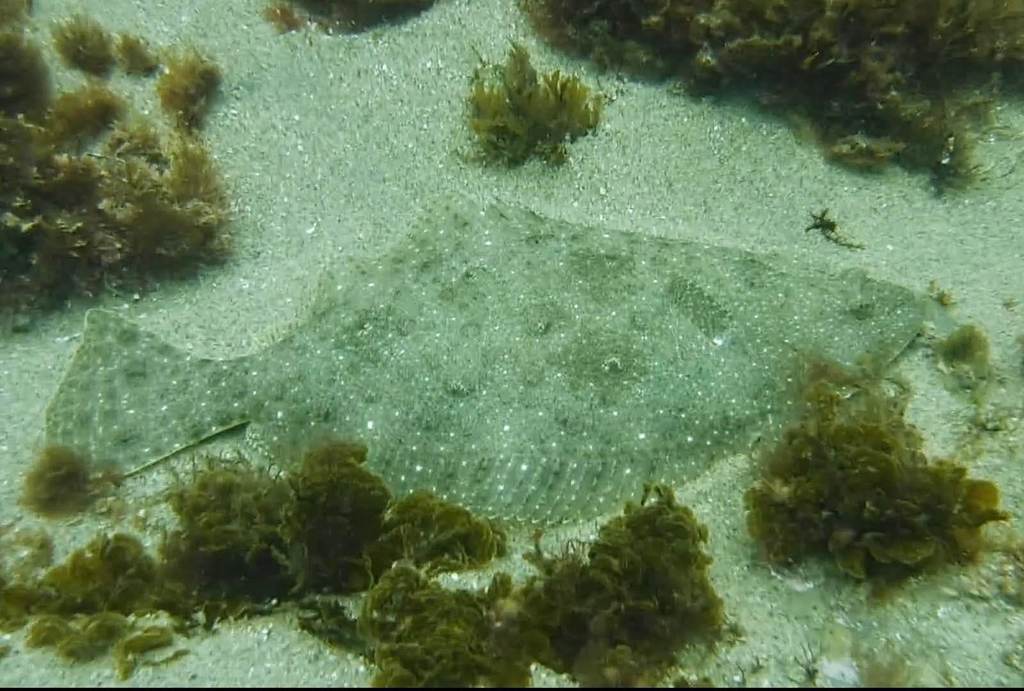
California halibut
- Family
- Paralichthyidae
- Depth
- 0–183 m
- Season
- Apr, May, Jun, Jul, Aug, Sep
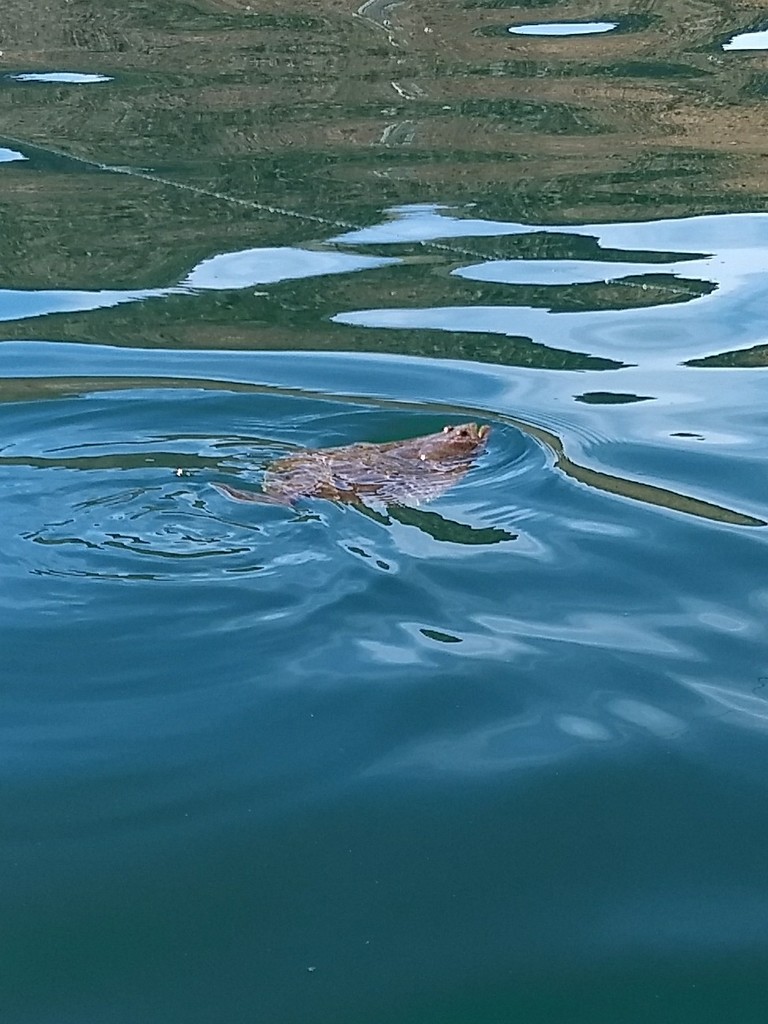
Cortez halibut
- Family
- Paralichthyidae
- Depth
- ≤ 44 m

Olive flounder
- Family
- Paralichthyidae
- Depth
- 10–200 m
- Season
- Feb, Mar, Apr, Jun, Jul
Guides for this water
Technique, gear and safety guides that fit Patagonian flounder.