
Parona leatherjacket
Parona leatherjacket is a southwest Atlantic carangid, from southern Brazil to southern Argentina, and it is the only member of its genus. In Argentina it is sold as palometa. FishBase gives 60 cm TL as the maximum and 40 cm as the common length, but the larger figure is an assumption of one and a half times the common length rather than a measured fish. Boat fishing, shore casting and trolling are the methods listed.
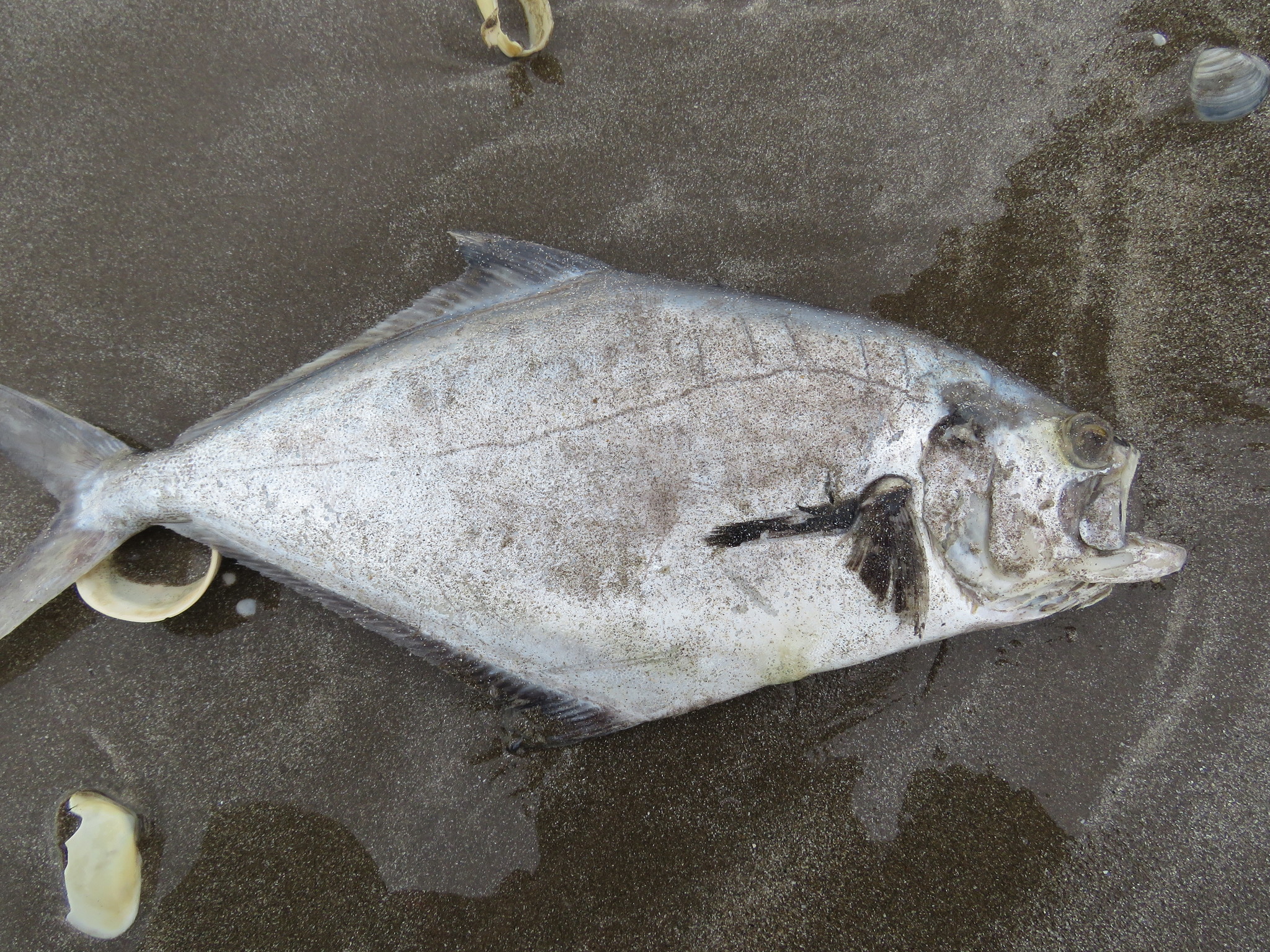
*Parona signata*, the Parona leatherjacket, is a carangid sold in Argentina as palometa; the iNaturalist summary notes it is the only member of its genus. FishBase gives 60 cm TL as the maximum and 40 cm TL as the common length, but the 60 cm figure is explicitly an assumption, one and a half times the common length, rather than a measured fish. The range is the southwest Atlantic from southern Brazil to southern Argentina. This page covers the naming problem, the almost empty biology file, and the Buenos Aires rule that sets a 40-fish ceiling.
Identification
The fin formula is 5–6 dorsal spines, 33 dorsal soft rays, 3 anal spines and 33–41 anal soft rays, with 27 vertebrae. The first dorsal fin is a set of short spines preceded by an anteriorly directed spine that is usually buried under the skin, and two detached spines sit ahead of the soft anal fin. The lateral line curves and undulates, branching about ten times at the front. A black patch on the opercle is the conspicuous mark that gave the species the name signata.
Body form is recorded as fusiform. Beyond the opercular patch the page gives no colour, scale count or comparison with other jack genera.
The names are the harder identification problem. The Chinese name used here is , taken from FishBase; the element points at the pomfrets, a different family, while the fish is a jack. In Argentina, Uruguay and Chile it is palometa. In Brazil the near-homonym palombeta usually refers to Chloroscombrus chrysurus, another carangid, so the Portuguese name should not be carried across the border.
Range and habitat
The distribution text is one line: southwest Atlantic, southern Brazil to southern Argentina. The environment line adds subtropical and a latitudinal band of 9°S to 37°S, marine and demersal, with no depth figure. That missing depth is the largest gap: the fish is bottom-dwelling, and nothing says how deep.
GBIF returns 1,382 present records, 1,229 from Argentina, 110 from Brazil, 20 from Uruguay and one from Australia. iNaturalist carries 28 observations. The Argentine share is 89 percent of the set, which fits the range's centre; the single Australian record is best read as a data artefact. The summary on the iNaturalist page extends the range to the Falkland Islands, which the FishBase text does not.
No substrate, salinity or estuary use is recorded.
Habits and diet
The biology section contains one sentence, and it is about the length figure: the maximum is assumed to be 1.5 times 40 cm, giving 60 cm TL. That is the whole entry. No diet, prey, feeding time, growth rate or natural mortality is given.
Reproduction is blank. There is no spawning record, no spawning ground, no season and no maturity length; the maturity field reads "?". Across 28 degrees of latitude and three countries, that is the central uncertainty of this page.
The genus is monotypic according to the summary carried on the iNaturalist taxon page. FishBase places the species in the Carangidae, subfamily Scomberoidinae.
Season and time of day
Nothing in the source supports a season. With no spawning record and no depth figure, no date can be given for gathering, inshore movement or departure. The 9°S to 37°S band spans tropical and warm-temperate water; that is a range, not a season.
Time of day is equally unrecorded. A labelled inference can be built from two facts: the species is demersal, and it carries a fusiform body and a long, branched lateral line. Neither says when it feeds. The only defensible advice is to fish the bottom and to treat dawn and dusk as the default low-light window, on the general behaviour of demersal predators rather than on any record for this species.
Tackle and techniques
With no depth and no diet on the page, gear cannot be derived from habitat. Two numbers are solid: a common length of 40 cm TL, and a maximum that is only an assumption at 60 cm. Scale terminal tackle to a 40 cm fish; the 60 cm figure is the ceiling of a guess.
The morphology points to a bottom presentation. A fusiform body, a first dorsal of short spines and two detached anal spines ahead of the soft fin describe a fish built to hold position near structure rather than to cruise at speed. A bottom rig with fish or shrimp bait is the reasonable starting point; that is inference from body form, since the source records no diet.
Identification matters more here than usual, because the name determines the bag. In Buenos Aires, palometa is one of the species in the variado costero group with a 40-fish ceiling. A fish logged as palometa but actually another carangid still counts against that group limit, while a fish logged under the Brazilian palombeta does not. The opercular black patch is the mark to check first.
Kitchen and handling
FishBase records minor commercial use only: no aquaculture, no gamefish entry, no price and no quality note. There is no weight on the page, so the 40 cm common length cannot be converted into a kilogram grade.
The 60 cm maximum should not be used as a market grade. It is an assumption derived from the common length, not a fish that was weighed and measured.
Nothing is recorded about handling, bleeding, storage or fillets. The only handling rule the sources supply is regulatory: in Buenos Aires the fish falls into the variado costero group at 40 pieces per angler per day. Because the same fish is palometa in Argentina and Uruguay and something else again in Brazil, the label on a market slab is a weaker identifier than the opercular patch.
Regulations and conservation
IUCN lists the species as Least Concern, assessed on 18 July 2017. The page gives no population trend, stock estimate or regional breakdown. LC is a global label, not a statement about the Buenos Aires shelf, where 1,229 of the 1,382 GBIF records sit.
Argentina, Buenos Aires Province: a recreational licence is required, and palometa is one of the species in the variado costero group at up to 40 pieces per angler per day. No Buenos Aires minimum size for palometa was located in the sources checked; the published minimums cover corvina rubia, pescadilla, salmón de mar and gatuzo. Other provinces and national waters set different rules.
Brazil: a licence is required and the marine transport limit is 15 kg plus 1 specimen per angler per day. No federal minimum size for Parona signata was located; state or ICMBio rules apply.
Uruguay: DINARA sets the permit conditions, and no species-specific size or bag number was located.
In all three countries the species number is missing.
How to catch it
Boat fishing
Fished with the listed approach, matched to the recorded depth and size.
Shore casting
Fished with the listed approach, matched to the recorded depth and size.
Trolling
Fished with the listed approach, matched to the recorded depth and size.
Where these facts come from
Check these pages before you rely on a size, range or protection status.
- FishBase — Parona signata — FishBase · T2
- GBIF — Parona signata occurrence records — GBIF · T2
- IUCN Red List — Parona signata — IUCN · T1
- Photo record — iNaturalist — iNaturalist · T3
Fish in the same water
These fish live in the same place.
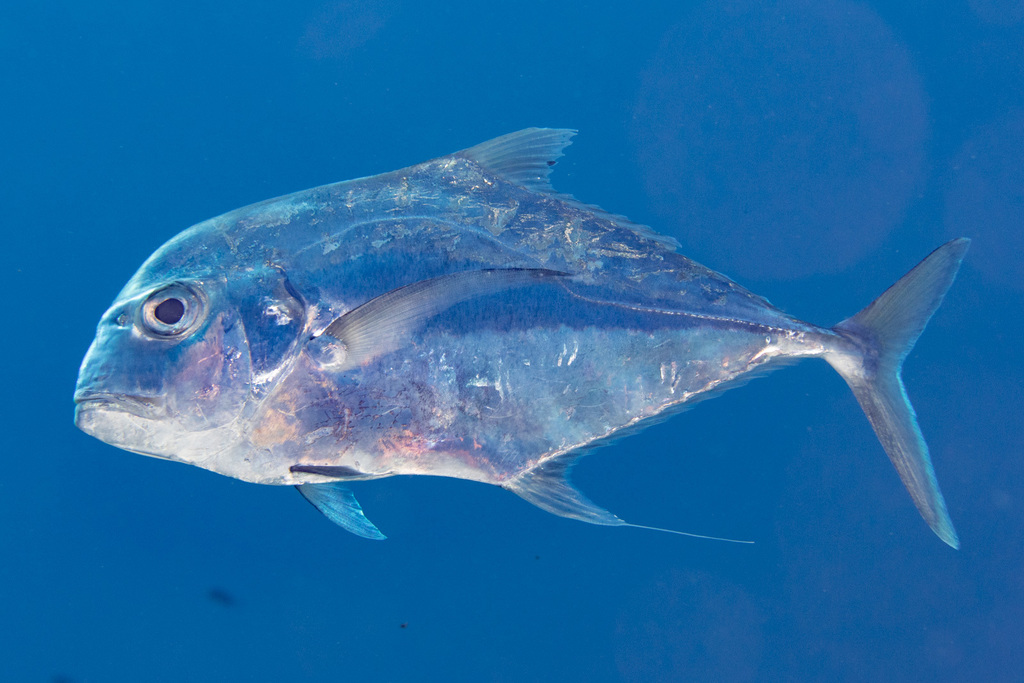
African pompano
- Family
- Carangidae
- Depth
- 60–100 m
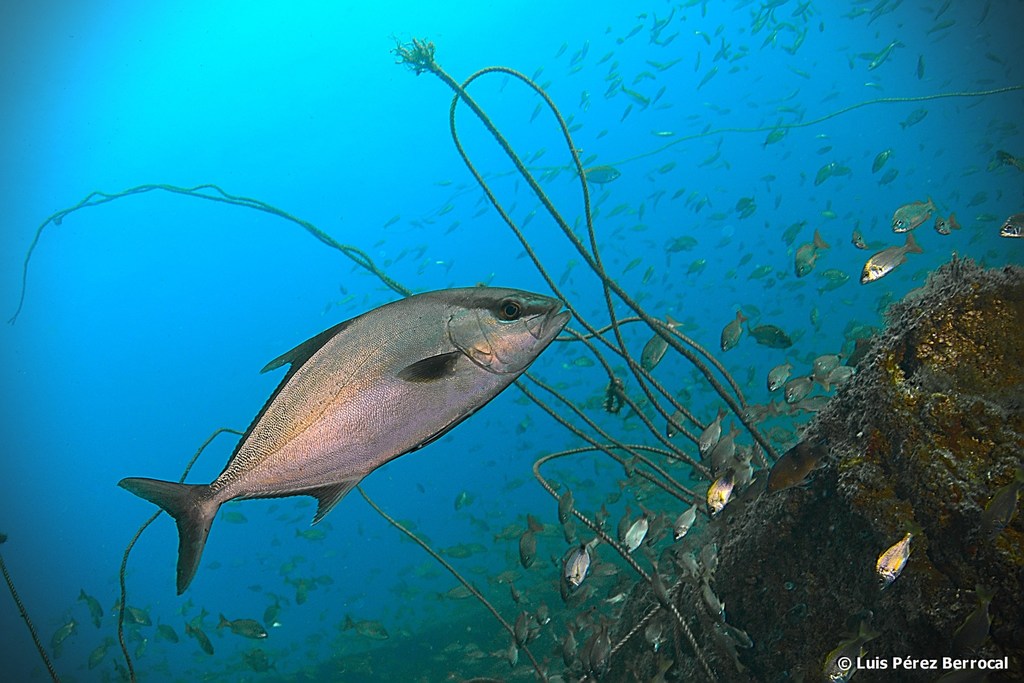
Almaco jack
- Family
- Carangidae
- Depth
- 5–245 m
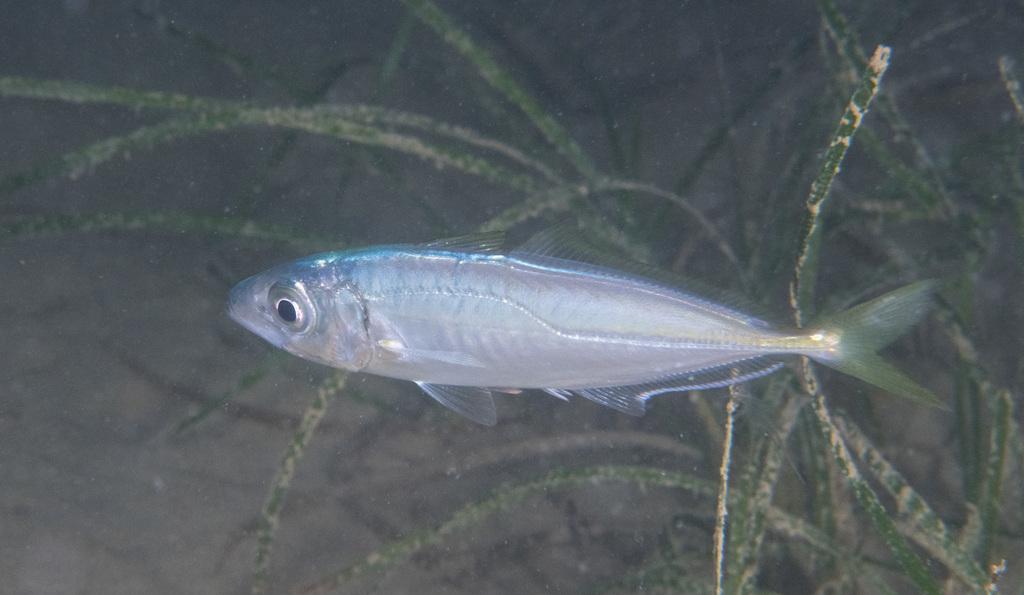
Atlantic horse mackerel
- Family
- Carangidae
- Depth
- 0–1050 m
- Season
- Jan, Feb, Mar, Apr, May, Jun, Jul, Aug, Sep, Oct, Nov, Dec
Guides for this water
Technique, gear and safety guides that fit Parona leatherjacket.