
Forsskål's goatfish
Forsskal's goatfish is a mullid with a moderately elongate body, two long barbels under the chin, eight dorsal spines with nine soft rays and seven anal rays. It lives over sand and rubble beside coral from 1 to 45 m, feeding on small benthic invertebrates. It reaches 28 cm TL with a common length of 25 cm and about 275 g. Boat bottom fishing, fly fishing and jigging are the methods listed.
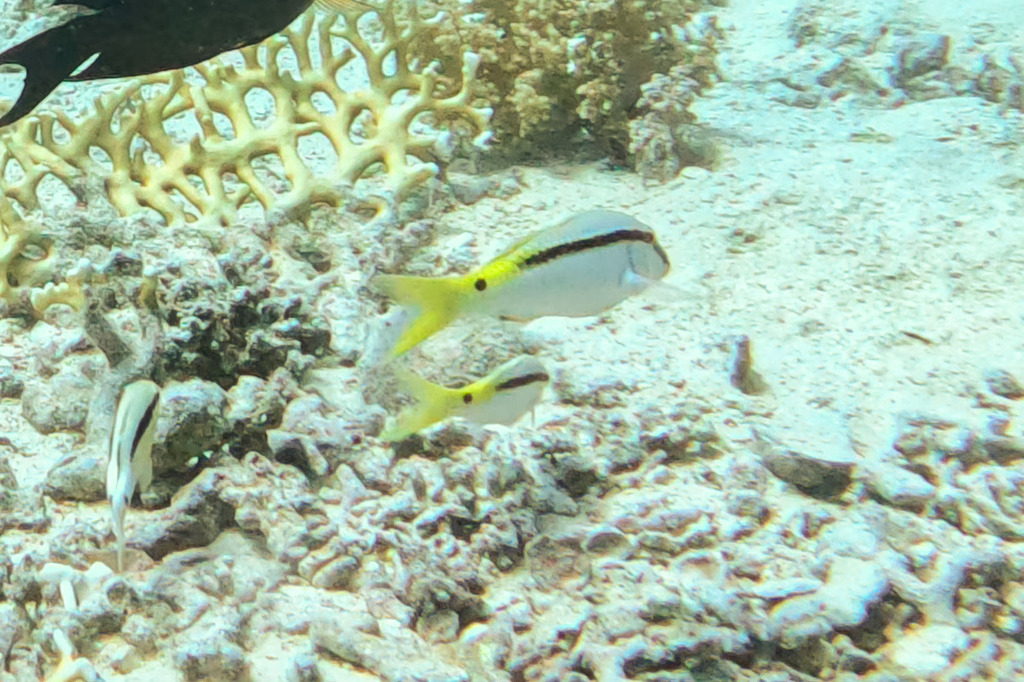
Parupeneus forsskali is a mullid goatfish with a moderately elongate body, two long barbels under the chin, eight dorsal spines with nine soft rays and seven anal rays. FishBase gives a maximum of 28 cm total length, a common length of 25 cm and about 275 g. It lives over sand and rubble beside coral from 1 to 45 m, feeding on small benthic invertebrates. It is recorded mainly from the Red Sea, the Gulf of Aden and Socotra, and has entered the eastern Mediterranean through the Suez Canal.
Identification
A goatfish with a moderately elongate body, a slightly forked tail and a pair of long barbels under the chin. The dorsal fin has eight spines and nine soft rays, and the anal fin has seven soft rays.
Colour is red-brown to orange-red above, paler below, with the fins picking up the same warm tone. The barbels are pale and are usually visible when the fish is working the sand.
FishBase gives 28 cm total length, a common length of 25 cm and about 275 g. It is small, and size is the easiest way to separate it from larger goatfish on the same ground.
Distribution and Habitat
Recorded mainly from the Red Sea, the Gulf of Aden and Socotra, and it has entered the eastern Mediterranean through the Suez Canal as a Lessepsian migrant. Persian Gulf records are fewer and should be verified rather than assumed.
It lives over sand, rubble and reef margins from 1 to 45 m, usually near coral that gives cover. Open featureless sand holds fewer fish than sand beside structure.
That shallow sand-and-coral niche makes it a shore and small-boat target.
Habits and Diet
It probes sand with its barbels to find small benthic invertebrates, then picks them up with a small, downward-pointing mouth. Feeding is diurnal, and fish are most active when the light is good and the water is moving.
It is usually seen singly or in loose groups rather than dense schools, and it often works the same sand patch as other reef fish without competing directly.
FishBase does not give monthly spawning data for this species, so no breeding season is asserted here.
Fishing Methods and Gear
Light bottom bait is the simplest method: a small piece of shrimp or squid on a size 6 to 1/0 hook, a light sinker, and a cast onto the sand between coral heads.
A sinking fly line with a small shrimp or nymph pattern works well over the same ground, and a slow figure-of-eight retrieve keeps the fly in contact with the bottom.
Micro jigs of 20 to 40 g take fish when they are grouped and active. Use a 7 ft light rod, a 2500 to 3000 reel, 0.8 to 1.2 PE braid and a 15 to 20 lb leader.
Seasonal Window
Present year-round in the Red Sea and Gulf of Aden. The warm months produce the most consistent shallow-water fishing, and fish move deeper in the coolest weeks.
Moving water is more useful than a particular hour: the middle of the flood and the start of the ebb are the best windows on a sand patch.
Early morning and late afternoon are the most comfortable times; the species also takes at night under lights.
Edibility and Handling
A good small food fish, usually fried or grilled whole. The flesh is white and sweet, and the fish is a standard item in Red Sea markets.
The body is delicate, so bleed and ice immediately and avoid piling fish on top of each other in the cooler.
There is a general ciguatera caution for reef-associated fish in this region; small goatfish are low risk but should still come from clean ground.
Regulations and Conservation
United Arab Emirates: no species-specific minimum size or bag limit for this goatfish was located in Ministerial Decree No. 580 of 2015 or on the Abu Dhabi prohibited list. A recreational licence is required, and Abu Dhabi charges AED 120 per year or AED 30 per week for applicants aged 18 and over.
Saudi Arabia: recreational fishing requires ministerial licensing under the Agriculture Law Implementing Regulation, but no species-specific size or bag limit for this fish was found; treat that as unverified.
IUCN: Least Concern, assessed in 2019.
How to catch it
Boat bottom fishing
Fly fishing
Jigging
20–40
Where these facts come from
Check these pages before you rely on a size, range or protection status.
- GBIF — Parupeneus forsskali occurrence records — GBIF · T2
- IUCN Red List — Parupeneus forsskali — IUCN · T1
- Photo record — iNaturalist — iNaturalist · T3
Fish in the same water
These fish live in the same place.
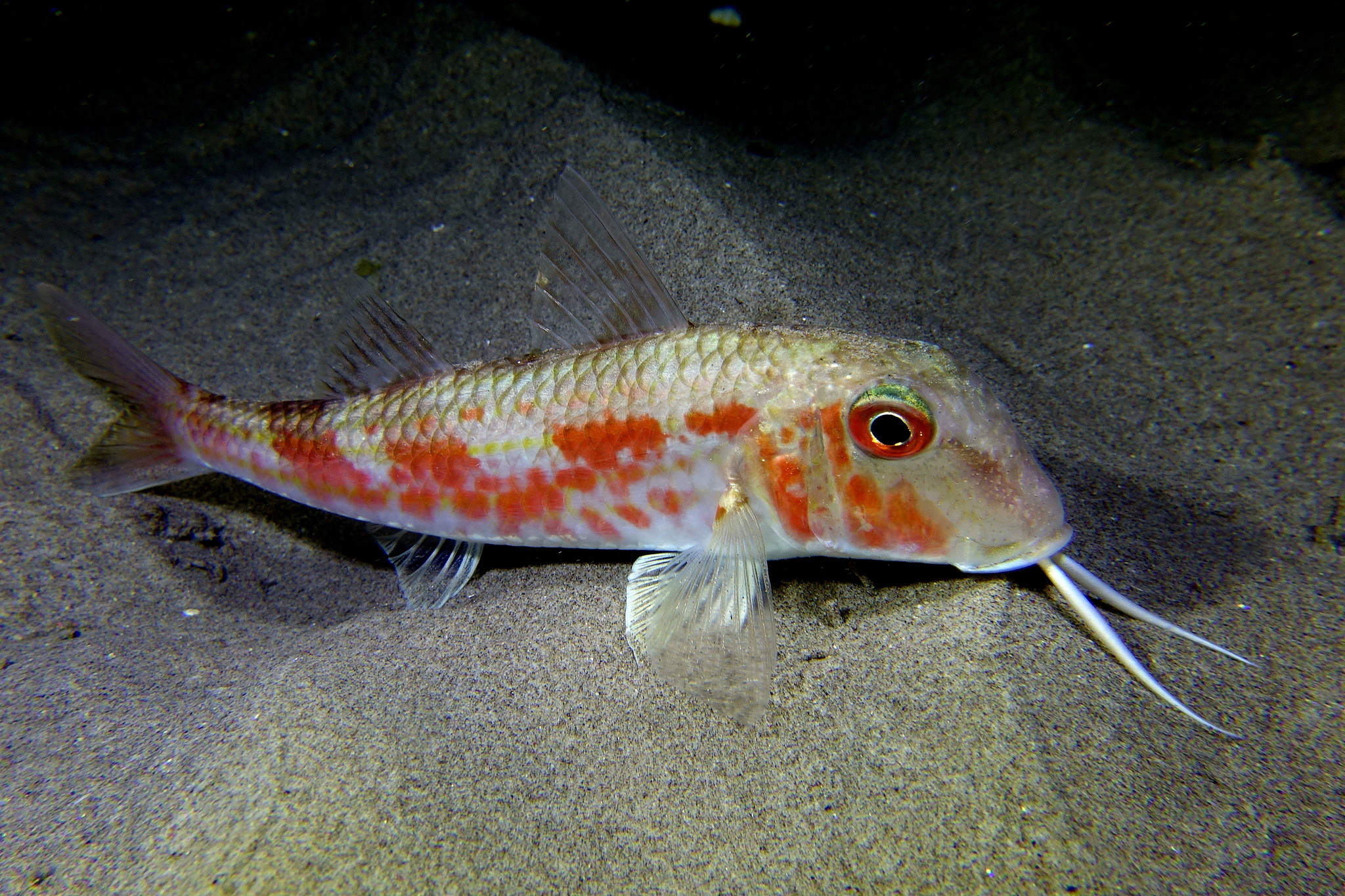
Blunt-snouted mullet
- Family
- Mullidae
- Depth
- 10–328 m
- Season
- Feb, Mar, Apr, May, Jun, Jul, Aug, Sep, Oct

Manybar goatfish
- Family
- Mullidae
- Depth
- 0–161 m
- Season
- Jan, Feb, Mar, Apr, May, Jun, Jul, Aug, Sep, Oct, Nov, Dec
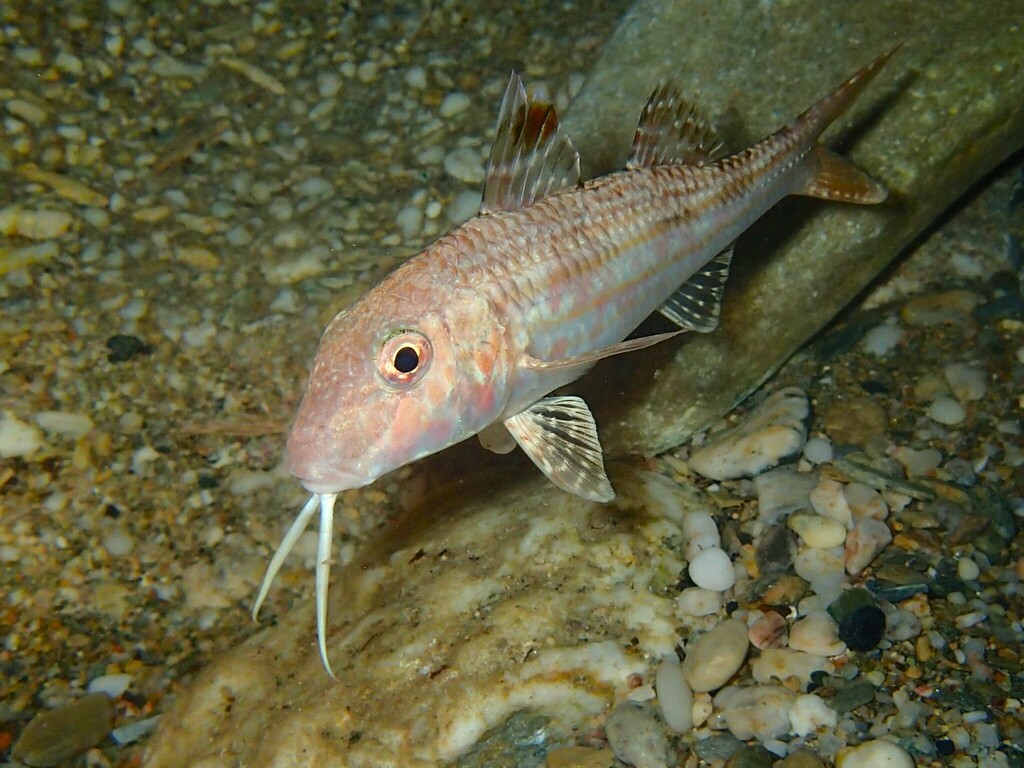
Red mullet
- Family
- Mullidae
- Depth
- 5–409 m
- Season
- Jan, Mar, Apr, May, Jun, Jul, Aug, Sep, Oct, Nov, Dec
Guides for this water
Technique, gear and safety guides that fit Forsskål's goatfish.