
Silver croaker
Silver croaker is a bottom-dwelling sciaenid of the northwest Pacific, from Hong Kong and the northern Yellow Sea east to the Kii Peninsula in Japan. It works 20 to 140 m in temperate water and feeds on fish. Fish reach 40 cm SL, which is modest for the family. April to November is the season.
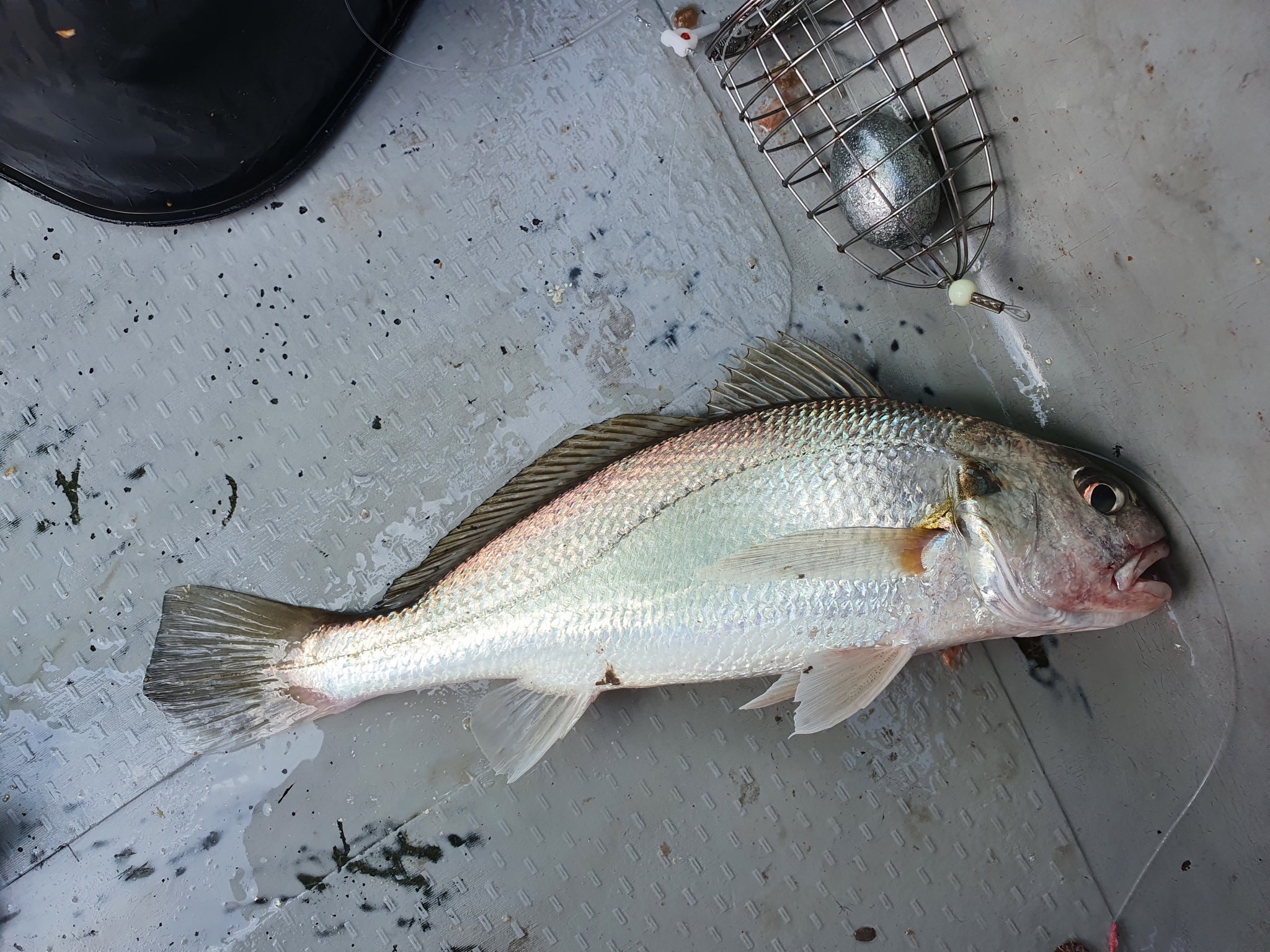
Silver croaker (Pennahia argentata) is a fish of the family Sciaenidae. FishBase gives its range as: Northwest Pacific: from Hong Kong to north Korea Yellow Sea, then east to Kii Peninsula, Japan. The Taiwan Fish Database prints the same 40 cm SL and describes a body that is purple-brown above and silver-white below, a black caudal fin, a silvery band in the soft dorsal and a dark blotch at the rear edge of the gill cover. It is recorded from 20 to 140 m, in temperate water. The recorded maximum is 40 cm SL. Diet includes fishes. IUCN status: Least Concern (LC). Chinese name: .
Identification
FishBase gives the species a 40 cm SL maximum and a 20 cm TL common length, with a maturity range starting at 14 cm; weight and age are absent. The two length figures use different conventions, SL and TL, so they cannot be subtracted from each other. The Taiwan Fish Database prints the same 40 cm SL and describes a body that is purple-brown above and silver-white below, a black caudal fin, a silvery band in the soft dorsal and a dark blotch at the rear edge of the gill cover. The lower jaw carries enlarged canines, and the upper jaw has a pair of canines at its tip. FishBase's fin counts, 25–28 dorsal soft rays and II + 7–8 anal rays, are not repeated on the Taiwan Fish Database page, which instead describes the otolith and gives 11–12 pyloric caeca. iNaturalist holds 43 observations under taxon 201522. The identification is therefore a croaker with a terminal mouth, a dark-edged gill cover and a silver belly; the "silver" in the name describes the flank, not the whole fish.
Habitat and distribution
This is the substrate axis. FishBase calls it marine, benthopelagic and oceanodromous, 20–140 m, usually below 40 m, with habitat keywords sand, mud and coast. The Taiwan Fish Database page gives 3–40 m and sand-mud bottom in estuaries and coastal water. The two depth ranges overlap only between 20 and 40 m; outside that overlap, one source says the fish is there and the other does not. The range is the Northwest Pacific, Hong Kong SAR to the northern Yellow Sea and east to the Kii Peninsula, six territories. The Taiwan Fish Database adds the South China Sea, East China Sea and southern Yellow Sea, with Penghu and the north and west coasts. The important physical fact is the substrate, not the country and territory list: this fish sits on, or just above, soft bottom.
Season and fishing approach
FishBase's spawning table gives April–August and October–November, with Ariake Sound in Japan April–August and Hong Kong SAR June, August, October and November. The Taiwan Fish Database says spawning fish gather and migrate, that fishing peaks in spring and summer, and that the commercial catch is year-round. For an angler the aggregation is more useful than the month list: find the sand-mud edge and fish it on the bottom. FishBase's benthopelagic label means the fish can sit slightly off the bottom, so a bait held just above the substrate is not wasted, but the rig still belongs on the bottom, not at the surface. The Taiwan Fish Database lists small fish and crustaceans as food; FishBase's diet keyword is fish only. Bottom trawl and longline are the commercial gears; for rod and line, a running sinker with a fish or crustacean bait is the natural translation. The depth conflict means the first trip should bracket 20–40 m and record which end produces fish.
Edibility and regulations
Commercial landings and a gamefish entry are the only uses on the FishBase page. The Taiwan Fish Database calls the bottom-trawl landing extremely important and high-volume, with flesh it recommends for steaming or frying. IUCN's Red List entry, assessed 1 July 2016, is Least Concern. Neither the Taiwan Fish Database page nor the six-territory FishBase table states a legal minimum, a take cap or a closure, so a rule from one of those six jurisdictions cannot be carried across the others. The more useful practical caution is the depth split: a 3–40 m local band and a 20–140 m database band imply different grounds, not different rules.
Where these facts come from
Check these pages before you rely on a size, range or protection status.
- FishBase — Pennahia argentata — FishBase · T2
- GBIF — Pennahia argentata occurrence records — GBIF · T2
- IUCN Red List — Pennahia argentata — IUCN · T1
- Photo record — iNaturalist — iNaturalist · T3
Fish in the same water
These fish live in the same place.

Acoupa weakfish
- Family
- Sciaenidae
- Depth
- 1–20 m
- Season
- Jan, Feb, Mar, Apr, May, Jun, Jul, Aug, Sep, Oct, Nov, Dec
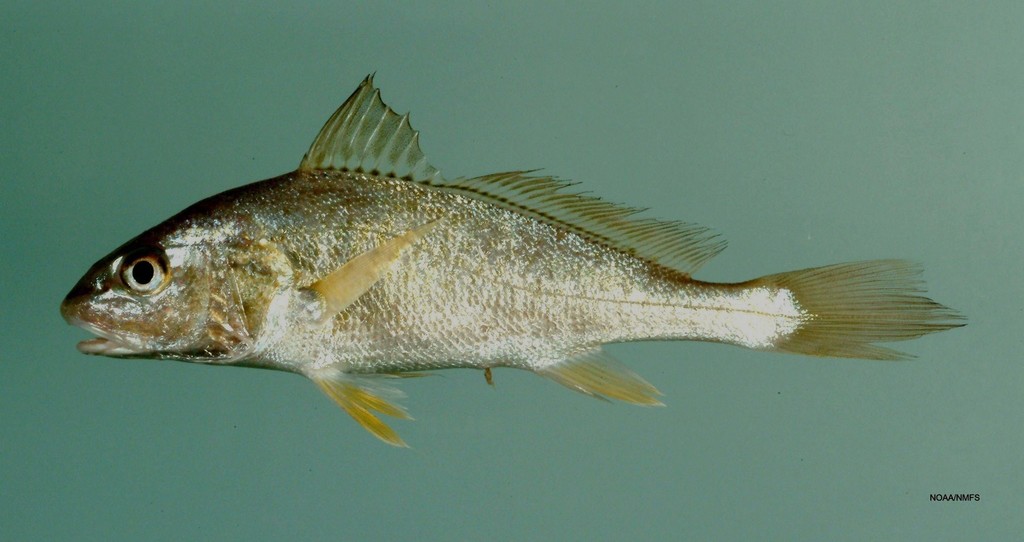
Atlantic croaker
- Family
- Sciaenidae
- Depth
- ≤ 100 m
- Season
- Jan, Feb, Mar, Apr, May, Jun, Jul, Aug, Sep, Oct, Nov, Dec
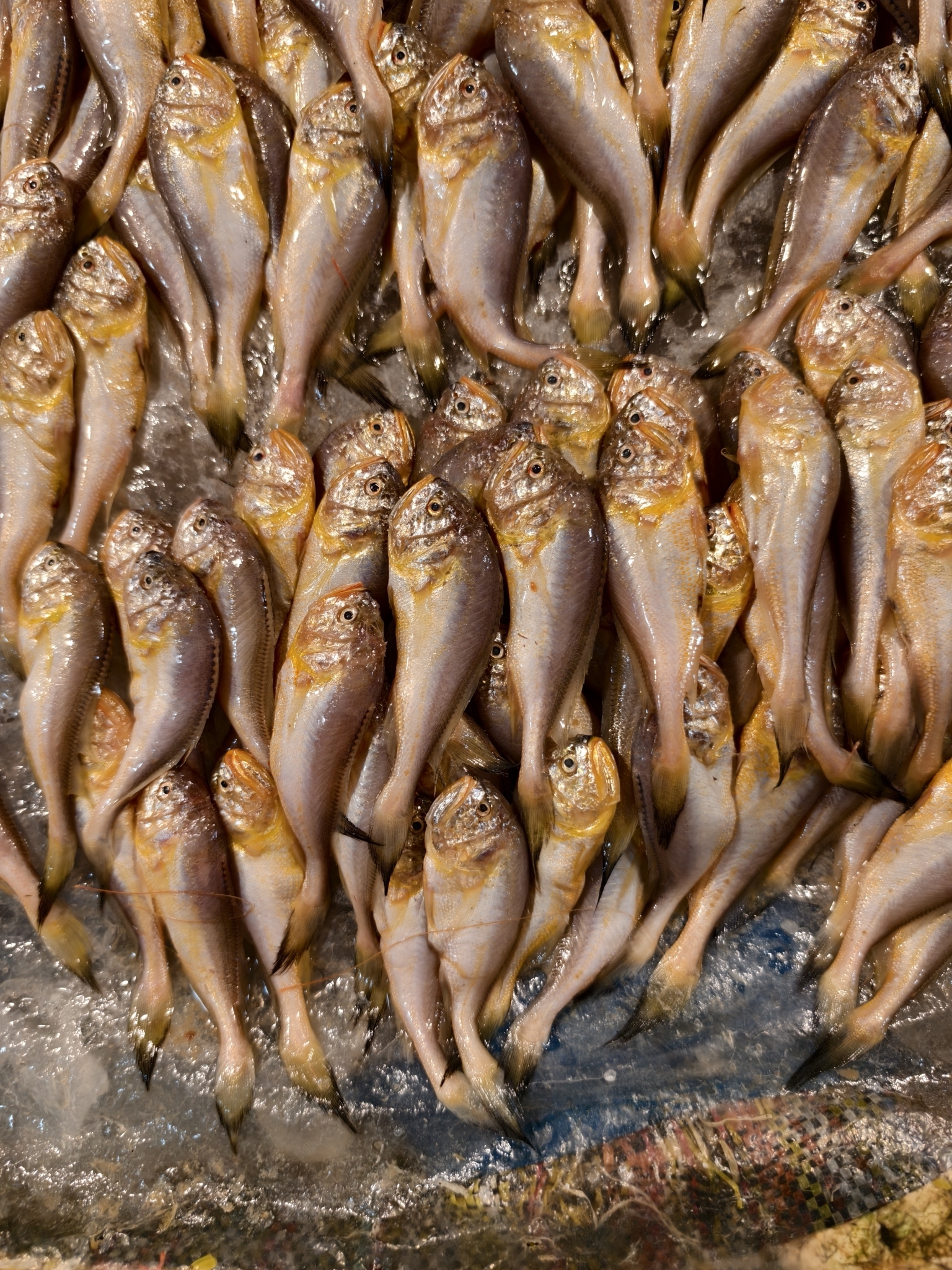
Bighead croaker
- Family
- Sciaenidae
- Depth
- ≤ 90 m
- Season
- Jan, Mar, Apr, May, Jun, Jul, Aug, Sep, Oct, Nov, Dec
Guides for this water
Technique, gear and safety guides that fit Silver croaker.