
Spotfin croaker
A black patch at the base of the pectoral fin is the easiest identification on the beach: a silver-grey body, no vertical bars, and the mark at the fin root settles the species. It is also the big-fish option among Southern California's croakers, and a 70 cm record means the same light surf rig sometimes hooks something it cannot hold.
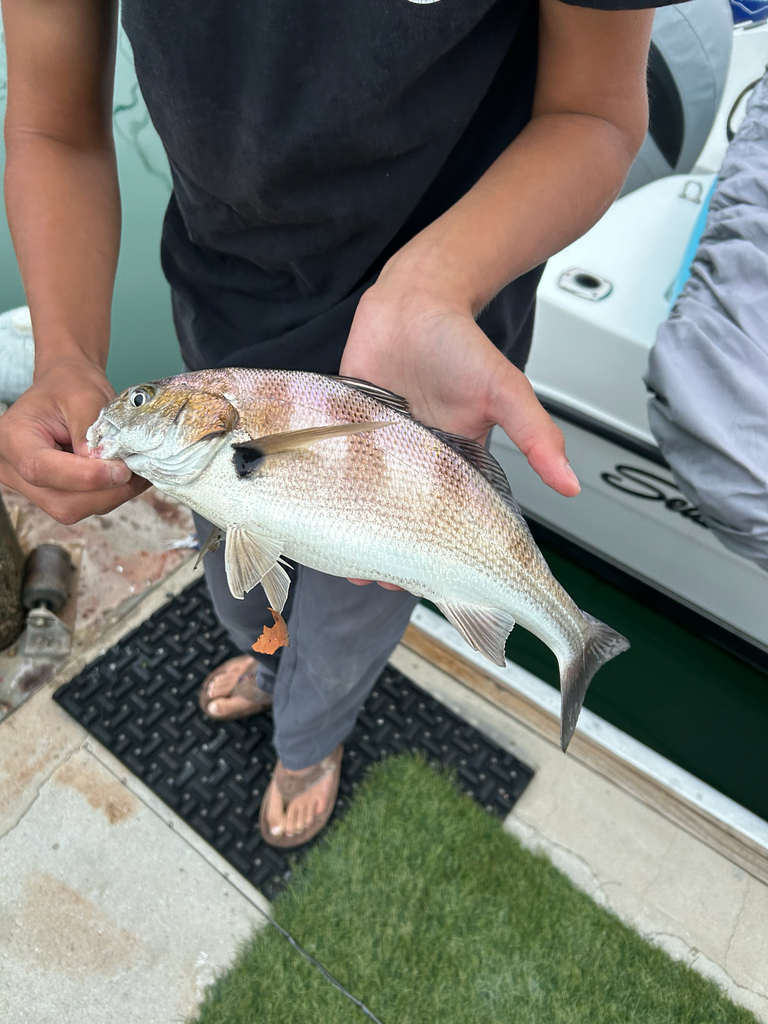
A black patch at the base of the pectoral fin is the easiest identification on the beach: a silver-grey body, no vertical bars, and the mark at the fin root settles the species. It is also the big-fish option among Southern California's croakers, and a 70 cm record means the same light surf rig sometimes hooks something it cannot hold.
The black patch at the base of the pectoral fin
Look at the root of the pectoral fin first: a clear black patch sits where the fin meets the body, and it is the steadiest field mark on the species. The body is silver-grey, darker along the back and near white below, with no vertical bars and no covering of small dark spots. The yellowfin croaker has yellow fins, wavy dark lines along the flank and two strong anal spines; the California corbina has a long chin barbel, dark pectoral fins and one weak anal spine. The white croaker is smaller, unmarked and has no barbel. In a mixed surf catch, read the fin-root patch first and confirm with fin colour and anal spines.
Sandy surf, bay mouths and the edge of rock
FishBase runs the range from Point Conception in California to southern Baja California. The fish appears over sandy shore and bay, mostly in shallow surf but down to about 15 m, often near rock and at bay entrances. It travels in small groups and gathers to spawn. In Southern California the working water is the trough between sandbars, the inside of a bay mouth, and the sand outside a pier or breakwater. It does not hold in dense kelp or sit for long on clean mud. The record reaches 22 m, but nearly all of the catch comes from water a wading angler can reach.
A summer surf season without a spawning table
FishBase states that the species aggregates to spawn and describes it as a pelagic spawner, but provides no month-by-month table and no preferred temperature. Southern California catches improve from late spring, hold through summer and autumn in the surf, and thin in winter when the swell is up and fish move a little deeper. Larger fish tend to show from late summer into autumn, though no source pairs size with month; that is a local observation, not a statistic. Whether a given day is worth fishing is read from swell, water colour and tide rather than from a temperature.
Bait in the trough, not lures in the wash
The surf is the main stage. Use enough pyramid weight to hold bottom in the trough, bait with bloodworm, clam or sand crab, and let the bait move slowly in the backwash. It feeds on worms, clams, crabs and small crustaceans, so a bait with scent outperforms a shiny lure. The second approach is bottom fishing from a pier or at a bay mouth, with a little more weight, cast to the seam between sand and structure, waiting for the fish to find it. Large individuals sometimes take a whole crab or a big piece of clam, so upsize the bait to screen for them, accepting fewer bites.
A surf rod with drag left for a big fish
An 8 to 9 foot medium surf rod with a 3000 or 4000 size spinning reel, 15 to 20 lb braid, a 10 to 12 lb fluorocarbon leader and a 1/0 to 2/0 fine-wire hook covers the fishery, with a half to two ounce sinker chosen for the swell. A 70 cm fish in shallow water runs hard, so leave drag in reserve rather than locking down as you would for small fish. Sand does little damage to the leader, but gravel at a bay mouth does, so check the last metre before the next cast. A long rod also lifts line over the shorebreak, which keeps the bait where you put it.
No size limit, and the big fish counts as one
FishBase records commercial and recreational use but gives no eating quality. Croaker flesh is white and takes well to frying, grilling or soup, and bleeding it into ice early is the part that matters. California's general marine bag is 20 fish in total with no more than 10 of any one species, and this species has no size limit and no closed season (14 CCR § 27.60). The bag does not grade by size: a 70 cm fish counts the same as a 30 cm fish, so decide before you keep the big one. Parts of the Southern California beach and bay lie inside marine protected areas, so check the CDFW MPA map and the current year's notice. A licence is required from 16, plus the Ocean Enhancement Validation south of Point Arguello.
What FishBase supplies and what the beach adds
Length, common length, weight, age, depth, distribution, diet and the spawning aggregation all come from FishBase. The family follows GBIF's Sciaenidae, and the IUCN listing is Least Concern, assessed in 2020. FishBase gives no monthly spawning table, so the month-by-month strength is arranged from Southern California surf reports. The separation from the other three croakers follows the project's identification notes and uses only visible marks: fin colour, the fin-root patch and the anal spines, with no fin-ray counts. The regulation paragraph uses only the general bag limit in 14 CCR § 27.60.
How to catch it
Heavy sinker in the trough
Add pyramid weight until it holds in the wash, bait with bloodworm or clam on a 1/0 hook, and let the backwash carry the bait.
Lure fishing
On the falling tide, put the bait on the seam between sand and gravel with a little extra weight and wait for fish working the edge.
Pier fishing
A whole crab or a large clam piece on a 2/0 hook, lowered off the end and moved slowly along the bottom for the larger fish.
Where these facts come from
Check these pages before you rely on a size, range or protection status.
- FishBase — Roncador stearnsii — FishBase · T2
- GBIF — Roncador stearnsii occurrence records — GBIF · T2
- IUCN Red List — Roncador stearnsii — IUCN · T1
- Photo record — iNaturalist — iNaturalist · T3
Fish in the same water
These fish live in the same place.

Acoupa weakfish
- Family
- Sciaenidae
- Depth
- 1–20 m
- Season
- Jan, Feb, Mar, Apr, May, Jun, Jul, Aug, Sep, Oct, Nov, Dec
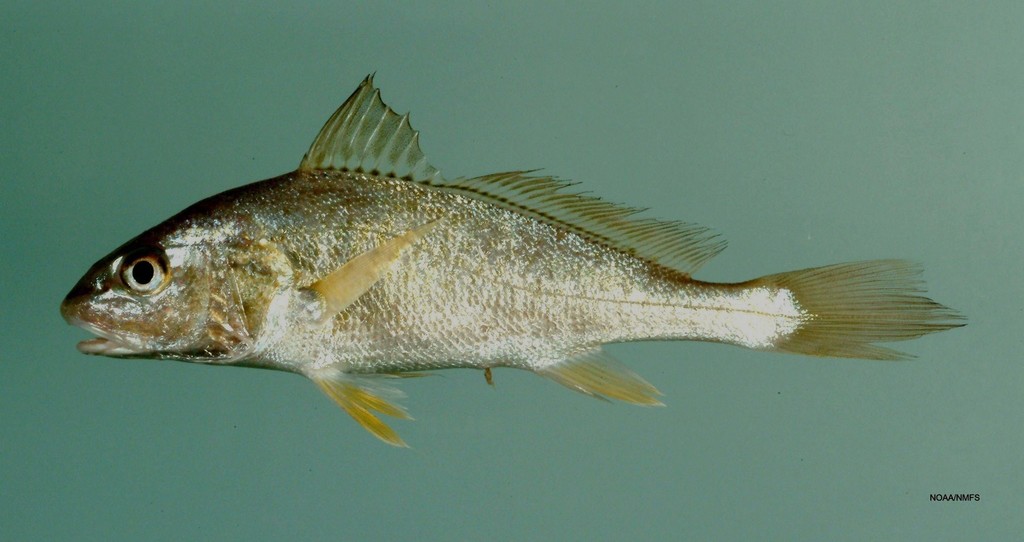
Atlantic croaker
- Family
- Sciaenidae
- Depth
- ≤ 100 m
- Season
- Jan, Feb, Mar, Apr, May, Jun, Jul, Aug, Sep, Oct, Nov, Dec
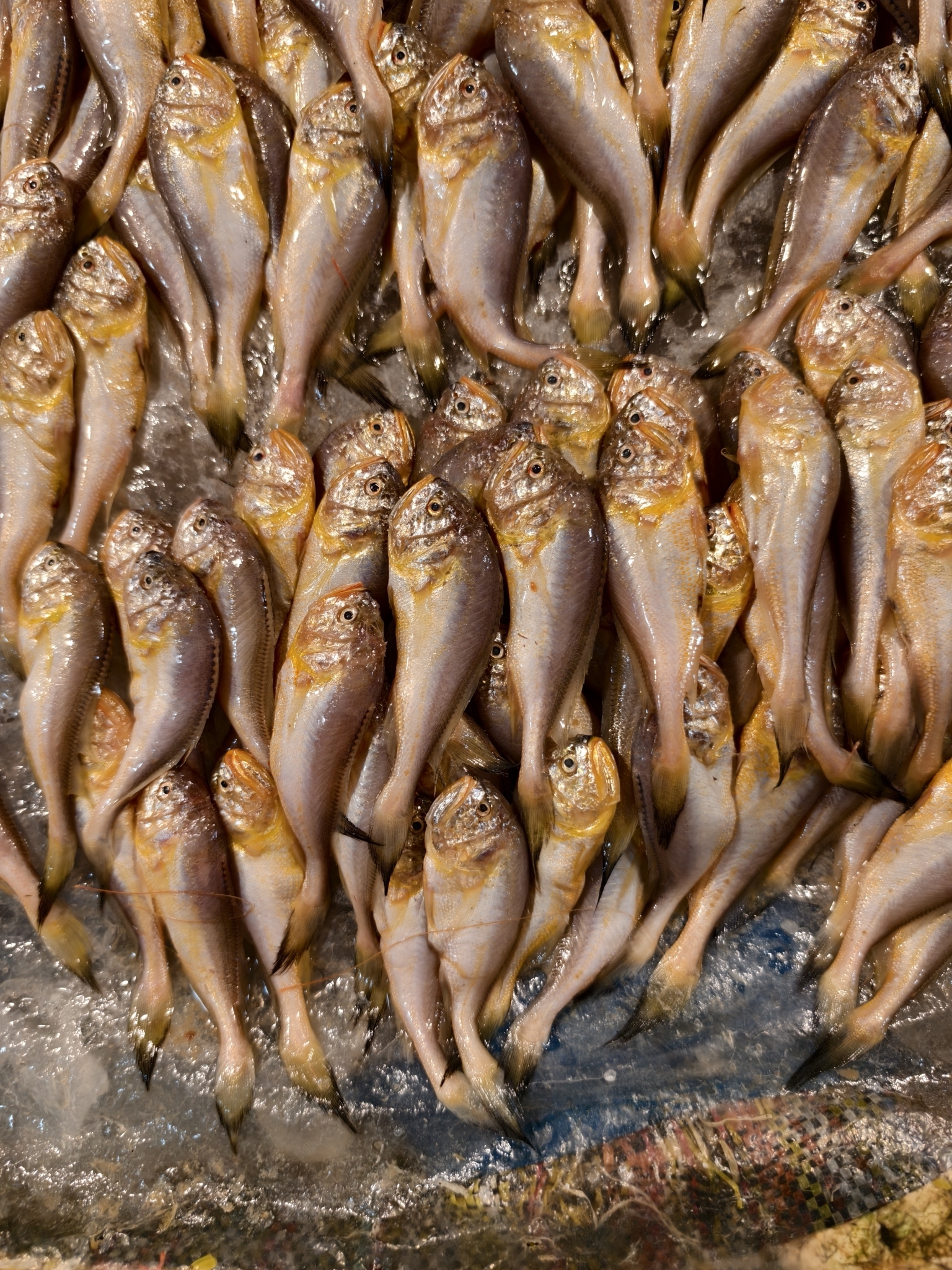
Bighead croaker
- Family
- Sciaenidae
- Depth
- ≤ 90 m
- Season
- Jan, Mar, Apr, May, Jun, Jul, Aug, Sep, Oct, Nov, Dec
Guides for this water
Technique, gear and safety guides that fit Spotfin croaker.