
Arctic char
The Arctic char, listed here as Alpine char, is a salmonid of the genus Salvelinus with a circumpolar range across Iceland, Scandinavia, northern Russia, Alaska, Canada and Greenland. It is a benthopelagic fish of 0–70 m, usually within a metre of the surface, at 4–16 °C, and some populations are anadromous while others stay landlocked. FishBase records it as a gamefish and a minor commercial species, with aquaculture production alongside.
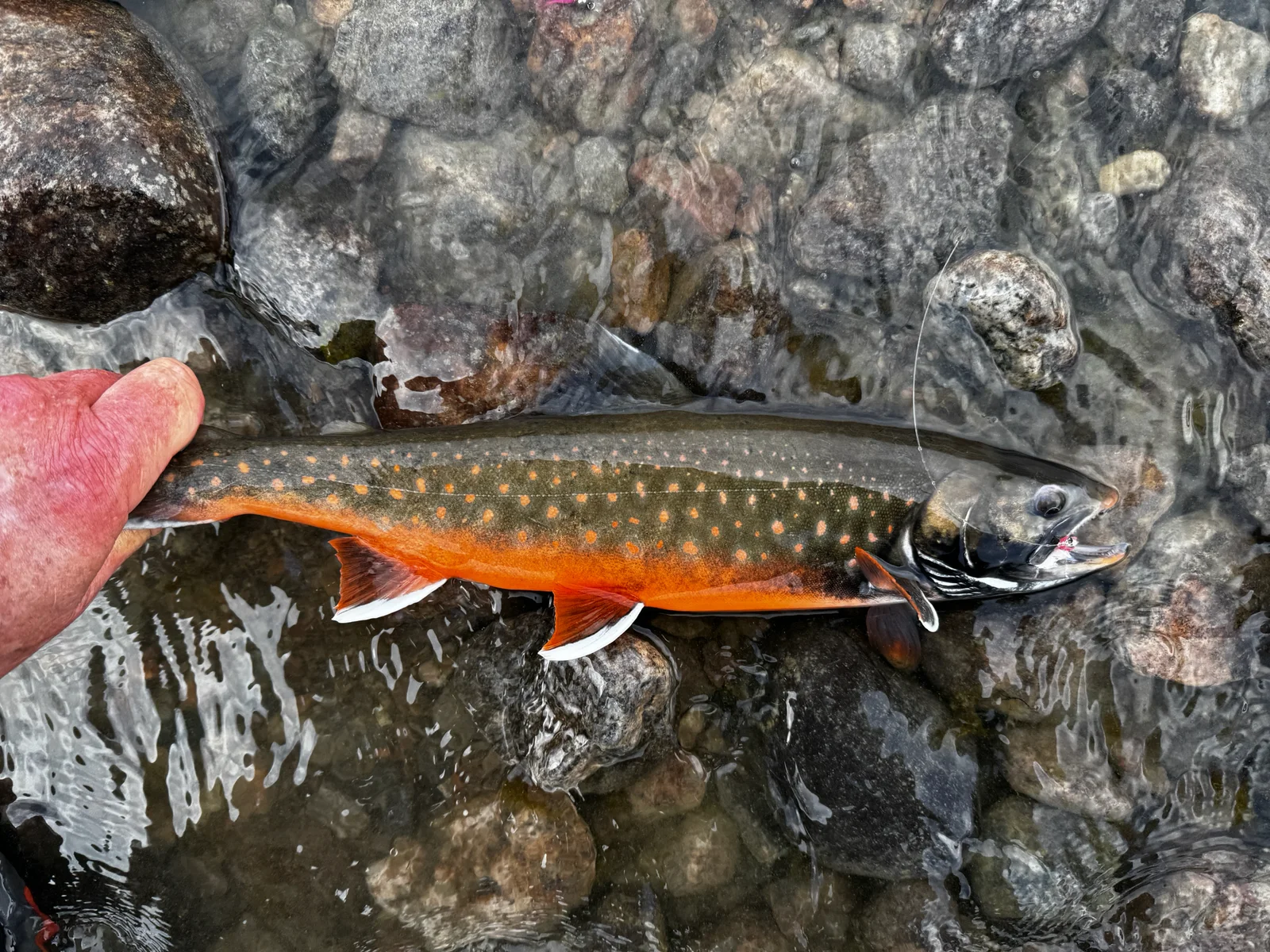
The Arctic char, listed here as Alpine char, is a salmonid of the genus Salvelinus with a circumpolar range across Iceland, Scandinavia, northern Russia, Alaska, Canada and Greenland. It is a benthopelagic fish of 0–70 m, usually within a metre of the surface, at 4–16 °C, and some populations are anadromous while others stay landlocked. FishBase records it as a gamefish and a minor commercial species, with aquaculture production alongside. It grows to 107 cm and 15 kg and may live 40 years, though 40 cm is the common size.
A char under several names
FishBase's principal English name is Alpine char, but the names in circulation are Arctic char and Arctic charr, the latter used by the American Fisheries Society and by Wikipedia. iNaturalist prefers Arctic Char. The Chinese list is broader again: and both appear, beside , and . The multiplicity is not noise. Salvelinus alpinus is a species complex, and local names track local forms.
The specific epithet alpinus means alpine, yet the range is circumpolar and the species reaches farther north than any other freshwater fish. The name records a European lake form, not the Arctic distribution. Taxonomy places it in Salmonidae, genus Salvelinus.
One species, several life histories
The record calls the species anadromous, and Wikipedia qualifies that: some populations are anadromous, not all. The capture lists marine, freshwater and brackish as its three milieux, and a depth range of 0–70 m that is usually 0–1 m. A usual depth of one metre is the signature of a surface-oriented fish in lakes and coastal water, not of a demersal one.
That combination — sea-run and lake-bound forms in one species — is why the "where" question has several answers. An anadromous fish moves between salt and fresh water; a landlocked one spends its whole life in a lake. The record does not separate the two, and its country table counts countries rather than populations.
Conformation and counts
Fin counts are broad: 4–5 dorsal spines, 8–16 dorsal soft rays, 3–4 anal spines and 7–15 anal soft rays, with 62–68 vertebrae. The soft-ray spans are wide enough that a count alone will not separate this char from a trout; the combination of salmonid fins and a char body is what matters. Body shape and cross-section are blank in the capture.
The 62–68 vertebrae are many for a salmonid and fit a long, laterally compressed fish. No weight-to-length formula is supplied, so the 15 kg maximum cannot be visually calibrated from the 107 cm maximum.
The northern rim of the map
The distribution text is circumpolar and Holarctic, with an explicit exclusion: the species is absent from the Alps. That exclusion is worth pausing on. A fish called Alpine char does not live in the Alps; the name comes from alpine lakes elsewhere, and the range instead follows Arctic and subarctic coasts and cold lakes across the northern hemisphere.
Twenty-two country entries split 17 native and five introduced: Italy, Kerguelen, Latvia, Serbia and Türkiye. The introductions are an odd set — a subantarctic island, a Baltic state, two inland Balkan or West Asian countries — and none is a classic Arctic char range. The capture gives no dates or reasons.
Coordinates run 82°N–41°N and 180°W–180°E. The northern limit is the highest in this batch by a wide margin; the southern limit near 41°N corresponds to the cold lakes and deep water where the species persists.
Water temperature sets the ceiling
The temperature range is 4–16 °C. That is the tightest band in this batch and explains most of the distribution: the fish is confined to water that stays cold, whether at high latitude or at altitude. Depth 0–70 m with a usual 0–1 m means the surface layer, not the bottom.
Habitat keywords are estuary, coastal, freshwater, deep and open-water, and the diet is crustaceans, fishes and zooplankton. The keyword list mixes three environments and two depth zones; read with the temperature band, it describes a fish that uses shallow open water in cold lakes and coastal seas, and goes deeper only where it must.
Autumn spawning, with one spring exception
Eight spawning rows are carried. Cumberland Sound in September; Europe, Finland and the UK September–December; France January and November–December; the Iterlaa lakes in south-west Greenland in September; the North Slope of the Brooks Range in August–September; Windermere in February–March and October–November.
Seven of the eight rows are autumn, August through December. Windermere is the exception with a second winter-spring window. The Arctic rows start earliest, the boreal and European rows later, and the French row straddles the year boundary. A single "autumn" label would hide both the Arctic August start and the English spring record.
Forty years and a 60 cm maturity
The maxima are 107 cm total length, 15.0 kg and 40 years. First maturity is 60.0 cm, with no range given. The common length is 40.0 cm TL. These three numbers do not fit comfortably together: if maturity is at 60 cm and the common length is 40 cm, the typical fish in the record is below its own maturity point. Either the common length is drawn from a different population or the maturity figure belongs to a large, anadromous form. The capture does not reconcile them, and the page should say so rather than average them.
Forty years is a long life for a salmonid and matches a slow, cold-water strategy. No growth curve is given, so the route from 40 cm to 107 cm remains undated.
Where to look
Angle for cold water first: 4–16 °C is the hard filter, and 0–1 m the usual depth. The habitat keywords allow estuary, coast and freshwater, so both a lake and a coastal bay can hold fish; the record does not say which form is present where.
The gamefish tick is yes, and minor commercial and commercial aquaculture are also recorded. No method, tackle or bait is carried, and no regulation either. IUCN status is Least Concern, assessed 29 August 2023. What the page can honestly offer is the temperature band, the depth and the split life history; the technique has to come from local knowledge, not from this capture.
Where these facts come from
Check these pages before you rely on a size, range or protection status.
- FishBase — Salvelinus alpinus — FishBase · T2
- GBIF — Salvelinus alpinus occurrence records — GBIF · T2
- IUCN Red List — Salvelinus alpinus — IUCN · T1
- Photo record — iNaturalist — iNaturalist · T3
Fish in the same water
These fish live in the same place.
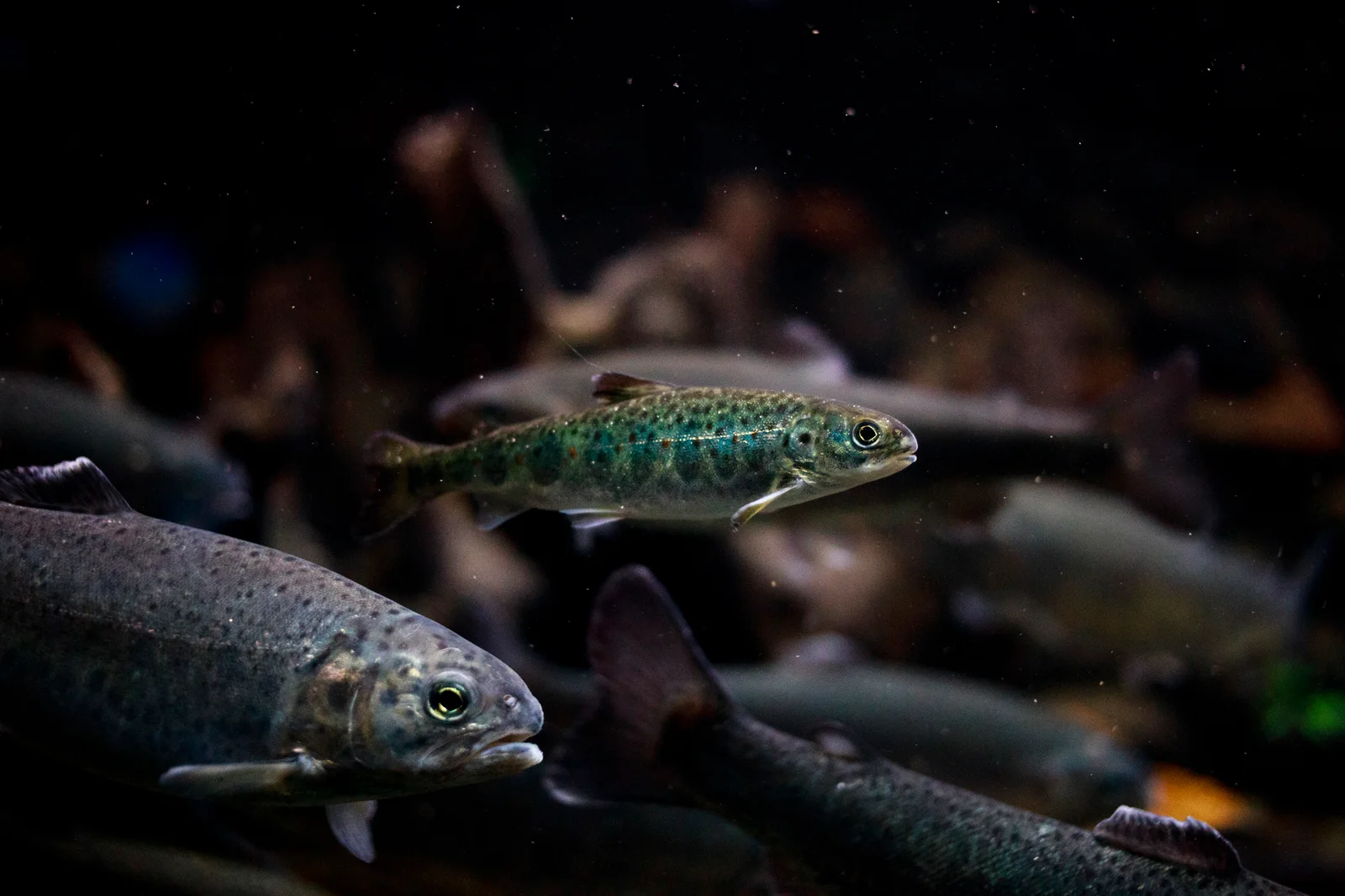
Atlantic salmon
- Family
- Salmonidae
- Depth
- 0–210 m
- Season
- Jan, Jun, Jul, Aug, Sep, Oct, Nov, Dec
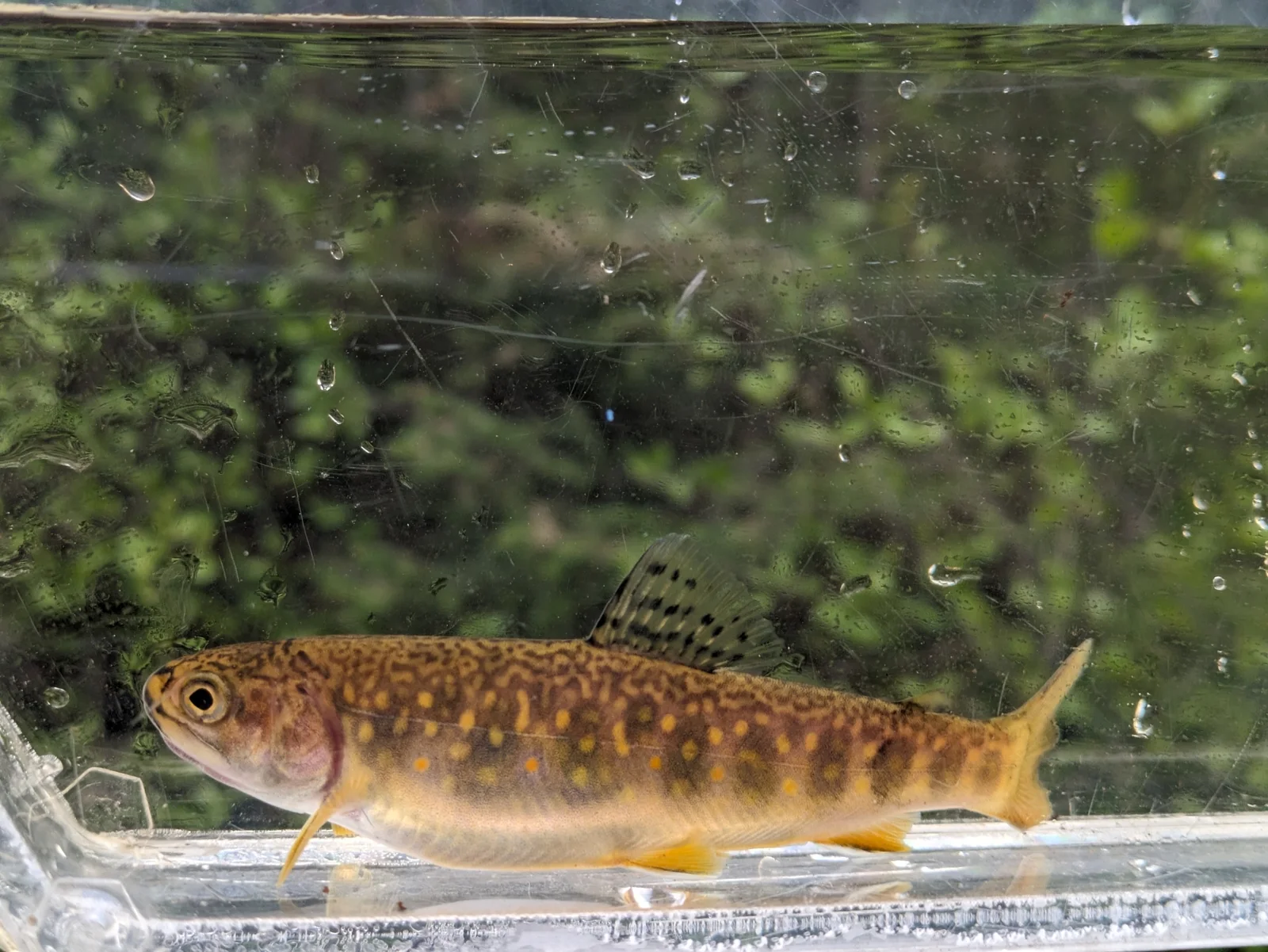
Brook trout
- Family
- Salmonidae
- Depth
- 15–27 m
- Season
- Aug, Sep, Oct, Nov, Dec
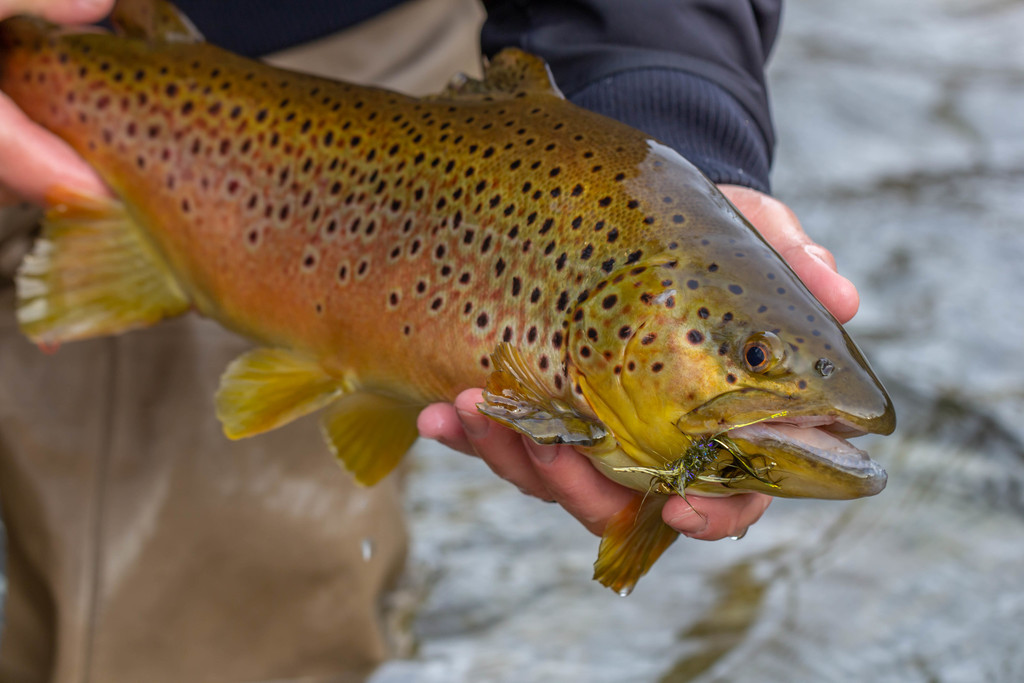
Brown trout
- Family
- Salmonidae
- Depth
- 0–28 m
- Season
- Jan, Feb, Mar, Apr, May, Jun, Jul, Aug, Sep, Oct, Nov, Dec
Guides for this water
Technique, gear and safety guides that fit Arctic char.