
Brook trout
Brook trout is a char of the genus Salvelinus, a salmonid native to the streams and lakes of eastern North America from Labrador to the Appalachian Mountains. It has been introduced far beyond that ground, and most of its present map is stocked rather than native. The species tolerates 0–25 °C, reaches a maximum of 86 cm and 8 kg, and lives up to 24 years.
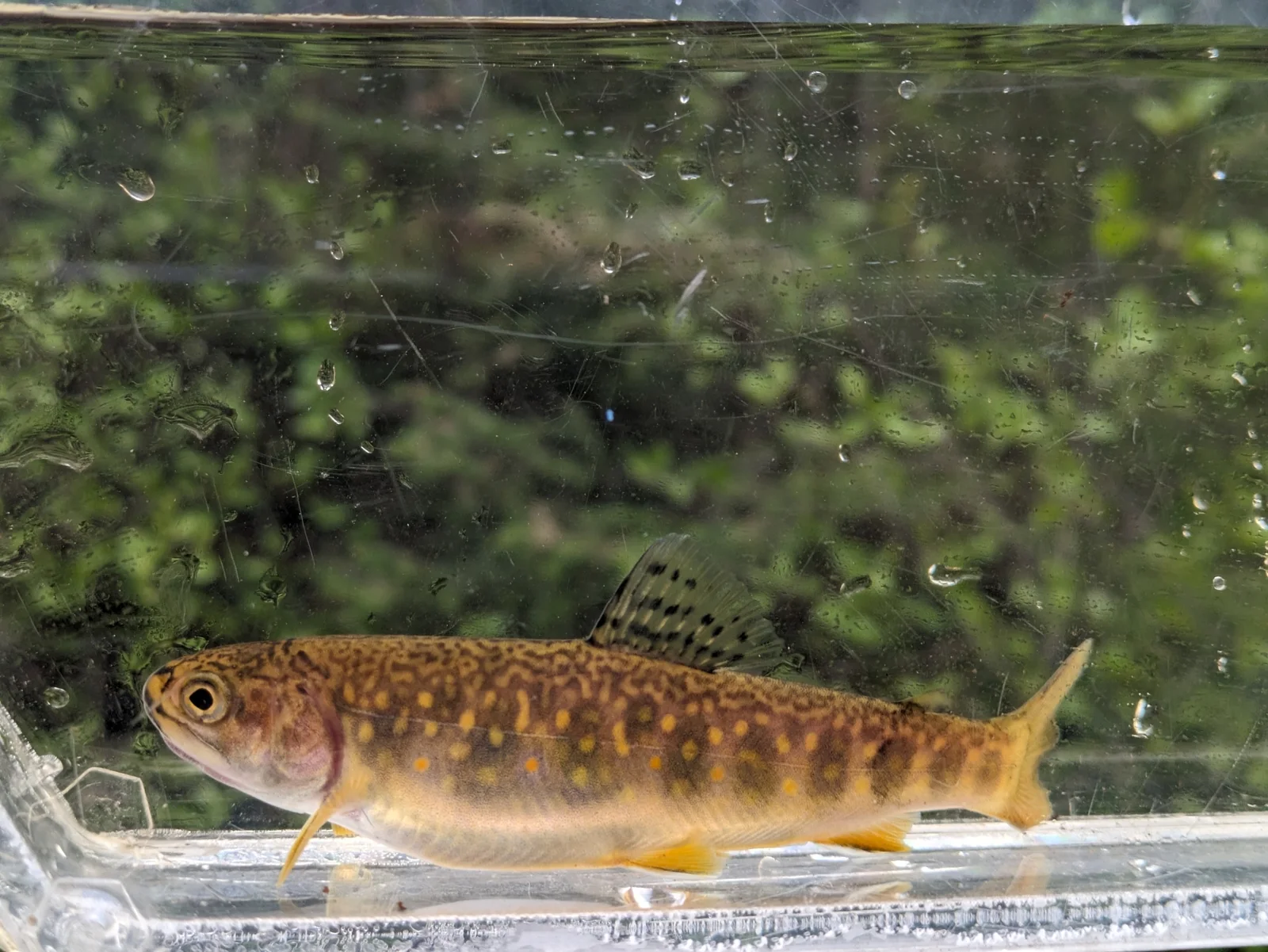
Brook trout is a char of the genus Salvelinus, a salmonid native to the streams and lakes of eastern North America from Labrador to the Appalachian Mountains. It has been introduced far beyond that ground, and most of its present map is stocked rather than native. The species tolerates 0–25 °C, reaches a maximum of 86 cm and 8 kg, and lives up to 24 years. Landed only in minor commercial volume, it is chiefly valued as a gamefish and is assessed Least Concern.
A trout that is really a char
Brook trout is a misnomer on two counts. The fish sits in Salvelinus, the char genus, not in Salmo, and Wikipedia's opening line calls it a freshwater fish of the char genus in the salmon family. FishBase's English list is short — Brook trout, with no regional variants — while Wikipedia adds eastern brook trout, speckled trout, brook char, squaretail, brookie and mud trout. iNaturalist prefers Brook Trout.
The capture also carries the etymology of the genus: Salvelinus is an old name for char, sharing its root with the German saibling, a little salmon. Chinese is more scattered. is the FishBase principal, with , and alongside. The last pair translates the English directly — American red-spotted salmon — while the principal follows a transliteration, so a reader arriving from either tradition will not recognise the other without the scientific name.
Native ground is small
Four of the forty-five country entries are native: Canada, Greenland, Saint Pierre and Miquelon, and the contiguous United States. The other forty-one are introduced, from Alaska and Argentina to Zimbabwe and Papua New Guinea. Four native against forty-one introduced is the widest ratio in this batch, and it governs how the distribution should be read.
The native text is precise: eastern Canada from Newfoundland and Labrador to the western side of Hudson Bay, then south through the Atlantic, Great Lakes and Mississippi basins to Minnesota and northern Georgia in the Appalachian Mountains, with the headwaters of the Chattahoochee River in the Gulf basin. That is a freshwater and coastal range in one corner of North America, and it is small. Everything beyond it is planting.
FishBase adds that several countries report adverse ecological impact after introduction, and the sentence breaks off at the word "after". The break is a capture artefact; the warning survives it. This is a fish that has changed waters it was put into.
Fin counts of a char
Dorsal spines 3–4 and dorsal soft rays 8–14; anal spines 3–4 and anal soft rays 8–14; vertebrae 58–62. Body shape and cross-section are not recorded. The pattern is a char pattern: a short spiny dorsal, a long soft dorsal, an anal fin of matching size, and a vertebral count in the high fifties.
Matching ranges on both fins are unusual and useful. A count of three or four spines and eight to fourteen rays on each will not separate brook trout from other Salvelinus, and the capture does not try. What it supports is a statement about build: paired, nearly identical dorsal and anal fins, little spine development, and a body that the record does not describe. The page should stop there rather than borrow an identification key from elsewhere.
Zero to twenty-five degrees
The environment line is marine, freshwater and brackish; benthopelagic; anadromous; depth 15–27 m; temperate; 0–25 °C; between 61°N and 34°N and 124°W and 52°W. Each element needs a second look. Anadromy is asserted, yet the species is best known as a resident of small streams; the capture records the trait without separating sea-run from landlocked populations. Marine and brackish appear beside freshwater, so three milieux belong to one line rather than to three forms.
The depth range, 15–27 m, is narrow and shallow. For a fish that lives in headwater streams a 15-metre minimum is a poor fit, and it probably describes a lake or coastal phase. The temperature band, 0–25 °C, is wide and reaches freezing, which suits a native range extending into Canada and Greenland.
Habitat keywords give only open-water, and the diet is crustaceans, fishes and worms. One keyword for a fish that occupies streams, lakes and estuaries is a very thin habitat record. Nothing is carried about substrate, current or cover — the three variables a stream angler would want first.
Four spawning rows
Four rows are carried. Europe runs October–November; France August–November; an unlabelled row August–December; southern and eastern Canada September–November. The full month list runs from August to December.
All four are autumn. The French row starts first in August and the Canadian row in September; the unlabelled row is the only one reaching December. None extends into spring. That is a cleaner picture than many captures give: whatever the latitude, spawning falls in the second half of the year.
The rows overlap heavily and their labels are uneven — one names a continent, one a country, one nothing, one a region. What they agree on is more useful than where they differ, and the agreement is autumn.
Eighty-six centimetres and twenty-four years
Maximum length is 86.0 cm SL for a male or unsexed fish; common length 26.4 cm TL; maximum weight 8.0 kg; maximum age 24 years. No maturity length is recorded.
The two lengths use different bases. A common length of 26.4 cm TL and a maximum of 86.0 cm SL cannot be compared directly — one measurement carries the caudal fin and the other stops short of it. Even allowing for that, the gap is wide: the common fish is roughly a third of the largest. Twenty-four years is a long life and 8 kg a large maximum for a char.
Maturity is the missing number, and it matters more here than usual. Without it the page cannot say at what size the species breeds — the first question an angler asks of a fish planted as a sport fish. The capture simply does not have it, and no growth curve is offered to fill the gap.
More introductions than presences on the map
GBIF returns 198 rows for key 2351271: 110 marked present, 66 introduced, seven doubtful and seven without a status. Country counts put 20 rows outside any country, then Belgium 9, France 9, the United Kingdom 8, Sweden 8, Canada 7, Spain 6, Italy 6, Norway 6, and Australia, Chile and China on 4 each.
The 110 present rows are not a native range. FishBase's four native countries sit inside a much longer list, and GBIF marks 66 rows as introduced in the same file. The two sources do different jobs: FishBase counts countries, GBIF records what each dataset says about establishment. Read alone, either number misleads.
iNaturalist holds 14,163 observations. A popular sport fish photographed by anglers will always be over-represented on a citizen-science platform, and that number says more about the fishery than about the fish.
What the record can and cannot support
The human-use line is the fullest in this batch: minor commercial fishery, commercial aquaculture, gamefish yes, and public aquariums. IUCN lists Least Concern, assessed 1 August 2021. A reader planning a trip gets a clear signal — this is a stocked and angled fish across most of its introduced range — and no method, bait or regulation from this capture.
The usable variables are cold water, with 0 °C inside the band; shallow depth, 15–27 m; and an autumn spawn from August to December. The native range is eastern North America, the planted range is almost everywhere else, and the capture itself warns that some plantings had ecological consequences. That is enough to place the fish, and not enough to fish for it without local rules.
Where these facts come from
Check these pages before you rely on a size, range or protection status.
- FishBase — Salvelinus fontinalis — FishBase · T2
- GBIF — Salvelinus fontinalis occurrence records — GBIF · T2
- IUCN Red List — Salvelinus fontinalis — IUCN · T1
- Photo record — iNaturalist — iNaturalist · T3
Fish in the same water
These fish live in the same place.
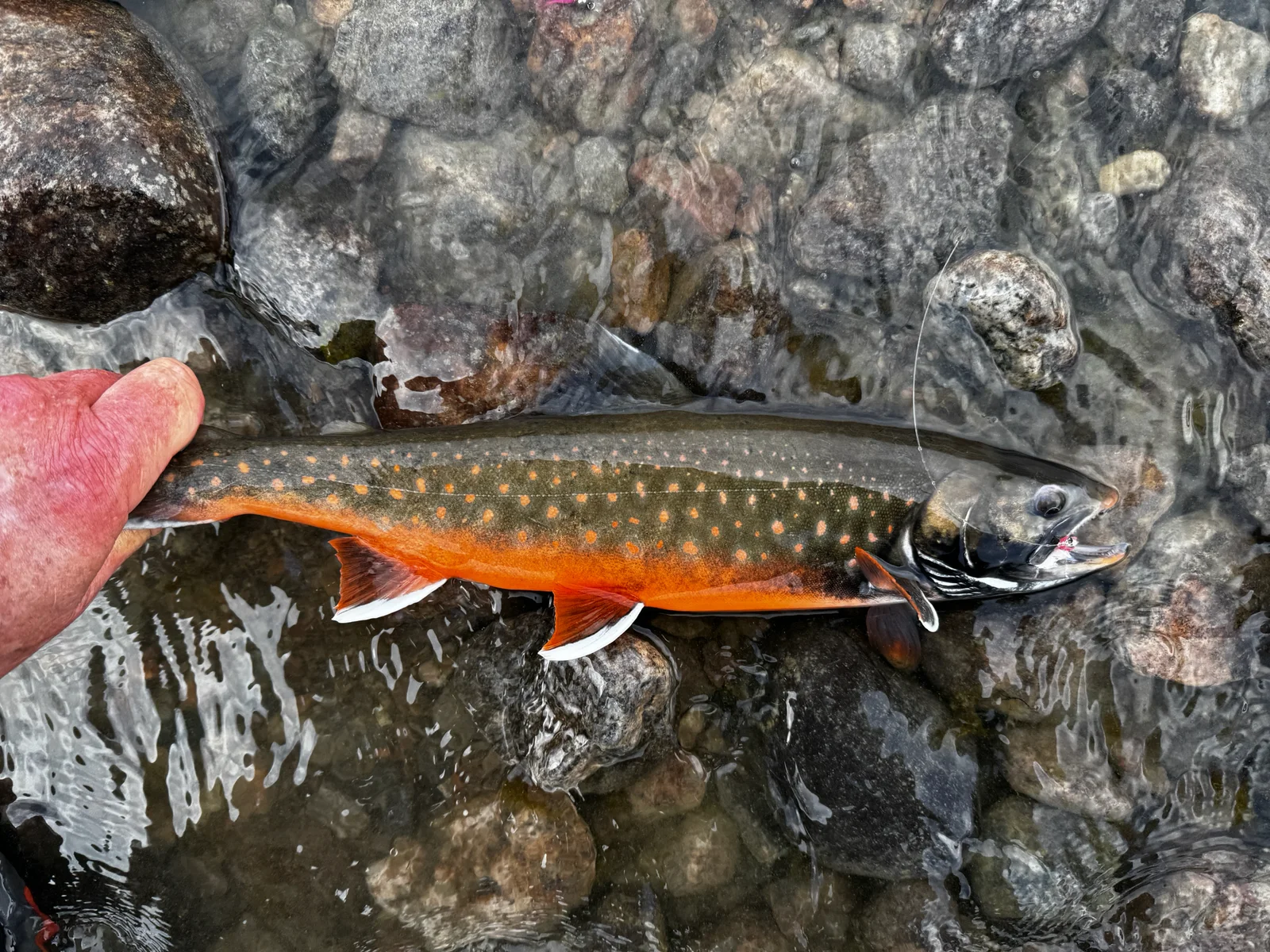
Arctic char
- Family
- Salmonidae
- Depth
- 0–70 m
- Season
- Jan, Feb, Mar, Aug, Sep, Oct, Nov, Dec
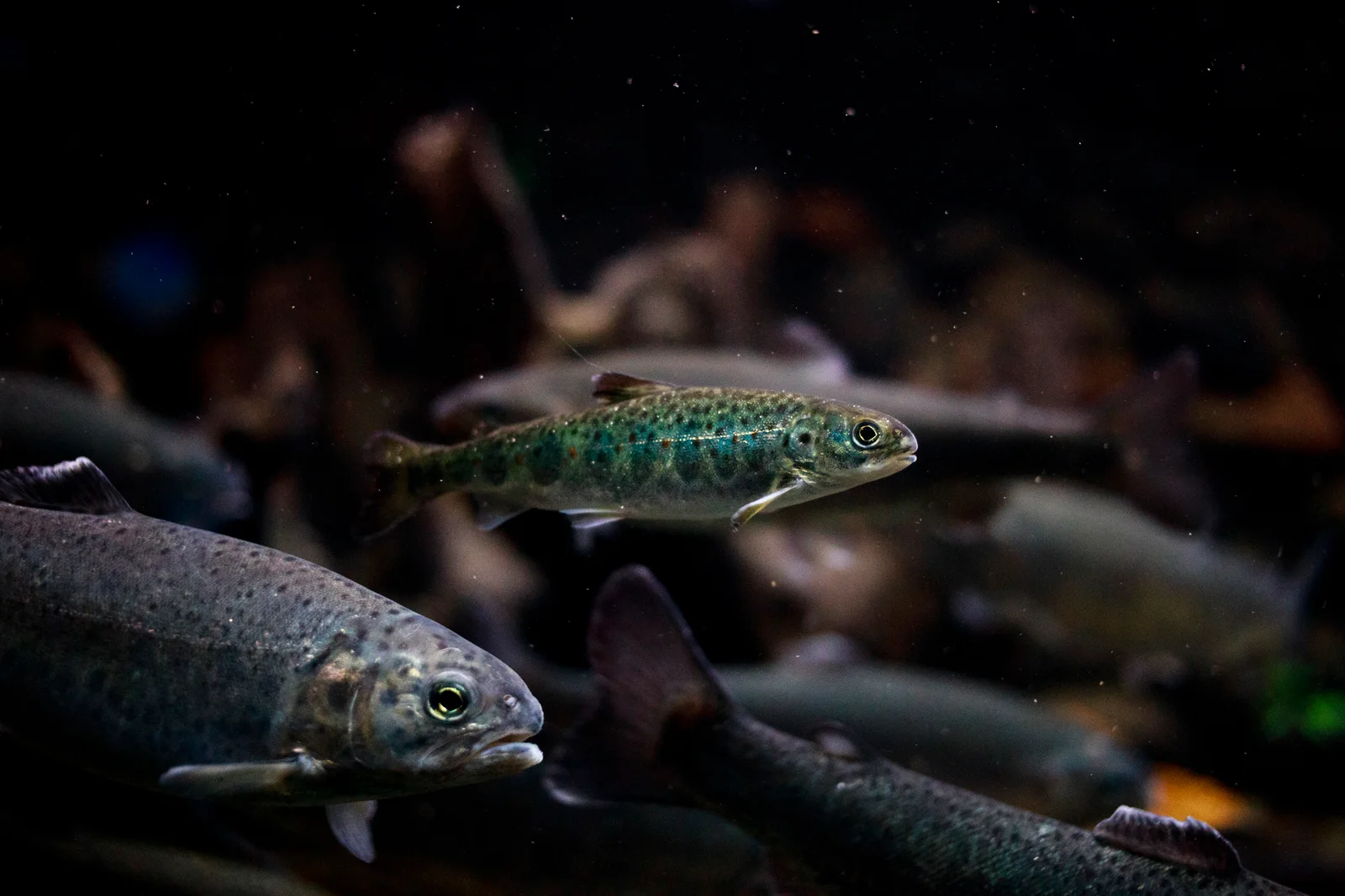
Atlantic salmon
- Family
- Salmonidae
- Depth
- 0–210 m
- Season
- Jan, Jun, Jul, Aug, Sep, Oct, Nov, Dec
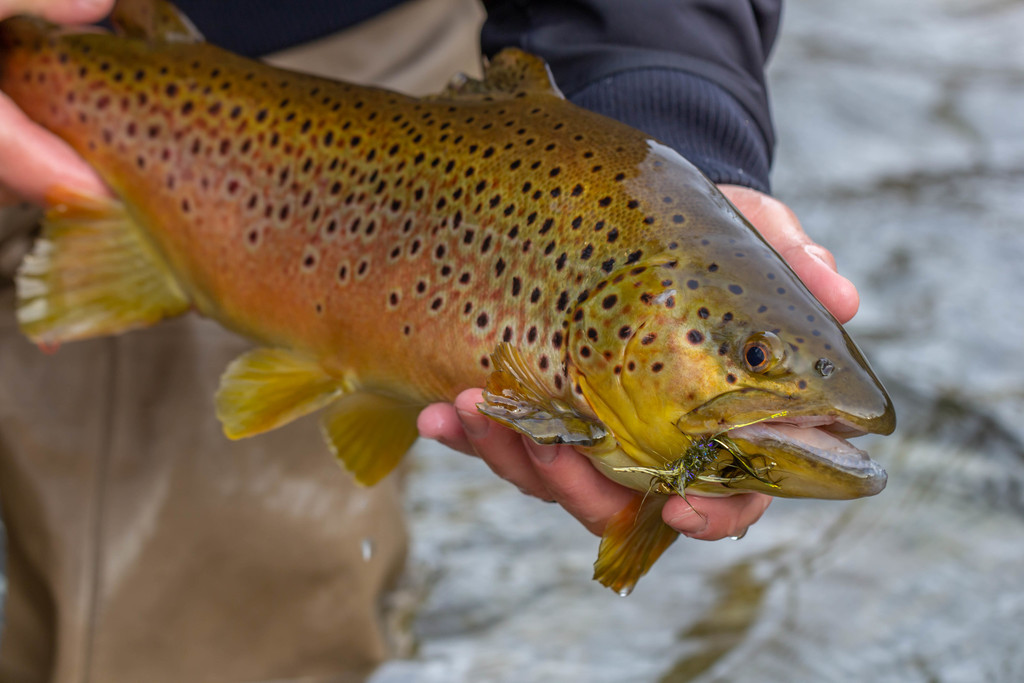
Brown trout
- Family
- Salmonidae
- Depth
- 0–28 m
- Season
- Jan, Feb, Mar, Apr, May, Jun, Jul, Aug, Sep, Oct, Nov, Dec
Guides for this water
Technique, gear and safety guides that fit Brook trout.