
Brazilian sardinella
Sardinella brasiliensis, the Brazilian sardinella, is a small, silvery, strongly schooling sardine of the family Dorosomatidae. It is found in the western Atlantic from the Caribbean south to Brazil and northern Uruguay, where it supports a large purse-seine fishery, and it is extremely hard to distinguish from Sardinella aurita.
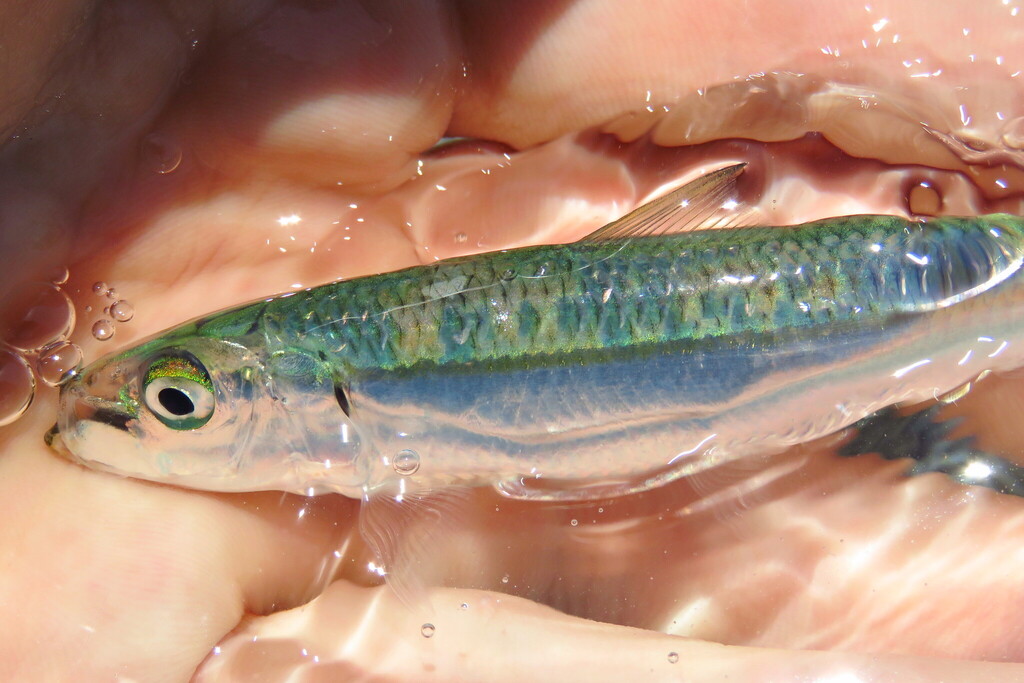
Sardinella brasiliensis, the Brazilian sardinella, is a small, silvery, strongly schooling sardine of the family Dorosomatidae. It is found in the western Atlantic from the Caribbean south to Brazil and northern Uruguay, where it supports a large purse-seine fishery, and it is extremely hard to distinguish from Sardinella aurita.
Identification
Sardinella brasiliensis is a sardine of the family Dorosomatidae, in the order Clupeiformes. It is a small, silvery, strongly schooling fish, and in the hand it looks like the other sardinellas of the western Atlantic.
The size entry uses two different measures. Maximum length is 27 cm TL and common length is 20 cm SL. Because the two figures are not the same kind of measurement, the gap between them is not simply the distance from the largest specimen to a typical one. Nothing on the page converts one to the other.
First maturity is given as 19.2 cm. No maximum weight and no maximum age appear, so the entry describes length and nothing else. For a fish that supports a large purse-seine fishery, that is a thin record.
Two sardinellas that are hard to tell apart
Wikipedia states the identification problem plainly: S. brasiliensis is extremely hard to distinguish from Sardinella aurita, and most studies and catch estimates combine the two. That single sentence explains a lot of what follows on this page.
The common names add to the confusion rather than resolving it. The English table offers Brazilian sardine and Orangespot sardine, and the AFS entry uses Orangespot sardine for a fish that the FAO list calls Brazilian sardinella. Round sardinella, the usual English name of S. aurita, is a different species with a different range.
For an angler the practical consequence is simple: a small sardine caught in the Caribbean may be either species, and the records that would tell you which one are usually pooled. Count the fish you release, not the species you think you caught.
Depth and ground
FishBase gives the environment as marine and brackish, pelagic-neritic, oceanodromous, 5 to 60 m, subtropical between 31°N and 36°S. Sixty metres is the floor of the record, and there is no usual band.
The habitat keyword is coastal, and the diet keywords are blank. That blank is the interesting part. A sardine that feeds on plankton is not going to take a bait presented on the bottom, and the page does not even name the food. The coastal tag plus the shallow depth band is all the guidance available: fish the top of the water column over the shelf, not the seabed.
Brackish is recorded alongside marine, which fits the estuaries and lagoons along the South American coast. It also means the salinity at the mouth of a river is not a reason to assume the school has gone.
Seasonal window
The spawning table lists ten months: January, February, March, April, June, July, September, October, November and December. May and August are missing. Five rows support the pattern, and all five come from Brazil: Rio de Janeiro in 1999–2000 and 1999–2001, São Paulo, São Paulo in 1963–1964, and the south-east coast in 1970–1971.
Wikipedia puts the spawn in coastal water in late spring and summer, with the densest periods in December and January. That is consistent with the Brazilian rows and narrower than the ten-month table.
Read the table as a Brazilian shelf statement. The database has no Venezuelan, Caribbean or Uruguayan spawning row, even though the country list runs that far north and south.
Gear and approach
At 27 cm maximum and 20 cm common, this is light tackle. A 7 ft spinning rod, 8 to 12 lb braid, a small reel and a 20 to 30 g spoon cover the range. Sabiki rigs catch more fish but hook them deep, which matters if the plan is to release.
The maturity figure of 19.2 cm is close to the common length of 20 cm. That is the useful contrast on the page: the usual fish is just past the point where it begins to breed, so there is very little margin. Keeping the biggest fish removes the spawning stock first, and keeping the smallest removes fish that have barely started.
Edibility and regulations
FishBase records a highly commercial fishery and notes that the species is usually used as bait. Wikipedia describes the Venezuelan catch falling from 228,000 tonnes in 1973 to 31,000 tonnes in 1990. That collapse is the context for every rule that follows.
The IUCN assessment is Data Deficient, dated 12 July 2017. Data Deficient does not mean the stock is healthy; it means nobody has the data to say. With the two sardinellas pooled in most catch statistics, that gap is structural rather than temporary.
The keep rule on that coast is a minimum size and a bag limit, and for a school fish both are often written per vessel or per landing rather than per angler. Whether the boat may fish is settled by the closure calendar, which in Brazil is tied to the spawning season. Neither appears here.
Where to look
The distribution text covers the Gulf of Mexico, the Caribbean and the West Indies south to Brazil and northern Uruguay, and adds the warning that identifications are not always reliable. The country table runs the same arc from the Antilles and Central America down the South American coast.
GBIF returns three rows. One places the species in the Western Atlantic through ITIS, one is the global IUCN row carrying Data Deficient, and one is a Mexican national checklist. Three rows is a very thin distribution record for a fish with a commercial fishery.
OBIS supplies the occurrence data that the other sources lack: 131 records from 22 datasets, spanning 1965 to 2018. Sampled depths run from 3 to 150 m, which is deeper than the 60 m ceiling FishBase records; the two sources disagree about where the bottom of the range sits.
Where these facts come from
Check these pages before you rely on a size, range or protection status.
- FishBase — Sardinella brasiliensis — FishBase · T2
- GBIF — Sardinella brasiliensis occurrence records — GBIF · T2
- IUCN Red List — Sardinella brasiliensis — IUCN · T1
- Photo record — iNaturalist — iNaturalist · T3
Fish in the same water
These fish live in the same place.
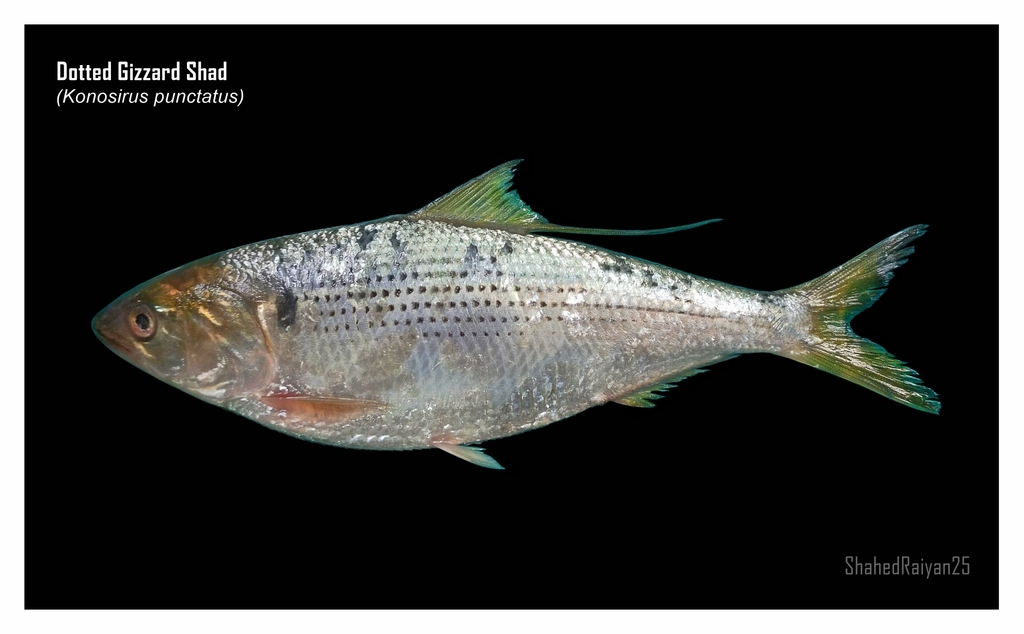
Dotted gizzard shad
- Family
- Dorosomatidae
- Season
- Jan, Feb, Mar, Apr, May, Jun, Jul, Aug, Sep, Oct, Nov, Dec
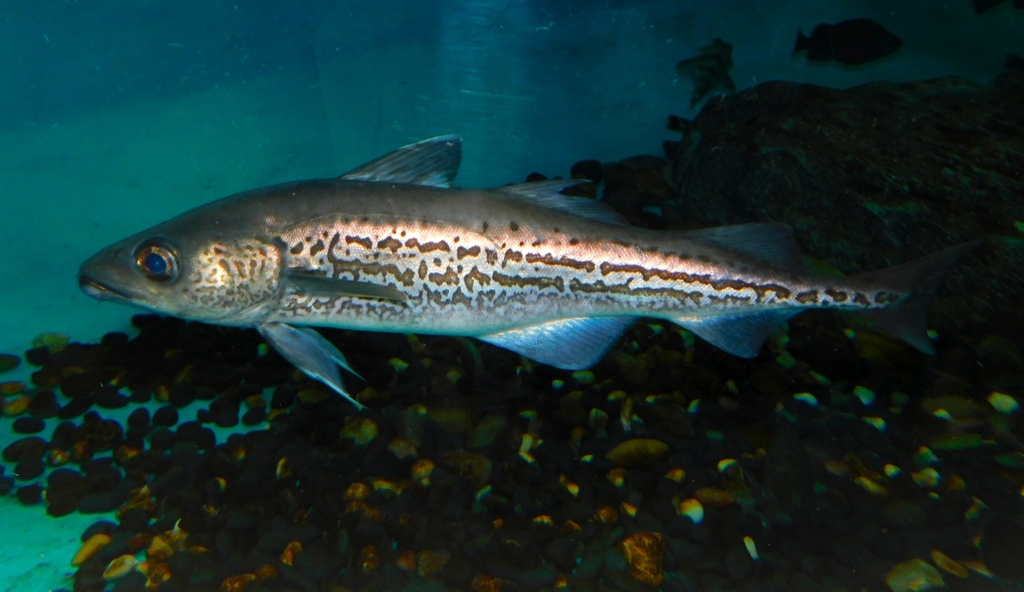
Alaska pollock
- Family
- Gadidae
- Depth
- 0–1280 m
- Season
- Jan, Feb, Mar, Apr, May, Jun, Jul, Aug

Albacore
- Family
- Scombridae
- Depth
- 0–600 m
- Season
- Jan, Feb, Mar, Apr, May, Jun, Jul, Aug, Oct, Nov, Dec
Guides for this water
Technique, gear and safety guides that fit Brazilian sardinella.