
Golden cuttlefish
Golden cuttlefish is a medium-sized cuttlefish of the western Pacific, from the South and East China seas through Japan to the Philippines and Indonesia. It lives from 10 to 150 m in water of 15 to 25 °C, reaches 18 cm mantle length and 0.6 kg. Boat fishing, handline or trap fishing is the usual approach, with the season running February to June.
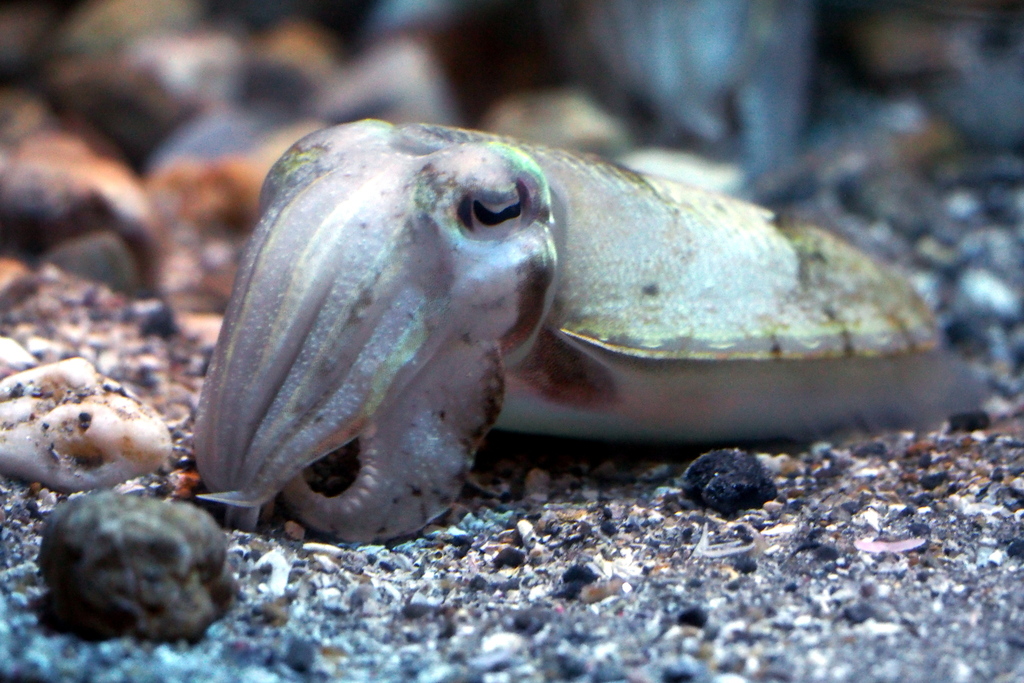
Golden cuttlefish (Sepia esculenta) is a cephalopod of the family Sepiidae. SeaLifeBase gives its range as: Western Pacific: South and East China seas, Japan to Philippines and Indonesia. It is recorded from 10 to 150 m, in subtropical water at 15–25 °C. The recorded maxima are 18 cm ML, 0.6 kg. IUCN status: Data Deficient (DD). Chinese name: .
Two names on one animal
SeaLifeBase's classification line reads Sepia esculenta. The linked encyclopedia entry carries Acanthosepion esculentum in its title and describes the same golden cuttlefish. The difference is not a spelling error: the genus has been revised, and the species epithet changes its ending to agree with the gender of the genus it sits in. Sepia is feminine, so the epithet appears as esculenta; Acanthosepion is neuter, so the same epithet appears as esculentum. A reader who searches only one of the two names will find half the literature.
Why the genus name moved
Generic revisions in cephalopods are common and often follow new morphological or molecular work. The record here does not contain that work, and this page cannot say which placement is current. What it can say is what each source does: SeaLifeBase keeps the species under Sepia, while the encyclopedia entry uses Acanthosepion. Treat the two names as search terms, not as rival identities. The species epithet is the stable part; the genus prefix is the part that moves.
The common name is a third layer
English names add another layer of uncertainty. SeaLifeBase's common-name table has no English alias record for this species. iNaturalist's preferred name is "Golden Cuttlefish", and its linked summary opens with the Acanthosepion form. So the English name used on this page comes from a public observation platform, not from the source database. That is not a reason to drop it; it is a reason to keep the scientific name beside it. A common name with no database record behind it travels easily and verifies poorly.
Two depth statements, no average
The source record gives a depth range of 10–150 m and a usual depth of 60–150 m. The iNaturalist-linked summary describes the species as primarily found between 10 and 100 m. These are not the same statement, and averaging them would invent a third one that neither source supports. The page uses the SeaLifeBase figures because they are the structured record; the shallower summary is noted as a conflict, not adopted. A diver or angler planning by depth should expect the deeper half of the range to be the normal one, with the shallow end recorded but not usual.
The GBIF tail
GBIF's 364 preserved occurrences are led by South Korea (205), Taiwan region (41) and Japan (30), with Malta (5), Great Britain (3), Hong Kong SAR (3) and China (2) behind them. Malta and Great Britain sit outside the Western Pacific range given by the source text. That does not prove the species occurs there; it shows what happens when occurrences are aggregated under a name. Mislabelled specimens, old synonyms and identification errors all land in the same bucket. The tail is the part of the map that argues for caution.
Mantle length, not total length
The size record is 18 cm ML and a maximum published weight of 600 g. ML means mantle length, the standard cephalopod measurement, and it is not comparable with the total length used for fish. A length limit written for a fish therefore cannot be applied to this animal without a conversion the record does not supply. There is no common length, no maturity length and no age record. A cuttlefish measured at 18 cm ML is a full-sized animal by this record, but the page cannot say how old it is or at what size it first breeds. Those blanks are more honest than a guessed lifespan.
Spawning is two local windows
The spawning table aggregates February to June, but the entries behind it are local: Hong Kong SAR, China for February–May, with the locality field left unspecified, and Rizhao in Shandong for May–June. Two places, two windows, one union. The Hong Kong SAR, China entry is the weaker one because it does not name a site; the Shandong entry is the more specific. Neither supports a single coast-wide season, and the union should not be read as a six-month spawning run.
Fishing under an unsettled name
Boat fishing, handline and trap fishing are the recorded approaches, with traps marked as regional and subject to local rules. The naming problem reaches the regulations: a size limit or closed season may be written under one name while the catch is logged under the other. Before keeping catch, check the rule under both Sepia esculenta and Acanthosepion esculentum, and use the local list rather than this page. The IUCN category is DD (Data Deficient), assessed 14 March 2009. Data Deficient means the data are insufficient for a status, not that the stock is fine.
How to catch it
Boat fishing
Fished from a boat, with the approach adjusted to the recorded depth.
Handline
Handline fished vertically; simple and direct.
Trap fishing
Trap or pot fishing; check local rules before using.
Where these facts come from
Check these pages before you rely on a size, range or protection status.
- FishBase — Sepia esculenta — FishBase · T2
- GBIF — Sepia esculenta occurrence records — GBIF · T2
- IUCN Red List — Sepia esculenta — IUCN · T1
- Photo record — iNaturalist — iNaturalist · T3
Fish in the same water
These fish live in the same place.

Common cuttlefish
- Family
- Sepiidae
- Depth
- 0–242 m
- Season
- Jan, Feb, Mar, Apr, May, Jun, Jul, Aug, Sep, Oct, Nov, Dec
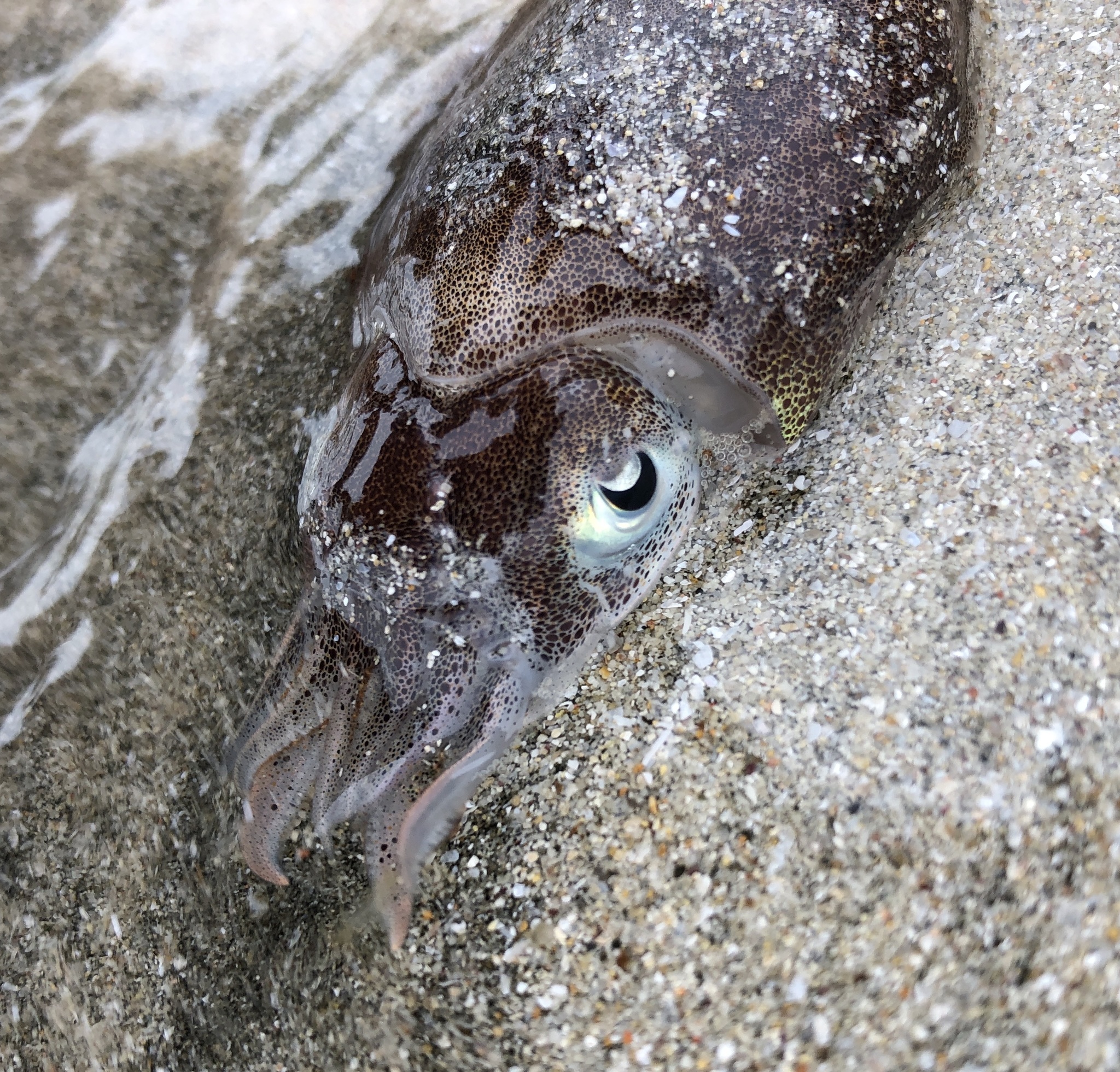
Japanese spineless cuttlefish
- Family
- Sepiidae
- Depth
- 0–50 m
- Season
- Feb, Mar
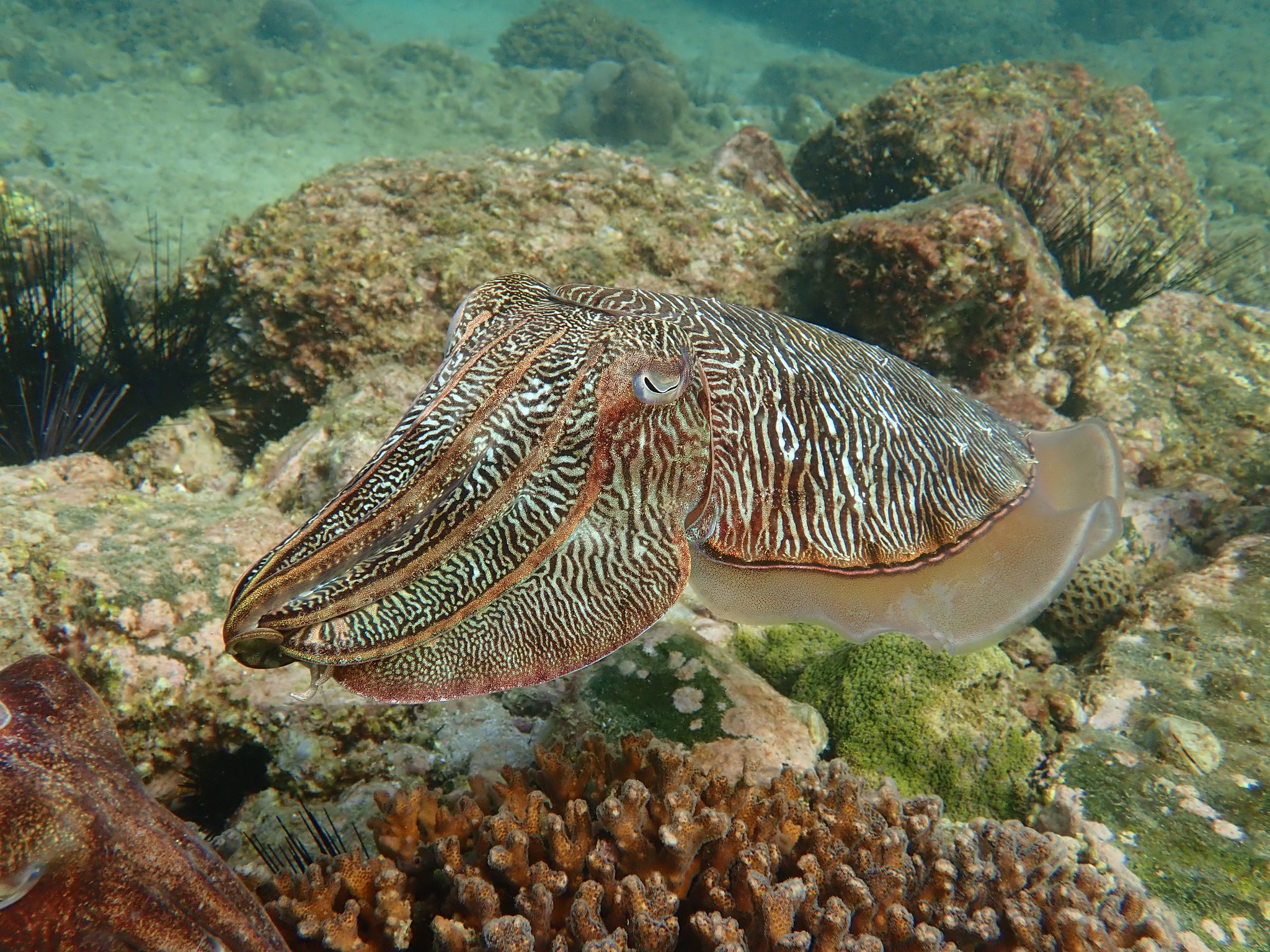
Pharaoh cuttlefish
- Family
- Sepiidae
- Depth
- 0–130 m
- Season
- Jan, Feb, Mar, Apr, May, Jun, Jul, Aug, Sep, Oct, Nov, Dec
Guides for this water
Technique, gear and safety guides that fit Golden cuttlefish.