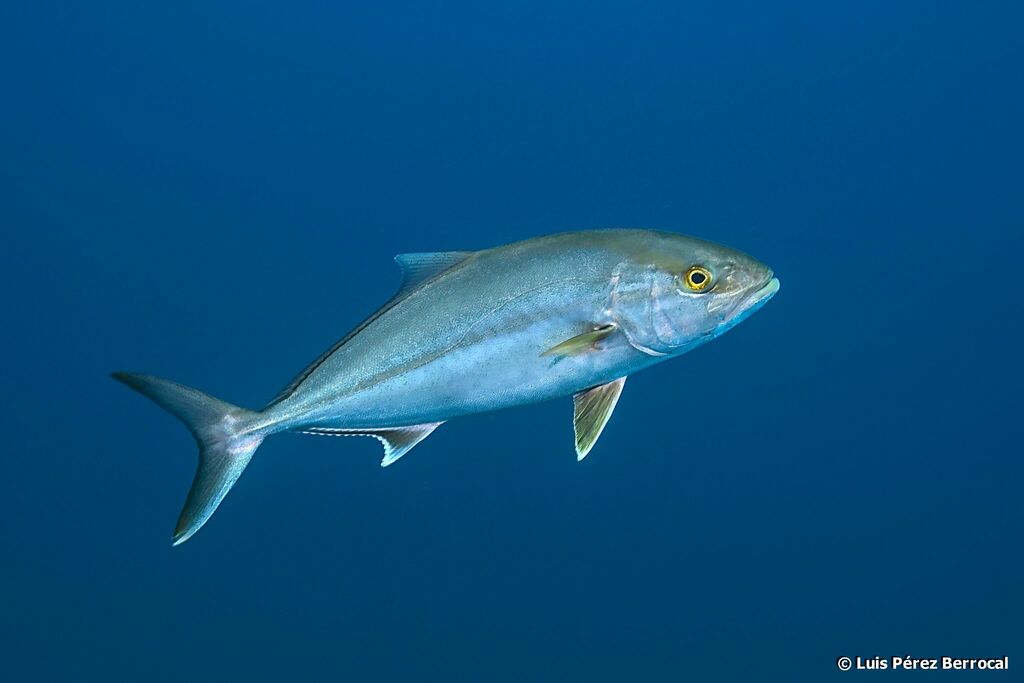
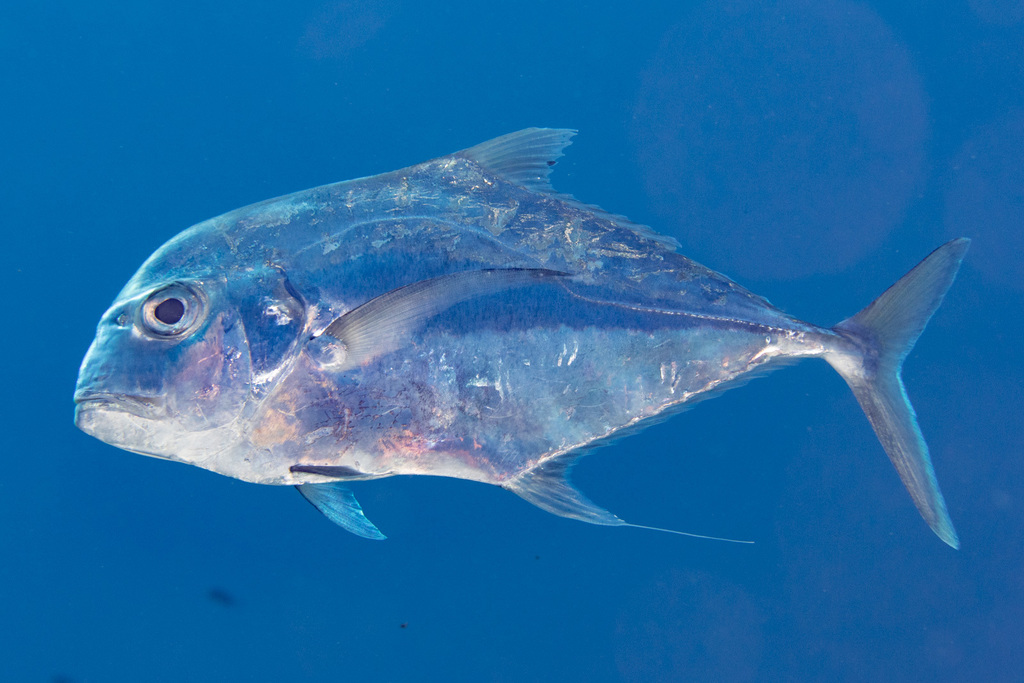
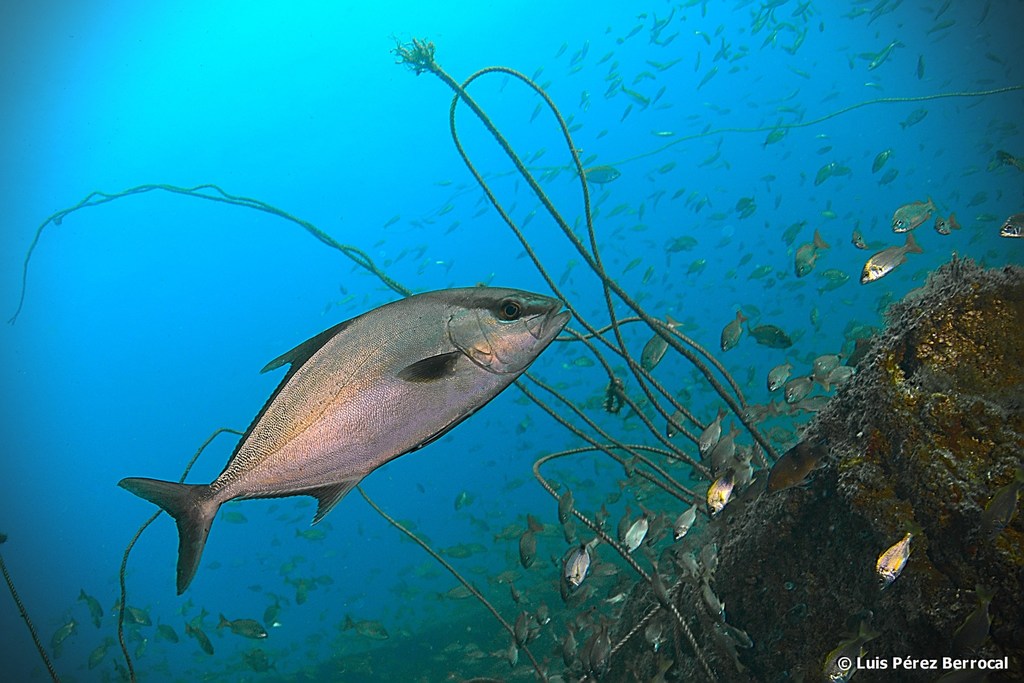
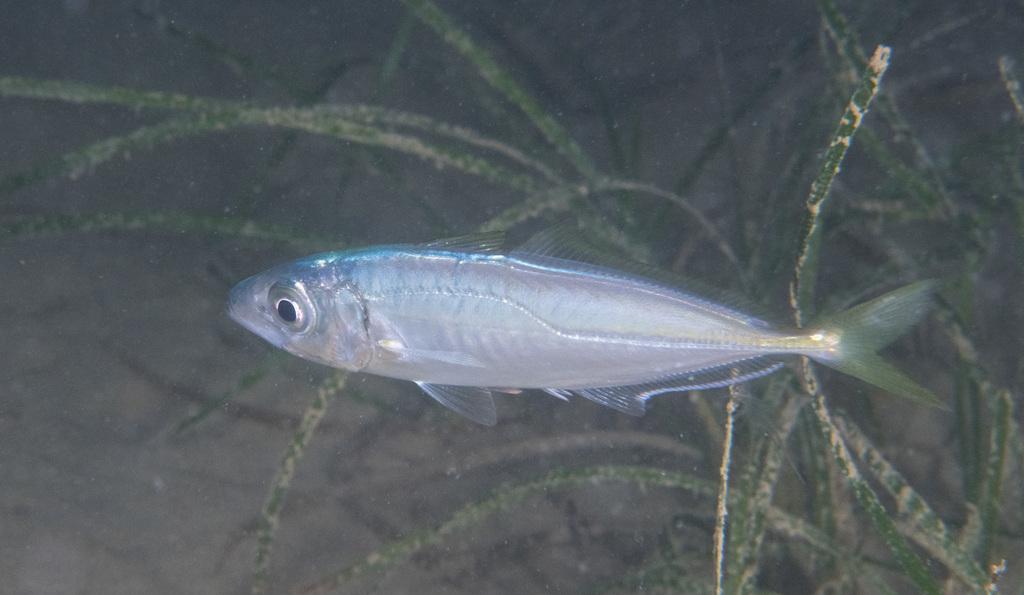
Greater amberjack (Seriola dumerili) is a fish of the family Carangidae. FishBase gives its range as: Circumglobal. Tropical and warm temperate seas. It is recorded from 1 to 385 m, in subtropical water. The recorded maxima are 190 cm TL, 80.6 kg, 15 years. Common length is recorded at 100 cm. Diet includes fishes. IUCN status: Least Concern (LC). Chinese name: .
Identification
The species belongs to the family Carangidae. FishBase's morphology record gives 29-35 soft dorsal rays; 3 anal spines and 18-22 soft anal rays. These are identification aids rather than a complete diagnosis; the accompanying photographs show the live colour pattern.
Habitat and behaviour
It is recorded in marine water, with a reef-associated mode, a recorded depth range of 1-385 m and a subtropical climate. Habitat notes mention coastal, deep, open-water. Diet records mention fishes. These are source records, not a guarantee that the same habitat exists at every local mark.
Seasonal window
FishBase's spawning table lists records in Feb, Mar, Apr, May, Jun, Jul for Italy, US of America. This is a spawning record, not a fishing-season forecast; check the local season, weather and regulations before planning a trip.
Gear and approach
Match hook, leader and drag to a fish that can reach 190 cm and 80.6 kg. Use tackle that can present the bait or lure at the deeper end of the recorded range. A jigging rod and reel rated for the working depth is the practical choice. No exact gear ratings are published here because they are equipment choices, not source facts. Adjust the terminal tackle to the bait or lure you can obtain locally.
Edibility and regulations
FishBase's human-use record lists Fisheries use: minor commercial; aquaculture: commercial; gamefish: yes; aquarium: public aquariums. It is taken as a game fish; FishBase does not record a separate edibility rating. The IUCN Red List category is LC (Least Concern), assessed 07 November 2013. Threat to humans: Threat to humans Reports of ciguatera poisoning. CITES: Not Evaluated; CMS: Not Evaluated. No official regulation text was verified for this draft. Check the current national and local fisheries rules, size limits and closed seasons before keeping catch.
Where to look
For trip planning: GBIF holds 17,474 preserved occurrence records for the matched taxon; the largest country counts are US (1,335), JP (614), AU (550), ES (533), FR (436); FishBase territories include Admiralty Islands, Albania, Algeria, Anguilla, Antigua and Barbuda, Aruba, Ascension Island, Australia; the sea regions represented are Mediterranean Sea, Eastern Atlantic, Western Atlantic, Gulf of Mexico, Caribbean Sea; habitat keywords point to coastal, deep-water, open-water. These are distribution and habitat signals, not spot coordinates; use them to narrow the search, then check local access and conditions.
How to catch it
Jigging
Vertical jigging over the recorded depth range.
Trolling
Trolled from a moving boat; suits roaming or pelagic species.
Regulations before you keep it
These are the published regulations for this fish. Read the number first. The notice below it is the actual regulation.
Bag limit1
≥32 in total length · 2 fish possession limit
United States — Virginia · US-VA
Virginia sets a 32-inch total-length minimum and a possession limit of 2 greater amberjack at any time, with a vessel limit of 2 per eligible angler and no closed season.
Federal South Atlantic rules differ: 28 in fork length, 1 per person per day, with a 1–30 April closure.
AMBERJACK
Regulation 4 VAC 20-510-10 et seq.
Minimum Size Limit: 32 IN.
Possession Limit: 2 per person
Every record above names its source and the date it was retrieved. See the regulation register for the full list, or how to read these regulations.
Where these facts come from
Check these pages before you rely on a size, range or protection status.
-
FishBase — Seriola dumerili
— FishBase · T2
-
GBIF — Seriola dumerili occurrence records
— GBIF · T2
-
IUCN Red List — Seriola dumerili
— IUCN · T1
-
Photo record — iNaturalist
— iNaturalist · T3