≤15 cm total length may not be taken · year-round
Japan — Tokyo · JP-13
Tokyo prohibits anyone from taking Japanese amberjack (buri) of 15 cm total length or less.
Rule text: 35 ( の ).

Japanese amberjack is a member of the family Carangidae and ranges across the Northwest Pacific, from Japan and the eastern Korean Peninsula to the Hawaiian Islands. It lives shallower than 100 m in subtropical water. Fish reach 150 cm TL and 40 kg, feeding on zooplankton and algae. The usual approach is jigging, trolling or live bait.
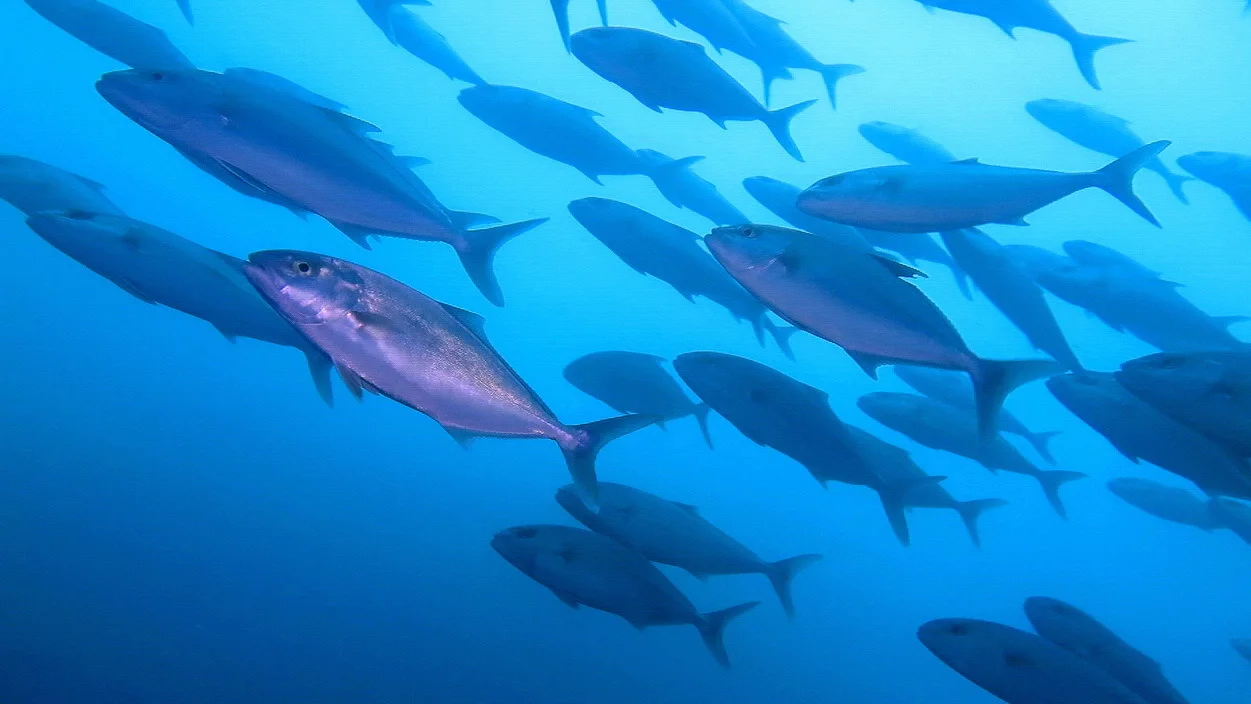
Japanese amberjack (Seriola quinqueradiata) is a fish of the family Carangidae. FishBase gives its range as: Northwest Pacific: Japan and the eastern Korean Peninsula to the Hawaiian Islands. It is recorded shallower than 100 m, in subtropical water. The recorded maxima are 150 cm TL, 40 kg. Diet includes zooplankton and algae. IUCN status: Least Concern (LC). Chinese name: .
The species belongs to the family Carangidae. FishBase's morphology record gives 6-7 dorsal spines and 29-36 soft dorsal rays; 3 anal spines and 17-22 soft anal rays; 24 vertebrae; a fusiform / normal body; an oval cross-section. These are identification aids rather than a complete diagnosis; the accompanying photographs show the live colour pattern.
It is recorded in marine water, with a demersal mode, a recorded depth range down to 100 m and a subtropical climate. Diet records mention zooplankton, algae. These are source records, not a guarantee that the same habitat exists at every local mark.
No spawning-window record was available in the FishBase page checked for this species. The season field is left empty rather than estimated from general knowledge.
Match hook, leader and drag to a fish that can reach 150 cm and 40 kg. A jigging rod and reel rated for the working depth is the practical choice. No exact gear ratings are published here because they are equipment choices, not source facts. Adjust the terminal tackle to the bait or lure you can obtain locally.
FishBase's human-use record lists Fisheries use: highly commercial; aquaculture: commercial; gamefish: yes. The species is marketed as food. The IUCN Red List category is LC (Least Concern), assessed 09 March 2015. Threat to humans: Harmless. CITES: Not Evaluated; CMS: Not Evaluated. No official regulation text was verified for this draft. Check the current national and local fisheries rules, size limits and closed seasons before keeping catch.
For trip planning: GBIF holds 1,187 preserved occurrence records for the matched taxon; the largest country and territory counts are JP (657), KR (251), AU (52), US (14), GB (12); FishBase territories include China, Hawaii, Japan, Korea (North), Korea (South), Ogasawara / Bonin Islands, Taiwan region / Chinese Taipei; the sea regions represented are Northwest Pacific. These are distribution and habitat signals, not spot coordinates; use them to narrow the search, then check local access and conditions.
Vertical jigging over the recorded depth range.
Trolled from a moving boat; suits roaming or pelagic species.
Live bait presented where the fish is likely to feed.
These are the published regulations for this fish. Read the number first. The notice below it is the actual regulation.
Tokyo prohibits anyone from taking Japanese amberjack (buri) of 15 cm total length or less.
Rule text: 35 ( の ).
Shizuoka Prefecture Fisheries Adjustment Rule, Article 36: taking yellowtail (buri) of 15 cm total length or less is prohibited. The provision protects juveniles; it is not a market-size minimum for adult fish.
The Shizuoka rule table does not list size limits for red seabream or sea bass.
Mie Prefecture prohibits anyone from taking Japanese amberjack (buri) of 15 cm total length or less.
Rule text: 36 , which applies to any person; undersized catch may not be possessed or sold.
Fukuoka Prefecture Fisheries Adjustment Rule, Article 38: in sea waters it is prohibited year-round to take yellowtail (buri, including juveniles known as mojako) of 15 cm total length or less. The provision protects juveniles; it is not a market-size minimum for adult fish.
The Fukuoka rule table has no entries for red seabream or sea bass; the 7 cm bass minimum applies only to inland waters and not to sea fishing.
Nagasaki Prefecture prohibits anyone, including recreational anglers, from taking Japanese amberjack (buri) of 15 cm total length or less.
The page states these size limits apply to the general public, not only to commercial fishers.
Every record above names its source and the date it was retrieved. See the regulation register for the full list, or how to read these regulations.
Check these pages before you rely on a size, range or protection status.
These fish live in the same place.


Technique, gear and safety guides that fit Japanese amberjack.