
Queenfish
The queenfish sits in California's no-bag-limit group, listed alongside anchovy, sardine and Pacific mackerel. That status is also its value: a small fish nobody counts, and one of the most useful live baits in Southern California. What the rule removes is a number. It does not remove the licence, the marine protected areas, or the combined limit on everything else in the box.
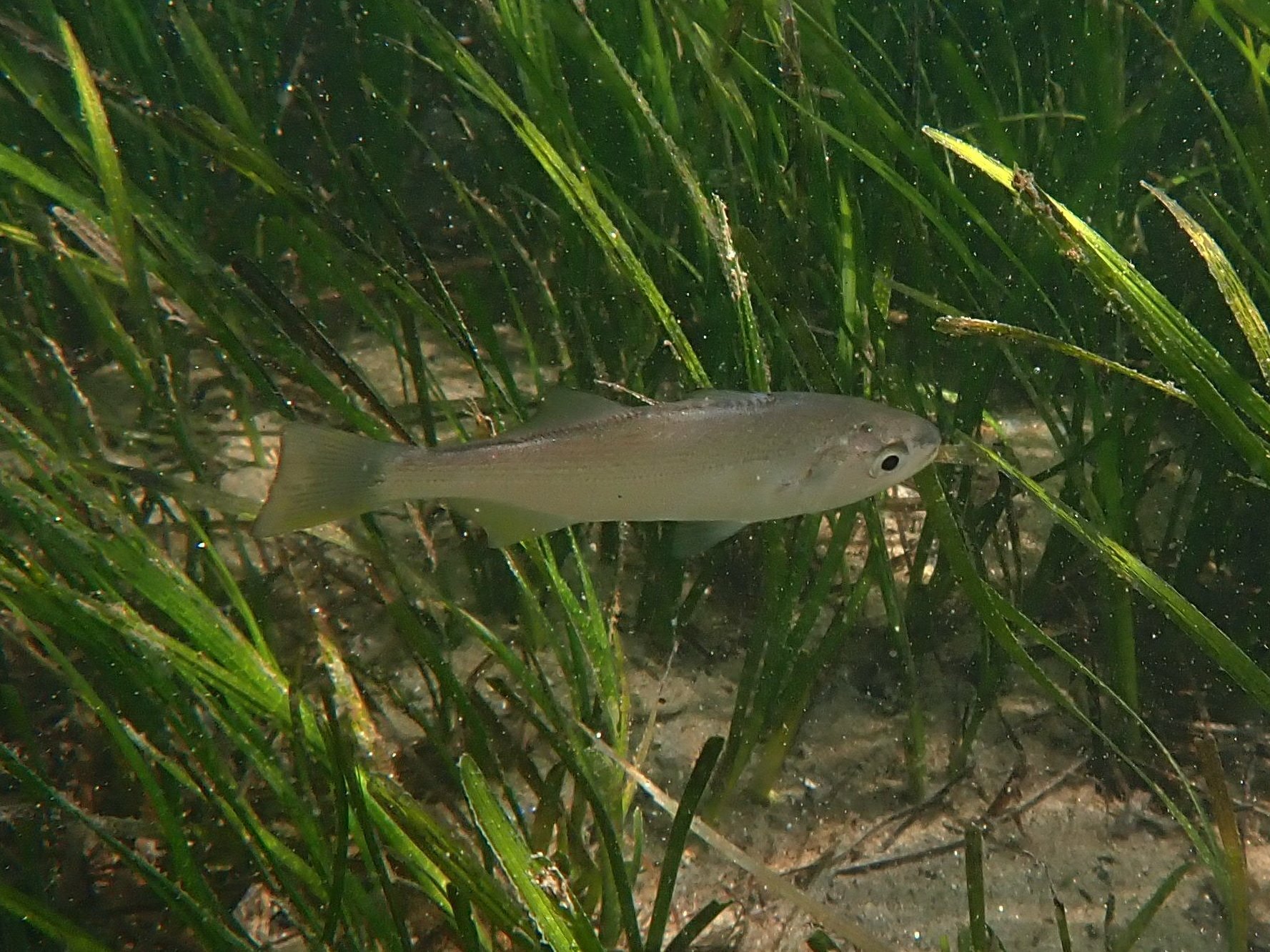
The queenfish sits in California's no-bag-limit group, listed alongside anchovy, sardine and Pacific mackerel. That status is also its value: a small fish nobody counts, and one of the most useful live baits in Southern California. What the rule removes is a number. It does not remove the licence, the marine protected areas, or the combined limit on everything else in the box.
Thirty centimetres, silver, and no barbel
Size is the first filter: FishBase lists a maximum of 30 cm total length, and most caught fish are well under that. The body is bright silver with a grey-brown back and a pale belly, and the flanks carry neither spots nor stripes. There is no barbel under the chin, which separates it at once from the yellowfin croaker, whose lower jaw carries a short one. The tail is deeply forked and the eye is large for the head. The confusing fish is the white croaker: neither has a barbel, so compare build and tail shape instead of colour.
Bays, sloughs, and the pilings at night
FishBase runs the range from Yaquina Bay in Oregon to southern Baja California, with a single British Columbia record at the cold edge. This is an inshore bottom fish, recorded from 1 to 21 m and mostly between 1 and 8 m, over sand in bays, tidal sloughs and around pilings. It sits shallow by day and moves a little deeper at night. In Southern California the working water is the back of a bay, the shadow of a pier light, and the sand inside a breakwater. The British Columbia record is not a destination. On a slow night the fish can be found by watching where the light stops on the bottom and fishing that edge.
A summer and autumn fish under the lights
FishBase calls it a pelagic spawner and gives no month-by-month table. In Southern California the fishing starts as the water warms in spring, thickens through summer and autumn, and the night bite under pier lights runs almost every warm evening. Through winter the schools slide into slightly deeper water and shore catches thin out. The fish moves in small groups, so finding one usually means several fish in a row; when the bite dies, changing pilings beats changing bait. No preferred temperature is given, so read colour, bait and the gathering under the light.
Sabiki first, then a live bait on a light rig
Under a pier light is where this fish lives. The lamp collects plankton and small shrimp, and the queenfish follows. A small sabiki rig takes several at once, and they go straight into the bait well for halibut or bass. To fish for them on purpose, a small hook with a short piece of squid or shrimp, no lead or very little, and let the bait sink with the current. From a boat, a light sinker dragged over sand finds schools and produces a run of small taps. The diet is small shrimp, worms and fish, so the bait stays small. Keep a second rod rigged with a live one, because a bait that has been in the bucket too long stops swimming and stops working.
Light line so the bait still sinks
A six to seven-foot light spinning rod with a 2000 to 3000 reel, 8 to 15-pound braid and a 6 to 10-pound fluorocarbon leader. Hooks run from size 6 down to 1/0, with size 8 to 12 on the sabiki. The point of the light rig is sink rate. The mouth is small, and heavy line makes a small bait hang stiffly, which kills the bite. At night, add a small light or glow stick and keep the bait at the edge of the glow. When the fish go into a bait bucket, change the water often; small fish use more oxygen than they look like they do.
No bag limit is not no rules
The flesh is white and soft with fine bones, best fried whole or used in soup. Most people keep this fish as bait rather than as dinner. California lists it among the no-bag-limit species in 14 CCR § 27.60(b), alongside anchovy, sardine and Pacific mackerel, with no size limit. That exemption applies to this species only. Everything else in the box still counts against the general 20-fish aggregate with a 10-fish single-species cap, and the licence, the marine protected areas and the gear rules still apply. State and federal water can differ, and many bays and piers sit inside MPAs. Check the current CDFW notice and the MPA map. The rule is short, and the short version is the one that gets misquoted: the exemption is written for the species, not for the trip.
Where the numbers come from, and where they stop
The 30 cm maximum, the 1 to 21 m depth, the Oregon to Baja range, the sand and bay habitat, the night movement into deeper water and the pelagic spawning all come from FishBase; no maximum weight or age is listed. The no-bag-limit classification comes from 14 CCR § 27.60(b), which names species without giving numbers, so this article states no numerical limit at all. IUCN rates it Least Concern, assessed in 2020. The month-by-month pattern is pier and bay experience rather than a statistic, and the bait use is local habit; FishBase's use field says only bait, usually.
How to catch it
Pier fishing
A small sabiki tipped with glow fibre, fished at the lower edge of the light where the school gathers.
Light sinker over sand
Half an ounce or less, dragged slowly along the bottom from a boat until the taps start coming in series.
Bait fishing
Back-hook the fish you just caught and send it down just above the sand for halibut and bass.
Where these facts come from
Check these pages before you rely on a size, range or protection status.
- FishBase — Seriphus politus — FishBase · T2
- GBIF — Seriphus politus occurrence records — GBIF · T2
- IUCN Red List — Seriphus politus — IUCN · T1
- Photo record — iNaturalist — iNaturalist · T3
Fish in the same water
These fish live in the same place.

Acoupa weakfish
- Family
- Sciaenidae
- Depth
- 1–20 m
- Season
- Jan, Feb, Mar, Apr, May, Jun, Jul, Aug, Sep, Oct, Nov, Dec
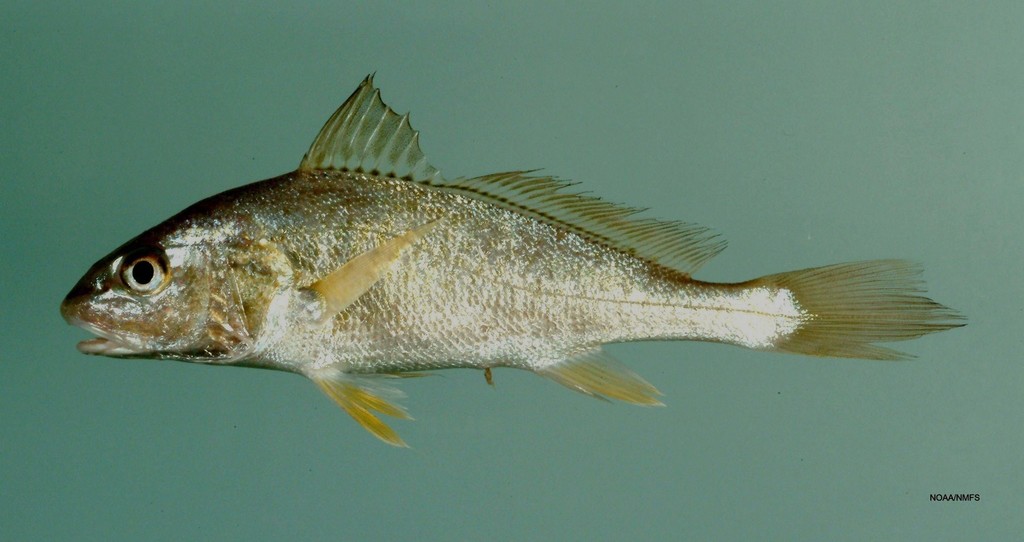
Atlantic croaker
- Family
- Sciaenidae
- Depth
- ≤ 100 m
- Season
- Jan, Feb, Mar, Apr, May, Jun, Jul, Aug, Sep, Oct, Nov, Dec
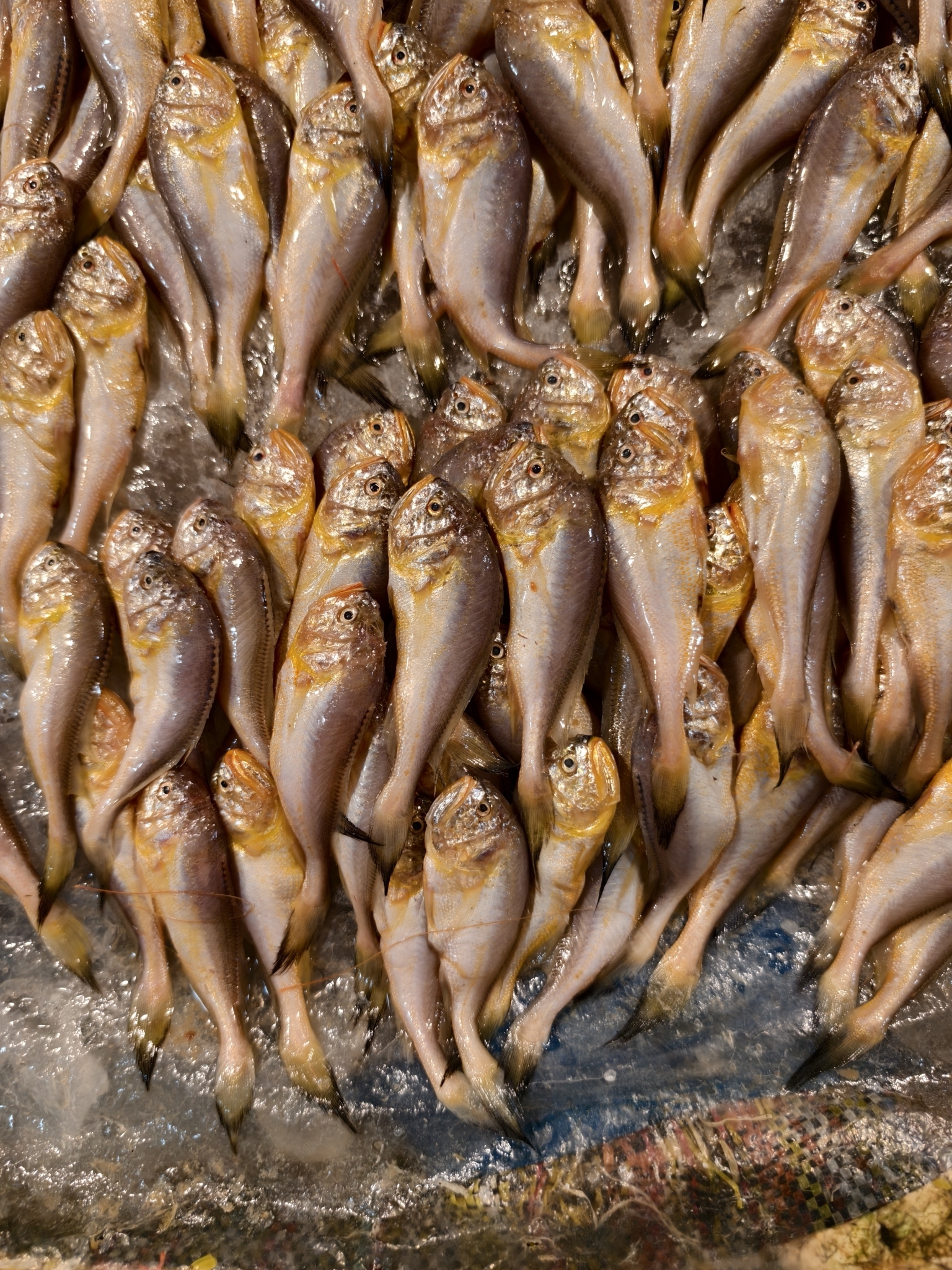
Bighead croaker
- Family
- Sciaenidae
- Depth
- ≤ 90 m
- Season
- Jan, Mar, Apr, May, Jun, Jul, Aug, Sep, Oct, Nov, Dec
Guides for this water
Technique, gear and safety guides that fit Queenfish.