Snubnose pompano
Snubnose pompano is a deep-bodied carangid of the Indo-Pacific, from the Red Sea and East Africa across to the Marshall Islands and Samoa, north to southern Japan and south to Australia. It is a shallow fish, recorded from just 1 to 7 m, and it is usually met where reef flat meets sand and mud. Adults reach 110 cm FL and 3.4 kg.
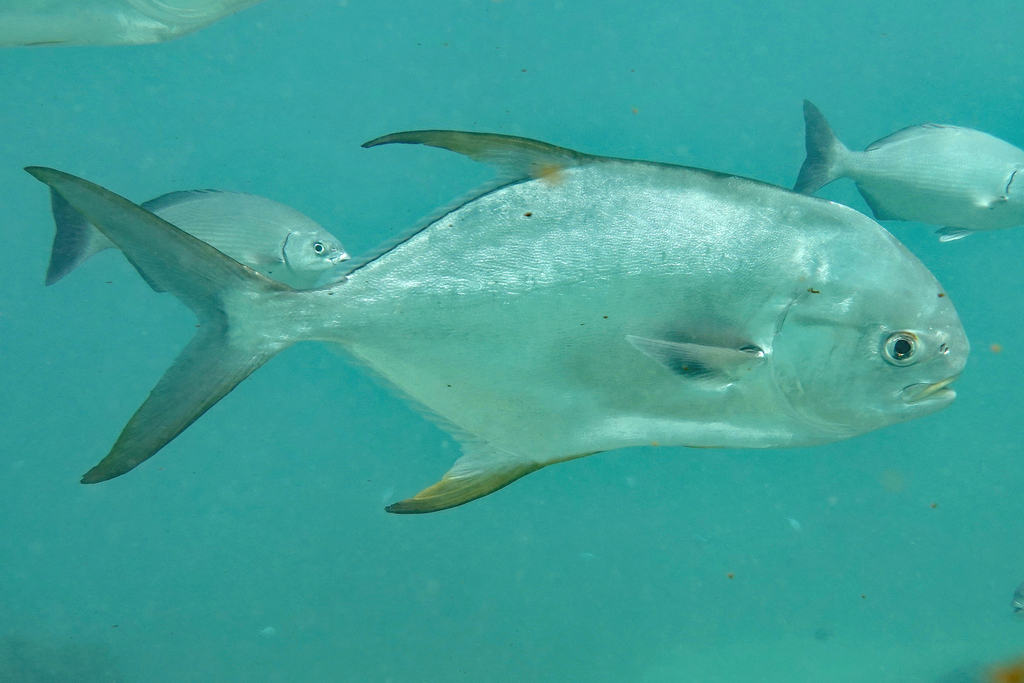
Snubnose pompano (Trachinotus blochii) is a fish of the family Carangidae. FishBase gives its range as: Indo-Pacific: Red Sea and East Africa to the Marshall Islands and Samoa, north to southern Japan, south to Australia. The body is short and deep, compressed, with 18–20 dorsal soft rays and III + 16–18 anal rays. It is recorded from 1 to 7 m, in tropical water. The recorded maxima are 110 cm FL, 3.4 kg. IUCN status: Least Concern (LC). Chinese name: .
Identification
The record mixes units before it gives a single usable size. FishBase puts the maximum at 110 cm FL, the common length at 40 cm TL, the maximum weight at 3.4 kg, and the maturity field as "Lm ?, range 58 – ? cm". FL and TL are not interchangeable: a 110 cm fork-length fish and a 40 cm total-length fish are measured from different points, and the maturity row is incomplete. The body is short and deep, compressed, with 18–20 dorsal soft rays and III + 16–18 anal rays. Wikipedia calls it the snubnose dart, golden pompano or golden pomfret, places it in the family Trachinotidae, and describes a pelagic fish of rocky and coral reefs and inshore habitats. FishBase places it in Carangidae. The family label is a source disagreement; the species name is not. iNaturalist holds 825 observations under taxon 180751.
Habitat and distribution
FishBase records a marine and brackish, reef-associated species from the Red Sea and East Africa to the Marshall Islands and Samoa, north to southern Japan and south to Australia. Its country table carries 73 territories, from Admiralty Islands and American Samoa to Thailand and Timor-Leste. The recorded depth is 1–7 m, and the habitat keywords are reef, rocky, sandy and muddy. A 110 cm fish in a 1–7 m band is possible on a reef face, but the band is narrow enough that it should be read as a shallow coastal record, not as the full vertical range of the species. Wikipedia's "pelagic" label and FishBase's reef-associated label sit beside each other without contradiction: the fish can move over open water and still be found around reef structure.
Season and fishing approach
No spawning month is recorded, and a spawning peak is not enough to build a season. The measurement problem is the practical one: the common fish is 40 cm TL, while the record is 110 cm FL. Tackle, hooks and drag should be sized for the common fish, not for the record; a 110 cm fish is an outlier that will test the leader, not a target that justifies heavy gear every trip. The 1–7 m depth band puts the fishing close to shore, around reef, rock, sand and mud edges, rather than offshore. The sources do not list prey, so bait choice is an observation to make locally, not a number to quote. If the fish is feeding on a shallow reef flat, a small fish or crustacean presentation worked along the edge is a reasonable start; the point is to keep the rig light enough that a 40 cm fish can still be felt.
Edibility and regulations
The uses tab on FishBase carries four separate entries — minor commercial landings, commercial aquaculture, gamefish and public aquariums — and the aquaculture entry changes what the market label means: a farmed fish and a reef-caught fish can arrive under the same name but not as the same supply. The Red List entry is dated 9 March 2015 and reads Least Concern; neither the CITES nor the CMS field on the record carries a listing for this species. Ciguatera is reported, which is a consumer warning rather than a harvest rule. The 73-territory country table supplies ranges, not regulations: no legal floor, take limit or closure is attached to any of those 73, so the rule has to be read locally and under the scientific name.
Where these facts come from
Check these pages before you rely on a size, range or protection status.
- FishBase — Trachinotus blochii — FishBase · T2
- GBIF — Trachinotus blochii occurrence records — GBIF · T2
- IUCN Red List — Trachinotus blochii — IUCN · T1
- Photo record — iNaturalist — iNaturalist · T3
Fish in the same water
These fish live in the same place.
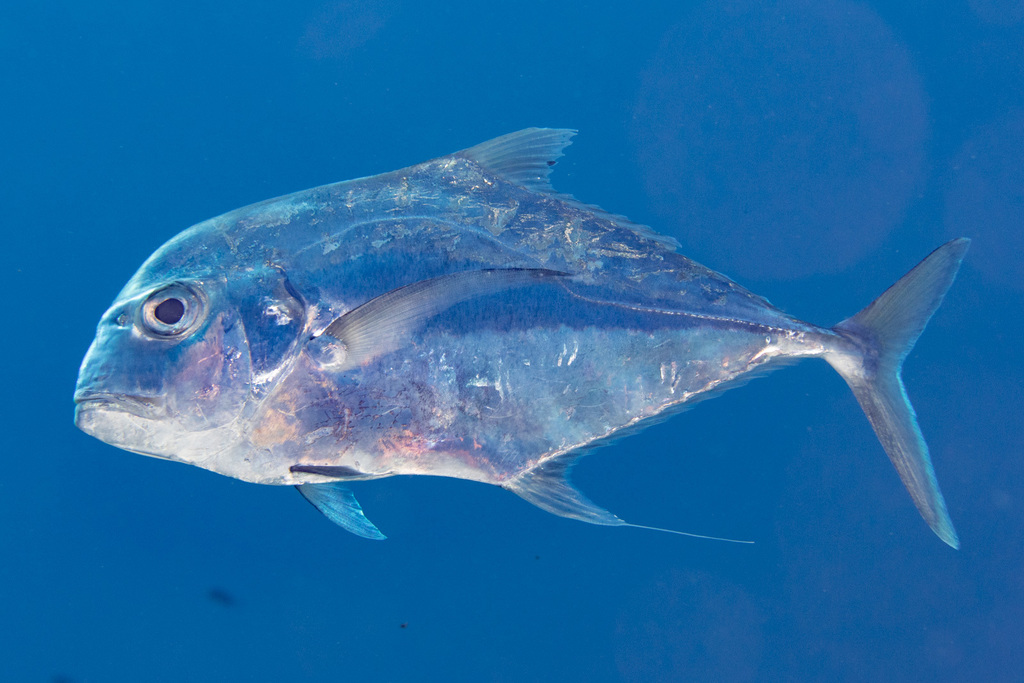
African pompano
- Family
- Carangidae
- Depth
- 60–100 m
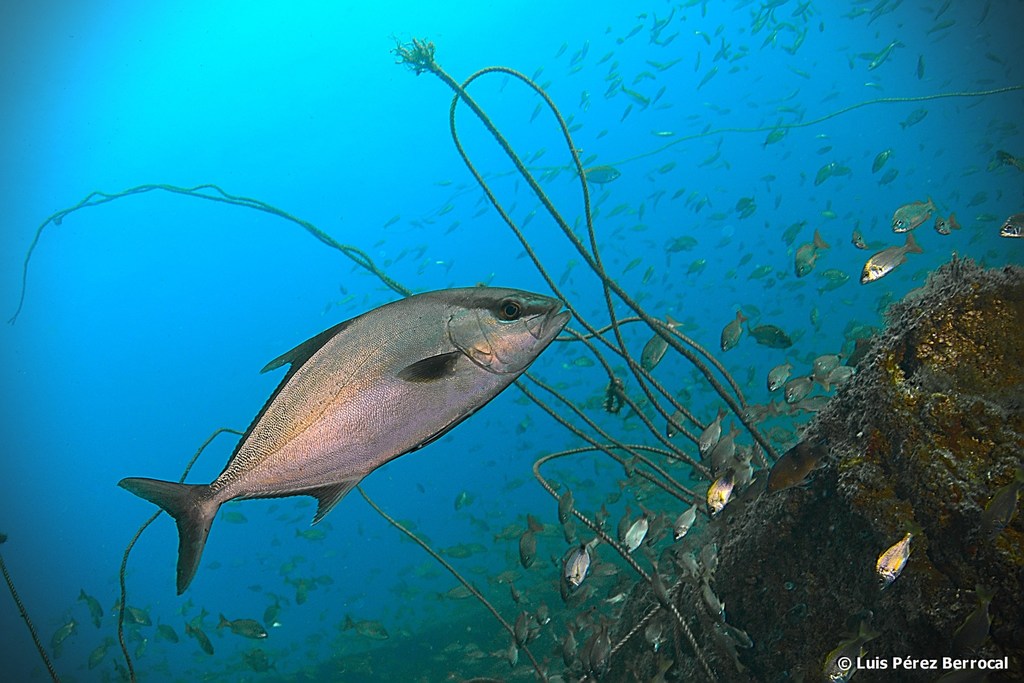
Almaco jack
- Family
- Carangidae
- Depth
- 5–245 m
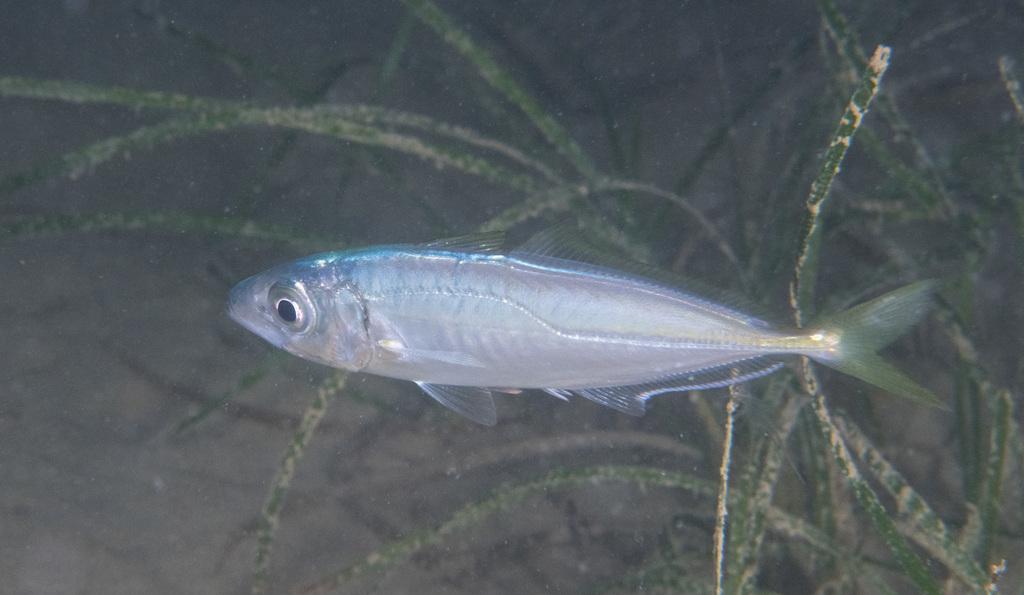
Atlantic horse mackerel
- Family
- Carangidae
- Depth
- 0–1050 m
- Season
- Jan, Feb, Mar, Apr, May, Jun, Jul, Aug, Sep, Oct, Nov, Dec
Guides for this water
Technique, gear and safety guides that fit Snubnose pompano.