
Palometa
Palometa is a small, deep-bodied carangid of the western Atlantic, from Massachusetts and Bermuda through the Gulf of Mexico and the Caribbean to Argentina. It is a shallow fish, recorded from 0 to 12 m, and reaches 50 cm TL with a common length of 35 cm and 560 g. May and June are the season. Shore casting with lures and lure fishing are the methods listed.
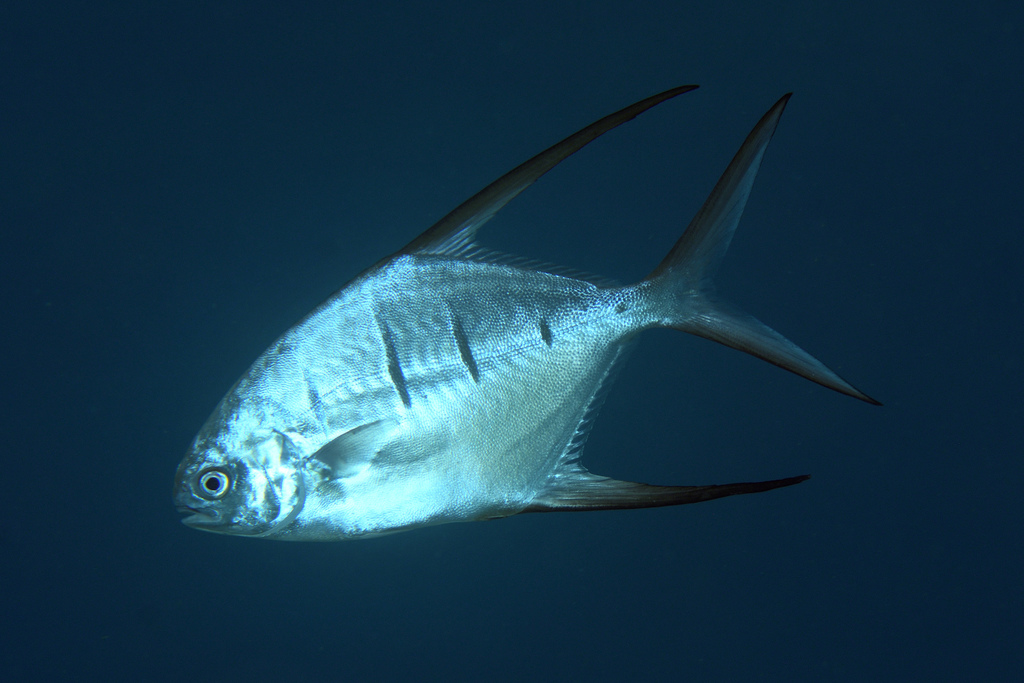
The palometa is a small, deep-bodied carangid of the western Atlantic, recorded from Massachusetts and Bermuda through the Gulf of Mexico and the Caribbean to Argentina. FishBase gives a maximum length of 50 cm TL, a common length of 35 cm and a maximum published weight of 560 g; no maturity or age figures are listed. It is a shallow-water fish of clear coastal water and sandy beaches, recorded from the surface to 12 m, and listed as a gamefish and a minor commercial species. The IUCN Red List category is LC (Least Concern), assessed on 4 February 2009.
Identification
The palometa is a compressed, deep-bodied jack with a small mouth and a deeply forked tail. FishBase records 7–8 dorsal spines and 19–20 soft rays, 2–3 anal spines and 16–18 soft rays, and very long, dark anterior lobes on the dorsal and anal fins. Those dark streamers are the most useful field mark, together with the colour: bluish silver on the back, silver on the sides, and four narrow dark bars across the upper body. The bars fade in some light, so check a photo before deciding. Florida pompano and permit share the same surf and a similar outline; separate them on fin lobes, bars and size, and confirm with a regional guide.
Habitat and distribution
Adults school in clear coastal water, usually near coral formations, while juveniles are common on clean sandy beaches. The recorded depth range is 0–12 m; the species is marine, reef-associated and subtropical (43°N–37°S). The diet is crustaceans, polychaete worms, insect pupae, molluscs and small fishes.
The range runs from Massachusetts and Bermuda through the Gulf of Mexico and the Caribbean to Argentina. GBIF holds 1,416 occurrence records, with the largest counts in Brazil (325), the United States (156), Puerto Rico (105) and the Bahamas (92). Those counts track recording effort as much as abundance; the species is widespread but rarely a dedicated target.
Season and fishing approach
The only spawning record in FishBase is May–June from Cuba, which is thin evidence for a season. Treat the warm months as the practical window and let water temperature and clarity set the day: palometa are sight-oriented fish of clear, shallow water, and a cold snap or dirty surge pushes them off the beach.
The approved methods are shore casting, shore casting with lures and lure fishing. Fish the troughs and the edges of sandbars on a moving tide, casting ahead of cruising fish instead of waiting for a bite. Small shiny jigs, spoons, teasers and flies work; bait fishermen use shrimp, sand fleas and small strips. Keep the offering small and retrieve fast; a fish that follows and refuses has usually seen the leader. Light line and a long cast matter more than a big lure.
Edibility and regulations
FishBase lists the species as a minor commercial catch, as a commercial aquaculture species and as a gamefish. The flesh is well regarded, but the same entry records ciguatera poisoning reports, so where ciguatera occurs follow local health advice and be cautious with larger fish.
No federal size, season or bag rule applies to palometa; Florida and the Gulf states may set their own, so check before keeping a fish. The IUCN category is LC (Least Concern), assessed on 4 February 2009, with CITES and CMS both Not Evaluated.
How to catch it
Shore casting lure
Fished with the listed approach, matched to the recorded depth and size.
Shore casting
Fished with the listed approach, matched to the recorded depth and size.
Lure fishing
Fished with the listed approach, matched to the recorded depth and size.
Where these facts come from
Check these pages before you rely on a size, range or protection status.
- FishBase — Trachinotus goodei — FishBase · T2
- GBIF — Trachinotus goodei occurrence records — GBIF · T2
- IUCN Red List — Trachinotus goodei — IUCN · T1
- Photo record — iNaturalist — iNaturalist · T3
Fish in the same water
These fish live in the same place.
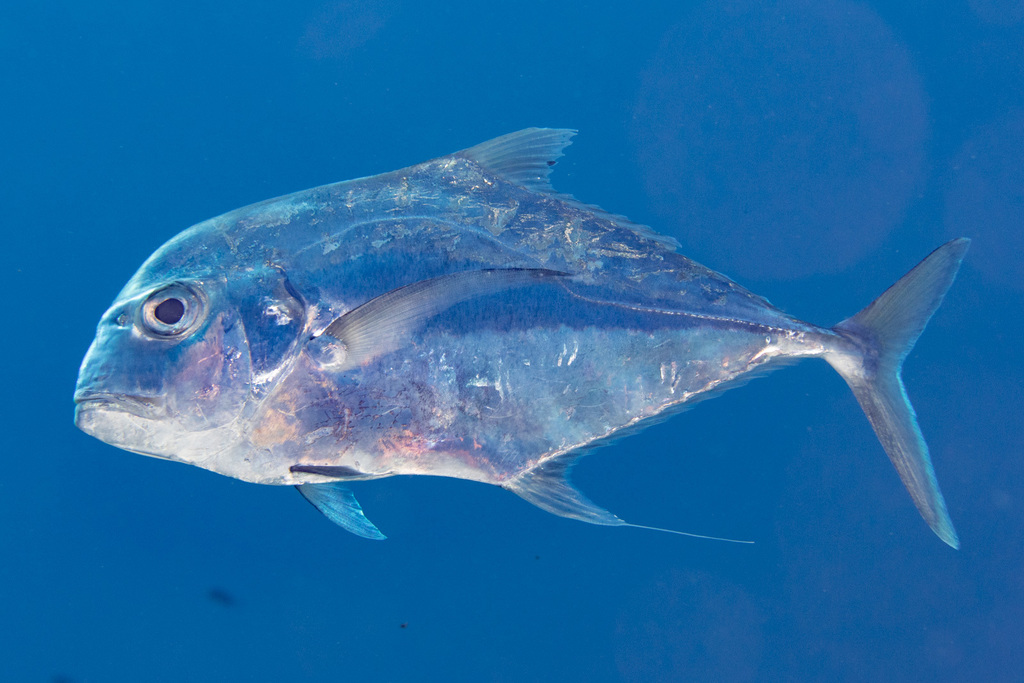
African pompano
- Family
- Carangidae
- Depth
- 60–100 m
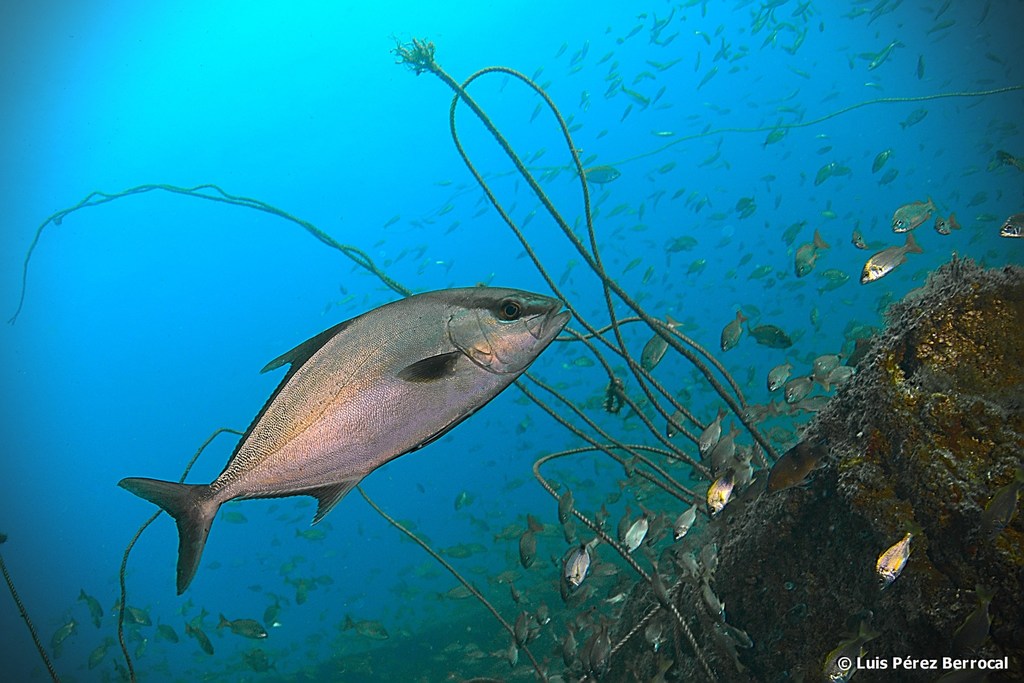
Almaco jack
- Family
- Carangidae
- Depth
- 5–245 m
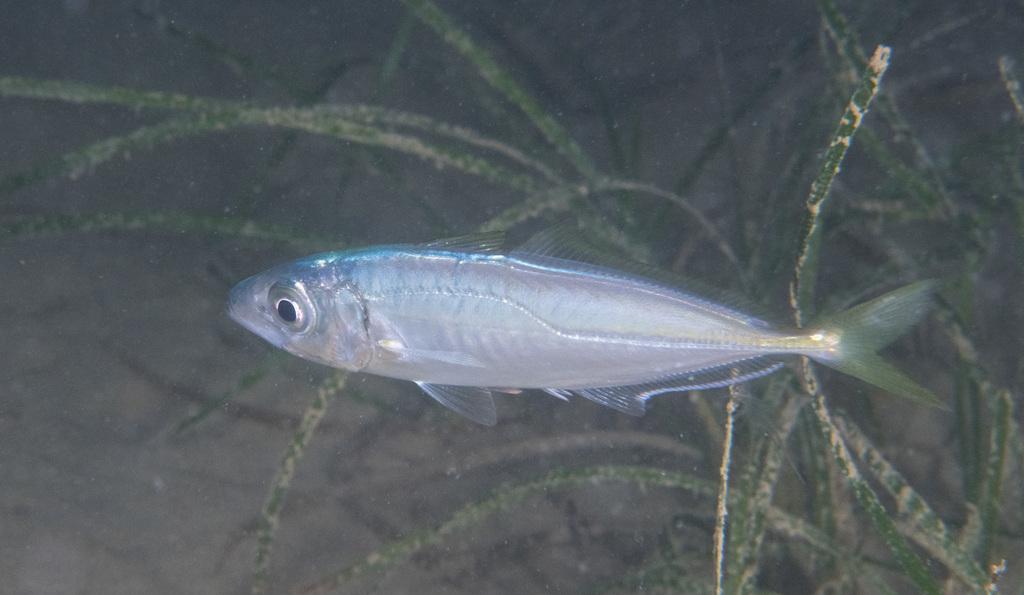
Atlantic horse mackerel
- Family
- Carangidae
- Depth
- 0–1050 m
- Season
- Jan, Feb, Mar, Apr, May, Jun, Jul, Aug, Sep, Oct, Nov, Dec
Guides for this water
Technique, gear and safety guides that fit Palometa.