
Pacific seabream in Australia — Queensland: ≥25 cm — Queensland tidal waters.
Pikey bream | Min: 25cm | Combined limit: 30 in total of pikey bream, tarwhine and yellowfin bream
Quoted from Queensland Government — Size and possession limits in tidal waters
Queensland's 30-fish possession limit for pikey bream is shared with tarwhine and yellowfin bream.
Regulation guide
Official sourcesThe name on the Queensland table
Queensland regulates the bream group in its tidal water table, and the entry that matches this species is pikey bream. The table lists pikey bream, tarwhine and yellowfin bream as three names in one group, each with its own row.
The table applies to tidal waters, which Queensland defines as waters subject to tidal influence. That includes waters with marine plants such as mangroves, seagrasses, marine algae or salt marsh, waters with salt or brackish water, and waters with a tidal ebb and flow regardless of salinity.
Freshwater limits are published separately, so an angler fishing above the tidal reach works from a different table. The department also publishes the rules through the Qld Fishing 2.0 app, which it describes as the source of the latest figures.
Source: Queensland Government: Size and possession limits in tidal waters
The 25 cm minimum
Each of the three bream entries carries a minimum size of 25 cm, so the figure does not change if a fish is misidentified within the group. The table sets a minimum only; there is no maximum size for bream.
Fish are measured from the tip of the snout to the end of the tail, and the fish must not be manipulated to increase or decrease its length.
Undersized fish must be returned to the water immediately. The measure page puts undersized, oversized, no-take and closed-season fish under the same instruction, so a bream that fails the 25 cm check is released without delay.
Source: Queensland Government: Size and possession limits in tidal waters · Queensland Government: Measure your catch
The Limit column is a possession limit
The bream entries share a combined possession limit of 30 in total of pikey bream, tarwhine and yellowfin bream. The column heading is possession limit, not bag limit.
Queensland defines a possession limit as the total number of fish a person can legally take and keep at any single time. It is not a daily limit, and it includes fish kept at home, including fish in the freezer.
A mixed bag is counted as one total across the three species, so 10 pikey bream, 10 tarwhine and 10 yellowfin bream reaches the limit. The general possession limit of 20 for unlisted tidal species does not apply, because the bream group has its own entry.
Because the limit is a possession limit, a fisher who already holds 30 bream at home cannot keep another one, even on a new day.
Source: Queensland Government: Size and possession limits in tidal waters
No boat limit and no closed season
The bream entries carry no boat limit in the tidal table. The control is the combined possession limit of 30, which applies to the individual fisher rather than to the boat.
Queensland's tidal closed seasons cover Australian bass, barramundi, black jewfish, coral reef fin fish, snapper and pearl perch, Spanish mackerel, spanner crab and tropical rocklobster. Bream is not on that list.
Closed waters are separate from closed seasons and can apply regardless of species, for example where fish gather before spawning or where a barrier concentrates them. The absence of a bream closed season therefore does not mean every area is open.
Source: Queensland Government: Size and possession limits in tidal waters · Queensland Government: Closed seasons and waters · Queensland Department of Primary Industries: Closed seasons in tidal waters
Gear in tidal waters
Anglers may use up to three fishing lines with no more than six hooks in total, in any configuration. An artificial fly, lure, bait jig or gang hook counts as one hook.
A line may be handheld or attached to a rod and reel, but cross lines, drum lines, free-floating lines and set lines are prohibited, and anglers must stay with their lines.
Jagging or foul hooking is prohibited, as is using underwater breathing apparatus other than a snorkel to catch fish. A crab hook and gear stretched across a waterway so that it blocks more than half the width are also prohibited.
Telling the bream apart
The three bream names sit in one table with the same size and the same combined limit, so a mistake inside the group does not change the number that applies.
The group does not include every fish called bream. The table lists other species under their own headings, and the general possession limit of 20 applies to tidal species that are not listed at all.
The department points anglers to its fish species identification guide and the Qld Fishing 2.0 app when the catch is uncertain. For a bream, the practical check is the 25 cm minimum and the combined count of 30.
Source: Queensland Government: Size and possession limits in tidal waters
What to check before keeping a bream
Check 25 cm from snout to tail, and return the fish immediately if it is under.
Count pikey, tarwhine and yellowfin bream together against 30, and remember that the count includes fish at home and in the freezer.
Identify the fish before it goes in the bag, because the size and the limit are shared but the entry is still species-specific.
Source: Queensland Government: Size and possession limits in tidal waters · Queensland Government: Measure your catch
Official pages: Queensland Government: Size and possession limits in tidal waters · Queensland Government: Measure your catch · Queensland Government: Closed seasons and waters · Queensland Department of Primary Industries: Closed seasons in tidal waters · Queensland Government: Fishing gear
Pacific seabream regulations at a glance
1 jurisdictions| Jurisdiction | Area | Size | Bag | Season / closure | Closed area | Other |
|---|---|---|---|---|---|---|
| Australia — Queensland | Queensland tidal waters | ≥25 cm | — | — | — | — |
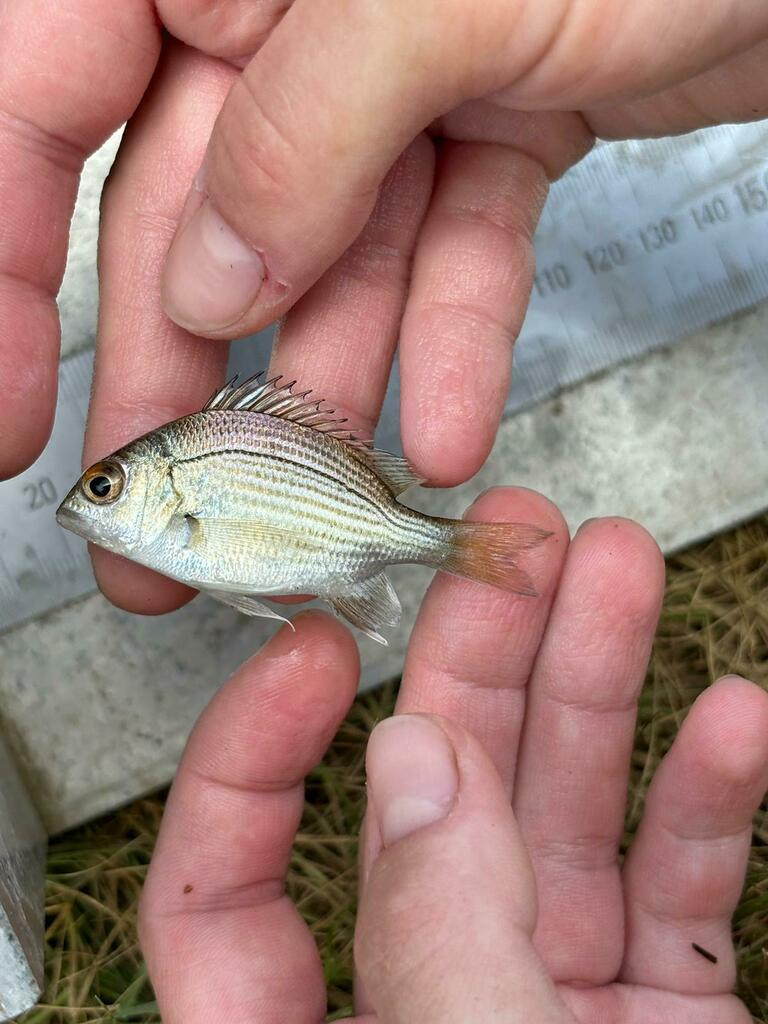
Pacific seabream
Acanthopagrus pacificus · Sparidae
Pacific seabream is an estuarine and inshore sparid of the western Pacific, recorded from southern Japan south to Australia and east through the western Pacific islands. It enters river mouths, tidal creeks and sheltered bays, and also works rocky shorelines, which is why shore casters, rock anglers and small-boat fishermen all meet it. FishBase gives a maximum of 50 cm standard length and 34.8 cm for females, with maturity from about 21 cm.
- Family
- Sparidae
- Max length
- 50 cm SL
- IUCN
- LC
- Climate
- Tropical
Pacific seabream is an estuarine and inshore sparid of the western Pacific, recorded from southern Japan south to Australia and east through the western Pacific islands. It enters river mouths, tidal creeks and sheltered bays, and also works rocky shorelines, which is why shore casters, rock anglers and small-boat fishermen all meet it. FishBase gives a maximum of 50 cm standard length and 34.8 cm for females, with maturity from about 21 cm. IUCN lists it as Least Concern, assessed in 2014.
Techniques
- Bottom fishing —
- Lure fishing —
Seasonality
Other AU-QLD regulations
Same jurisdictionBefore you keep a fish
- Read the recorded value. It is copied from the notice; if the number and the notice disagree, the notice wins.
- Check the area. Federal, state and local waters can set different limits for the same fish.
- Check the date. Seasons, quotas and closures change; confirm the current notice before you go.
Common questions
- What is the minimum size for Pacific seabream in Australia — Queensland?
- ≥25 cm
- Where does this regulation apply?
- Queensland tidal waters
- When was it checked?
- 2026-11-18, against Queensland Government — Size and possession limits in tidal waters.