
Lehi in Australia — Queensland: ≥25 cm (tropical snapper group default) — Queensland tidal waters.
Tropical snappers and sea perch | Min: 25cm | Limit: 5 per species
Quoted from Queensland Government — Size and possession limits in tidal waters
Lehi is not listed by name in the Queensland table; the 25 cm and 5-per-species figures are the group defaults. Confirm placement with Queensland Fisheries before relying on them.
Regulation guide
Official sourcesWhere Lehi sits in Queensland's rules
Lehi (Aphareus rutilans) is a jobfish that Queensland regulates inside its tropical snapper and seaperch group. Queensland is the only jurisdiction covered here that sets rules for it.
Queensland manages the species as a coral reef fin fish rather than as a standalone species. That matters more than the species entry itself, because the coral reef fin fish rules impose a combined possession ceiling, two annual closures and a set of on-board filleting conditions that apply regardless of the individual species limit.
The rules below are Queensland state rules for tidal waters. They are not Commonwealth rules and do not extend to other states.
Source: Queensland Government: Size and possession limits in tidal waters · Queensland Fisheries (General) Regulation 2019, Schedule 7
Queensland does not list Lehi by name
Queensland's tidal-water table names green jobfish, smalltooth jobfish, flame snapper, ruby snapper, goldband snapper and a number of other tropical snappers individually. Lehi is not one of them, and the state's fish species identification guide has no Lehi entry.
The species is still inside the regulated coral reef fin fish list. Schedule 7 of the Fisheries (General) Regulation 2019 includes a category described as miscellaneous jobfish and snapper, covering Aphareus spp. and several other genera, and Lehi is Aphareus rutilans.
Because there is no Lehi row, two figures on the Queensland page could be read as applying. The tropical snapper and seaperch group row carries a 25 cm minimum and a possession limit of 5 per species; the page also states that a tidal species not listed on it takes the general possession limit of 20. No 38 cm figure appears for Lehi anywhere in the table. The 38 cm entries belong to named species such as green jobfish, flame snapper, ruby snapper and smalltooth jobfish, which is Aphareus furca.
Source: Queensland Government: Size and possession limits in tidal waters · Queensland Fisheries (General) Regulation 2019, Schedule 7 · Queensland Government: Fish species identification
The 20-fish coral reef fin fish ceiling
Queensland applies a combined possession limit of 20 in total for all coral reef fin fish. That limit sits above the individual species figures and caps the whole reef catch, so a fisher holding a mix of jobfish, snapper and emperors cannot use separate species allowances to exceed 20 reef fish.
The combined limit is a possession limit, not a daily bag limit. Queensland defines a possession limit as the total number of fish a person may legally take and keep at any one time, and says that it includes fish held at home, including in the freezer.
For Lehi specifically, this is the one figure that is not in doubt. Even if the species-level allowance is argued, the combined coral reef fin fish limit of 20 applies because Aphareus spp. is on the regulated list.
Source: Queensland Government: Size and possession limits in tidal waters · Queensland Fisheries (General) Regulation 2019, Schedule 7
Two five-day closures each October and November
Queensland closes the coral reef fin fish fishery for two five-day periods in October and November each year. The published 2026 dates are 8 to 12 October and 6 to 10 November; the 2027 dates are 26 to 30 October and 25 to 29 November.
During a closure it is an offence to take coral reef fin fish, or to possess coral reef fin fish taken in the regulated waters. The regulated waters run along the Queensland east coast from the northern tip of Cape York to a boundary at about latitude 24 degrees 50 minutes south, with the outer edge set by a series of listed coordinates.
The species pages carry a narrow exception for recreational fishers. A regulated coral reef fin fish may be kept on a boat in the regulated waters during a closure if it was taken outside those waters and is to be eaten on board a boat that carries no fishing line, spear or speargun; there is a separate allowance for charter trips of at least 24 continuous hours.
Source: Queensland Department of Primary Industries: Closed seasons in tidal waters · Queensland Government: Size and possession limits in tidal waters
Filleting and live fish on board
Queensland allows coral reef fin fish to be kept on board a boat whole and dead, gilled, gutted or filleted. Fillets must be at least 40 cm long, with skin and scales left on.
A live fish may be kept on board only where it is going to be displayed in an aquarium. The page excepts coral trout and redthroat emperor from that allowance, so those two cannot be kept alive on a boat at all.
Outside the coral reef fin fish group, the general tidal rule is stricter: fillets cannot be kept on board with the skin removed, and fish may only be divided into portions if an inspector can easily count them. A Lehi kept as fillets therefore has to clear the 40 cm fillet length and keep its skin and scales.
Source: Queensland Government: Size and possession limits in tidal waters
Measuring and licensing
Queensland measures fish from the tip of the snout to the end of the tail, and prohibits manipulating a fish to increase or decrease its length. A Lehi has to be measured on that total-length basis whatever figure is applied to it.
No recreational fishing licence is required to fish in Queensland waters, apart from some stocked impoundments. The absence of a licence does not reduce the reporting or compliance obligations that come with the closures.
Because the species is not named in the table, an angler who intends to keep one should confirm the current figure with the Queensland department before relying on a number taken from a secondary source.
Source: Queensland Government: Measure your catch · Queensland Government: Fishing rules and licensing · Queensland Government: Size and possession limits in tidal waters
What to check before keeping a Lehi
Check the date against the two October and November closures before targeting reef fish, and check whether the boat is inside the regulated waters if any reef fish are on board.
Count the fish against the combined coral reef fin fish possession limit of 20, remembering that fish at home count. Treat any species-level figure for Lehi as provisional until the department confirms it, because the published table does not name the species.
Measure from the snout to the end of the tail. If the fish is filleted, keep the fillets at least 40 cm long with skin and scales on.
Source: Queensland Department of Primary Industries: Closed seasons in tidal waters · Queensland Government: Size and possession limits in tidal waters
Official pages: Queensland Government: Size and possession limits in tidal waters · Queensland Department of Primary Industries: Closed seasons in tidal waters · Queensland Government: Measure your catch · Queensland Fisheries (General) Regulation 2019
Lehi regulations at a glance
1 jurisdictions| Jurisdiction | Area | Size | Bag | Season / closure | Closed area | Other |
|---|---|---|---|---|---|---|
| Australia — Queensland | Queensland tidal waters | ≥25 cm (tropical snapper group default) | 5 fish possession limit (group default) | — | — | — |
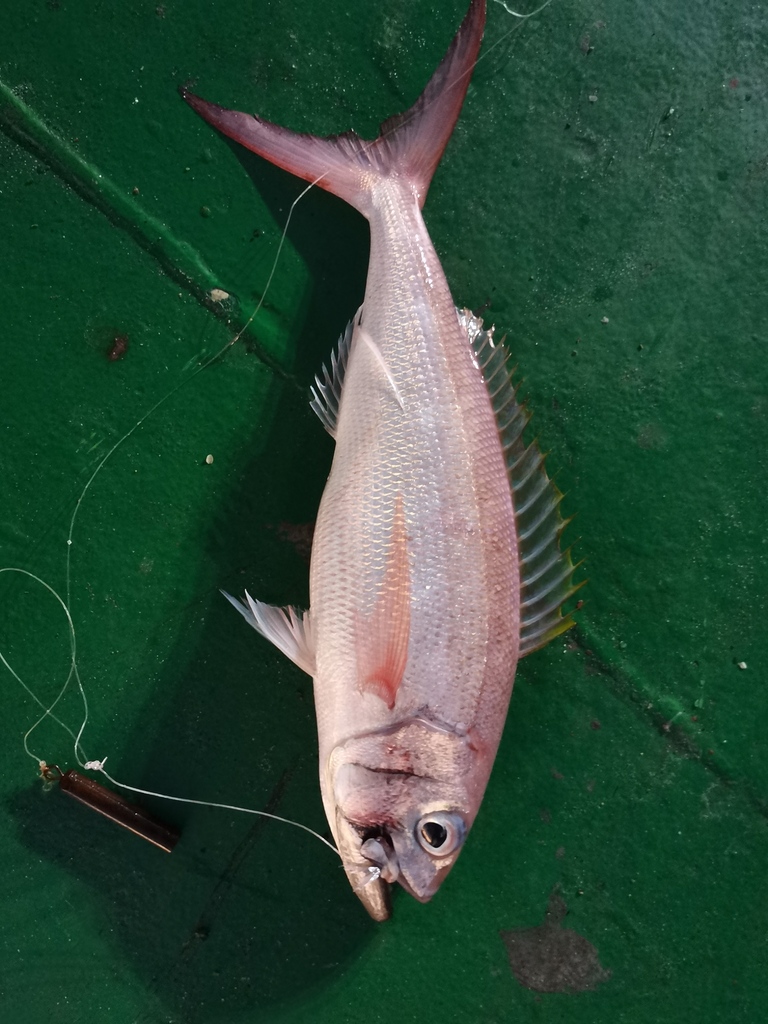
Lehi
Aphareus rutilans · Lutjanidae
The build is elongate and laterally compressed, lighter than most snappers of the same length. Several characters together make the identification reliable. The lower jaw protrudes slightly, and the premaxillae are not protrusible, being fixed by a frenum, which is unusual among snappers. The jaw teeth are extremely small, minute in large adults, and the roof of the mouth is toothless.
- Family
- Lutjanidae
- Max length
- 110 cm
- Max weight
- 11.3 kg
- Max age
- 16 years
- Depth
- 100–330 m
- IUCN
- LC
- Climate
- Tropical
The build is elongate and laterally compressed, lighter than most snappers of the same length. Several characters together make the identification reliable. The lower jaw protrudes slightly, and the premaxillae are not protrusible, being fixed by a frenum, which is unusual among snappers. The jaw teeth are extremely small, minute in large adults, and the roof of the mouth is toothless. Gill rakers on the first arch total 49–52, the last soft ray of both dorsal and anal fins is produced, and the caudal fin is forked. Colour runs from blue-grey or mauve to overall reddish, with a black margin on the maxilla, a shining silver lining inside the mouth and gill chamber, and yellowish to reddish fins. The tubed lateral-line scales number 69–75. Taken together, these marks are safer than the word red.
Techniques
- Deep bottom fishing —
- Jigging —
Seasonality
Other AU-QLD regulations
Same jurisdictionBefore you keep a fish
- Read the recorded value. It is copied from the notice; if the number and the notice disagree, the notice wins.
- Check the area. Federal, state and local waters can set different limits for the same fish.
- Check the date. Seasons, quotas and closures change; confirm the current notice before you go.
Common questions
- What is the minimum size for Lehi in Australia — Queensland?
- ≥25 cm (tropical snapper group default)
- Where does this regulation apply?
- Queensland tidal waters
- When was it checked?
- 2026-11-18, against Queensland Government — Size and possession limits in tidal waters.