
Japanese meagre in Australia — Western Australia: ≥500 mm — Western Australia — statewide.
"Mulloway (caught primarily south of Exmouth Gulf) Argyrosomus japonicas 500 mm 2"
Quoted from WA DPIRD — Recreational fishing guide 2026 (bag, size and possession limits)
Regulation guide
Official sourcesMulloway, Japanese meagre and other names
Mulloway is the Australian name for the fish this guide lists as Japanese meagre. The New South Wales Department of Primary Industries and Regional Development gives the scientific name as Argyrosomus japonicus or hololepidotus, while the Victorian Fisheries Authority lists mulloway as Argyrosomus japonicus.
New South Wales describes mulloway as a coastal species found from Rockhampton in Queensland to North West Cape in Western Australia, excluding Tasmania, reaching about 60 kg and 1.8 m. The rules in this dossier come from two states, Victoria and New South Wales, and they differ in both size and bag limit.
Source: NSW DPIRD: Mulloway · VFA: Mulloway
Victoria: 60 cm and five fish
Victoria sets a 60 cm minimum legal size and a bag limit of five mulloway per person per day. The limit applies to fish taken on any one calendar day while in, on or next to Victorian waters and to fish possessed there.
Victorian definitions measure fish from the tip of the snout with the mouth closed to the end of the tail, require legal size to be checked quickly, and require fish outside the legal range to be returned immediately and without harm. Once the bag limit is reached, an angler cannot keep fishing for other people or upgrade the catch by releasing smaller fish.
Source: VFA: Mulloway · VFA: Fishing definitions
New South Wales: 70 cm and one fish
New South Wales sets a 70 cm minimum legal length and a daily bag limit of one mulloway per person. A boat limit of two mulloway per boat per day applies when two or more fishers are on board, and the charter boat limit is three per boat per day.
Mulloway is not one of the species with a doubled possession limit, so the possession limit is the same as the daily bag limit. Boat limits apply regardless of how many people are in the boat, and the department lists only gemfish and mulloway as saltwater species with a boat limit.
Source: NSW DPIRD: Saltwater bag and size limits · NSW DPIRD: Recreational fishing rule definitions
Mulloway or teraglin
New South Wales lists teraglin as the species most easily confused with mulloway. The end of the mulloway's caudal fin is convex, or rounded, while the caudal fin of teraglin is concave.
Mulloway are mostly silver with a blue-grey, green or bronze back, a line of silver-white spots following the lateral line and sometimes a black mark at the base of the pectoral fin. Because the tail shape separates the two species, it is worth checking before a fish is measured against the mulloway limit.
Source: NSW DPIRD: Mulloway · NSW DPIRD: Saltwater bag and size limits
Measuring and cleaning
In New South Wales fish are measured from the point of the nose to the tip of the tail. The department warns that fish can shrink after capture, so a fish close to the minimum should be measured with care.
It is illegal in New South Wales to alter a fish, for example by filleting or removing the head or tail, until well away from the water. Fish may be cleaned by gilling and gutting only. The rule does not apply at areas normally used for cleaning fish such as boat-ramp cleaning tables, for fish for immediate consumption or immediate use as bait, or for fish without a legal length, and any altered fish must still meet the legal size.
Source: NSW DPIRD: How to measure fish · NSW DPI: Saltwater recreational fishing rules summary
Licences and fees
Victoria requires a Recreational Fishing Licence to take or attempt to take fish, or to use or possess fishing gear in, on or next to Victorian waters, unless the fisher is exempt. Exemptions include people under 18, people 70 or over, Seniors Card holders, holders of specified veterans and pensioner cards, and Aboriginal and Torres Strait Islander people, and a licence cannot be lent to another person.
New South Wales requires the NSW Recreational Fishing Fee and the fisher must carry the receipt. The fee also applies to spearfishing, hand gathering, bait collecting and possession of gear in, on or adjacent to waters, and at the time of the department's October 2025 summary it was $7 for 3 days, $14 for 1 month, $35 for 1 year and $85 for 3 years.
New South Wales fee exemptions include people under 18, Aboriginal people, people fishing in a private dam of two hectares or less, and holders of a current Pensioner Concession Card or specified Department of Veterans' Affairs cards. Seniors Cards and Health Care Cards do not qualify.
Source: VFA: Fishing licence · NSW DPI: Saltwater recreational fishing rules summary · NSW DPIRD: Recreational fishing fee exemptions
Before you keep a mulloway
The same fish is legal at 60 cm in Victoria and 70 cm in New South Wales, so the first check is the border. Victoria allows five fish per day; New South Wales allows one, with a boat limit of two, or three on a charter boat.
Check the tail before keeping a fish, because teraglin is easily confused with mulloway. In New South Wales, keep the fish whole or gilled and gutted until well away from the water, and carry the fishing fee receipt; in Victoria, carry the licence or exemption card and measure from snout to tail.
Source: VFA: Mulloway · NSW DPIRD: Saltwater bag and size limits · NSW DPIRD: Mulloway
Official pages: VFA: Mulloway · VFA: Fishing licence · NSW DPIRD: Saltwater bag and size limits · NSW DPIRD: Mulloway · NSW DPIRD: How to measure fish · NSW DPIRD: Recreational fishing fee exemptions
Japanese meagre regulations at a glance
5 jurisdictions| Jurisdiction | Area | Size | Bag | Season / closure | Closed area | Other |
|---|---|---|---|---|---|---|
| Australia — New South Wales | New South Wales | ≥70 cm | 1 fish per person per day · boat limit 2 (charter boat limit 3) | — | — | — |
| Australia — Queensland | Queensland tidal waters | ≥75 cm | 2 fish possession limit | — | — | — |
| Australia — South Australia | South Australia — all fishing zones | ≥82 cm | 2 fish per person per day · 6 per boat | — | — | — |
| Australia — Victoria | Victorian waters | ≥60 cm | 5 fish per person per day | — | — | — |
| Australia — Western Australia | Western Australia — statewide | ≥500 mm | 2 fish per person per day | — | — | — |
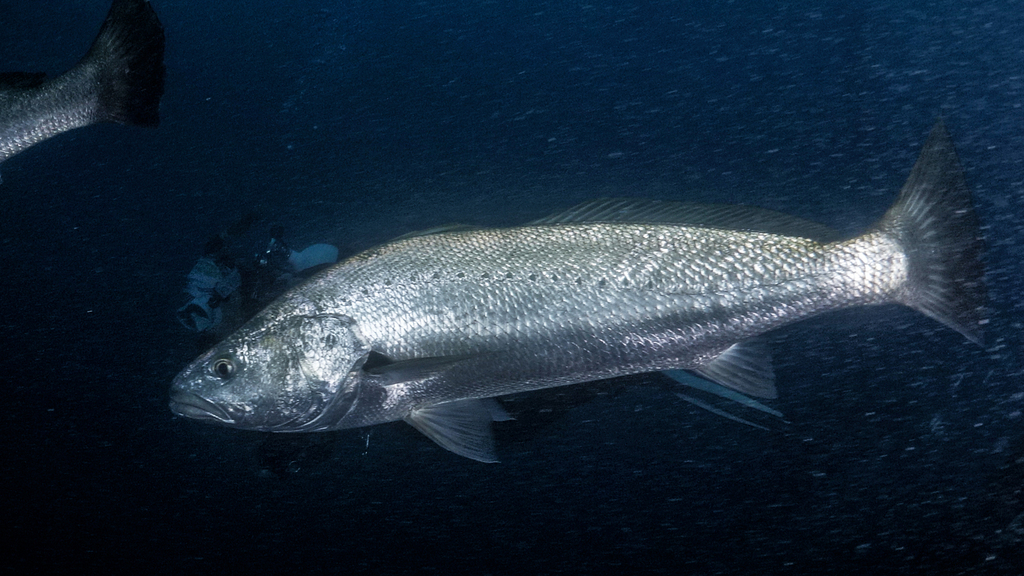
Japanese meagre
Argyrosomus japonicus · Sciaenidae
One line of the record carries three economic identities: commercial fishery, commercial aquaculture, and gamefish: yes. A few lines below, the same page places the species in Endangered, assessed in September 2018. Those statements do not cancel each other; they are different economies looking at one fish.
- Family
- Sciaenidae
- Max length
- 181 cm TL
- Max weight
- 75 kg
- IUCN
- EN
- Climate
- Tropical
- Diet
- fishes
One line of the record carries three economic identities: commercial fishery, commercial aquaculture, and gamefish: yes. A few lines below, the same page places the species in Endangered, assessed in September 2018. Those statements do not cancel each other; they are different economies looking at one fish. The angler meets a fourth.
Seasonality
Other AU-WA regulations
Same jurisdictionBefore you keep a fish
- Read the recorded value. It is copied from the notice; if the number and the notice disagree, the notice wins.
- Check the area. Federal, state and local waters can set different limits for the same fish.
- Check the date. Seasons, quotas and closures change; confirm the current notice before you go.
Common questions
- What is the minimum size for Japanese meagre in Australia — Western Australia?
- ≥500 mm
- Where does this regulation apply?
- Western Australia — statewide
- When was it checked?
- 2026-11-18, against WA DPIRD — Recreational fishing guide 2026 (bag, size and possession limits).
- Do other jurisdictions set different limits?
- Yes. This register lists 5 jurisdictions for Japanese meagre; compare them in the table above.