
Bluefish in United States — federal (Atlantic): No minimum size · 5 fish per person per day (private anglers) · 7 fish per person per day (party/charter) · all year — US federal Atlantic waters (New England/Mid-Atlantic).
Open season : All year Minimum size : None Possession limit : - Private Anglers: 5 fish per day - Party/Charter Anglers: 7 fish per day
Quoted from NOAA Fisheries — Recreational Fishing Regulations by Species
Regulation guide
Official sourcesWho manages Atlantic bluefish
Atlantic bluefish (Pomatomus saltatrix) are managed jointly by NOAA Fisheries, the Mid-Atlantic Fishery Management Council and the Atlantic States Marine Fisheries Commission (ASMFC). The federal regulations sit at 50 CFR part 648 subpart J, and the fishery operates under the Bluefish Fishery Management Plan.
The 2025 management track assessment found the stock was not overfished and was not experiencing overfishing in 2024. The stock remains in the seven-year rebuilding plan adopted through Amendment 2 in 2021, which NOAA lists with a target completion date of 2029.
Bluefish are highly migratory along the US Atlantic coast between Maine and Florida. Because the same stock moves through federal waters and state waters, two sets of rules apply, and which one governs depends on where the fish is taken.
Source: NOAA Fisheries: Bluefish · NOAA Fisheries: Bluefish Management · ASMFC: Bluefish · eCFR: 50 CFR Part 648 Subpart J
Federal waters: five fish private, seven for hire
In federal Atlantic waters, the recreational bag limit depends on the type of trip. NOAA lists 5 bluefish per person per day for private recreational vessels and 7 per person per day for party or charter vessels holding the relevant federal for-hire permit.
Those figures are the 2026 Atlantic bluefish recreational specifications, which run from 1 January to 31 December 2026. NOAA describes the federal bag limit as a possession limit and applies it per person, per day. The 2026 and 2027 limits were set after the 2025 assessment; they are annual specifications, not a permanent entitlement.
There is no federal size limit for recreational bluefish, so an angler fishing federal waters does not measure the fish against a federal minimum. NOAA advises anglers to check state or regional measures that may also apply. The recreational fishery uses hook-and-line gear.
Source: NOAA Fisheries: Bluefish · ASMFC: Bluefish
State waters and the ASMFC interstate plan
Inside state waters, bluefish are managed through the ASMFC Interstate Fishery Management Plan for Bluefish, which covers states from Maine to Florida. The plan is the mechanism for keeping state measures compatible with the federal plan.
ASMFC records that, from 2020, the coastwide recreational limit was 3 fish per day for private anglers and shore-based anglers and 5 fish per day for for-hire anglers. With the higher recreational harvest limit for 2026 and 2027, the coastwide limits rose to 5 fish for private anglers and 7 fish for for-hire anglers.
States implement the interstate plan through their own rules, so the ASMFC coastwide figure is a baseline. The state regulation for the water being fished remains the operative rule, and it may add a size, gear or seasonal condition that does not appear in the federal measure.
Source: ASMFC: Bluefish · ASMFC: Bluefish Recreational Measures 2026/2027
Allocation, quotas and rebuilding
Amendment 2 allocates 86% of the resource to recreational fisheries and 14% to commercial fisheries. The commercial share is divided into state-by-state quotas based on historical landings and phased in over seven years.
Managers set an annual catch limit, and a limited amount of quota may be transferred between sectors when one is not expected to use its allocation. NOAA also notes that unused recreational catch can be reallocated to commercial fisheries. Commercial fishers need a federal permit to catch and sell bluefish.
The rebuilding plan stays in place until spawning stock biomass reaches its target. ASMFC reported 2024 biomass at 170 million pounds, 89% of the target, and scheduled the next management track assessment for 2027.
Source: NOAA Fisheries: Bluefish Management · ASMFC: Bluefish
Reporting and permits
Private recreational anglers have no federal bluefish catch-reporting requirement. NOAA's recreational estimates come from the Marine Recreational Information Program, which the agency describes as voluntary coordinated data-collection programs.
For-hire vessels with a federal charter/party permit to fish for bluefish must keep a vessel trip report on board and submit one for every trip, whatever species are retained. The report must be submitted electronically within 48 hours after entering port at the end of a trip.
Federally permitted vessels must carry an observer if randomly selected. Commercial vessels holding a federal bluefish permit also submit vessel trip reports electronically.
Source: NOAA Fisheries: Bluefish
Before you keep a bluefish
Start with the water. In federal waters the trip type sets the bag: 5 fish per person on a private vessel and 7 per person on a party or charter vessel, with no federal size limit.
Then check the landing state's rule. The ASMFC plan is implemented through state regulations, and a state may apply its own size, bag or gear measure, so a bluefish that is legal offshore may not be legal everywhere inshore.
Check the year as well. The federal and coastwide limits were raised for 2026 and 2027 from the earlier 3-fish and 5-fish levels. An older guide, or a chart that predates the change, is not a reliable reference for the current season.
Source: NOAA Fisheries: Bluefish · ASMFC: Bluefish
Official pages: NOAA Fisheries: Bluefish · NOAA Fisheries: Bluefish Management · ASMFC: Bluefish · ASMFC: Bluefish Recreational Measures 2026/2027 · eCFR: 50 CFR Part 648 Subpart J
Bluefish regulations at a glance
7 jurisdictions| Jurisdiction | Area | Size | Bag | Season / closure | Closed area | Other |
|---|---|---|---|---|---|---|
| United States — Maine | Maine territorial waters | — | No minimum size · 5 fish per angler per day | — | — | — |
| United States — Massachusetts | Massachusetts state waters | — | No minimum size · 5 fish per person per day (7 on for-hire vessels) · year round | — | — | — |
| United States — New York | New York Marine and Coastal District | — | No minimum size · 5 fish per person per day (7 on for-hire) · all year | — | — | — |
| United States — North Carolina | North Carolina coastal and joint waters | — | No minimum size · 5 fish per person per day (7 on for-hire vessels) | — | — | — |
| United States — Rhode Island | Rhode Island state waters | — | No minimum size · 5 fish per person per day (7 on party/charter) · year round | — | — | — |
| United States — Virginia | Virginia marine waters | — | No minimum size · 5 fish per person per day | — | — | — |
| United States — federal (Atlantic) | US federal Atlantic waters (New England/Mid-Atlantic) | — | No minimum size · 5 fish per person per day (private anglers) · 7 fish per person per day (party/charter) · all year | — | — | — |
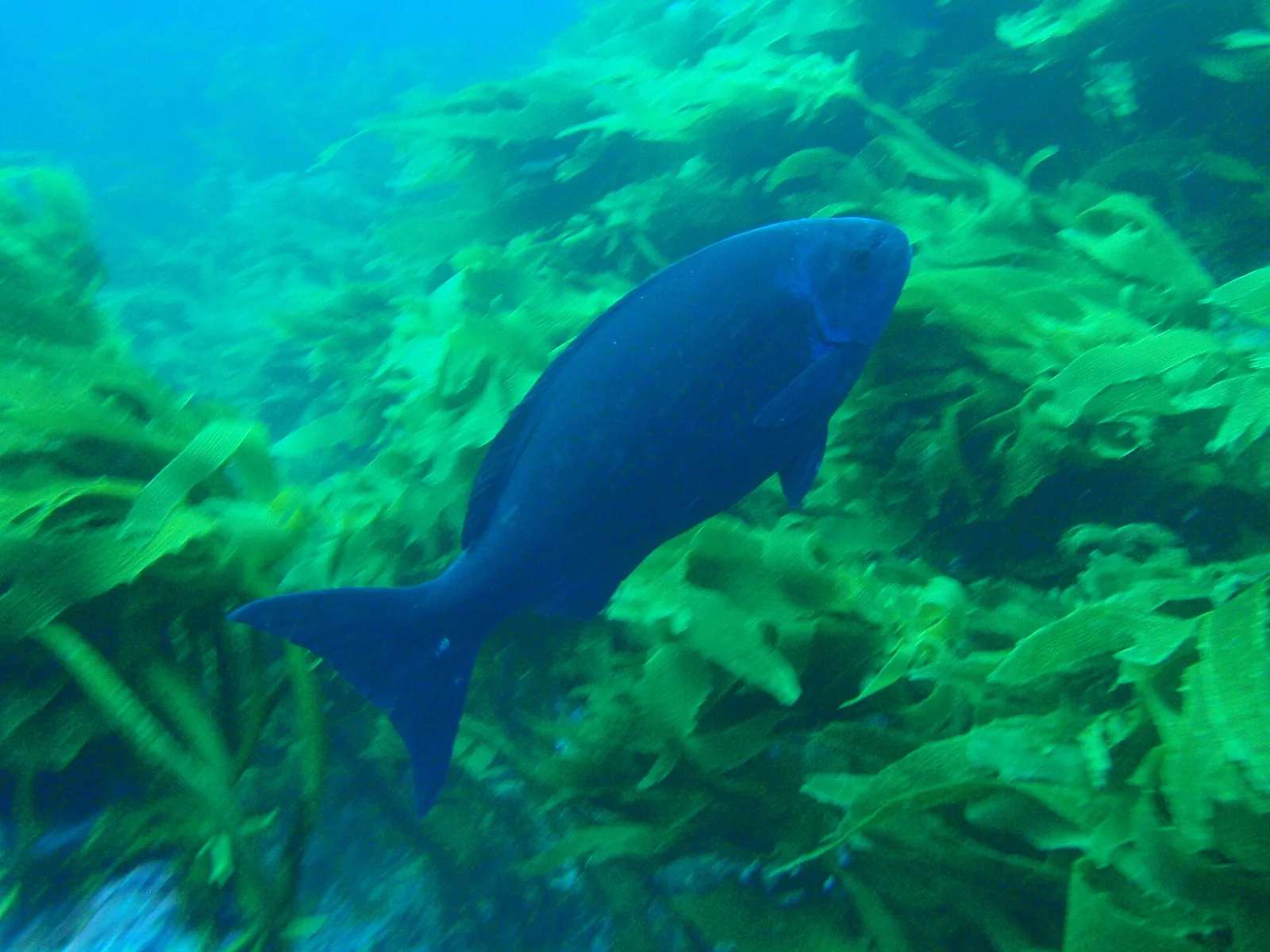
Bluefish
Pomatomus saltatrix · Pomatomidae
Bluefish carries a different name in every fishery: tailor in Australia, elf or shad in South Africa, lufer in Turkey, chopper or snapper blue in the United States. The species is the only living member of its family, so there is no close relative to compare it with. The fish behind the labels is a fast, toothy predator that blitzes bait along beaches and inlets.
- Family
- Pomatomidae
- Max length
- 130 cm TL
- Max weight
- 14.4 kg
- Max age
- 14 years
- Depth
- 0–200 m
- IUCN
- VU
- Climate
- Subtropical
- Diet
- crustaceans, fishes, molluscs
Bluefish is one fish with too many names. In Australia it is tailor, in South Africa elf or shad, in Turkey lufer, in the United States chopper or snapper blue or simply blue. Each name belongs to a different fishery, a different market and a different set of rules, and none of them travels well. The scientific name does not help much either: the species is the only living member of its family, so there is no sibling to compare it with. What follows is the fish behind the labels.
Techniques
- Shore casting —
- Trolling —
- Jigging —
Baits
- Metal spoon
- Popper
- Bunker chunk
- Swimbait
Seasonality
Peak May–SepMoving tide concentrates bait. Fish the inlet on the last of the ebb.
Blues feed in rough, cloudy conditions. NW wind after a front often brings clean water and blitzes.
Other US-FED-ATL regulations
Same jurisdictionBefore you keep a fish
- Read the recorded value. It is copied from the notice; if the number and the notice disagree, the notice wins.
- Check the area. Federal, state and local waters can set different limits for the same fish.
- Check the date. Seasons, quotas and closures change; confirm the current notice before you go.
Common questions
- What is the bag limit for Bluefish in United States — federal (Atlantic)?
- No minimum size · 5 fish per person per day (private anglers) · 7 fish per person per day (party/charter) · all year
- Where does this regulation apply?
- US federal Atlantic waters (New England/Mid-Atlantic)
- When was it checked?
- 2026-11-18, against NOAA Fisheries — Recreational Fishing Regulations by Species.
- Do other jurisdictions set different limits?
- Yes. This register lists 7 jurisdictions for Bluefish; compare them in the table above.