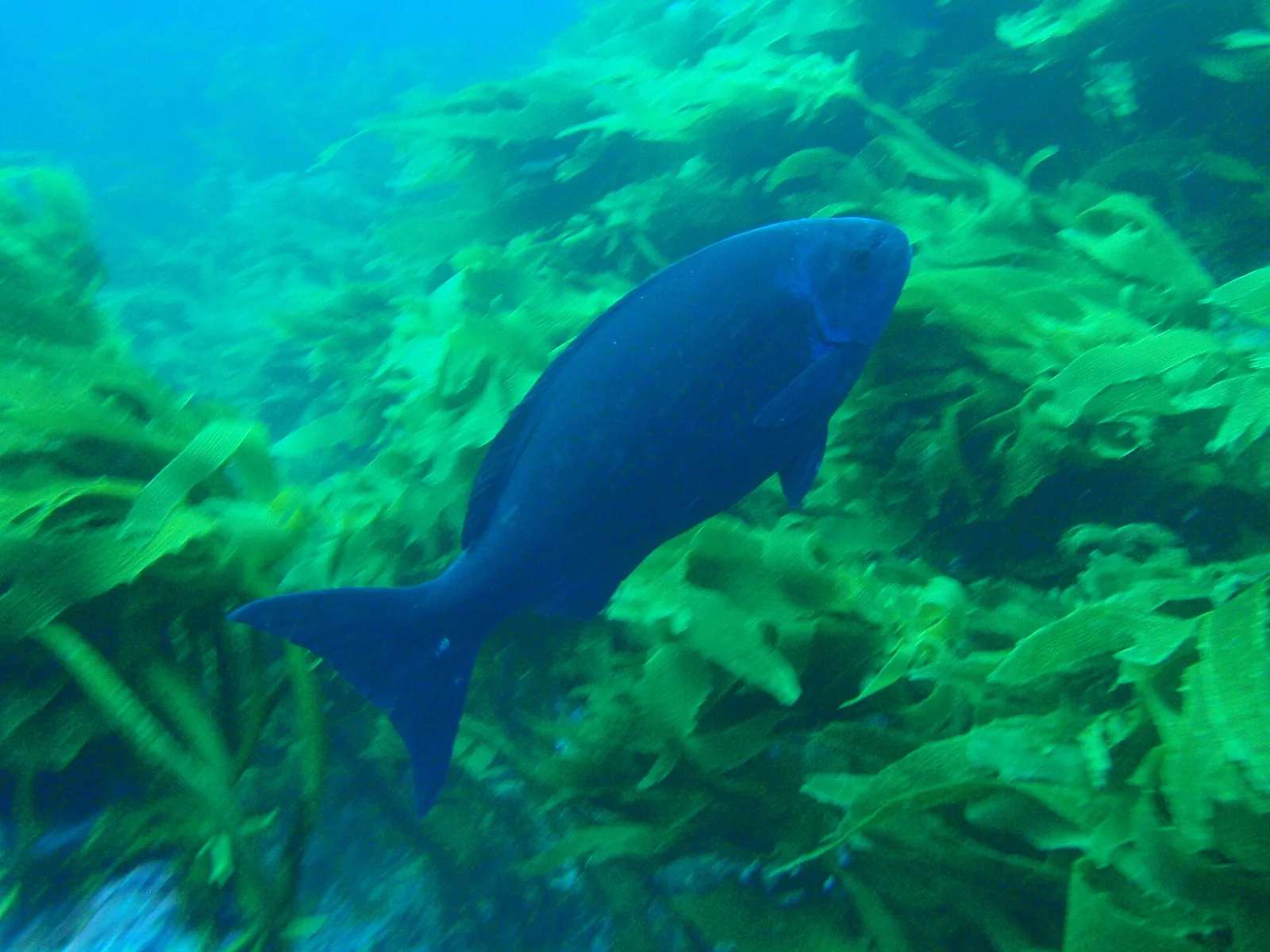
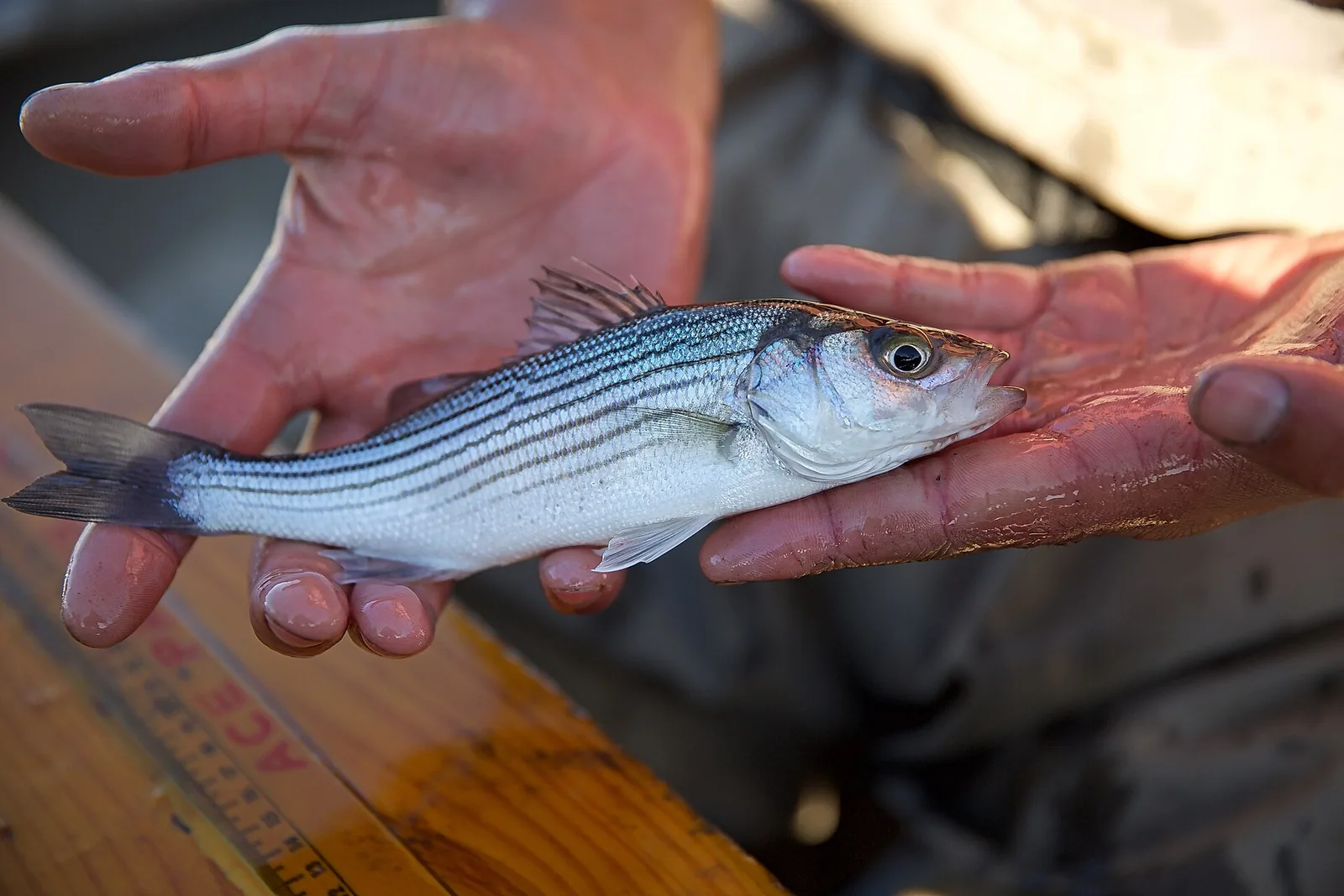
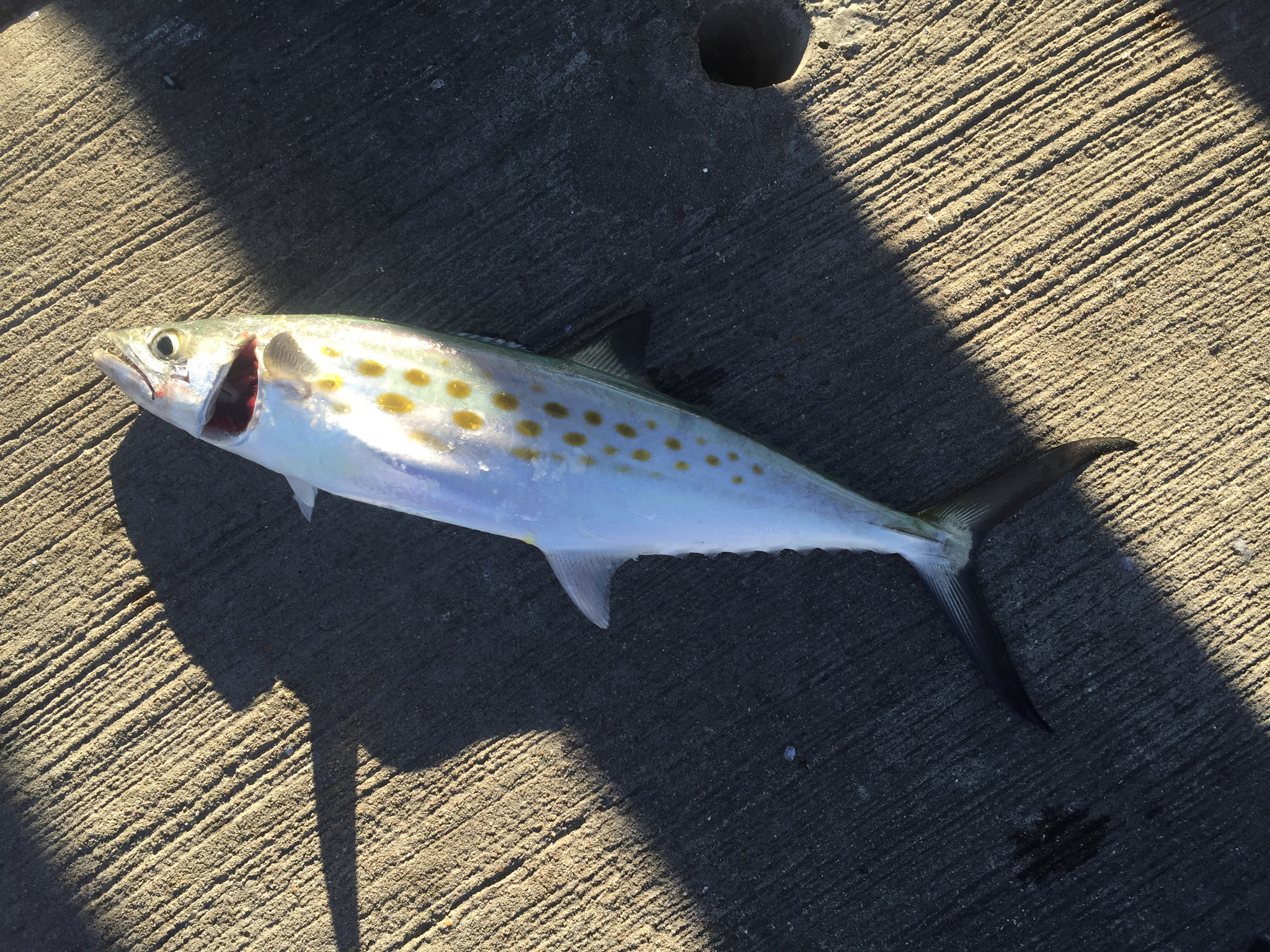
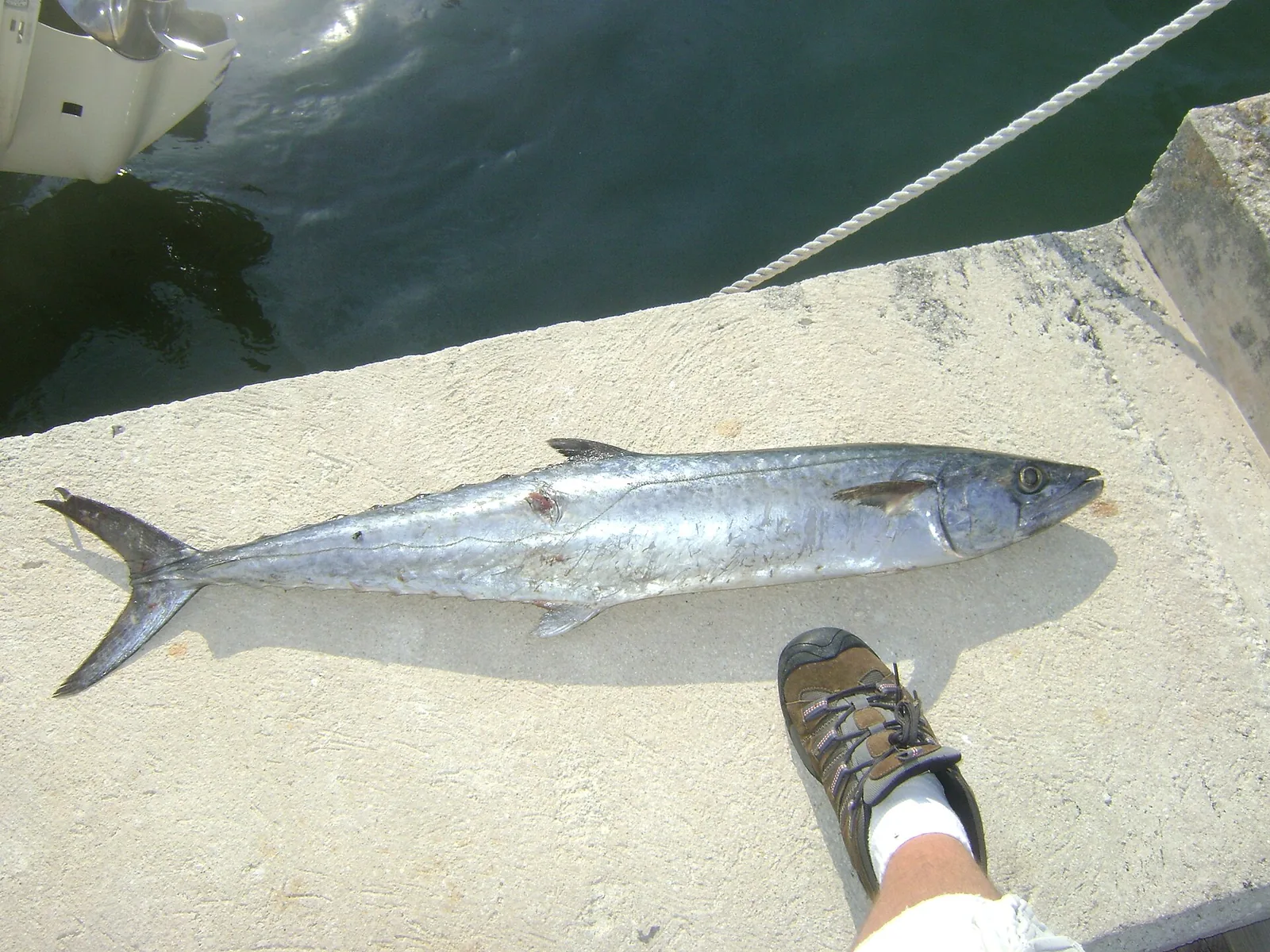
Bluefish is one fish with too many names. In Australia it is tailor, in South Africa elf or shad, in Turkey lufer, in the United States chopper or snapper blue or simply blue. Each name belongs to a different fishery, a different market and a different set of rules, and none of them travels well. The scientific name does not help much either: the species is the only living member of its family, so there is no sibling to compare it with. What follows is the fish behind the labels.
One species, five market names
The list in FishBase is long enough to be a warning: ancho, bailey leaf, big cinekop, big lufer, blue fish, Boston bluefish, choppers, elf, fatback, horsemackerel, jumbos, marine piranha, razorbacks, salmon bluefish, shad, skipmackerel. Some are regional English, some are trade names, and one is borrowed from a completely different fish — "shad" is an alosa in North America and this animal in South Africa.
The naming collision has consequences. A "snapper blue" is a young bluefish, not a snapper; a "Boston bluefish" may be a pollock in a fish market. Anyone buying or regulating the fish has to know which of those names is in play before the conversation means anything.
What the teeth are for
The body is moderately proportioned, with a broad forked tail and a spiny first dorsal fin that folds back into a groove, as do the pectoral fins. The colour is grey-blue-green above and white below. The diagnostic feature is the mouth: a single row of teeth in each jaw, uniform in size, knife-edged and sharp. FishBase counts 8–9 dorsal spines and 23–28 soft rays, 2–3 anal spines and 23–27 soft rays, a fusiform body with a compressed cross-section.
Those teeth explain the handling rules. A bluefish is one of the few inshore fish that has injured anglers badly enough to be listed as traumatogenic, and the record says so. Wading among a feeding school is not a photograph opportunity. Pliers, a wet towel and a plan for the hook are the difference between a release and an emergency room.
The blitz looks like weather
Bluefish hunt in loose groups and drive baitfish into the surf, churning the water white — the behaviour everyone calls a blitz. Wikipedia adds the detail that matters: they keep attacking the school in a feeding frenzy after they appear to have eaten their fill, and they are cannibalistic, able to destroy their own young. Prey includes menhaden and other clupeids, jacks, weakfish, grunts, striped anchovies, shrimp and squid.
For a shore angler the blitz is a timing signal, not a spot. The fish are where the bait is, and the bait is where the current and the light put it. A blitz that lasts twenty minutes may be the entire day's opportunity; a surface lure retrieved fast enough to look like a fleeing menhaden is the standard answer, and a metal spoon is the fallback when the fish are deeper.
Two hundred metres of water and no reason to fish it
The catalogue records a depth range of 0–200 m, pelagic-oceanic, oceanodromous, in subtropical water from 53°N to 44°S. Almost none of that is fishable from a rod. The working depth is the top twenty metres over structure — a surf line, a rock headland, a channel edge — because that is where bait concentrates and where a lure can be presented.
The recorded range does explain the migrations. On the U.S. east coast the fish winter off Florida, move north by April and reach Massachusetts by June, sometimes Nova Scotia in strong years, then head south again in October. The Black Sea population runs south through the Bosphorus, the Sea of Marmara and the Dardanelles in autumn. South African movement follows a similar rhythm. A fishery built on a migrating fish is a fishery with a calendar, and the calendar is set by water temperature rather than by a date on a licence.
Cape Hatteras splits the stock
In the western North Atlantic there are at least two populations, separated by Cape Hatteras. The Gulf Stream can carry fry spawned south of the cape northward, and eddies can spin them into the mid-Atlantic and New England populations. Bluefish abundance is also cyclical, swinging widely over ten years or more, which makes a single good or bad season a poor basis for a rule.
FishBase's spawning table is a reminder of how little the record knows: it lists records in every month, with Brazil (Ceará) in January–February, Australia (Fraser Island and Western Australia) in August–November, and a Mediterranean record from March to August. That is not a year-round spawning season for one stock; it is a set of local observations from opposite hemispheres stitched into one table.
The record fish is the wrong fish to plan around
The maximum is 130 cm and 14.4 kg, common length 60 cm, maturity at 30 cm, maximum reported age 14 years. Wikipedia notes that adults are typically 30–60 cm and that fish over 9 kg are exceptional. The IGFA all-tackle record, 14.4 kg, came from Hatteras, North Carolina; the unofficial record is a 35 lb 6 oz fish from Connecticut.
The 14.4 kg figure therefore describes a record, not a trip. A 3–5 kg fish is a good one, and the 18 cm "snapper blues" that fill a bucket in late summer are a different fishery with different gear: light rod, small spoon, and no expectation of a long fight.
Mercury, fat and the kitchen clock
The flesh is oily, which is why it is high in omega-3 fatty acids and why it goes rancid quickly. Wikipedia puts the average mercury level at about 0.4 ppm, comparable to albacore tuna or Spanish mackerel, and notes that the U.S. FDA advises young children and women of childbearing age to eat no more than one serving a week. Traditional preparations — vinegar and wine before cooking, as in vina d'alhos or en escabeche — are partly a response to the oil.
That is a food-safety fact, not a reason to avoid the fish. It is a reason to treat a bluefish as a local product: keep it cold, cook it the day it is caught, and do not plan to ship it.
A stock that was rebuilt once already
The IUCN assessment is Vulnerable, dated 7 July 2014. In the U.S. the species was heavily overfished in the late 1990s and active management rebuilt the stock by 2007; catch limits and public campaigns, including bluefish festivals, are the tools described. In Turkey the recreational and commercial pressure on lufer led to a protection campaign and an annual ban from 15 April to 1 September.
The lesson from both places is the same. Bluefish respond to management because they grow fast and mature at 30 cm, and they collapse quickly because the fishery targets the same aggregations the species uses to spawn and migrate. A rebuild that took under a decade is fast by fish standards; it is not a reason to relax.
Where and when it feeds
Tide. Moving tide concentrates bait. Fish the inlet on the last of the ebb.
Weather. Blues feed in rough, cloudy conditions. NW wind after a front often brings clean water and blitzes.
How to catch it
Shore casting
Cast from shore or a breakwater, within reach of the recorded inshore range.
Trolling
Trolled from a moving boat; suits roaming or pelagic species.
Jigging
Vertical jigging over the recorded depth range.
Bait and lures
Metal spoonPopperBunker chunkSwimbait
Regulations before you keep it
These are the published regulations for this fish. Read the number first. The notice below it is the actual regulation.
Bag limit7
No minimum size · 5 fish per person per day (private anglers) · 7 fish per person per day (party/charter) · all year
United States — federal (Atlantic) · US-FED-ATL
In federal Atlantic waters there is no bluefish minimum size, with a five-fish daily limit for private anglers and seven fish for party or charter anglers.
Open season : All year
Minimum size : None
Possession limit :
- Private Anglers: 5 fish per day
- Party/Charter Anglers: 7 fish per day
No minimum size · 5 fish per person per day (7 on for-hire vessels) · year round
United States — Massachusetts · US-MA
Massachusetts allows 5 bluefish per person per day for shore and private-vessel anglers and 7 on for-hire vessels.
Bluefish (Shore and Private Vessel) No Limit Year Round 5 fish
Bluefish (For-Hire Vessel) No limit Year Round 7 fish
No minimum size · 5 fish per angler per day
United States — Maine · US-ME
Maine allows 5 bluefish per angler per day with no minimum size.
BLUEFISH (Pomatomus saltatrix)
Size: No minimum size.
Bag limit: 5 fish per angler per day.
No minimum size · 5 fish per person per day (7 on for-hire vessels)
United States — North Carolina · US-NC
North Carolina sets a 5-fish daily bluefish creel for private anglers and 7 for for-hire anglers.
The recreational creel limit for bluefish is 5 fish per person per day in all private (non for-hire) recreational fisheries.
No minimum size · 5 fish per person per day (7 on for-hire) · all year
United States — New York · US-NY
New York allows 5 bluefish per person per day with no minimum size.
Bluefish (including "snappers") No size limit 5 for individuals
7 for anglers aboard
licensed party/charter boats All year
No minimum size · 5 fish per person per day (7 on party/charter) · year round
United States — Rhode Island · US-RI
Rhode Island allows 5 bluefish per person per day with no minimum size.
3.17.1 Recreational
A.Minimum size: No minimum size.
B.Season: January 1 through December 31.
C.Possession limit: Five (5) fish per person per day.
No minimum size · 5 fish per person per day
United States — Virginia · US-VA
Virginia allows 5 bluefish per person per day with no minimum size.
BLUEFISH
Regulation 4 VAC 20-450-10 et seq.
Minimum Size Limit: None
Possession Limit: 5 per person from shore or a rented or private vessel; 5 per person on for-hire or charter vessels
Every record above names its source and the date it was retrieved. See the regulation register for the full list, or how to read these regulations.
Where these facts come from
Check these pages before you rely on a size, range or protection status.
-
FishBase — Pomatomus saltatrix
— FishBase · T2
-
GBIF — Pomatomus saltatrix occurrence records
— GBIF · T2
-
IUCN Red List — Pomatomus saltatrix
— IUCN · T1
-
Photo record — iNaturalist
— iNaturalist · T3