
Humpback grouper in Australia — Queensland: No take — Queensland tidal waters.
Barramundi cod | No take | No take
Quoted from Queensland Government — Size and possession limits in tidal waters
Queensland uses the common name barramundi cod; species.json lists Cromileptes altivelis as Humpback grouper with Barramundi cod as an alias.
Regulation guide
Official sourcesTwo jurisdictions, two different answers
The humpback grouper (Cromileptes altivelis) is known in Australian rules as barramundi cod. Queensland and Western Australia treat the same fish in opposite ways: Queensland makes it a no-take species, while Western Australia lists it as a demersal scalefish with a bag limit.
The two regimes do not meet in the middle. A fish that must be released unharmed in Queensland can be retained in Western Australia, subject to a demersal bag limit and, in the West Coast bioregion, a boat-based closure.
Both sets of rules are state rules for state waters. An angler fishing near a border, or reading a national species profile, should not assume that a rule from one state carries into the other.
Source: Queensland Government: Size and possession limits in tidal waters · Queensland Government: Protected and no-take species · DPIRD: Recreational fishing guide 2026 (PDF)
Queensland: barramundi cod is no take
Queensland's tidal-water table lists barramundi cod in the cods and groupers section with no take for both the size limit and the possession limit. The state's protected and no-take species page repeats the listing under tidal waters.
The no-take rule sits outside the group allowances. The cods and groupers group carries a 38 cm minimum and a combined possession limit of 5 across all cod and grouper species, but that allowance does not extend to barramundi cod. The species is also listed by name in Schedule 7 of the Fisheries (General) Regulation 2019 as a regulated coral reef fin fish.
Queensland's no-take page instructs that a no-take species caught accidentally must be returned to the water immediately and carefully, unharmed. The requirement is a release obligation, not a bag limit set at zero that could be traded against another species.
Source: Queensland Government: Size and possession limits in tidal waters · Queensland Government: Protected and no-take species · Queensland Fisheries (General) Regulation 2019, Schedule 7
Queensland: what the no-take rule means on the water
A barramundi cod must not be kept, filleted, iced down or carried on a boat in Queensland. Because it is also a regulated coral reef fin fish, the October and November closures apply to the fishery as a whole, though the no-take rule makes the closure dates irrelevant for this species.
Identifying the fish matters, because the cod and grouper group includes species that can be kept. The Queensland table lists camouflage grouper, flowery rockcod, greasy rockcod and Maori rockcod with individual limits inside the combined five, and Queensland grouper and potato rockcod as further no-take species alongside barramundi cod.
No recreational fishing licence is required in Queensland, apart from some stocked impoundments, so there is no licence record that would flag the species. The obligation rests on the angler's identification.
Source: Queensland Government: Size and possession limits in tidal waters · Queensland Government: Protected and no-take species · Queensland Government: Fishing rules and licensing
Western Australia: barramundi cod is a demersal scalefish
Western Australia's demersal scalefish table lists barramundi cod (Cromileptes altivelis) with no minimum legal size and an individual species daily bag limit of 2 in the West Coast bioregion, 1 at the Abrolhos Islands, and 4 in the South Coast, Gascoyne Coast and North Coast bioregions.
Those species figures match the mixed demersal bag limit for the same areas: 2 in the West Coast bioregion, 1 at the Abrolhos Islands and 4 elsewhere. Taking a barramundi cod therefore uses up part or all of the mixed demersal allowance for the day.
The statewide demersal bag limit outside the West Coast bioregion was reduced from 5 to 4 fish per day from 1 June 2026, and the guide states that some individual species limits were also reduced at the same time.
Source: DPIRD: Recreational fishing guide 2026 (PDF) · DPIRD: New statewide finfish size and bag limits from 1 June 2026 (PDF)
Western Australia: the West Coast boat closure
Recreational fishing for demersal scalefish by boat is closed in the West Coast bioregion until spring 2027. The guide describes the closed area as the West Coast bioregion from Kalbarri to Augusta, and prohibits fishing for, taking, possessing on a boat or landing demersal scalefish there during the closure.
The closure is not limited to powered boats. The guide states that a demersal scalefish may not be taken, possessed or landed during the closure from a kayak or similar vessel, or by spearfishing, other than land-based spearfishing. It is also prohibited to have demersal scalefish on a boat for use as rock lobster bait during the closure.
Land-based fishing is excluded from the closure, including drone fishing and land-based spearfishing, and charter fishing is excluded outside the Perth Metropolitan area. Charter fishing for demersal scalefish in the metro area is closed, and charter fishing elsewhere in the bioregion operates under the tag system. Land-based spearfishing for West Australian dhufish is not permitted.
Western Australia: licence, release weight and possession
A Recreational Fishing from Boat Licence is required for fishing from a powered boat, including line fishing, spearfishing and diving, and for using a powered boat to move catch or gear to or from a land-based spot. It is not required for a boat without a motor or for shore fishing.
Anyone boat fishing for demersal species anywhere in Western Australia must carry a release weight on board. The guide also advises against targeting demersal fish for catch and release and against high grading, and states that a fish not returned immediately counts towards the daily bag limit.
The general finfish possession limit is 10 kg of fillets of any species plus an additional 10 kg of large pelagic fillets with skin on, or 10 kg of fillets and one day's bag limit of whole fish, or two days' bag limit of whole fish. At the Abrolhos Islands the limit is 5 kg of fillets plus 5 kg of large pelagic fillets with skin, or one day's bag limit of whole fish.
Source: DPIRD: Recreational fishing guide 2026 (PDF) · DPIRD: Bag, size and possession limits
What to check before keeping a humpback grouper
Decide the jurisdiction first. In Queensland the fish must go back immediately, whatever its size and whatever else is in the catch. No further check makes it retainable there.
In Western Australia, establish the bioregion and whether the boat is inside the West Coast bioregion, where boat-based demersal fishing is closed until spring 2027. A demersal fish landed from a boat at Kalbarri, or anywhere south to Augusta, during the closure is a problem regardless of the bag limit.
Outside the closure, check the demersal bag for the bioregion, carry a release weight if boat fishing for demersal species, and confirm the boat licence position before launching.
Source: Queensland Government: Protected and no-take species · DPIRD: Recreational fishing guide 2026 (PDF)
Official pages: Queensland Government: Protected and no-take species · Queensland Government: Size and possession limits in tidal waters · DPIRD: Recreational fishing guide 2026 (PDF) · DPIRD: New statewide finfish size and bag limits from 1 June 2026 (PDF)
Humpback grouper regulations at a glance
2 jurisdictions| Jurisdiction | Area | Size | Bag | Season / closure | Closed area | Other |
|---|---|---|---|---|---|---|
| Australia — Queensland | Queensland tidal waters | — | — | — | — | Protected species: No take |
| Australia — Western Australia | Western Australia — all bioregions | — | 2 per day (West Coast) · 1 (Abrolhos Islands) · 4 (other bioregions) | — | — | — |
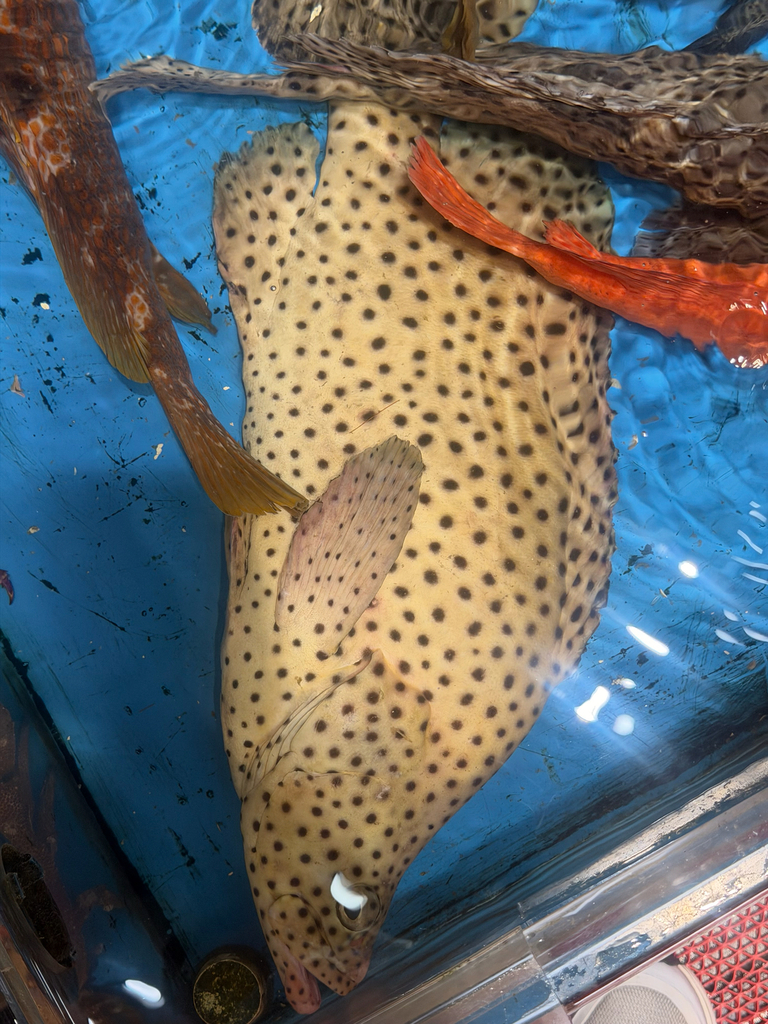
Humpback grouper
Cromileptes altivelis · Epinephelidae
The humpback grouper is a warm-water grouper of the western Pacific, from southern Japan to Palau, Guam, New Caledonia and southern Queensland, Australia; in the eastern Indian Ocean it runs from the Nicobar Islands to Broome, Western Australia. Most western Indian Ocean reports are unsubstantiated, with one Kenyan record considered valid; Hawaiian records are probably released aquarium fish.
- Family
- Epinephelidae
- Max length
- 70 cm TL
- Depth
- 2–40 m
- IUCN
- DD
- Climate
- Tropical
The humpback grouper is a warm-water grouper of the western Pacific, from southern Japan to Palau, Guam, New Caledonia and southern Queensland, Australia; in the eastern Indian Ocean it runs from the Nicobar Islands to Broome, Western Australia. Most western Indian Ocean reports are unsubstantiated, with one Kenyan record considered valid; Hawaiian records are probably released aquarium fish. It is recorded as marine and reef-associated, at 2–40 m, usually 5–25 m, in tropical water from 32°N to 23°S and 88°E to 170°E. FishBase gives a maximum of 70 cm total length and a maturity range starting at 39 cm. IUCN lists it as Data Deficient, assessed on 20 November 2016.
Techniques
- Bottom fishing —
- Lure fishing —
Seasonality
Other AU-QLD regulations
Same jurisdictionBefore you keep a fish
- Read the recorded value. It is copied from the notice; if the number and the notice disagree, the notice wins.
- Check the area. Federal, state and local waters can set different limits for the same fish.
- Check the date. Seasons, quotas and closures change; confirm the current notice before you go.
Common questions
- What is the protected species for Humpback grouper in Australia — Queensland?
- No take
- Where does this regulation apply?
- Queensland tidal waters
- When was it checked?
- 2026-11-18, against Queensland Government — Size and possession limits in tidal waters.
- Do other jurisdictions set different limits?
- Yes. This register lists 2 jurisdictions for Humpback grouper; compare them in the table above.